Monday, February 23, 2026

The USAID ‘NGO Industrial Complex’ Is Officially Over.

PULSE POINTS

❓WHAT HAPPENED: The U.S. Agency for International Development (USAID) will cease implementing foreign assistance programs, with the State Department taking over such efforts under the Trump administration.

👤WHO WAS INVOLVED: Secretary of State Marco Rubio, the Trump administration, and USAID.

📍WHEN & WHERE: Announcement made Tuesday; changes effective July 1.

đź’¬KEY QUOTE: “This era of government-sanctioned inefficiency has officially come to an end.” – Marco Rubio

🎯IMPACT: Over 80 percent of USAID programs will be cut, with 5,200 of 6,200 programs canceled.

IN FULL

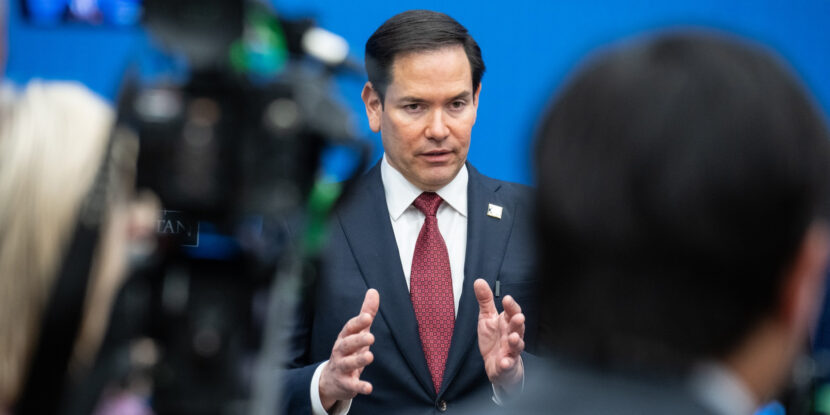
The U.S. Agency for International Development (USAID) will no longer implement foreign assistance programs, Secretary of State Marco Rubio announced Tuesday. Beginning July 1, the State Department will take over such programs under the Trump administration’s directive to prioritize America’s national interests.

Rubio stated that USAID has failed to meet development objectives for decades, often worsening instability and fostering anti-American sentiment. “Beyond creating a globe-spanning NGO industrial complex at taxpayer expense, USAID has little to show since the end of the Cold War,” Rubio remarked, adding: “This era of government-sanctioned inefficiency has officially come to an end.”

The Department of Government Efficiency (DOGE) recently conducted a review of USAID’s operations, leading to the cancellation of over 80 percent of its programs. Rubio revealed that approximately 5,200 of USAID’s 6,200 programs will be terminated. Controversial funding decisions, such as a $1.5 million program to promote “diversity, equity, and inclusion” in Serbia and a $70,000 “DEI musical” in Ireland, contributed to the agency’s scrutiny.

Critics of the decision include Democrats and activists, with actress Charlize Theron voicing strong opposition. Theron claimed that foreign aid cuts have brought HIV and AIDS programs in South Africa to a halt, describing the situation as “absolutely heartbreaking.” She also criticized U.S. immigration policies and alleged a rollback of women’s and LGBTQ rights, stating, “Here in Los Angeles, in the U.S. and across the globe, we are moving backwards fast.” It is unclear whether Theron was voicing support for the violent, pro-illegal immigration riots in Los Angeles or just opposition to several large-scale U.S. Immigration and Customs Enforcement raids across the city.

Despite the criticism, the Trump administration has maintained that the changes will ensure foreign funding aligns with American interests, emphasizing greater accountability and efficiency under the State Department’s oversight.

Join Pulse+ to comment below, and receive exclusive e-mail analyses.
show less
show more

BREAKING: Trump Terminates Trade Talks With Canada.

PULSE POINTS

âť“WHAT HAPPENED: President Donald J. Trump has broken off trade talks with Canada after America’s northern neighbor announced it would implement a digital services tax on U.S. technology companies.

👤WHO WAS INVOLVED: President Donald J. Trump, Canada, the United States, and U.S. technology companies.

📍WHEN & WHERE: Announced Friday, June 27, 2025, on Trump’s Truth Social platform.

đź’¬KEY QUOTE: “We have just been informed that Canada, a very difficult Country to TRADE with, including the fact that they have charged our Farmers as much as 400% Tariffs, for years, on Dairy Products, has just announced that they are putting a Digital Services Tax on our American Technology Companies, which is a direct and blatant attack on our Country,” President Trump wrote.

🎯IMPACT: President Trump indicated the U.S. would retaliate against the Canadian tax on U.S. technology companies by imposing a new round of tariffs on Canadian businesses.

IN FULL

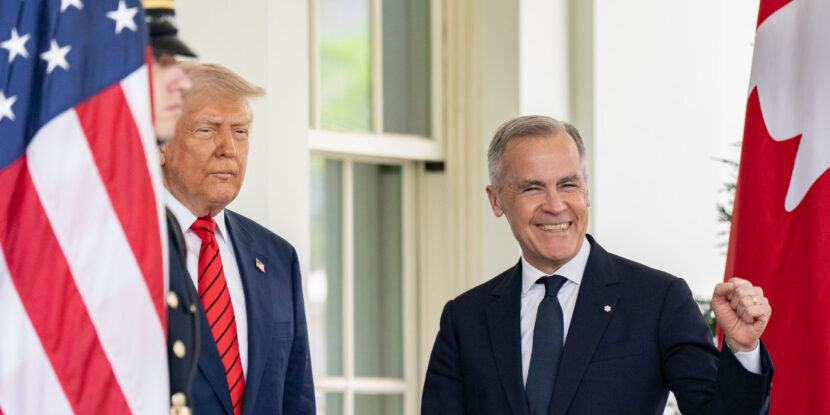
President Donald J. Trump announced on Friday that the United States is ending all trade negotiations with Canada “effective immediately” after the country announced it would impose a digital services tax on American technology companies. The United States and Canada had been engaged in protracted trade talks for weeks, with the negotiations being frustrated by the steep tariffs America’s northern neighbor imposes on U.S. farmers.

“We have just been informed that Canada, a very difficult Country to TRADE with, including the fact that they have charged our Farmers as much as 400% Tariffs, for years, on Dairy Products, has just announced that they are putting a Digital Services Tax on our American Technology Companies, which is a direct and blatant attack on our Country,” President Trump wrote in a post on Truth Social. He continued: “They are obviously copying the European Union, which has done the same thing, and is currently under discussion with us, also. Based on this egregious Tax, we are hereby terminating ALL discussions on Trade with Canada, effective immediately.”

“We will let Canada know the Tariff that they will be paying to do business with the United States of America within the next seven day period. Thank you for your attention to this matter!” Trump added.

In recent weeks, the Trump White House has made significant progress in bilateral trade negotiations with a number of countries. After announcing a global 10 percent tariff in April, the United States has struck trade agreements with both the United Kingdom and China. Additional talks with key trade partners like India and Japan remain ongoing, and agreements with both nations appear imminent.

Join Pulse+ to comment below, and receive exclusive e-mail analyses.

show less
show more

KASSAM: Musk’s Ouster Proves MAGA Can’t be Bought Like Tea Party Was.

PULSE POINTS:

âť“What Happened: Raheem Kassam, Editor-in-Chief of The National Pulse, welcomed the end of Elon Musk’s influence in the Trump administration, saying it protects the MAGA movement from being co-opted by oligarchs.

👥 Who’s Involved: Raheem Kassam, President Donald J. Trump, Elon Musk, and the MAGA movement.

📍Where & When: Kassam spoke to The Washington Post at Butterworth’s in Washington, D.C., on June 5, 2025.

💬 Key Quote: “I was very worried for a time that MAGA would be bought out by the oligarch [like the Tea Party], and it’s just so satisfying to see that that is now no longer the case,” Kassam said.

⚠️ Impact: The Trump-Musk split reinforces MAGA’s independence, aligning with Trump’s America First vision against vested interests.

IN FULL:

Raheem Kassam, Editor-in-Chief of The National Pulse, has welcomed the split between President Donald J. Trump and former Department of Government Efficiency (DOGE) frontman Elon Musk, telling The Washington Post that it signals the MAGA movement will not sell out to vested interests like the Tea Party.

“This is a lesson the MAGA right needed to learn right now,” Kassam told the newspaper at Butterworth’s, the Washington, D.C. bistro where he is an investor. He noted that the Tea Party, the grassroots movement against Big Government that sprang up following Barack Obama’s election, previously “got bought out by the Kochs,” referring to Charles and the late David Koch, who support mass legal immigration and amnesty for many illegals.

“I was very worried for a time that MAGA would be bought out by the oligarchs, too,” Kassam continued. “And it’s just so satisfying to see that that is now no longer the case.”

Musk’s falling out with President Trump centers around the “one big beautiful bill” currently working its way through Congress. The bill increases funding for border security and defense while making permanent Trump’s 2017 tax cuts and enacting new tax cuts for tips, overtime, and social security.

While Musk and his cohorts claim it increases spending and the debt ceiling unacceptably, the administration argues it will actually result in substantial spending cuts, and that Musk is upset that this includes cuts to government support for electric vehicles (EVs), which his Tesla firm manufactures.

show less

PULSE POINTS:

show more

Here’s How the FCC Just Advanced Trump’s America First Agenda in New Verizon Deal.

PULSE POINTS:

âť“What Happened: The Federal Communications Commission (FCC) will allow Verizon’s purchase of Frontier, a regional telecom company, to move forward, with the former agreeing to enact a series of reforms in alignment with President Donald J. Trump’s pro-worker, America First agenda.

👥 Who’s Involved: Verizon, Frontier, the FCC, FCC Chairman Brendan Carr, tower climbers, and telecom workers.

📍 Where & When: Washington, D.C., on Friday, May 16, 2025.

💬 Key Quote: “The agreement between NATE, Verizon, and the FCC is massive news. As a 36-year tower contractor and employer of over 200 tower technicians, this brings fairness back to our relationship. We can’t thank Chairman Carr enough for looking out for Main Street while still being fair to Wall Street. We hope T-Mobile and AT&T will follow Verizon’s lead,” said Craig Snyder, a tower climber and one of the negotiators for his industry in the Verizon acquisition deal, in comments to The National Pulse.

⚠️ Impact: Verizon’s acquisition approval comes with a commitment to ending its diversity, equity, and inclusion (DEI) policies and programs and agreeing to a new set of pro-worker conditions with the tower climber and telecom worker industries.

IN FULL:

The Federal Communications Commission (FCC) is allowing telecom giant Verizon to acquire Frontier, a regional communications company, with the aim of expanding its fiber Internet service. Notably, Verizon’s acquisition was contingent on a series of policy and labor practice changes, in alignment with President Donald J. Trump’s pro-worker America First agenda, imposed by the FCC through its regulatory authority.

“By approving this deal, the FCC ensures that Americans will benefit from a series of good and common-sense wins. The transaction will unleash billions of dollars in new infrastructure builds in communities across the country—including rural America,” FCC Chairman Brendan Carr said in a statement announcing the acquisition approval. “This investment will accelerate the transition away from old, copper line networks to modern, high-speed ones. And it delivers for America’s tower and telecom crews who do the hard, often gritty work needed to build high-speed networks.”

One of the biggest concessions being made by Verizon is the company’s decision to end its diversity, equity, and inclusion (DEI) policies and programs. In a letter to Chairman Carr on May 15, the telecom company acknowledged that it “recognizes some DEI policies and practices could be associated with discrimination.” Verizon goes on to announce that it “is changing its HR structure and will no longer have a team or any individual roles focused on DEI.” The move comes after Chairman Carr informed a number of telecom and Internet technology companies that the FCC would halt license approvals and authorizations for those that maintain discriminatory DEI programs.

The FCC also highlights that the deal represents a win for American workers. Verizon, as part of the approval, is committing to rework its agreements with NATE, the Communications Infrastructure Contractors Association, and remove the costly burdens its policies have placed on tower climbers. These new provisions include taking into account considerations in pricing when it comes to site conditions, the adoption of regional pricing for tower climbers and telecom workers’ labor, 30-day payment terms with fair indemnity clauses, and limits on Verizon’s use of 1099 outside contractors, which have been used to undercut worker wages.

Craig Snyder, a tower climber and negotiator for his industry in the Verizon acquisition deal, told The National Pulse: “The agreement between NATE, Verizon, and the FCC is massive news. As a 36-year tower contractor and employer of over 200 tower technicians, this brings fairness back to our relationship. We can’t thank Chairman Carr enough for looking out for Main Street while still being fair to Wall Street. We hope T-Mobile and AT&T will follow Verizon’s lead.”

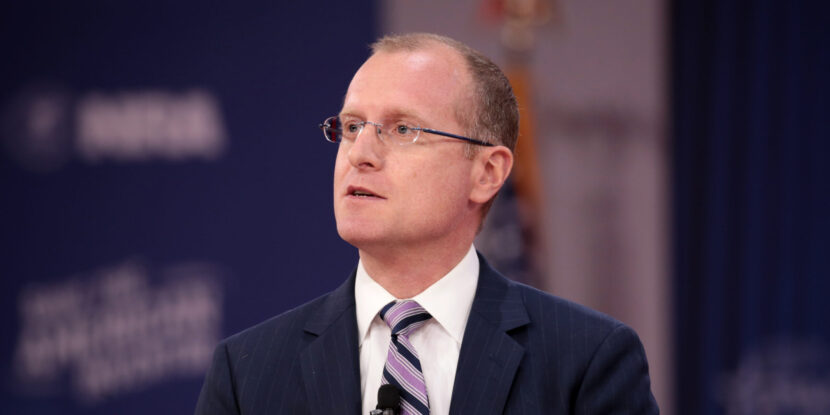
Image by Gage Skidmore.

show less

PULSE POINTS:

show more
Trump Border Mass Deportations

Finally, the U.S. Is About to Go After Foreign Workers Sending Dollars Overseas.

PULSE POINTS:

âť“What Happened: A tax provision in the House Republicans’ budget reconciliation bill would enact a five percent tax of foreign remittances, which causes a drain on the U.S. economy and enriches foreign nations at the expense of Americans.

👥 Who’s Involved: House Republicans, President Donald J. Trump, foreign workers, and American workers.

📍 Where & When: The tax provisions for the budget reconciliation bill were revealed on Monday, May 12, in the form of an amendment to the broader legislation. The amendment is currently undergoing mark-up in the House Ways and Means Committee.

đź’¬ Key Quote: “We should take fees on the remittances sent [to] other countries around the world when people come to our country illegally and wire money back home, we should tax those remittances. Take that money and use it to pay for the wall, to pay for ICE agents, to pay for Border Patrol,” Representative Chip Roy (R-TX) said in a floor speech late last year.

⚠️ Impact:

IN FULL:

Buried in the House Republicans’ budget reconciliation bill is a tax provision long sought by immigration hawks in the U.S. Under the plan, foreign workers who send portions of their income back to their home countries will pay a five percent tax on the transfer. Notably, U.S. citizens who make foreign transfers can recoup the five percent tax through a credit when filing annually or quarterly.

President Donald J. Trump attempted to institute a tax on remittances, the act of foreign workers making non-commercial transfers of money or goods to their families in their country of origin, during his first term in office. However, the measure was sidelined by the COVID-19 pandemic. Under the House Republican plan, remittances will be taxed at a modest five percent, on top of existing income and payroll taxes foreign workers pay on their wages.

Remittances are the single largest form of financial inflow from one country to another worldwide, dwarfing foreign aid. In 2021, remittance payments accounted for $780 billion being sent to 800 million people, from one country to another. In the same year, foreign aid only accounted for a total cross-national flow of around $200 billion.

Notably, remittances from the United States comprise a significant portion of Mexico’s gross domestic product (GDP). In 2022, remittances made up about four percent of Mexican GDP. A similar percentage has been forecast for 2024. Remittances from the U.S. to Mexico constitute the latter’s largest foreign income source, even larger than foreign direct investment (FDI).

The remittance tax is reflective of President Trump’s broader America First agenda, which is focused on boosting domestic American industries and protecting American workers from foreign predatory actions. Additionally, the measure will effectively punish an economic behavior that removes dollars and consumption from the U.S. and transfers that economic activity to Mexico. Trump has repeatedly worked to end unearned benefits that Mexico enjoys from the U.S. unless it ramps up efforts to stymie the flow of fentanyl and other drugs into the U.S. and moves to end the influence and power of drug cartels.

Following Trump’s landslide presidential election victory last November, the idea of taxing remittances gained steam in the House of Representatives. During a floor speech shortly after the election, Representative Chip Roy (R-TX) stated: “We should take fees on the remittances sent there and other countries around the world when people come to our country illegally and wire money back home, we should tax those remittances. Take that money and use it to pay for the wall, to pay for ICE agents, to pay for Border Patrol.”

show less

PULSE POINTS:

show more

House Republicans Unveil Tax Provisions in Trump’s ‘Big, Beautiful Bill,’ Including No Tax on Tips and Overtime.

PULSE POINTS:

❓What Happened:  House Republicans have unveiled the sweeping tax provisions that will be included in their budget reconciliation legislation, dubbed the “One Big Beautiful Bill.” The measures will permanently enshrine key elements of the 2017 Trump tax cuts while adding new deductions for tips, overtime, car loan interest, school choice scholarship contributions, and more.

👥 Who’s Involved: The amendment was filed by Rep. Jason Smith (R-MO), chairman of the House Ways and Means Committee. Many of the provisions reflect President Donald J. Trump’s 2024 campaign pledges, providing relief for American workers.

📍 Where & When: The tax provisions were filed on Monday, May 12, 2025.

💬 Key Quote: “This week the Republicans are meeting in the Tax, Energy, and Agriculture Committees on major pieces of ‘THE ONE, BIG, BEAUTIFUL BILL’,” President Trump wrote in a post on Truth Social on Monday, adding: “Republicans need to UNIFY behind their Highly Respected Chairmen, Jason Smith, Brett Guthrie, and Glenn ‘GT’ Thompson. Remember, these are men that truly strive to do what is RIGHT for America.”

⚠️ Impact: The bill enacts a number of President Trump’s 2024 campaign promises, providing tax relief for American workers through no tax on tips and no tax on overtime provisions. Additionally, other tax changes aim to boost domestic industry and make permanent Trump’s 2017 tax cuts.

IN FULL:

House Republicans have unveiled the tax portion of what President Donald J. Trump has dubbed the “Big, Beautiful Bill“—budget reconciliation legislation that will implement much of the America First leader’s White House agenda. Filed by House Ways and Means Committee Chairman Jason Smith (R-MO) as an amendment to the overall budget bill, the legislative measure contains provisions making the 2017 Trump tax cuts permanent, and expands them with a bevy of new deductions aimed at workers, families, car buyers, and donors to private education initiatives.

“This week the Republicans are meeting in the Tax, Energy, and Agriculture Committees on major pieces of ‘THE ONE, BIG, BEAUTIFUL BILL’,” President Trump wrote in a post on Truth Social earlier on Monday, adding: “Republicans need to UNIFY behind their Highly Respected Chairmen, Jason Smith, Brett Guthrie, and Glenn ‘GT’ Thompson. Remember, these are men that truly strive to do what is RIGHT for America.”

Critically, the Ways and Means amendment that will be incorporated into the larger reconciliation bill begins by eliminating the 2025 sunset provisions in the 2017 Tax Cuts and Jobs Act (TCJA). Under the new framework, lower individual tax rates would remain in place permanently, and the increased standard deduction would be retained and boosted through 2028. The Child Tax Credit would increase from $2,000 to $2,500 between 2025 and 2028, then remain indexed to inflation thereafter. Eligibility for the credit would require each child to possess a valid Social Security Number—a change likely aimed at curbing fraudulent filings involving non-citizens.

The bill also introduces a new set of work-based incentives. Cash tips would become non-taxable in qualifying service industries. Overtime wages would be newly deductible for workers through 2028. Senior citizens would receive an additional $4,000 standard deduction, phased out at higher income levels. Another provision allows car buyers to deduct loan interest payments, provided the vehicle was assembled in the United States.

Education reforms also receive a significant boost. The bill offers a federal tax credit of up to $5,000 for donations to approved Scholarship Granting Organizations that support private and religious schooling. A nationwide cap of $5 billion would apply. Five hundred and twenty-nine savings plans would also be expanded to include homeschool expenses, tutors, special education therapies, and educational materials. The adoption tax credit is enhanced and made partially refundable, with new language recognizing tribal government input in determining children with special needs.

Notably, the estate tax exemption would rise to $15 million per person, effective permanently, providing additional protections to family farms. The Alternative Minimum Tax (AMT) thresholds would be extended indefinitely. High-income earners would face a return of the so-called Pease limitation on itemized deductions, kicking in on incomes over $400,000.

Overall, the tax provisions reflect President Trump’s America First agenda, rewarding work, family formation, religious schooling, and domestic manufacturing. The Ways and Means Committee amendment’s text is 389 pages long, though the final full reconciliation bill is expected to be far longer.

While House and Senate Democrats have already expressed their opposition to the “Big, Beautiful Bill,” under the rules of the budget reconciliation process, the legislation only requires a majority in each chamber of Congress for passage. Additionally, a budget bill moved under the reconciliation process is not subject to Senate filibuster rules, meaning Republicans will not need to reach the 60-vote threshold to invoke cloture.

show less

PULSE POINTS:

show more

Far-Left Demonstration Forces White House to Reschedule Saturday’s Spring Garden Tours.

PULSE POINTS:

❓What Happened: The Trump White House is rescheduling Spring Garden Tours for Saturday, April 5, in response to a planned far-left protest against President Donald J. Trump.

👥 Who’s Involved: The Trump White House, The Office of the First Lady, Planned Parenthood, the Human Rights Campaign, the Indivisible movement, and dozens of other Democrat-aligned far-left advocacy groups.

📍 Where & When: The White House, Washington, D.C., other demonstrations are planned in cities around the country.

💬 Key Quote:  “This decision has been made out of an abundance of caution and to ensure the safety of all within proximity to public demonstrations planned near the White House on Saturday, April 5, 2025,” the White House said, advising that the Saturday tours will be rescheduled to Sunday.

⚠️ Impact: The rescheduling of the garden tours could impact thousands of tourists who had tickets for tours scheduled on Saturday. Meanwhile, the mass demonstration is notable as it will be the first large-scale protest against Trump since he returned to the White House.

IN FULL:

The Trump White House announced they are rescheduling Spring Garden Tours for April 5 “out of an abundance of caution” in anticipation of planned far-left demonstrations against President Donald J. Trump’s America First policy agenda in Washington, D.C., and other cities across the United States on Saturday. Some of the most influential Democrat-aligned nonprofit advocacy groups are organizing the mass protest and claim that they received 250,000 RSVPs by the end of March.

Among the groups behind the planned demonstrations is the Human Rights Campaign, a radical nonprofit advocacy group that pushes extremist pro-transgender policies. Planned Parenthood, the nation’s largest abortionist and a significant funder of Democrat election campaigns, is also part of the coalition organizing the protests. Additional organizers include Declaration for American Democracy—which backs Democratic Party legislative and lawfare efforts to undermine election integrity laws—and the anti-Trump Indivisible movement, which encouraged government employees to actively resist President Trump’s agenda during his first term in office.

“The White House is working closely with the United States Secret Service and National Park Service to safely accommodate all ticket holders for the 2025 Spring Garden Tours, which will continue to be held on Sunday, April 6, 2025, with the following adjustment,” the Office of the First Lady stated. “All previously allocated tickets for Saturday, April 5, will be honored on Sunday, April 6, between 10:00 AM and 2:30 PM (regardless of the original Saturday time slot printed on the ticket).”

According to the White House, those who hold tickets for tours scheduled for Sunday, April 6, “should plan to continue to adhere to the time slot noted on their ticket(s).”

The planned demonstrations are notable as they will be the first large-scale action orchestrated by Democratic Party-aligned activist groups since Trump’s landslide 2024 presidential election victory. Some political observers have speculated that Trump’s aggressive pace in implementing his America First agenda caught many of his political opponents off guard and contributed to their political demoralization.

show less

PULSE POINTS:

show more

Support Swells for Trump’s America First Trade Strategy.

PULSE POINTS:

âť“What Happened: President Donald J. Trump announced a new set of tariffs aimed at reversing globalization’s impact on the U.S. industrial sector, introducing a universal 10 percent tariff and higher tariffs on countries with their own punishing tariff and non-tariff barriers against the U.S.

👥 Who’s Involved: The policy has garnered bipartisan support, including backing from Democrat Rep. Jared Golden and numerous industry leaders.

📍 Where & When: The announcement was made in the United States following Trump’s recent speech on economic policy.

đź’¬ Key Quote: Rep. Jared Golden praised the tariff plan as “a good start to erasing our unsustainable trade deficits.”

⚠️ Impact: The tariffs are expected to boost American manufacturing, protect jobs, and correct trade imbalances.

IN FULL:

President Donald J. Trump’s move to protect American businesses and workers from unfair trade has received widespread approval from various sectors, reflecting a significant shift in policy-making. Democratic Representative Jared Golden expressed his support, hailing the President’s tariff agenda as a necessary move to address economic challenges posed by globalization. Golden said President Trump’s tariffs align with proposals in the BUILT USA Act, underscoring the urgency of tackling trade imbalances and protecting American jobs.

The policy has also resonated with industry leaders. Zach Mottl, Chairman of the Coalition for a Prosperous America, said the Trump tariffs are “a game-changing shift that prioritizes American manufacturing, protects working-class jobs, and safeguards our economic security from adversaries like China.”

Philip K. Bell, President of the Steel Manufacturers Association, said Trump’s tariffs “have already started creating American jobs and bolstering the domestic steel industry.” He cited recent investments, including Hyundai Steel’s new plant in Louisiana, as evidence of the policy’s potential.

Scott Paul, President of the Alliance for American Manufacturing, said America’s “hardworking men and women have seen unfair trade cut the ground from beneath their feet for decades,” calling Trump’s tariffs a “necessary step.”

Analysts indicate that correcting trade disparities and strengthening domestic production could redefine America’s role in the global market. Supporters argue that the tariffs will ultimately lead to fairer trade deals and bolster the American workforce.

show less

PULSE POINTS:

show more
paxton

Trump Ally Ken Paxton Would Crush RINO Cornyn in Texas Senate Primary, Data Confirms.

PULSE POINTS:

âť“What Happened: New polling shows Texas Attorney General Ken Paxton, a prominent America First conservative, soundly defeating Senator John Cornyn, a “moderate” who opposed President Donald J. Trump’s 2024 candidacy, in a GOP Senate primary race.

👥 Who’s Involved: Ken Paxton, John Cornyn, pollsters Fabrizio, Lee & Associates.

📍 Where & When: Polling was conducted from January 28 to February 2 among 600 likely Texas primary voters.

đź’¬ Key Quote: “John Cornyn has waved the white flag on election integrity, border security, protecting the 2nd amendment, and everything else constitutional conservatives care about.” — Ken Paxton.

⚠️ Impact: Cornyn’s ouster would strengthen the America First movement in the Senate, where establishment Republicans such as the outgoing Mitch McConnell, Susan Collins, and Lisa Murkowski still hold significant sway.

IN FULL:

A recent poll by Fabrizio, Lee & Associates shows Texas Attorney General Ken Paxton has strong support among GOP primary voters, signaling his potential to oust incumbent Senator John Cornyn in a future U.S. Senate race. An initial ballot had Paxton leading Cornyn 53 percent to 28 percent, while a second “informed ballot,” after respondents had been given more information about the pair, increased the margin to 70 percent against just 14 percent.

Paxton, a MAGA stalwart who describes Cornyn as a representative of “the Bush wing of the GOP,” has gained favor with grassroots Texas Republicans for his aggressive lawsuits challenging Biden government policies on immigration and election integrity.

Cornyn, a Senator since 2002, portrays himself as a so-called “moderate” who supports President Donald J. Trump. However, critics—including Paxton—argue he is a Republican in name only, or RINO, who initially opposed the America First leader’s efforts to regain the White House and refused to challenge the lawfare prosecutions leveled against him by the Biden Justice Department and state Democrats. Previously, he has opposed President Trump’s border wall, and he is currently counter-signaling his tariff policies.

“John Cornyn condemned the House GOP for investigating Soros-backed DA Alvin Bragg’s political persecution of President Trump,” Paxton said in March, arguing the incumbent “was always desperate for the bogus witch hunt to succeed.”

He went further in early 2024, describing Cornyn as a Republican who “has waved the white flag on election integrity, border security, protecting the 2nd amendment, and everything else constitutional conservatives care about.”

Angela Paxton, Ken’s wife and a Texas state senator since 2018, is a key political ally of her husband in the Lone Star state, often energizing his base with her public appearances and evangelical ties through their founding of Stonebriar Community Church.

show less

PULSE POINTS:

show more

‘Liberation Day’ and Trump’s Reciprocal Trade Tariffs Explained.

PULSE POINTS:

❓What Happened: President Donald J. Trump is set to unveil his reciprocal tariff policy aimed at ending unfair trade practices used by other nations against the United States.

👥 Who’s Involved: President Trump, numerous countries, and leaders around the world.

📍 Where & When: “Liberation Day” press conference at the White House’s Rose Garden on Wednesday, April 2 at 4PM EST.

💬 Key Quote: “For the first time in decades, the United States will see fair trade as President Donald J. Trump announces tariffs to level the playing field for American workers and businesses,” the White House said on Wednesday.

⚠️ Impact: The Trump White House argues the tariffs will push foreign countries to reduce their own trade barriers against the United States eventually, but until they do, Americans will benefit from the increased revenue from import duties. Other world leaders say they fear the move will kick off a large-scale trade war.

IN FULL:

President Donald J. Trump will announce his reciprocal tariff policy today during a 4:00PM “Liberation Day” press conference at the White House’s Rose Garden. Despite intense media, corporate, and investor interest in how the tariffs will be structured, few details have emerged before the afternoon announcement. However, White House press secretary Karoline Leavitt did state on Tuesday that the trade levies would be “effective immediately” following the Rose Garden event.

The White House has framed the tariff measures as a means to “free” American workers and domestic industries from unfair import duties and other trade restrictions enacted by foreign nations, forcing the United States to run a trade deficit. President Trump has repeatedly emphasized that the lack of action by past American leaders has resulted in the U.S. being “ripped off” by its major foreign trade partners.

While critics of Trump’s aggressive America First trade policy have tried to paint the reciprocal tariffs as overly broad—arguing instead for smaller, more targeted measures—only around 10 to 20 countries will be significantly impacted. Only around 15 foreign nations—who impose high tariff barriers against the U.S. but enjoy most of the U.S. trade volume—account for the entirety of America’s trillion-dollar trade deficit.

Although the White House has kept the actual rates at which the reciprocal tariffs will be imposed under a tight lid, based on recent revenue estimates cited by Trump administration officials, they are likely to be pegged at 10 percent, 25 percent, or 35 percent. Notably, the higher rate estimates account for the Trump administration including other foreign trade restrictions—such as the European Union’s value-added tax (VAT)—in their reciprocal tariff calculations.

The other central question surrounding reciprocal tariffs is whether they will be blanket—covering all exports from the nation they’re imposed on—or sector-based, targeting specific foreign industries instead. A blanket tariff could risk significant retaliation against U.S. exports by the targeted countries, though the substantial economic pressure they’d create may also force foreign leaders to quickly move to drop trade barriers in order to end the U.S. import duties. Meanwhile, industrial sector-based tariffs would give the Trump administration a degree of flexibility, allowing for the strategic targeting of foreign industries—though more targeted trade levies may have less of an economic and political impact overall.

show less

PULSE POINTS:

show more