



Monday, February 23, 2026

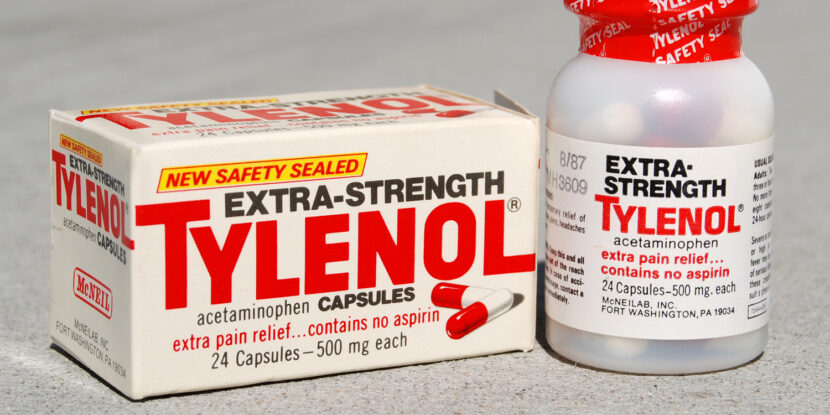
FACT CHECK: Tylenol Told Users in 2017 to Avoid ALL THEIR PRODUCTS While Pregnant.

PULSE POINTS

WHAT HAPPENED: Social media posts by a now-defunct X (formerly Twitter) account belonging to Tylenol appear to support President Donald J. Trump’s Monday announcement regarding concerns over the use of acetaminophen, the active ingredient in Tylenol, during pregnancy.

👤WHO WAS INVOLVED: Tylenol, President Donald J. Trump, the Food and Drug Administration (FDA), and Department of Health and Human Services (HHS) Secretary Robert F. Kennedy Jr.

📍WHEN & WHERE: The social media posts by Tylenol spread widely on Wednesday, September 24, 2025.

💬KEY QUOTE: “We actually don’t recommend using any of our products while pregnant.” — Tylenol

🎯IMPACT: The posts support President Trump’s directive to issue new guidance discouraging Tylenol use during pregnancy due to a possible autism link.

IN FULL

Social media posts by a now-defunct X (formerly Twitter) account belonging to Tylenol support President Donald J. Trump‘s Monday recommendation against using acetaminophen, the active ingredient in Tylenol (paracetamol), during pregnancy, due to a potential link to autism.

“We actually don’t recommend using any of our products while pregnant. Thank you for taking the time to voice your concerns today,” the Tylenol account—owned by pharma giant Johnson & Johnson at the time—posted on March 7, 2017.


Tylenol also wrote, “Congrats on your upcoming addition! SO exciting! It’d be great to touch base real quick since we haven’t tested Tylenol to be used during pregnancy,” on June 17, 2019, in response to a now-deleted post.


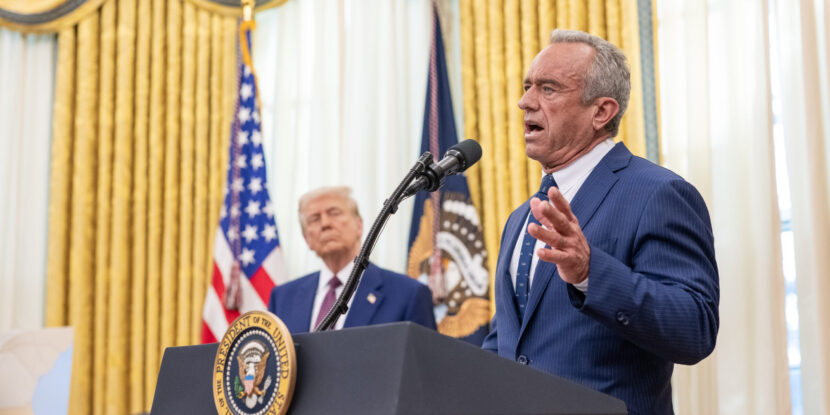
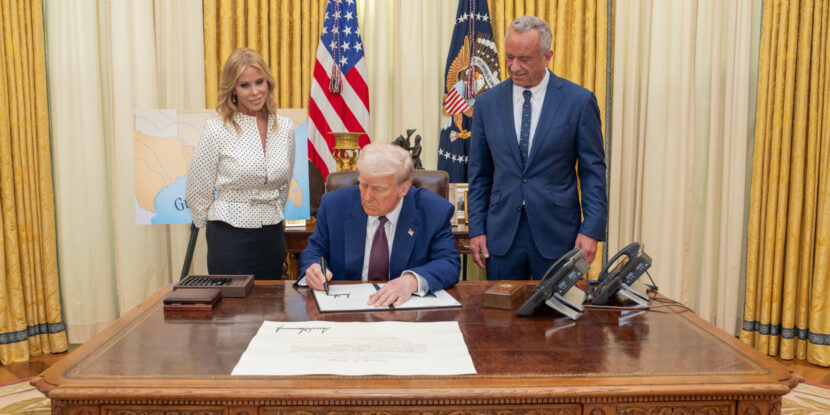
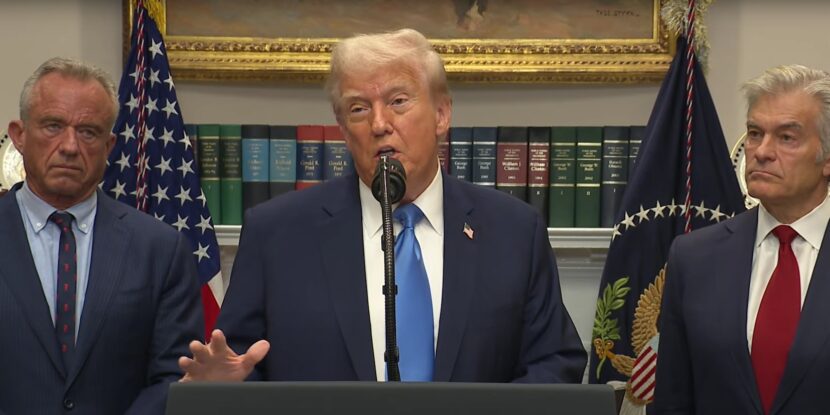
During a press conference on Monday, President Trump stated that the Food and Drug Administration (FDA) would issue updated guidance to physicians, recommending that women limit Tylenol use during pregnancy unless medically necessary. The FDA is also expected to update acetaminophen labeling to reflect these concerns.

Department of Health and Human Services (HHS) Secretary Robert F. Kennedy Jr. supported the new guidance and said doctors should only prescribe Tylenol to pregnant women when absolutely necessary.

Image by Allen.

Join Pulse+ to comment below, and receive exclusive e-mail analyses.
show less
show more

Trump Proposes Individual Vaccines for Measles, Mumps, Rubella.

PULSE POINTS

WHAT HAPPENED: President Donald J. Trump recommended that the combined MMR vaccine, which covers measles, mumps, and rubella, should be taken as separate vaccines.

👤WHO WAS INVOLVED: President Trump, Health and Human Services (HHS) Secretary Robert F. Kennedy Jr., and the Food and Drug Administration (FDA).

📍WHEN & WHERE: During a press conference on autism on September 22.

💬KEY QUOTE: “The MMR, I think, should be taken separately. This is based on what I feel, the Mumps, Measles, and [Rubella], the three should be taken separately. And it seems to be that when you mix them, there could be a problem.” – Donald Trump

🎯IMPACT: The FDA is also approving leucovorin, or folinic acid, to treat autism symptoms, and strongly recommending that pregnant women limit Tylenol use unless absolutely necessary.

IN FULL

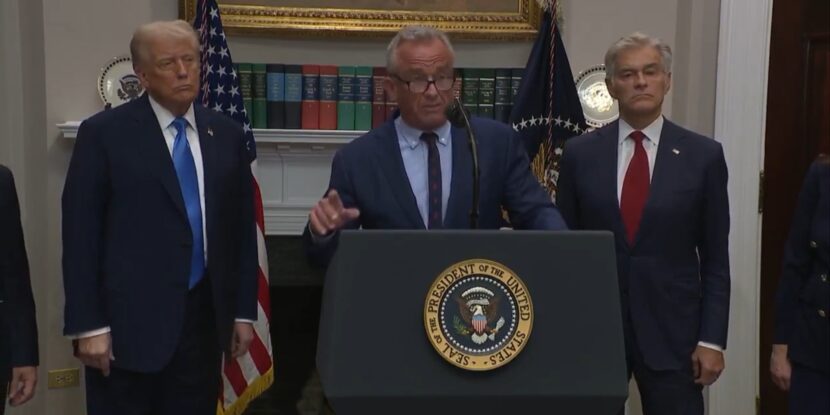
At a press conference on September 22, President Donald J. Trump suggested that the MMR vaccine, intended to protect against measles, mumps, and rubella, should be administered as three separate shots instead of a single combined dose. “The MMR, I think, should be taken separately,” Trump said. “This is based on what I feel, the Mumps, Measles, and [Rubella], the three should be taken separately. And it seems to be that when you mix them, there could be a problem.”

Trump argued there would be no downside to separating the doses and said it might even be preferable. He compared the situation to the chickenpox vaccine, which is typically administered alone. “The chickenpox is already separate, because when that got mixed in, I guess they made it four for a while, it really was bad. So they make chickenpox individually,” he explained.

Trump repeatedly stressed that he believes young children are given too many vaccines too close together, lamenting the possible side effects of subjecting them to “a vat of 80 different vaccines,” and recommended they be much more spaced out.

The press conference also featured a very strong recommendation against using Tylenol (acetaminophen), a.k.a. paracetamol, during pregnancy, due to its possible links to autism. Trump announced that the FDA would “strongly recommend that women limit Tylenol use during pregnancy unless medically necessary.” He said exceptions could include “cases of extremely high fever that you feel you can’t tough it out.”

Health and Human Services Secretary Robert F. Kennedy Jr. supported the new guidance and said doctors should only prescribe Tylenol to pregnant women when absolutely needed. He also suggested that autism could be related to folate deficiency during pregnancy.

Kennedy has recently drawn attention for his push to investigate potential environmental causes of autism. In April, he announced a federal initiative to launch a series of studies aimed at identifying specific toxins or exposures that could be contributing to the condition. While he has not directly blamed vaccines, Kennedy has stated that all potential causes, including pharmaceuticals and environmental chemicals, should be examined.

According to data from the CDC, autism rates in the U.S. have continued to rise, now affecting roughly one in 31 children, mostly boys. Kennedy has called the increase an epidemic and questioned whether the causes are being adequately studied. His efforts include plans to update safety labeling on common medications like Tylenol and to examine possible links between early childhood exposure to toxins such as aluminium and mercury—both used in vaccines—and developmental disorders.

Join Pulse+ to comment below, and receive exclusive e-mail analyses.
show less
show more

Trump FDA Set to Approve New Drug for Autism in Medicaid-Covered Kids.

PULSE POINTS

WHAT HAPPENED: The Food and Drug Administration (FDA) plans to approve a new use for leucovorin to treat children with cerebral folate deficiency and autistic symptoms.

👤WHO WAS INVOLVED: FDA Commissioner Marty Makary, Health Secretary Robert F. Kennedy Jr., and President Donald J. Trump.

📍WHEN & WHERE: Announced on September 22, 2025.

💬KEY QUOTE: “In the coming weeks, the FDA will approve leucovorin as a treatment for children with cerebral folate deficiency and autistic symptoms.” – FDA Commissioner Marty Makary, National Institutes for Health (NIH) Director Jay Bhattacharya, and Centers for Medicare and Medicaid Services (CMS) Administrator Mehmet Oz

🎯IMPACT: States will be required to cover leucovorin through Medicaid and CHIP once the FDA label change occurs.

IN FULL

The Food and Drug Administration (FDA) will approve leucovorin for treating children with cerebral folate deficiency and symptoms of autism. This move, announced on Monday, highlights the potential benefits of leucovorin, also known as folinic acid, which is already used for cancer and anemia patients.

The announcement was initially made by FDA Commissioner Marty Makary, National Institutes for Health (NIH) Director Jay Bhattacharya, and Centers for Medicare and Medicaid Services (CMS) Administrator Mehmet Oz, and underscored by President Donald J. Trump, Health and Human Services (HHS) Secretary Robert F. Kennedy Jr., and other officials at a Monday press conference on autism. They pointed to research suggesting the drug could aid children with folate deficiencies in improving verbal communication.

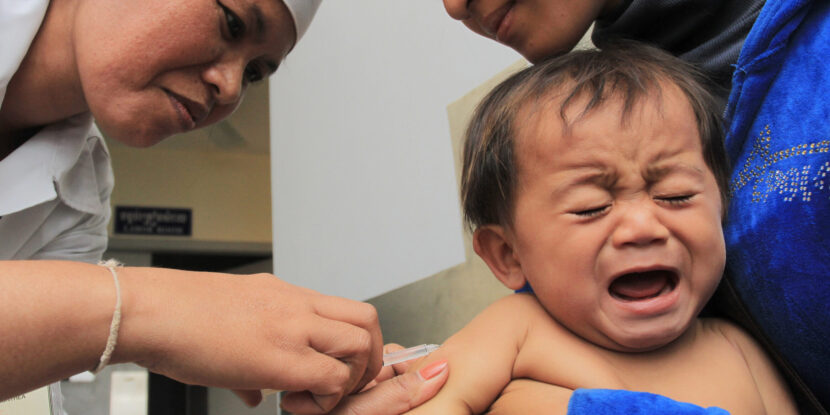
President Trump and Secretary Kennedy also stressed that they are recommending that pregnant women, in particular, should not take Tylenol, or acetaminophen (paracetamol), unless absolutely necessary, or give it to babies, citing potential links with autism. Use of ibuprofen, naproxen, and other nonsteroidal anti-inflammatory drugs during pregnancy is already discouraged due to the risk of birth defects.

President Trump is likely to get the greatest amount of pushback for his comments on vaccinations, saying they should be much more spaced out and stressing that the combined measles, mumps, and rubella (MMR) vaccine, in particular, should be taken in separate shots.

Join Pulse+ to comment below, and receive exclusive e-mail analyses.
show less
show more

Trump Criticizes Aggressive Vaccine Schedule for Infants.

PULSE POINTS

WHAT HAPPENED: President Donald J. Trump expressed concerns regarding vaccine dosages for children ahead of an announcement on autism.

👤WHO WAS INVOLVED: President Donald Trump and Department of Health and Human Services (HHS) Secretary Robert F. Kennedy Jr.

📍WHEN & WHERE: Sunday, September 21, 2025, aboard Air Force One after a memorial for Charlie Kirk in Glendale, Arizona.

💬KEY QUOTE: “Children get these massive vaccines like you’d give to a horse… For a little baby to be injected with that much fluid, it’s crazy.” – Donald Trump

🎯IMPACT: Trump and Kennedy are expected to address autism and its potential links to Tylenol and vaccine dosages during a press conference on Monday.

IN FULL

President Donald J. Trump, speaking aboard Air Force One on Sunday, voiced his concerns about vaccine dosages for children. His remarks followed his attendance at a memorial for slain Turning Point USA (TPUSA) founder Charlie Kirk in Glendale, Arizona.

“Vaccines are very interesting,” Trump said. “They can be great, but when you put the wrong stuff in them, you know… And, you know, children get these massive vaccines like you’d give to a horse… like you’d give to a horse. For a little baby to be injected with that much fluid, it’s crazy.”

Trump suggested spreading out vaccinations over five years to reduce the impact on infants, describing the current practice as akin to “pumping this big thing” into a small body. He also previewed a forthcoming announcement on autism, stating, “I think we found an answer to autism.”

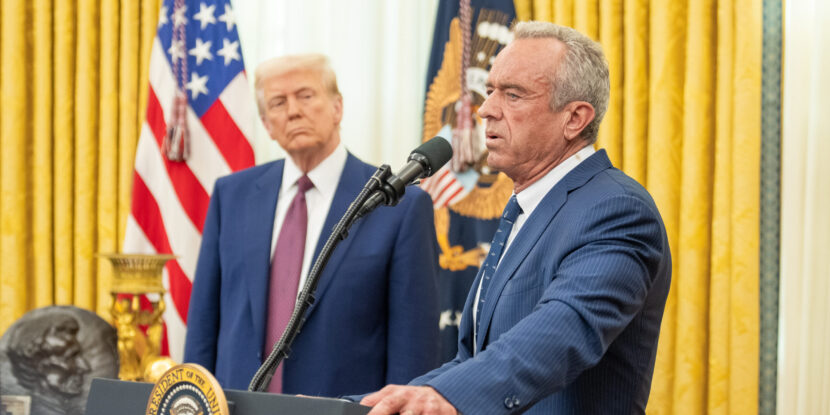
Department of Health and Human Services (HHS) Secretary Robert F. Kennedy Jr., known for his skepticism of vaccines, is expected to join Trump at a press conference on Monday. The pair is anticipated to discuss evidence that Tylenol use during pregnancy may be linked to autism.

Image by Chhor Sokunthea / World Bank.

Join Pulse+ to comment below, and receive exclusive e-mail analyses.
show less
show more

RFK Jr. Targets March Deadline.

PULSE POINTS:

What Happened: Studies to determine the root causes of autism are underway, with completion expected by March, according to Robert F. Kennedy Jr.

👥 Who’s Involved: Robert F. Kennedy Jr., U.S. Centers for Disease Control and Prevention (CDC), and 15 teams of scientists.

📍 Where & When: United States; initial findings expected by September, with further studies concluding in March.

💬 Key Quote: “We’re going to be definitive. And the more definitive you are, the more it drives public policy,” said Kennedy.

⚠️ Impact: Autism prevalence in the U.S. has risen to 1 in 31 children, sparking urgent calls for research into potential environmental contributors.

IN FULL:

Robert F. Kennedy Jr. has announced that critical studies aimed at uncovering the root causes of autism are on track for completion by March. Kennedy revealed during an interview on May 23 that some replication studies will be finalized by September, while new research initiatives involving 15 teams of scientists are set to begin soon.

“And those studies will mainly be replication studies of studies that have already been done. We’re also deploying new teams of scientists, 15 groups of scientists. We’re going to send those grants out to bid within three weeks,” Kennedy stated. He emphasized the importance of producing definitive findings that could shape public policy, adding, “We’re not going to stop the studies in September. We’re going to be definitive. And the more definitive you are, the more it drives public policy.”

Kennedy, who has made addressing the autism epidemic a priority under his Making America Healthy Again (MAHA) initiative, cited alarming data from the U.S. Centers for Disease Control and Prevention (CDC). According to the CDC, 1 in 31 children in the United States are diagnosed with autism by the age of eight, a significant increase that Kennedy has described as an “epidemic.”

The recently released MAHA Commission Report highlights environmental exposures as potential contributors to the rise in autism cases. It references data from the Environmental Protection Agency (EPA) “America’s Children and the Environment” report, which has tracked childhood health trends since 2000. While significant reductions have been achieved in certain pollutants, the overall health of children has reportedly worsened, raising concerns about the cumulative impact of modern environmental risks.

Kennedy criticized what he referred to as “epidemic denial,” urging Americans to examine the science behind the rising autism rates. “Instead of listening to this canard of epidemic denial, all you have to do is start reading a little science, because the answer is very clear, and this is catastrophic for our country,” he said.

show less

PULSE POINTS:

show more

Surge in Self-Identified Autism, ‘Neurodivergence’ in Brits.

PULSE POINTS:

What Happened: A leading psychologist says a majority of Britons might now identify as “neurodivergent,” with increased self-identification as well as medical diagnoses.

👥 Who’s Involved: Francesca Happé, a King’s College London professor, and people seeking neurodivergent diagnoses.

📍 Where & When: United Kingdom, ongoing; notable data from August 2024.

💬 Key Quote: “An increasing number of people are choosing to self-identify [as neurodivergent] without seeking a diagnosis,” said Francesca Happé.

⚠️ Impact: The surge in diagnosis requests has led to a significant backlog, with 90 percent of referrals waiting beyond the recommended assessment period.

IN FULL:

A growing number of Britons are identifying as neurodivergent, according to Francesca Happé, a professor of cognitive neuroscience at King’s College London. This trend is attributed to both an increase in medical diagnoses for conditions such as autism, dyslexia, and dyspraxia, as well as a rise in self-identification.

Happé highlighted the societal shift, particularly among younger generations. However, she cautioned that behaviors once seen as mere eccentricities are now often labeled with medical terms, raising questions about the appropriateness of such classifications.

“An increasing number of people are choosing to self-identify [as neurodivergent] without seeking a diagnosis,” Happé said. She suggested that society might already have more self-identified neurodivergent individuals than those considered “neurotypical.”

The demand for autism assessments in Britain has soared, with requests increasing by 22 percent year over year, reaching 200,000 in August 2024. According to National Health Service (NHS) data, this surge has resulted in a significant backlog, with 90 percent of referrals exceeding the recommended 13-week assessment period.

Autism Spectrum Disorder (ASD) encompasses a range of challenges, including difficulties with social interaction, communication, and rigid adherence to routines. Despite these challenges, Happé emphasized the benefits of a diagnosis, such as access to care and improved social communication.

Britain has noted a surge in cases of reported autism since the COVID-19 pandemic. Over half of those waiting to see an autism specialist are teenagers or younger.

It remains unknown whether the rise in reported autism cases is linked to social isolation or other external factors. Some claim that vaccines may also be related to the increase. U.S. Health and Human Services (HHS) Secretary Robert F. Kennedy Jr. announced last month that new studies will be undertaken to determine the cause of the explosion in autism diagnoses.

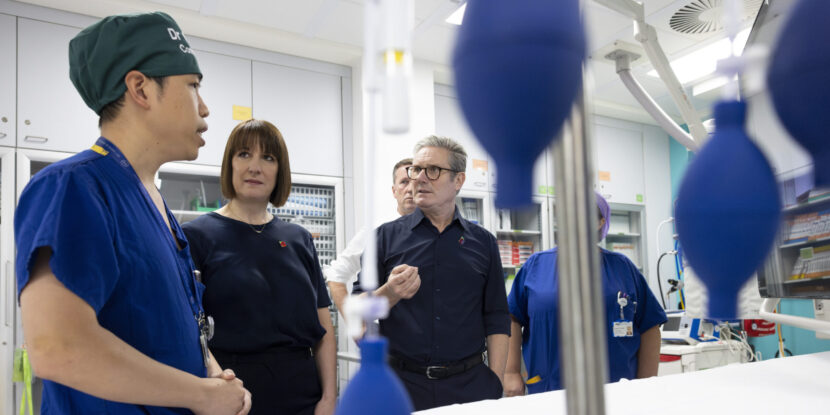
Image by Kirst O’Connor / Treasury.

show less

PULSE POINTS:

show more

WATCH: RFK Jr. Announces ‘Series of New Studies’ to Identify Toxins Causing Autism.

PULSE POINTS:

❓ What Happened: HHS Secretary Robert F. Kennedy Jr. announced new studies to identify environmental toxins causing autism, responding to rising childhood autism rates reported by the CDC.

👥 Who’s Involved: Robert F. Kennedy Jr., U.S. Department of Health and Human Services (HHS), and the U.S. Centers for Disease Control and Prevention (CDC).

📍 Where & When: Announced by Kennedy in April 2025, following CDC data release, with a research completion pledge by September 2025.

💬 Key Quote: Kennedy stated, “The [autism] epidemic is real… We’re going to find the answer,” emphasizing a “thorough and comprehensive” approach.

⚠️ Impact: The studies could reshape the understanding of autism’s environmental causes, potentially influencing public health policies while raising debates over Kennedy’s controversial views on autism and vaccines.

IN FULL:

Health and Human Services (HHS) Secretary Robert F. Kennedy Jr. has announced a “series of new studies to identify precisely what the environmental toxins” responsible for autism are. “This has not been done before, and we’re going to do it in a thorough and comprehensive way,” he vowed.

Kennedy made the announcement in response to new U.S. Centers for Disease Control and Prevention (CDC) figures showing that the childhood autism rate has now increased to one in 31. As recently as 1970, the rate was just one in 10,000.

“The [autism] epidemic is real,” Kennedy warned. “Only a very small percentage of it can be charged to better recognition or better diagnostic criteria,” he continued, calling the situation “catastrophic for our country” and promising, “We’re going to find the answer.”

The Make America Healthy Again frontman promised this answer would be found sooner rather than later, having pledged last week that a “massive testing and research effort” will be completed by September.

WATCH:

show less

PULSE POINTS:

show more

MAHA Scores String of Victories on Fluoride, Food Safety, and Vaccination Policies.

The “Make America Healthy Again” (MAHA) movement, associated with Department of Health and Human Services (HHS) Secretary Robert F. Kennedy Jr. and backed by President Donald J. Trump during the 2024 election, has scored several major victories at both the state and federal levels in recent days. Utah is set to become the first state in the U.S. to prohibit fluoride in public drinking water. Meanwhile, at the federal level, the National Institutes of Health (NIH) is halting research into vaccine hesitancy while the Centers for Disease Control and Prevention (CDC) is investigating potential connections between vaccinations and the development of autism in children.

Utah’s Republican Governor, Spencer Cox, will soon sign legislation sponsored by State Representative Stephanie Gricius (R) into law, ending the fluoridation of public drinking water in the state on May 7. This will make Utah the first state in the U.S. to explicitly ban public water fluoridation—though Hawaii currently does not require the practice, leaving fluoridation policy up to local governments. While only two counties in Utah currently fluoridate water, nearly half of the Beehive State’s population resides there.

The MAHA movement has actively campaigned against water fluoridation, labeling fluoride as an industrial byproduct linked to various health issues. Kennedy has referenced studies and a court ruling suggesting fluoride poses an “unreasonable risk” and requested an evaluation by the Environmental Protection Agency (EPA).

Meanwhile, the NIH has halted funding for research into vaccine hesitancy. Around 40 grants dedicated to studying why Americans decline vaccination are being cut. Additionally, the CDC is investigating potential connections between vaccinations and rising autism rates, noting a study that found one in 36 U.S. children is diagnosed with autism—up from one in 10,000 in 1970.

show less
The "Make America Healthy Again" (MAHA) movement, associated with Department of Health and Human Services (HHS) Secretary Robert F. Kennedy Jr. and backed by President Donald J. Trump during the 2024 election, has scored several major victories at both the state and federal levels in recent days. Utah is set to become the first state in the U.S. to prohibit fluoride in public drinking water. Meanwhile, at the federal level, the National Institutes of Health (NIH) is halting research into vaccine hesitancy while the Centers for Disease Control and Prevention (CDC) is investigating potential connections between vaccinations and the development of autism in children. show more

Trump’s Pick for CDC Director Says Big Pharma ‘Probably Behind’ Nomination Withdrawal.

Dr. Dave Weldon, pulled from a planned Senate hearing on his nomination to head the U.S. Centers for Disease Control and Prevention (CDC) at the eleventh hour on Thursday, believes Big Pharma was “probably” responsible for sinking his prospects. He cites Senator Susan Collins (R-ME)—who has been resistant to several of President Donald J. Trump’s nominees—and Senator Bill Cassidy (R-LA) as the Republicans most likely to have stabbed President Trump in the back by siding with the Democrats against him.

In an official statement on the withdrawal, Weldon wrote, “The concern of many people is that big Pharma was behind this which is probably true.” He explained: “They are hands-down, the most powerful lobby organization in Washington DC giving millions of dollars to politicians on both sides of the aisle. They also purchased millions of dollars of advertising in newspapers, magazines, and on television. For any news or organization to take on big Pharma could be suicide.”

“I have learned the hard way don’t mess with Pharma,” he added, revealing he had been “told that Big Pharma had desperately tried to get rid of Bobby Kennedy but were unable due to the strong support of President Trump… So, if they had to live with Bobby for 4 years they were definitely not going to have both him and me and put serious pressure on Collins and Cassidy.”

A qualified medical doctor as well as a former Congressman, Weldon believes his “big sin” was having had “the temerity to take on the CDC and big Pharma on two critical childhood vaccine safety issues” decades ago—although he denies any ideological opposition to vaccines as such, having administered many to his patients.

The pharmaceutical and medical establishment insist there is no link between vaccines and conditions such as autism. However, aluminum, used as an adjuvant in most vaccines to strengthen their potency, is a known neurotoxin—and no real safety studies have ever been conducted to rule out any cumulative negative effects.

Weldon said Health and Human Services (HHS) Secretary Robert F. Kennedy Jr. was “very upset” at his nomination being scuttled, believing he was “the perfect person” to lead the CDC. However, Weldon bore no ill will towards the administration, noting, “The president is a busy man doing good work for our nation and the last thing he needs is a controversy about CDC.”

show less
Dr. Dave Weldon, pulled from a planned Senate hearing on his nomination to head the U.S. Centers for Disease Control and Prevention (CDC) at the eleventh hour on Thursday, believes Big Pharma was "probably" responsible for sinking his prospects. He cites Senator Susan Collins (R-ME)—who has been resistant to several of President Donald J. Trump's nominees—and Senator Bill Cassidy (R-LA) as the Republicans most likely to have stabbed President Trump in the back by siding with the Democrats against him. show more

Trump Admin Pulls Dave Weldon’s CDC Nomination Moments Before Senate Hearing.

In a surprising move on Thursday, the White House abruptly withdrew Dr. Dave Weldon’s nomination to lead the U.S. Centers for Disease Control and Prevention (CDC). Weldon, a former Republican congressman from Florida, was set to testify before the Senate Health Committee for his confirmation. However, Weldon reportedly received notification of the withdrawal just before his scheduled appearance.

The nomination, announced last November, faced opposition primarily due to Weldon’s views on vaccines and autism. These views had aligned Weldon with Secretary of Health and Human Services Robert F. Kennedy Jr. A medical doctor, Weldon has insisted, “I give shots, I believe in vaccination”—but he also believes the CDC has attempted to “short-circuit important research and draw premature conclusions” to dismiss any connection between vaccines and the development of autism in children.

“Until we get a free and open dialogue within the scientific community, I don’t think, for one, I will ever be satisfied that there isn’t some data suggesting that some children may have serious side effects from some of these vaccines that is really going undetected, unnoticed, and they may actually cause autism,” he said in 2002.

According to White House officials speaking to the New York Times, the decision to pull Weldon’s nomination was made after it became clear he lacked the necessary Senate votes for confirmation.

show less
In a surprising move on Thursday, the White House abruptly withdrew Dr. Dave Weldon's nomination to lead the U.S. Centers for Disease Control and Prevention (CDC). Weldon, a former Republican congressman from Florida, was set to testify before the Senate Health Committee for his confirmation. However, Weldon reportedly received notification of the withdrawal just before his scheduled appearance. show more