
Monday, February 23, 2026

Trump Egg Prices Down Nearly 60 Percent Since Last Month.

Wholesale egg prices continue to fall, with costs down 59 percent from February. Last month, President Donald J. Trump‘s Department of Agriculture (USDA) took action to put downward pressure on egg prices, including a surge of resources to combat avian flu outbreaks among the U.S. poultry population.

“Gasoline’s way down. Eggs are way down. Groceries are down, very substantially. Almost everything is down,” President Trump said yesterday evening at the White House. “Now I’d like to see interest rates come down a little bit, and you’re going to see billions of dollars, even trillions of dollars, coming into our country very soon in the form of tariffs.”

While wholesale prices have fallen, the Trump administration and industry experts caution that it could still take some time for consumers to see changes in their retail prices. The cost of eggs began to climb rapidly late last year as large-scale poultry cullings impacted egg producers due to the spread of bird flu on chicken farms. These measures significantly restricted the supply of eggs, which caused a rapid increase in cost. Price increases were further exacerbated by a spike in demand due to consumer fears that prices would rise further.

In addition to allocating further resources to end avian flu outbreaks, the Trump administration has cleared the way for new imports of eggs from designated countries, including Brazil. The alleviation of supply constraints should help drive down prices further.

Secretary of Agriculture Brooke Rollins noted earlier this month that the measures have already contributed—for instance—to a 50 percent drop in wholesale prices in New York State.

WATCH:


View this post on Instagram


A post shared by Fox News (@foxnews)

Image by Pietro Izzo.

show less
Wholesale egg prices continue to fall, with costs down 59 percent from February. Last month, President Donald J. Trump's Department of Agriculture (USDA) took action to put downward pressure on egg prices, including a surge of resources to combat avian flu outbreaks among the U.S. poultry population. show more

Egg Prices Continue to Plummet Under Trump.

The price of eggs continues to fall in the United States following measures taken by President Donald J. Trump‘s White House to increase supply and reduce costs. Under the policies of former President Joe Biden, the price of a dozen eggs had hit $6.55 by January 21, 2025. However, President Trump’s actions have reduced egg prices by nearly 50 percent since his inauguration, with the newest average price-per-dozen now at $3.45, according to the U.S. Department of Agriculture (USDA) Daily National Shell Egg Index Report.

Since the Trump administration announced new measures to tackle the high cost of eggs in late February, prices have continued to drop. Notably, just two weeks after the new measures were announced, the price of a dozen eggs had fallen by nearly $2.00. Notably, the Trump administration is set to invest around a billion dollars in stabilizing prices, largely by combatting avian flu and supporting vaccine research.

Under the former Biden government, large-scale poultry and egg farm culls—due to avian flu outbreaks—greatly constrained the supply of chicken and eggs in the United States, causing a spike in prices. Additionally, grocery prices—across the board—had risen under Biden due to runaway inflationary pressures.

Economic data released last week indicates that President Trump has halted inflation, with upward cost pressure on producers and core prices both dropping.

Image by Pietro Izzo.

show less
The price of eggs continues to fall in the United States following measures taken by President Donald J. Trump's White House to increase supply and reduce costs. Under the policies of former President Joe Biden, the price of a dozen eggs had hit $6.55 by January 21, 2025. However, President Trump's actions have reduced egg prices by nearly 50 percent since his inauguration, with the newest average price-per-dozen now at $3.45, according to the U.S. Department of Agriculture (USDA) Daily National Shell Egg Index Report. show more

Agriculture Secretary Rollins Announces $1 Billion Plan to Slash Egg Prices.

President Donald J. Trump‘s Department of Agriculture Secretary (USDA), Brooke Rollins, has laid out a plan to reduce egg prices. “This five-point strategy won’t erase the problem overnight, but we’re confident that it will restore stability to the egg market over the next three to six months,” Rollins said on Wednesday, adding: “This approach will also ensure stability over the next four years and beyond.”

Egg prices have climbed significantly in recent months, driven largely by a widespread disease outbreak that has resulted in poultry cullings limiting supply. President Trump’s administration has been committed to lowering consumer costs, a key campaign promise for the America First leader. Recent polls suggest addressing this issue is crucial to maintaining the President’s favorable approval ratings.

Rollins pointed to ongoing incidents of highly pathogenic avian influenza, or bird flu, as a significant factor causing the price increase. To combat this, she announced a $1 billion investment dedicated to controlling bird flu, funded partly by savings identified by the Department of Government Efficiency (DOGE). The investment includes $500 million for biosecurity initiatives to help stop the flu’s spread among poultry producers. Another $400 million is earmarked for those producers experiencing significant production declines due to the flu, and $100 million will support vaccine research.

Currently, poultry farmers typically cull infected flocks to combat flu outbreaks. However, Rollins expressed optimism that vaccinations could lessen the need for this practice, ensuring a more stable supply. Additionally, she promised to explore possibilities for deregulating the industry to promote efficiency, and is considering egg imports as a temporary measure to boost supply.

Image by Pietro Izzo.

show less
President Donald J. Trump's Department of Agriculture Secretary (USDA), Brooke Rollins, has laid out a plan to reduce egg prices. "This five-point strategy won’t erase the problem overnight, but we’re confident that it will restore stability to the egg market over the next three to six months," Rollins said on Wednesday, adding: "This approach will also ensure stability over the next four years and beyond." show more

Here We Go Again? USDA Mandates Nationwide Milk Testing as Bird Flu Cases Surge.

The U.S. Department of Agriculture (USDA) has mandated testing of the nation’s milk supply due to growing concerns over bird flu, first identified in a Texas cow in March. The virus has since affected over 710 dairy herds across 15 states, with California experiencing the most cases. There have been 58 human infections, including a child from the San Francisco Bay Area.

Under the new federal order, regulators can collect samples for testing from dairy farms and during milk transportation or processing. Private laboratories must report any positive findings. Initially, this testing program will be implemented in California, Colorado, Michigan, Mississippi, Oregon, and Pennsylvania. The USDA indicated that the order aims to “identify where the disease is present, monitor trends, and help states identify potentially affected herds.”

Agriculture Secretary Tom Vilsack claims that the testing initiative is designed to boost confidence among farmers and farmworkers in the safety of their livestock and enhance the efforts to control and stop the virus’s spread nationwide. Evidence suggests that the virus propagates through dairy operations, potentially spreading via milk with high viral concentrations, rodents, other animals, or contaminated clothing and equipment.

RISK TO HUMANS.

California health officials recently detected bird flu in raw milk and cream products from Raw Farm in Fresno, prompting a recall and quarantine of the farm’s products. Although the exact risks of consumption are uncertain, scientists warn that infected milk could pose an infection threat. Federal health officials claim that pasteurized milk remains safe for consumption. However, The National Pulse has previously reported on bird flu being detected in pasteurized milk, too.

Former U.S. Centers for Disease Control (CDC) Director Dr. Robert Redfield warned of the risk of bird flu jumping to humans as a result of gain of function research in June. The first American to be infected with bird flu despite no close contact with animals was reported in September.

show less
The U.S. Department of Agriculture (USDA) has mandated testing of the nation's milk supply due to growing concerns over bird flu, first identified in a Texas cow in March. The virus has since affected over 710 dairy herds across 15 states, with California experiencing the most cases. There have been 58 human infections, including a child from the San Francisco Bay Area. show more
Chickens Bird Flu

First American Hospitalized with Bird Flu Despite No Contact with Infected Animals.

The United States has logged its 14th known case of bird flu (H5N1) infection in a human being—the first in which the patient had no known contact with infected animals. Previously, bird flu sufferers have had the virus transmitted to them after working with farm animals, showing it can jump between species. However, close contact with an infected animal was still necessary in those instances. Experts are unsure how the “very concerning” new case was contracted, speculating milk contaminated with H5N1 may be responsible.

Evidence indicates H5N1 transmission from wild birds to cows, cows to cows, and cows to humans. According to the U.S. Centers for Disease Control and Prevention (CDC), human-to-human transmission could result in a COVID-19-style pandemic.

The CDC currently assesses the overall risk to the public as low, noting that contact tracing identified no additional cases. The patient, who has underlying health conditions, received antiviral treatment and has since recovered and been discharged.

Nevertheless, the Biden-Harris government is already preparing to invest millions of dollars in an mRNA vaccine for bird flu, with the federal Biomedical Advanced Research and Development Authority (BARDA) in talks with Pfizer.

In June, former CDC Director Dr. Robert Redfield expressed concern that reckless gain-of-function research could produce a particularly deadly bird flu strain. The U.S. government has been funding such research despite the experience of the COVID-19 pandemic, although belated efforts to stop this are now underway.

show less
The United States has logged its 14th known case of bird flu (H5N1) infection in a human being—the first in which the patient had no known contact with infected animals. Previously, bird flu sufferers have had the virus transmitted to them after working with farm animals, showing it can jump between species. However, close contact with an infected animal was still necessary in those instances. Experts are unsure how the "very concerning" new case was contracted, speculating milk contaminated with H5N1 may be responsible. show more

Ex-CDC Chief Warns of High-Mortality Bird Flu Pandemic Caused by Gain of Function Research.

Former U.S. Centers for Disease Control (CDC) Director Dr. Robert Redfield has expressed concerns over a potential avian influenza pandemic caused by reckless gain-of-function research. Redfield stressed he is “less concerned” by the possibility of bird flu jumping between species than he is by an out-of-control manmade virus.

“I’m much more concerned that this will happen in the laboratory, through gain of function research. I can create this virus literally in weeks to months by using gain of function research,” Redfield warned.

“I know exactly what amino acids I have to change, because in 2012, against my recommendation, the scientists that did these experiments actually published them. So the recipe for how to make bird flu highly infectious for humans is already out there. All you have to do is look at it.”

Redfield has previously expressed disappointment in Dr. Anthony Fauci’s resistance to investigating whether the Chinese coronavirus pandemic was caused by a leaked gain-of-function virus—possibly because he funded such research.

HIGH FATALITY RATE. 

Dr. Redfield highlighted the high mortality associated with bird flu when it infects humans, estimating a fatality rate between 25 percent and 50 percent. He noted a rise in bird flu among 27 mammalian species including not only poultry animals like chicken, ducks, and turkeys, but also cattle in the United States.

Highlighting the virus’s spread to mammals such as dolphins, seals, bears, and cats, Redfield noted, “As the virus adapts to these new receptors, it inches closer to being able to infect humans.”

Health officials have detected bird flu in pasteurized milk from infected dairy cattle, and it has already transferred to at least one Texas dairy worker.

The Joe Biden regime is already investing millions in an mRNA vaccine for bird flu.

show less
Former U.S. Centers for Disease Control (CDC) Director Dr. Robert Redfield has expressed concerns over a potential avian influenza pandemic caused by reckless gain-of-function research. Redfield stressed he is "less concerned" by the possibility of bird flu jumping between species than he is by an out-of-control manmade virus. show more

CDC Warns of Bird Flu ‘Pandemic Potential.’

The Centers for Disease Control and Prevention (CDC) has warned that avian flu viruses “pose pandemic potential” as new analysis suggests one dairy worker’s case could represent the first known instance of transmission of bird flu from animals to humans — marking a significant evolution of the virus.

A CDC technical report says bird flu presents a “low risk to the general public” for now but that viruses have “caused severe respiratory disease in infected humans worldwide” and that it is “likely” dairy workers identified as having symptoms are refusing to be tested, leaving officials with gaps in their knowledge.

One dairy worker known to have contracted bird flu that had previously passed into cattle in Texas “did not disclose the name of their workplace,” hamstringing investigators’ ability to test for further infections.

Why he roadblocked the investigation is unclear, although agri-businesses and meat-packing corporations are known to employ illegal or inadequately vetted immigrants in large numbers.

In a recent report in the New England Journal of Medicine, researchers, including some from the CDC, concluded that there is “strong evidence” that the Texas farm worker contracted the disease from sick cattle, which would mark the first known instance of animal-to-human transmission.

If bird flu transfers from birds to humans, possibly via an intermediate animal, at scale, the impact could be “100 times worse than Covid,” with the virus having a far higher death rate. The chances of such a development are exacerbated by U.S. taxpayer money funding research to make bird flu more virulent in China.

show less
The Centers for Disease Control and Prevention (CDC) has warned that avian flu viruses "pose pandemic potential" as new analysis suggests one dairy worker's case could represent the first known instance of transmission of bird flu from animals to humans — marking a significant evolution of the virus. show more

Did You Know That You’re Funding Dangerous Chinese Bird Flu Research?

U.S. tax dollars are being directed towards a project at a Chinese military lab attempting to enhance the virulence of bird flu. The project involves the Department of Agriculture (USDA) and the Chinese Academy of Sciences, which oversees the controversial Wuhan Institute of Virology. Eighteen members of Congress have demanded answers.

The $1 million project, which intends to make highly pathogenic avian influenza more transmissible to mammals, began in 2021 and is due to receive funding until 2026.

Rep. Nick Langworthy, a New York Republican, organized a letter to Agriculture Secretary Tom Vilsack decrying the research, which involves experiments with “highly pathogenic” bird flu strains to assess their ability to jump between species.

“This research, funded by American taxpayers, could potentially generate dangerous new lab-created virus strains that threaten our national security and public health,” the letter warns.

Bird flu is currently spreading in the United States and has already jumped to cattle. There have now been instances of the virus jumping to people working with infected animals, too, with experts warning a bird flu pandemic could be “100 times worse than COVID… if [the virus] mutates and maintains its high case fatality rate.”

U.S. taxpayers are not only funding potentially dangerous bird flu research, however. Peter Daszak, the Anthony Fauci-linked researcher whose EcoHealth Alliance group has been accused of involvement in the Wuhan Institute of Virology leaking COVID-19, continues to receive funding for work with exotic viruses in bats, pangolins, and other animals.

“The U.S. taxpayer is funding recklessness,” Rutgers University virologist Dr. Richard Ebright warned of the research in January.

show less
U.S. tax dollars are being directed towards a project at a Chinese military lab attempting to enhance the virulence of bird flu. The project involves the Department of Agriculture (USDA) and the Chinese Academy of Sciences, which oversees the controversial Wuhan Institute of Virology. Eighteen members of Congress have demanded answers. show more
Chickens Bird Flu

More Bird Flu Detected in Texas, Michigan.

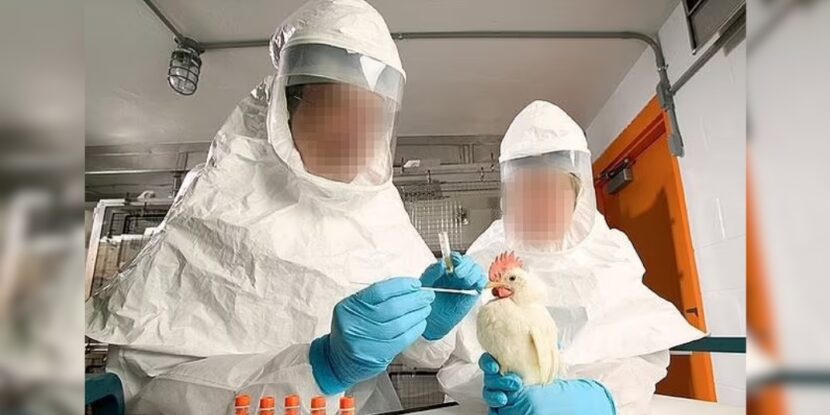
Avian influenza, also known as bird flu, has been detected in chickens in Texas and Michigan, amidst mounting fears over possible supply chain disruptions.

Cal-Maine Foods, the nation’s largest producer of fresh eggs, has halted production in one Texas facility after the virus was found. It has ordered the culling of 1.6 million hens and 337,000 chicks, which equates to 3.6 percent of its total flock.

This has implications for the price of poultry and eggs; a similar occurrence in 2022-23 led to a 70 percent price increase for eggs. Bird flu could also impact the production of the flu vaccine, which relies on 140 million eggs annually.

U.S. Centers for Disease Control and Prevention (CDC) has advised healthcare professionals be vigilant, especially with patients regularly in contact with birds and animals. High hygiene standards, including protective gear, are recommended for agricultural workers, hunters, and backyard farmers.

INFECTED DAIRY CATTLE.

Currently, health officials claim the risk of human-to-human transmission is still small, but the Texas Department of State Health Services previously confirmed a local man contracted bird flu after the virus had already jumped to dairy cattle.

Milk from infected cattle tested positive for bird flu in Texas and Kansas in recent weeks, potentially endangering dairy supplies. Cows in North Carolina also recently tested positive. A total of 21 herds across seven states have now been infected. 

In March, bird flu was detected in baby goats in Minnesota. Gregory Gray, an epidemiologist at the University of Texas, has also reported instances of the virus spreading to carnivores, including bears and wolves.

“It’s disturbing… [I]f the virus continues to change, it could move into other species, including humans,” he warned.

John Fulton, a Big Pharma vaccine consultant, has warned bird flu is “100 times worse than COVID — or it could be if it mutates and maintains its high case fatality rate.”

show less
Avian influenza, also known as bird flu, has been detected in chickens in Texas and Michigan, amidst mounting fears over possible supply chain disruptions. show more

Egg Prices Expected to Soar, Again.

The price of eggs is expected to soar yet again, with an avian flu outbreak fuelling the latest round of inflation.

“Seemingly every day there is another announced infection site, which not only physically reduces the actual number of egg layers, but also casts a negative psychology over the entire egg market,” Kevin Bergquist, Wells Fargo Agri-Food Institute sector manager, said. “The reaction to supply stress is price increase.”

The best part of 100 million birds were culled across 2022 and 2023 in an attempt to curtail the flu. October 2023 saw 1.4 million killed, while November saw a whopping 8 million. There were over 4 million slaughtered in the early part of December alone.

The height of the outbreak comes at a time when demand for eggs increases, around Christmas.

“Christmas is one of the times where egg consumption goes up for holiday meals, the eggnog and all that kind of stuff,” said Yuko Sato, a poultry veterinarian at Iowa State. “So naturally, every year, the egg prices go up during Christmastime or holiday season.”

show less
The price of eggs is expected to soar yet again, with an avian flu outbreak fuelling the latest round of inflation. show more