





Monday, February 23, 2026

Argentina’s Milei Stabs Trump in the Back on Chinese EVs.

PULSE POINTS

WHAT HAPPENED: Argentina’s President Javier Milei, a supposed ally of the Trump administration, appears to have done an about-face, cozying up to the Chinese Communist Party (CCP) and opening his country to a huge number of electric vehicles imported from China.

👤WHO WAS INVOLVED: Javier Milei, Chinese electric vehicle companies like BYD, U.S. President Donald J. Trump, U.S. Treasury Secretary Scott Bessent, U.S. automakers, and the Chinese Communist Party (CCP).

📍WHEN & WHERE: A shipment of 5,800 BYD-made electric and hybrid vehicles arrived in Argentina earlier this week.

🎯IMPACT: The opening of Argentina to a flood of Chinese goods is a stunning rebuke to the U.S. after President Donald J. Trump signed a $20 billion currency swap deal that stabilized the South American nation’s currency last October, ahead of critical elections for Milei’s government.

IN FULL

Argentina’s President Javier Milei, a supposed ally of the Trump administration, appears to have done an about-face, cozying up to the Chinese Communist Party (CCP) and opening his country to a large number of electric vehicles imported from China. Under Milei, Argentina has reversed a number of import restrictions, especially on cheap Chinese-made automobiles, with a Chinese cargo ship delivering a stunning 5,800 BYD-made electric and hybrid vehicles earlier this week.

The opening of Argentina to a flood of Chinese goods is a stunning rebuke of the U.S., where President Donald J. Trump signed a $20 billion currency swap deal that stabilized the South American nation’s currency last October, ahead of critical elections for Milei’s government. Notably, the Argentine currency crisis was primarily the result of a panic sparked by corruption allegations within Mielei’s own La Libertad Avanza party, which prompted investors to flee the peso.

In response to the crisis, the U.S. Treasury Department took emergency measures to help stabilize  Argentina’s economy and currency, as the country under Milei has been considered a staunch regional ally. Despite criticism from Democrats and some conservatives who viewed the aid as a bailout for a foreign nation, Trump‘s Treasury Secretary Scott Bessent stated at the time, “Argentina now has the opportunity to embrace economic freedom, and our stabilization agreement is a bridge to a better economic future for Argentina, not a bailout.”

Earlier this year, the Treasury Department announced that Argentina had repaid the funds it drew from the $20 billion currency swap. Still, President Milei effectively created a carve-out for Chinese electric vehicles, which are so cheap that they fall below Argentina’s $16,000 tariff threshold, unlike U.S. autos.

While Argentina’s under-maintained electric grid—for the moment—prevents total Chinese domination of its electric vehicle market, if improvements are made—possibly with Chinese financing—China is poised to run the table.

Join Pulse+ to comment below, and receive exclusive e-mail analyses.

show less
show more

Trump Admin Signs $20 Billion Deal to Stabilize Argentina.

PULSE POINTS

WHAT HAPPENED: The U.S. signed an “economic stabilization agreement” with Argentina’s central bank, involving a $20 billion currency swap.

👤WHO WAS INVOLVED: Treasury Secretary Scott Bessent, President Donald J. Trump, and Argentina’s President Javier Milei.

📍WHEN & WHERE: Announced Tuesday, October 21, 2025, in the United States and Argentina.

💬KEY QUOTE: “We do not want another failed state in Latin America, and a strong, stable Argentina as a good neighbor is explicitly in the strategic interest of the United States.” – Secretary Bessent

🎯IMPACT: The agreement aims to stabilize Argentina’s currency and economy, heading off a potential broader regional economic crisis.

IN FULL

On Tuesday, U.S. Treasury Secretary Scott Bessent confirmed that the Trump administration has entered into an “economic stabilization agreement” with Argentina’s central bank. The agreement is a key element of President Donald J. Trump’s effort to aid Argentina with a multibillion-dollar rescue plan.

The agreement, announced by Argentina’s central bank on Monday, involves a $20 billion currency swap designed to support the Argentine peso, as the nation approaches important midterm elections. These elections are crucial for the political future of President Javier Milei, a key South American ally of the Trump administration.

Earlier this month, President Trump and Secretary Bessent pledged substantial support to stabilize Argentina’s economy and currency. The Treasury Department has already taken steps to purchase Argentine pesos directly as part of this effort.

Despite criticism from Democrats and some conservatives who view the aid as a bailout for a foreign nation, Bessent stated, “Argentina now has the opportunity to embrace economic freedom, and our stabilization agreement is a bridge to a better economic future for Argentina, not a bailout.” He emphasized the strategic importance of a stable Argentina for the United States.

“We do not want another failed state in Latin America, and a strong, stable Argentina as a good neighbor is explicitly in the strategic interest of the United States,” Bessent added. Without American fiscal support, the Argentine currency crisis has the potential to spread across Latin America, throwing the region into economic turmoil—a strategic concern for the Trump White House.

In addition to the currency swap, Bessent is working on securing an additional $20 billion in financing from private lenders or sovereign wealth funds—though this financing plan has not yet been finalized.

Join Pulse+ to comment below, and receive exclusive e-mail analyses.
show less
show more

What’s the Deal With Argentina? And Why Are We Bailing Them Out?

PULSE POINTS

WHAT HAPPENED: Argentine President Javier Milei’s government teeters on the brink as his country faces a significant currency crisis, kicked off by several major corruption scandals and a flight of investors from the Argentine peso—despite a $20 billion U.S. rescue package.

👤WHO WAS INVOLVED: Javier Milei, U.S. President Donald J. Trump, and U.S. Treasury Secretary Scott Bessent.

📍WHEN & WHERE: The currency crisis has ravaged Argentina for over a month, with new meaures announced by Bessent on Thursday, October 9, 2025.

💬KEY QUOTE: “The [U.S. Treasury] has concluded 4 days of intensive meetings with [Argentina’s Economic Minister Luis Caputo] and his team in DC. We discussed Argentina’s strong economic fundamentals, including structural changes already underway that will generate significant dollar-denominated exports and foreign exchange reserves.” — Secretary Bessent.

🎯IMPACT: A possible Argentine peso devaluation would likely set off a new inflation crisis, threatening to derail Milei’s government. Critical midterm elections will take place on October 26, 2025, with leftist parties working to retake control from Milei’s party, La Libertad Avanza.

IN FULL

Argentine President Javier Milei‘s government teeters on the brink as his country faces a significant currency crisis, kicked off by several major corruption scandals and a flight of investors from the Argentine peso. On Wednesday, short-term interest rates in the South American country surged to over 80 percent, worsening the peso crisis.

In late September, U.S. President Donald J. Trump authorized a $20 billion bailout for Argentina, overseen by U.S. Treasury Secretary Scott Bessent. However, with the peso crisis deepening, Bessent revealed that Treasury Department staff are intervening far more in the Argentine economy than previously thought.

“The [U.S. Treasury] has concluded 4 days of intensive meetings with [Argentina’s Economic Minister Luis Caputo] and his team in DC. We discussed Argentina’s strong economic fundamentals, including structural changes already underway that will generate significant dollar-denominated exports and foreign exchange reserves,” Bessent wrote in a post on X (formerly Twitter). He continued: “Argentina faces a moment of acute illiquidity. The international community—including [The International Monetary Fund (IMF)]—is unified behind Argentina and its prudent fiscal strategy, but only the United States can act swiftly. And act we will.”

“Additionally, we have finalized a $20 billion currency swap framework with Argentina’s central bank. The U.S. Treasury is prepared, immediately, to take whatever exceptional measures are warranted to provide stability to markets,” Bessent added, referring to the $20 billion rescue package first revealed in September.

However, thus far, President Milei’s efforts to bring the crisis under control appear to be having little effect in heading off a potential devaluation. In recent weeks, Milei has reinstated some foreign exchange controls and authorized the selling of dollars in the futures market. However, many financial analysts now believe the peso’s current exchange rate is unsustainable.

A peso devaluation would likely set off a new inflation crisis, threatening to derail Milei’s government. Critical midterm elections will take place on October 26, 2025, with leftist parties working to retake control from Milei’s party, La Libertad Avanza.

While Milei has largely been successful in reining in the out-of-control inflation experienced under the country’s previous socialist governments, dropping from a peak of around 300 percent to just 33 percent in October 2025, the austerity measures enacted have kept the poverty rate elevated. In the first half of 2023, Argentina’s poverty rate sat at around 40 percent. That jumped to nearly 53 percent in the first half of 2024 before falling back to around 40 percent in the second half of the year.

The currency crisis and a renewed inflation crisis could send poverty soaring once again.

Image by Gage Skidmore.

Join Pulse+ to comment below, and receive exclusive e-mail analyses.

show less
show more

How a Luxury Hotel Lined Nancy & Paul Pelosi’s Pockets with COVID Cash.

A Napa Valley, California luxury hotel that has for decades failed to turn much of a profit turned into a major windfall generator for former House Speaker Nancy Pelosi (D-CA) and her husband, Paul, thanks to COVID-19 pandemic emergency relief programs. The Auberge du Soleil hotel, which the Pelosis own a significant stake in, received a $9 million U.S. taxpayer-funded bailout during the pandemic, according to RealClearInvestigations.

The COVID relief money disbursed to Auberge du Soleil corresponds with a 2021 ethics report in which former Speaker Pelosi reported that her family’s income generated from their stake in the hotel jumped from $1 million to $5 million. In most years, Auberge du Soleil has reported losses ranging in the tens of thousands to hundreds of thousands of dollars.

In addition to the Auberge du Soleil, several other hotels and restaurants owned by Paul and Nancy Pelosi were recipients of taxpayer dollars through various pandemic relief programs, resulting in a $28 million windfall overall for the family. While other lawmakers also benefited from pandemic aid granted to their private businesses, the scale of the Pelosi family’s profit stands alone. The fact that the former Democrat House Speaker was one of the key negotiators in securing the passage of around $5.5 trillion in pandemic aid raises serious ethical questions regarding the level of profits she and her husband were able to draw from it.

The National Pulse previously reported that Nancy Pelosi’s net worth has hit a new record high, reaching upwards of $272 million—an exponential increase from her reported wealth just a decade ago. The 84-year-old Democrat and her husband have been prolific stock traders throughout 2024, with a reported trade volume of $137.48 million on just 171 trades.

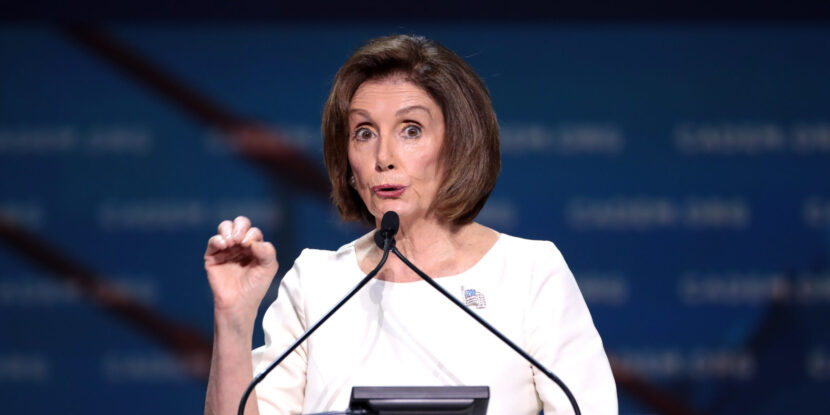
Image by Gage Skidmore.

show less
A Napa Valley, California luxury hotel that has for decades failed to turn much of a profit turned into a major windfall generator for former House Speaker Nancy Pelosi (D-CA) and her husband, Paul, thanks to COVID-19 pandemic emergency relief programs. The Auberge du Soleil hotel, which the Pelosis own a significant stake in, received a $9 million U.S. taxpayer-funded bailout during the pandemic, according to RealClearInvestigations. show more