



Monday, February 23, 2026

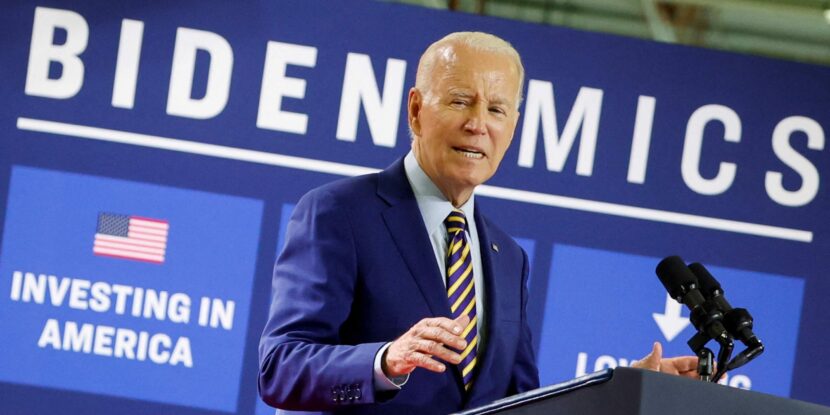
BIDENOMICS: Credit Scores Have Fallen For the First Time In A Decade.

FICO reports announced that the average credit score in the United States dipped for the first time in a decade, indicating Americans may be struggling with financial distress as they endeavor to make timely credit payments and bolster their savings. Ethan Dornhelm, FICO’s VP of scores and predictive analytics, identified a lack of savings buffer in households as one likely culprit for the lower credit scores. As the COVID-19 pandemic subsided and consumer spending increased, data showed a drawn-down of savings among American households.

The national average FICO Score, the commonly used yardstick for creditworthiness, logged at 718 from April to July 2023. By October, the average slipped to 717, indicating the possible impact of inflation and high interest rates on consumers’ finances. FICO says their data shows missing payments and climbing consumer debt levels are having a considerable impact on decreasing credit scores.

Dornhelm noted that pandemic-era financial relief programs such as stimulus checks and other government aid, which significantly bolstered consumers’ credit managing ability, are a thing of the past, leaving Americans to manage their credit responsibilities independently.

Additionally, a separate study by Assurance IQ revealed that many Americans, including those earning $75,000 or more annually, had to strategize new ways to cope with expenses last year, with borrowing and resorting to credit cards being the most common financing alternative. Predictably, reliance on lines of credit and payment plans was tougher on households earning less than $75,000 annually, with nearly half acknowledging they had to borrow funding to meet their 2023 expenses.

show less

FICO reports announced that the average credit score in the United States dipped for the first time in a decade, indicating Americans may be struggling with financial distress as they endeavor to make timely credit payments and bolster their savings. Ethan Dornhelm, FICO’s VP of scores and predictive analytics, identified a lack of savings buffer in households as one likely culprit for the lower credit scores. As the COVID-19 pandemic subsided and consumer spending increased, data showed a drawn-down of savings among American households. show more
Bidenomics

Producer Price Index Rises Again Sparking Renewed Inflation Fears.

The Producer Price Index (PPI) rose again in February, jumping 1.6 percent compared to the same time last year. January’s jump in the PPI was also revised up from 0.9 percent to 1.0 percent. Core PPI — annualized — rose 2 percent over the same period, on par with the 2 percent increase seen in January.

Last month, government data released by the Bureau of Labor Statistics indicated an acceleration in inflation. The Personal Consumption Expenditures (PCE) Index registered a 0.3 percent jump from the prior month. The increase in the PCE Index was 2.4 percent when annualized. The Federal Reserve closely monitors both the PCE Index and PPI as more accurate measures of inflation.

Earlier this week, President Joe Biden’s Treasury Secretary, Janet Yellen, said she regretted comments she made suggesting inflation was just transitory. “I regret saying it was transitory. It has come down. But I think transitory means a few weeks or months to most people,” the Treasury Secretary said.

The return of inflation fears is likely to push off further any interest rate cuts by the Federal Reserve. Jerome Powell, the central bank’s chairman, has already indicated that a rate cut is unlikely before the 2024 presidential election.

show less
The Producer Price Index (PPI) rose again in February, jumping 1.6 percent compared to the same time last year. January’s jump in the PPI was also revised up from 0.9 percent to 1.0 percent. Core PPI — annualized — rose 2 percent over the same period, on par with the 2 percent increase seen in January. show more

Biden’s Abandonment of Working Class, Embrace of Mass Immigration Is Sinking Him Among Black Male Voters.

Joe Biden’s embrace of far-left progressive policies is costing him black male voters.

Biden’s dwindling support amongst Black male voters is becoming a pressing issue for his re-election campaign. Unlike other demographics within the Democratic coalition, Black men comprise a critical voter base in crucial battleground states like  Georgia.

According to Roger House, professor emeritus of American Studies at Emerson College, Biden’s abandonment of working-class economics in favor of mass immigration and other progressive policy priorities is at the root of the collapse in support. House contends Biden’s policy agenda has been captured by the likes of Vice President Kamala Harris and the more progressive elements of the Congressional Black Caucus, who are out of touch with the needs of the working class.

“Biden’s reluctance to crusade for working-class men is mind-boggling,” House wrote in the Daily Beast, adding: “One suspects it stems from the priorities of a coterie of upper-class Black confidants, like Vice President Kamala Harris, who tend to keep the constituency at arm’s length.”

House says he believes Georgia’s upcoming presidential primary will be telling for Biden. He predicts the Democrat incumbent will experience a similar underperformance among Black men as the Stacey Abrams gubernatorial campaign did in 2022. Abrams, House contents, listened to consultants who convinced her that criminal justice reform was the vote-moving issue for Black men. Meanwhile, her opponent, Governor Brian Kemp, focused on “pocketbook” issues — drawing support from working-class white and Black men. Kemp easily won the election with 53.4 percent of the vote to Abrams’s 45.9 percent.

show less
Joe Biden’s embrace of far-left progressive policies is costing him black male voters. show more
bidenomics

JOBS: ⬆️ 275K Jobs In Feb, Jan Numbers REVISED DOWN ⬇️ By 124,000, Unemployment Up!🆙

The U.S. labor market numbers indicate 275,000 jobs were added to the U.S. economy in February. But, January’s official government job numbers were revised down from 353,000 to 229,000, a massive drop of 124,000.

Despite the “hot” jobs report Friday, the unemployment rate actually increased  — reaching a two-year high of 3.9 percent, up from 3.7 percent in the previous month. Unemployment among White Americans remained unchanged at 3.4 percent, while Black Americans saw unemployment increase from 5.3 to 5.6 percent. Asian and Hispanic Americans saw their rates remain flat at 3.4 and 5 percent, respectively.

The unemployment spike appears to be driven by an increase of workers exiting their jobs to seek new employment and an influx of individuals returning to the status of actively seeking work. An increasing number of immigrants in the U.S. seeking work also contributed to the spike. Healthcare and government sectors and construction saw the bulk of job growth in February. Meanwhile, credit intermediation, mainly commercial banking, has lost around 123,000 jobs since 2021.

However, the jobs scenario is not rosy for everyone. The company rating website, Glassdoor, reported falling employee confidence due to layoffs in tech and media. This concern is particularly acute in white-collar sectors such as human resources, whereas optimism remains relatively high in sectors requiring in-person work, such as healthcare, construction, and manufacturing.

show less
The U.S. labor market numbers indicate 275,000 jobs were added to the U.S. economy in February. But, January’s official government job numbers were revised down from 353,000 to 229,000, a massive drop of 124,000. show more

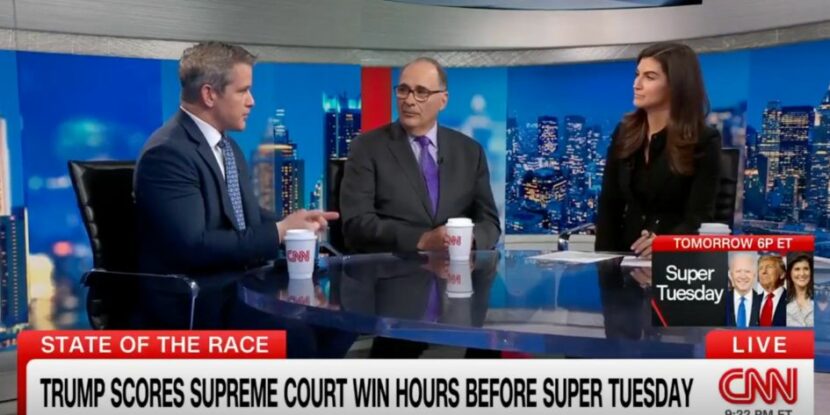
Obama Advisor Says Biden ‘Threats to Democracy’ Messaging is for The ‘Privileged’ Who Don’t Worry About Inflation.

Democratic messaging about alleged threats to ‘democracy’ resonates only with ‘privileged’ Americans who don’t have to worry about inflation, said David Axelrod, a former adviser to Barack Obama.

“I think that the people who are sitting around their kitchen table talking about this are people who aren’t concerned about what they paid for their groceries that are on the kitchen table,” Axelrod said during a discussion on CNN’s “The Source” Monday night.

“If you’re living with the concerns about inflation and sort of the day-to-day concerns of life, if you’re — if you don’t have the privilege not to, then you’re probably not talking about that,” he said.

The Biden campaign has leaned hard into its “democracy” messaging as it has become increasingly clear that Bidenomics has failed and that most Americans lack faith in Joe Biden’s ability to steer the economy successfully.

Last year, Axelrod called for Biden to drop out of the race due to former President Donald Trump’s strong poll results. In response, Biden allegedly called Axelrod a “prick.”

show less
Democratic messaging about alleged threats to ‘democracy’ resonates only with ‘privileged’ Americans who don’t have to worry about inflation, said David Axelrod, a former adviser to Barack Obama. show more

Voters Say Biden Will Make Inflation Worse, But He Says ‘I’m Really Proud of My Record.’

As the U.S. economy braces itself for the third year of an inflation surge that has substantially hiked the cost of living and sharply depressed real wages, most registered voters believe President Biden’s policies will cause prices to rise.

A poll by CBS News and YouGov released Sunday shows that 55 percent of registered voters believe Biden’s policies will trigger price increases. Only 17 percent of registered voters believe his policies will cause prices to decline. Twenty-seven percent believe his policies won’t impact prices either way, suggesting that 82 percent of voters believe Biden is ineffective at controlling inflation or is actively making it worse.

In comparison, 44 percent of registered voters believe former President Donald Trump’s policies would decrease inflation, and only a third believe his policies would worsen inflation. Sixty-five percent of registered voters said the economy was ‘good’ under Trump, while only 38 percent described Joe Biden’s economy as ‘good.’

Biden’s handling of the economy has been a persistent weakness for the incumbent president, as a 14,000-word profile published in The New Yorker on Monday highlights. Speaking in an interview for the piece, Biden remarked: “…look, if I didn’t think that the policies I put in place were best for the country, I don’t think I’d be doing it again. I’m running again because I think two things: No. 1, I’m really proud of my record, and I want to keep it going. I’m optimistic about the future. And, secondly, I look out there, and I say, ‘O.K., we’re just—most of what I’ve done is just kicking in now.’ ”

The profile also highlighted polling from January that reveals Americans’ lack of faith in Biden’s ability to steer the economy. “When pollsters asked who would do better in specific areas, the gaps were stark… on the economy, [Trump led Biden] fifty-five to thirty-three.”

show less
As the U.S. economy braces itself for the third year of an inflation surge that has substantially hiked the cost of living and sharply depressed real wages, most registered voters believe President Biden’s policies will cause prices to rise. show more

Insurance Spike Proves Inflation Still a Massive Problem.

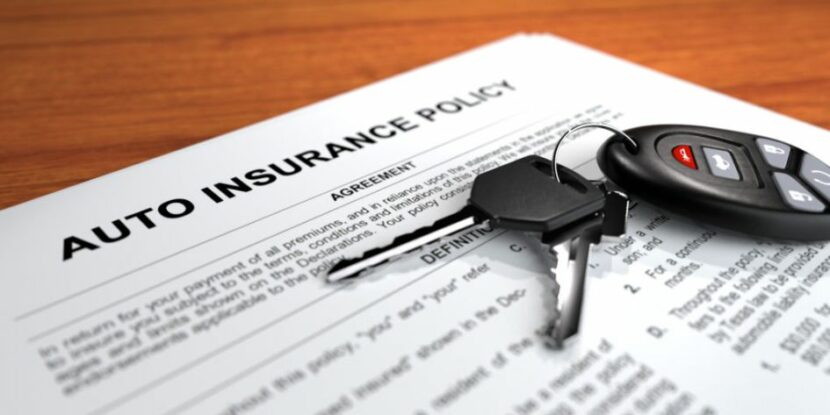
Auto insurance rates have seen the largest year-to-year spike since 1976. The cost of motor vehicle insurance increased 20.6 percent in the last year, and January alone saw a month-on-month rise of 1.4 percent. This escalating cost has played a marked role in tempering early-year optimism regarding inflation.

A recent private-sector estimate revealed that the average annual full-coverage car insurance premium for 2024 is $2,543. This contrasts sharply with 2023’s figure of $2,014 and the 2022 figure of $1,771.

This rise in insurance premium costs is rooted in multiple factors, but the main driver of increased costs is simple. As the costs of motor vehicles themselves have increased substantially, so too has the cost to ensure them. Between January 2020 and January 2024, the average cost of a new vehicle rose over 20 percent. The cost of used cars rose even more and the cost of vehicle repair increased 32 percent. Another major factor in rising auto insurance costs was the Federal Reserve’s decision to significantly increase in interest rates beginning in 2022.

The struggles Americans now face in owning and insuring their vehicles is just one factor in Americans’ negative view of the economy, despite the Biden administration’s claims to the contrary. The daily struggles faced by most Americans due to inflation and Bidenomics have even seen a sharp drop in support for the Biden regime among Gen Z and Millennials, once core constituents.

show less
Auto insurance rates have seen the largest year-to-year spike since 1976. The cost of motor vehicle insurance increased 20.6 percent in the last year, and January alone saw a month-on-month rise of 1.4 percent. This escalating cost has played a marked role in tempering early-year optimism regarding inflation. show more
bidenomics

DATA: Inflation Ticked Up Again in January.

A consumer price inflation indicator closely monitored by the Federal Reserve raised concerns yet again in January as persistently high prices create an increasing burden for Americans. The Labor Department reported a 0.3 percent monthly increase in the personal consumption expenditures (PCE) index, reflecting the rise in consumer prices. In terms of annual progression, it revealed a 2.4 percent increase in prices.

A spotlight on core prices, which exclude the typically fluctuating categories of food and energy, demonstrates an upward movement of 0.4 percent from last month, and 2.8 percent from the previous year.

The Federal Reserve, focused on the PCE headline figure, continues its efforts to maneuver consumer prices towards the desired 2 percent threshold. Fed Chair Jerome Powell had previously stated, however, that the core data should be considered more indicative of actual inflation rates.

show less
A consumer price inflation indicator closely monitored by the Federal Reserve raised concerns yet again in January as persistently high prices create an increasing burden for Americans. The Labor Department reported a 0.3 percent monthly increase in the personal consumption expenditures (PCE) index, reflecting the rise in consumer prices. In terms of annual progression, it revealed a 2.4 percent increase in prices. show more

America, Prepare for Recession.

Citi’s chief economist, Andrew Hollenhorst, has forecasted a recession in mid-2024 for the U.S. economy. In a recent interview with CNBC, Hollenhorst highlighted elements in recent economic data that suggest an impending downturn. Despite apparent low unemployment, stronger consumer spending, and GDP growth, Hollenhorst warns that there are indications of economic instability beneath the surface.

“There’s this very powerful and seductive narrative around a soft landing and we’re just not seeing it in the data,” said Hollenhorst. 

One key area of vulnerability is the labor market. Although January’s jobs report showed 353,000 ‘new’ jobs added to the economy, the number of hours worked actually declined, as did the number of full-time workers. Moreover, certain sectors, like the restaurant industry, did not see any job growth at all.

“That’s the key to the economy — what happens in the labor market,” Hollenhorst said. “If the unemployment rate stays low, people continue to spend, the economy holds up. But if that unemployment rate starts rising, which we think it will … that’s the sign that we’re going to have a more material decline in the US economy.”

Hollenhorts also pointed to rising credit card delinquencies as another indicator of impending recession.

“There may be some consumers out there with excess savings, but those consumers exposed to floating credit card debt with higher rates now, that have been pulling on those excess savings to continue to consume, continue to spend, now those delinquencies are picking up,” he said.

The state of the economy is set to be a key factor in the 2024 presidential election. Despite the Biden regime trying to take credit for GDP growth and rising jobs numbers, there is overwhelming evidence that Bidenomics has failed, and the majority of Americans have lost faith in Biden’s ability to manage the economy.

show less
Citi’s chief economist, Andrew Hollenhorst, has forecasted a recession in mid-2024 for the U.S. economy. In a recent interview with CNBC, Hollenhorst highlighted elements in recent economic data that suggest an impending downturn. Despite apparent low unemployment, stronger consumer spending, and GDP growth, Hollenhorst warns that there are indications of economic instability beneath the surface. show more

Biden’s ‘Job Recovery’ Driven Almost ENTIRELY By Migrant Labor.

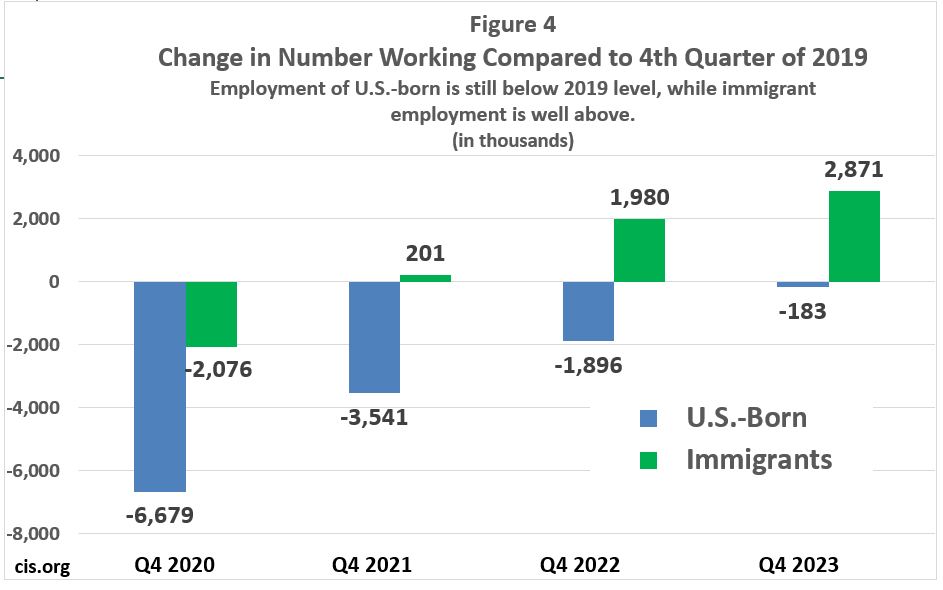
The post-COVID job “recovery” touted by Joe Biden has been driven almost entirely by the flow of foreign workers into the American labor force, according to a new study from the Center for Immigration Studies (CIS). The immigration policy group found that the figure of 2.7 million ‘additional’ individuals joining the workforce in the fourth quarter of 2023 came about because of an increase of 2.9 million legal or illegal immigrant jobs and a decline of 183,000 native-born American jobs.

Since the economic recovery began in late 2020, the number of U.S.-born workers entering the labor market has yet to return to pre-pandemic levels. Despite the sluggish job recovery among native workers, the U.S. experienced a hot job market — driven by a flood of cheap, foreign labor, the CIS study shows. Immigrant labor recovery has far outpaced native-born recovery when comparing fourth-quarter numbers at the end of each year since 2020.

Image

The National Pulse previously reported that the influx of legal and illegal immigrants has likely had a ‘cooling’ effect on inflation by depressing wages across the county. The downward wage pressure creates a degree of ‘demand destruction’ — and declining demand should correlate to falling prices.

The influx of immigrant labor has also likely fueled negative perceptions about the economy for groups of native-born Americans being displaced in the job market. Recently Van Jones, who served in the Obama government, slammed President Joe Biden, saying the jobs he’s made available to the Black community are “crappy.”

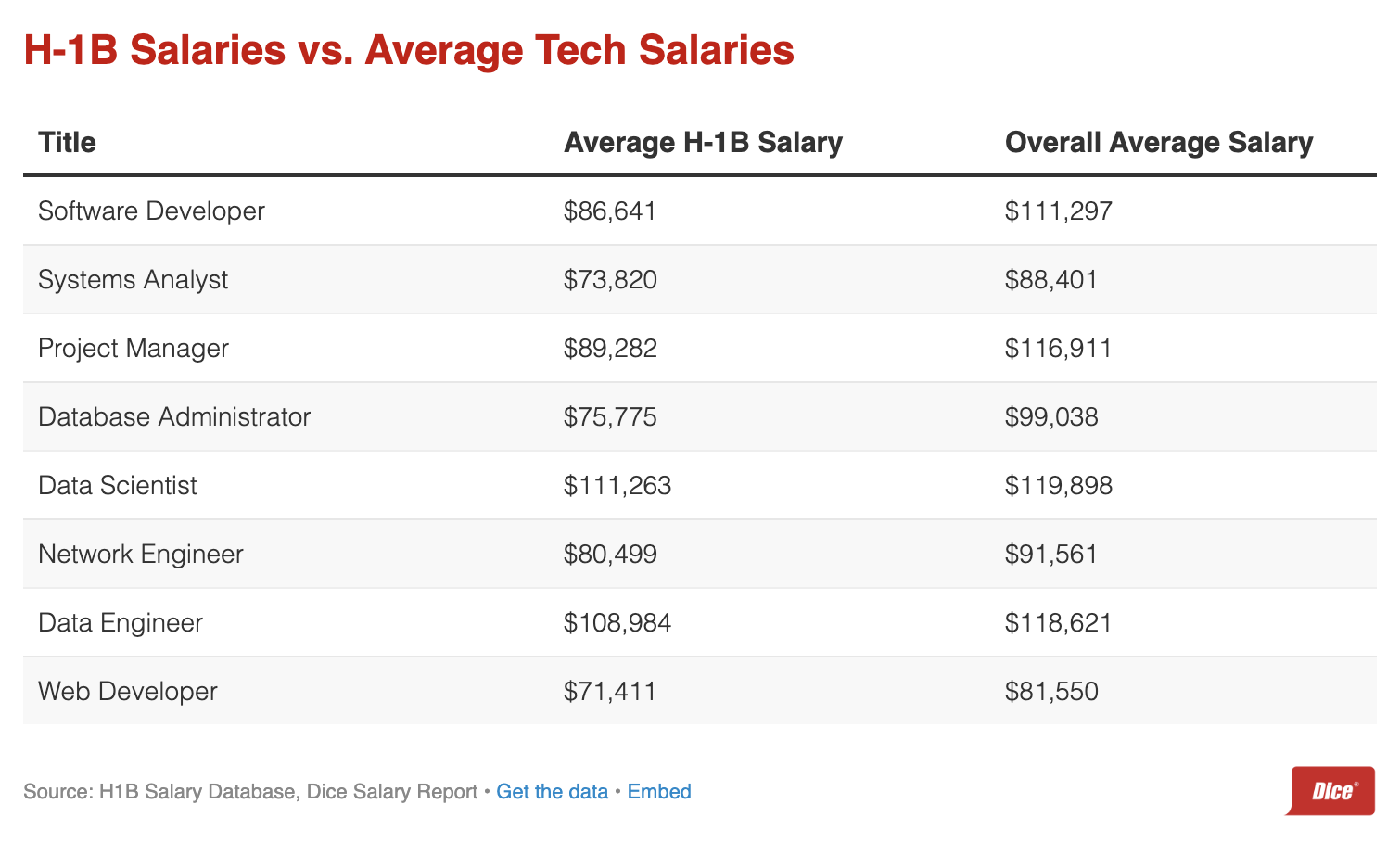
Competing with cheap, immigrant labor can be difficult for native-born Americans regardless of whether the job is blue-collar or white-collar. A look at salaries for H1B visa holders working in technology versus the industry average shows a significant difference in compensation — with the gap sometimes being ten thousand dollars or more.

show less
The post-COVID job "recovery" touted by Joe Biden has been driven almost entirely by the flow of foreign workers into the American labor force, according to a new study from the Center for Immigration Studies (CIS). The immigration policy group found that the figure of 2.7 million 'additional' individuals joining the workforce in the fourth quarter of 2023 came about because of an increase of 2.9 million legal or illegal immigrant jobs and a decline of 183,000 native-born American jobs. show more