Wednesday, April 29, 2026

Trump Admin Reclassifies Medical Marijuana as Less Dangerous Drug.

President Donald J. Trump has reclassified state-licensed medical marijuana, easing restrictions on research and allowing tax deductions for state-licensed medical marijuana companies.

PULSE POINTS
❓ WHAT HAPPENED: President Donald J. Trump’s Acting Attorney General, Todd Blanche, signed an order on Thursday reclassifying state-licensed medical marijuana from Schedule I to Schedule III, marking a historic shift in federal drug policy.
📰 DETAIL: The reclassification does not legalize marijuana federally but changes its regulation, allowing for tax deductions for state-licensed medical marijuana companies and easing research barriers. This move aligns with President Trump’s directive to expedite the reclassification process, which had been stalled under the former Biden government. Blanche credited the move to Trump’s “decisive leadership.”
🎯 IMPACT: The order legitimizes medical marijuana programs in 40 states, providing a tax break for operators and facilitating research. It also sets up a system for state-licensed producers to register with the Drug Enforcement Administration (DEA), potentially influencing future federal marijuana policies. In a social media post outlining the reform, Blanche said there would be “a new, expedited hearing with set deadlines, to fully reschedule marijuana” in the near future.
💬 KEY QUOTE: “This rescheduling action allows for research on the safety and efficacy of this substance, ultimately providing patients with better care and doctors with more reliable information.” – Todd Blanche
👀 FLASHBACK: The Marijuana Tax Act of 1937 marked the beginning of federal marijuana prohibition, which has persisted despite widespread state-level decriminalization and legalization for medical and recreational use. President Trump signed an executive order removing federal legal hurdles to medical marijuana and cannabidiol (CBD) research and tasking Blanche with expediting today’s rescheduling in December.

Join Pulse+ to comment below, and receive exclusive e-mail analyses.

show less

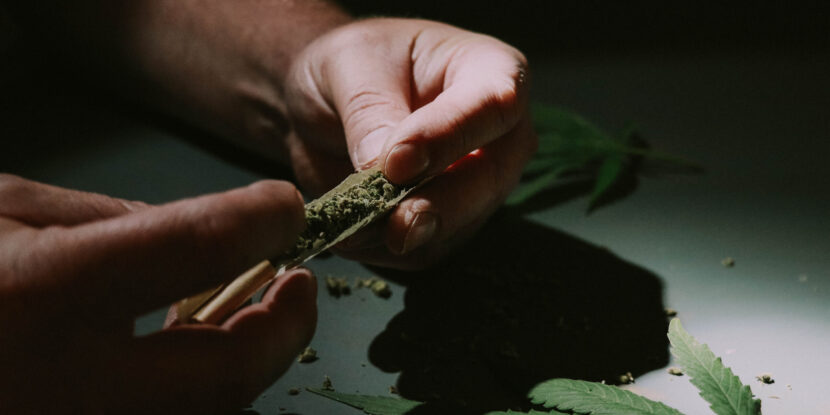
President Donald J. Trump has reclassified state-licensed medical marijuana, easing restrictions on research and allowing tax deductions for state-licensed medical marijuana companies.

show more

U.S. Army Raises Enlistment Age to 42 and Relaxes Rules on Recruiting Drug Convicts.

PULSE POINTS

WHAT HAPPENED: The U.S. Army increased its maximum enlistment age to 42 and changed its policy on recruiting people with marijuana convictions amid the Iran war.

👤WHO WAS INVOLVED: The U.S. Army, including the Regular Army, Army National Guard, and Army Reserves.

📍WHEN & WHERE: Announced March 2026, effective April 2026, across the United States.

💬KEY QUOTE: “The policy change is meant to better align the service with Defense Department standards.” – Army spokesman

🎯IMPACT: Aligns Army enlistment policies with other military branches and expands eligibility for potential recruits.

IN FULL

The U.S. Army has introduced a major update to its recruiting policies amid the Iran war, increasing the maximum enlistment age to 42. The change is scheduled to take effect on April 20, 2026. Alongside the age adjustment, the Army will now permit applicants who have a single conviction for marijuana possession to join without having to obtain a waiver.

Until now, the upper age limit for new recruits had stood at 35. The revised rules are spelled out in Army Regulation 601-210, which sets out the detailed policies and procedures governing enlistment into the Regular Army, the Army National Guard, and the Army Reserve. Officials say the broader policy revisions are designed to create more uniform enlistment standards throughout the Department of War.

This marks the second occasion in the past 20 years that the Army has raised its maximum enlistment age to 42; the service first did so in 2006 amid the demands of the Iraq and Afghanistan conflicts, before lowering it again to 35 in 2016.

The new regulation takes into account research by analysts who found that older recruits can sometimes perform more successfully than younger ones overall. In particular, people between the ages of 25 and 35 have been shown to be less likely to drop out of initial training and more inclined to reenlist once their first term is complete.

Notably, countries like Ukraine have already moved towards recruiting older men, with the average soldier in the Eastern European country approaching his mid-forties.

Join Pulse+ to comment below, and receive exclusive e-mail analyses.

show less
show more

Trump Plans to Reclassify Marijuana as Schedule III Drug Tomorrow: Reports.

PULSE POINTS

WHAT HAPPENED: President Donald J. Trump is expected to reclassify marijuana from a Schedule I drug to a Schedule III drug on Thursday.

👤WHO WAS INVOLVED: President Trump, federal health and law enforcement agencies, and lawmakers from both parties.

📍WHEN & WHERE: The reclassification is believed to be planned for Thursday, though the timing could shift.

💬KEY QUOTE: “A lot of people want to see it—the reclassification—because it leads to tremendous amounts of research that can’t be done unless you reclassify,” Trump said.

🎯IMPACT: The reclassification would ease federal restrictions and allow more research on marijuana’s medical uses, but it would not result in full legalization.

IN FULL

President Donald J. Trump is reportedly set to move marijuana from a Schedule I to a Schedule III classification on Thursday, per reports. This change would loosen federal controls and open doors for expanded medical research on the substance, without leading to outright federal legalization.

On the campaign trail in 2024, Trump remarked that he would “focus on research to unlock the medical uses of marijuana [as] a Schedule III drug.” The proposal has garnered support across party lines from legislators who highlight possible therapeutic advantages.

The Drug Enforcement Administration (DEA) describes Schedule I substances, including heroin, as having “no currently accepted medical use and a high potential for abuse.” In contrast, Schedule III drugs—like Tylenol with codeine, ketamine, and testosterone—are viewed as carrying “a moderate to low potential for physical and psychological dependence.”

Specialists point out that the existing Schedule I status has restricted cannabis studies. Dr. Kevin Hill of Beth Israel Deaconess Medical Center observed that shifting schedules creates potential for broader research efforts, stressing that states and cannabis-related businesses should invest more in those studies. J

However, Professor Jonathan Caulkins at Carnegie Mellon University has voiced doubt over the likelihood of major new medical discoveries, saying, “It is hard to imagine that there are many wonderful medical benefits of cannabis waiting to be unlocked by this change because U.S. federal scheduling status, of course, has no impact on the ability to do such medical research in any other country. If there were such benefits, they could have been discovered by any of the other countries with a modern pharmaceutical research base.”

Although CNN reports the shift is slated for Thursday, journalist Kit Maher has quoted a senior White House official noting that “timing could always shift.”

Image by Elsa Olofsson.

Join Pulse+ to comment below, and receive exclusive e-mail analyses.

show less

show more

Citadel Chief Ken Griffin Drops Millions Against Recreational Weed Ballot Measure.

Ken Griffin has pledged $12 million to stop a ballot measure that would legalize recreational marijuana in Florida. Griffin, the founder of Citadel, expressed his opposition to Amendment 3 in an op-ed for the Miami Herald, stating that the initiative could harm children and lead to increased crime.

The billionaire hedge-fund manager, who recently expanded his company’s presence in Florida, is directing his funds toward an effort to block Amendment 3. Griffin wrote that the amendment’s passage would create a monopoly for large marijuana dispensaries and permit pot use in both public and private areas throughout the state.

Griffin – an early backer of failed presidential candidate Ron DeSantis – also emphasized the adverse effects of marijuana legalization, including more dangerous roads, a higher risk of youth addiction, and elevated crime rates. He referred to similar measures in states like California, Colorado, and New York and the ill effects of legalization.

Citing a 2022 study from the Journal of Studies on Alcohol and Drugs, Griffin pointed out an increase in traffic crashes and fatalities following the legalization of recreational marijuana. However, research from the University of Colorado Boulder suggests no correlation between legal cannabis and an increase in substance-use disorders or other negative outcomes among adults.

“I have lived the nightmare of misguided politicians in other states whose policies are destroying jobs, fostering crime, ravaging schools, and damaging communities,” Griffin said in a statement explaining his opposition to the ballot measure. He added: My dream is for all Floridians to continue to have even more opportunities, and I am committed to supporting policies and principles that will further elevate Florida as the greatest place to live, work, and raise a family in America.”

show less
Ken Griffin has pledged $12 million to stop a ballot measure that would legalize recreational marijuana in Florida. Griffin, the founder of Citadel, expressed his opposition to Amendment 3 in an op-ed for the Miami Herald, stating that the initiative could harm children and lead to increased crime. show more

This Country is Reclassifying Weed, Undoing Decriminalization.

Thailand Prime Minister Srettha Thavisin made a surprising about-face on the nation’s approach to cannabis, declaring that the substance would be reclassified as a narcotic by the close of 2024. This decision comes two years after the unprecedented decriminalization of its recreational use in the region.

Srettha, a prominent figure in the real estate industry before his term as Prime Minister, has long held clear opposition to the recreational use of cannabis, asserting that it could inflame Thailand’s existing drug crisis further. His term in office, which began in 2023, has been characterized by a strong stance against recreational cannabis use, a position he reinforced this week via social by asking the health ministry to modify regulations.

“I want the health ministry to amend the rules and re-list cannabis as a narcotic,” Srettha posted on X (formerly Twitter) on Wednesday. He continued: “The ministry should quickly issue a rule to allow its usage for health and medical purposes only.”

The Prime Minister’s views contrast sharply with the nation’s previous cannabis policies, which led to the flourishing of numerous small businesses trading in cannabis products. Critics, however, contend the nation’s approach to lifting restrictions on recreational cannabis use was haphazard and handed too much authority to local magistrates to implement regulations.

Thailand marks the latest nation to reconsider loosening laws regarding drug use. An over-decade-long experiment with decriminalizing all drugs in Portugal appears to have failed, with public opinion increasingly turning against the policy. Even in the United States, where Oregon enacted reforms similar to Portugal, the Democrat governor recently signed emergency legislation into law decriminalizing drug possession after an epidemic of overdoses and violence.

Currently, the Biden government is moving to reduce federal restrictions on marijuana use.

show less
Thailand Prime Minister Srettha Thavisin made a surprising about-face on the nation's approach to cannabis, declaring that the substance would be reclassified as a narcotic by the close of 2024. This decision comes two years after the unprecedented decriminalization of its recreational use in the region. show more

Now Weed Has Fentanyl In It.

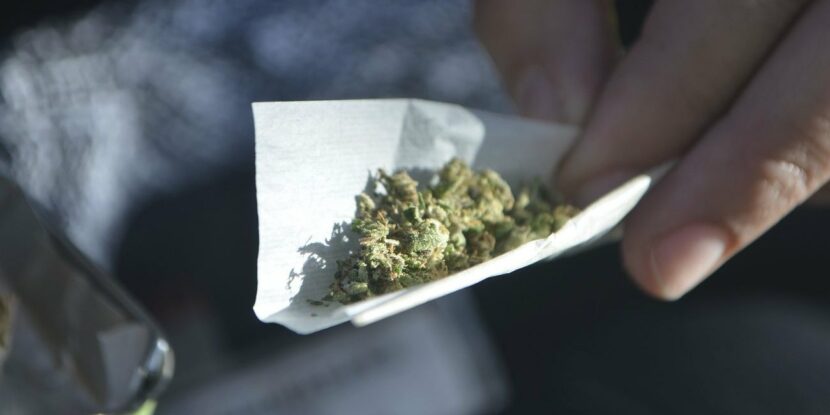
Fentanyl-laced marijuana is spreading rapidly across the United States, doctors have warned. This poses a particular threat to teenagers who may not be aware they are being exposed to the deadly synthetic opioid.

In a letter to the Primary Companion for CNS Disorders journal, Dr. Shailesh Jain of the Texas Tech University Health Science Center and three other physicians warned, “prescription drugs or fentanyl-laced marijuana” are the most common way for young people to be “initiated” into fentanyl use.

“Fentanyl-laced marijuana has been recovered from across the United States,” they note. The doctors cited reports of “school children intoxicated with fentanyl when using marijuana,” highlighting how even small amounts of the drug can easily kill minors.

“Combining fentanyl and marijuana can have severe drug-to-drug interactions and potentially life-threatening consequences,” the doctors warned, noting that taken together, the drugs can cause “extreme drowsiness, confusion, and impaired coordination,” elevating the risk of accidental injuries.

Drug Enforcement Administration (DEA) special agent Towanda Thorne-James recently warned fentanyl is now “in everything that we seize.”

The agency seized enough of the drug to kill every American citizen in 2023, bolstering Donald Trump’s assertion that the border crisis is “poisoning the blood” of the country.

show less
Fentanyl-laced marijuana is spreading rapidly across the United States, doctors have warned. This poses a particular threat to teenagers who may not be aware they are being exposed to the deadly synthetic opioid. show more

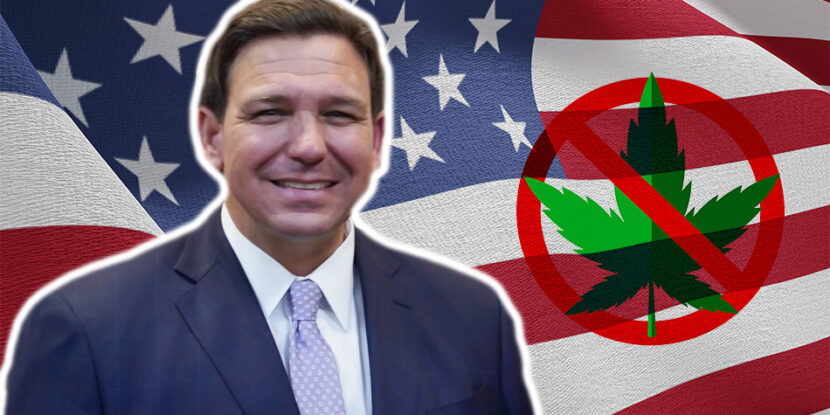
DeSantis Bans Doctor-Prescribed Cannabis, But Not Pharma Drugs, at Florida Recovery Centers.

Governor of Florida Ron DeSantis has signed a bill that prohibits possession or usage of medical marijuana — even when prescribed by a doctor — for residents of recovery residences in the state of Florida. Residents will be able to use prescribed pharmaceutical drugs.

The new law, which “explicitly singles out medical marijuana,” will require those looking to operate recovery residences under the state Department of Children and Families to affirm that they do not permit cannabis usage, including “marijuana that has been certified by a qualified physician for medical use.” Furthermore, the new law has amended the requirement to mandate the “prohibition on marijuana, regardless of a person’s status as a medical cannabis patient.”

DeSantis attacked cannabis use further by signing another bill that requires bars to raise the age limit to 21 for smokeless hemp products, including “snuff, chewing gum, and other smokeless products.”

The Governor of Florida has been forthright in his criticism of marijuana. Last month, he argued marijuana hurts the workforce, impedes productivity, and could be deadly if contaminated.

A March poll shows 70 percent of Floridians in favour of recreational marijuana use, including nearly 60 percent Republican support in the state.

DeSantis is yet to take such stringent action against Big Pharma, despite a number of presidential candidates, such as former President Donald J. Trump and Robert F. Kennedy Jr, demanding action to counter the political and societal impact of the industry. On the contrary, the Governor of Florida has been cosying up to Big Pharma lobbyists to kick-start his disappointing presidential campaign, including Moderna lobbyist Marc Lampkin.


show less
Governor of Florida Ron DeSantis has signed a bill that prohibits possession or usage of medical marijuana — even when prescribed by a doctor — for residents of recovery residences in the state of Florida. Residents will be able to use prescribed pharmaceutical drugs. show more