




Wednesday, April 1, 2026

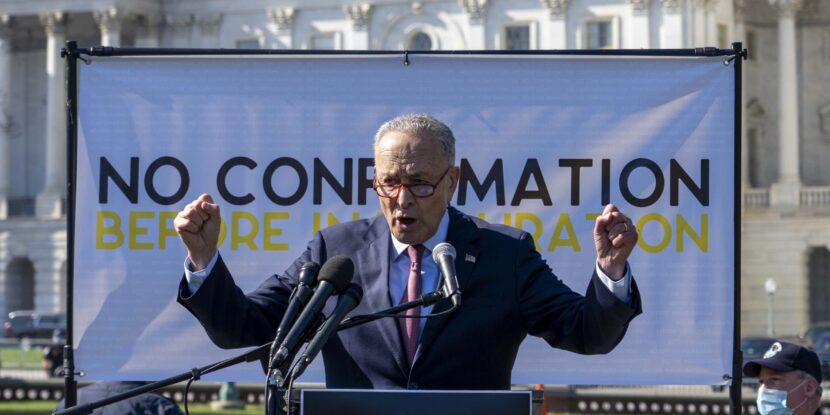
Schumer Vows to Block Voter ID Despite 71% of Dems Supporting It: ‘Jim Crow 2.0.’

PULSE POINTS

WHAT HAPPENED: Senate Minority Leader Chuck Schumer (D-NY) rejected the GOP-backed Safeguard American Voter Eligibility Act (SAVE) Act, comparing it to Jim Crow, despite overwhelming public support for voter ID laws.

👤WHO WAS INVOLVED: Chuck Schumer, Democratic voters, Republican lawmakers, and President Donald J. Trump.

📍WHEN & WHERE: Schumer made the comments on Thursday during an appearance on MS NOW.

💬KEY QUOTE: “It will not pass the Senate. You will not get a single Democratic vote in the Senate. We’re not reviving Jim Crow all over the country.” – Chuck Schumer

🎯IMPACT: The SAVE Act faces strong opposition from Senate Democrats, despite overwhelming voter support for voter ID.

IN FULL

Senate Minority Leader Chuck Schumer (D-NY) said February 5 he was surprised to learn that a huge majority of Democratic voters support nationwide voter ID requirements, but insisted that he will oppose Republican efforts to enact such laws regardless. During an interview, Schumer was presented with data showing that around 71 percent of Democrat voters back voter ID rules.

The Senate Minority Leader argued that the measures are designed to limit access to the ballot rather than protect elections. “It’s Jim Crow 2.0,” he claimed, adding: “What they’re trying to do here is the same thing that was done in the South for decades: to prevent people of color from voting,” he said. “If you can’t find a proper ID, you will be discriminated against. This is vicious and nasty.”

The comments came as Republicans push the Safeguard American Voter Eligibility Act, or SAVE Act, which would require proof of U.S. citizenship to vote in federal elections. Under the bill, acceptable documentation would include REAL-ID-compliant identification, a passport, or a birth certificate. The legislation would also bar states from registering voters without proper identification. Schumer vowed that Democrats will block the bill in the Senate, saying, “It will not pass the Senate. You will not get a single Democratic vote in the Senate. We’re not reviving Jim Crow all over the country.”

Despite opposition from Democratic leaders, voter ID laws continue to draw broad public support. Polling has consistently shown that Americans want photo identification requirements, along with other election measures such as paper ballots, early voting options, and making Election Day a national holiday. Support for voter ID crosses party lines among the general public, with massive majorities of Republicans, independents, and even Democrats backing the policy.

President Donald J. Trump has long promoted voter ID as a way to secure elections and made it a central issue in his 2024 campaign. Republicans in Congress and state legislatures are also pressing for proof-of-citizenship and voter ID laws, arguing they are necessary to protect election integrity and public confidence in elections.

Image via Senate Democrats.

Join Pulse+ to comment below, and receive exclusive e-mail analyses.

show less
show more

Trump Endorses Japan’s Anti-Mass Migration Prime Minister Ahead of Sunday Snap Election.

PULSE POINTS

WHAT HAPPENED: President Donald J. Trump issued a full endorsement of Japanese Prime Minister Sanae Takaichi ahead of Japan’s legislative election.

👤WHO WAS INVOLVED: Donald Trump, Sanae Takaichi, and Japanese voters.

📍WHEN & WHERE: The endorsement comes ahead of Japan’s February 8, 2026, legislative election. A meeting at the White House is scheduled for March 19, 2026.

💬KEY QUOTE: “SHE WILL NOT LET THE PEOPLE OF JAPAN DOWN! Good luck on your very important Sunday Vote.” – Donald Trump

🎯IMPACT: The endorsement highlights the strong U.S.-Japan relationship and emphasizes the shared priorities of Trump and Takaichi in national security, trade, and immigration.

IN FULL

President Donald J. Trump issued a high-profile endorsement Thursday for Japanese Prime Minister Sanae Takaichi, calling Sunday’s snap Japanese legislative election “very important” and praising Takaichi as someone who has “already proven to be a strong, powerful, and wise Leader.”

In a post on his Truth Social platform, Trump wrote that “The Great Country of Japan is having a very important Legislative Election on Sunday, February 8, 2026. The results of this Election are very important to the future of Japan.” He specifically highlighted Takaichi’s leadership and commitment to her country, saying she “truly loves her Country” and was impressive during his recent visit.

Trump also emphasized the close cooperation between the United States and Japan, noting that “the United States and Japan have worked closely together on making a very substantial Trade Deal, one that strongly benefits both Countries.”

Reiterating his support, the President wrote that “Prime Minister Takaichi is someone who deserves powerful recognition for the job she and her Coalition are doing and, therefore, as President of the United States of America, it is my Honor to give a Complete and Total Endorsement of her, and what her highly respected Coalition is representing.” He added a rallying message to Japanese voters: “SHE WILL NOT LET THE PEOPLE OF JAPAN DOWN! Good luck on your very important Sunday Vote.”

The endorsement comes as Japan prepares for a snap general election on February 8, 2026, to elect all 465 members of the lower house of its national legislature, the House of Representatives. The vote will shape the country’s political direction and could confirm the governing coalition’s mandate.

Takaichi, who became Prime Minister after winning the leadership of the ruling Liberal Democratic Party and forming a coalition last year, is widely expected to secure victory in the election. Her campaign emphasizes economic stability, national security, and strengthening Japan’s role on the international stage. She has also expressed a decidedly anti-mass migration stance, vowing to crack down on criminal migrants in the country.

Trump’s endorsement underscores Washington’s strategic interest in continuity in Tokyo’s leadership. Trump also noted he looks forward to hosting Prime Minister Takaichi at the White House on March 19.

Join Pulse+ to comment below, and receive exclusive e-mail analyses.
show less
show more

Liberal College Accused of Election Interference, Student Data Privacy Breaches.

PULSE POINTS

WHAT HAPPENED: The Department of Education has launched two investigations into a Tufts University program over potential violations of federal privacy laws related to student data collection and sharing with the possible intention to influence American elections.

👤WHO WAS INVOLVED: The Department of Education, Tufts University, the National Student Clearinghouse (NSC), and the National Study of Learning, Voting, and Engagement (NSLVE).

📍WHEN & WHERE: The investigations were announced on Thursday, with the program operating out of Tufts University.

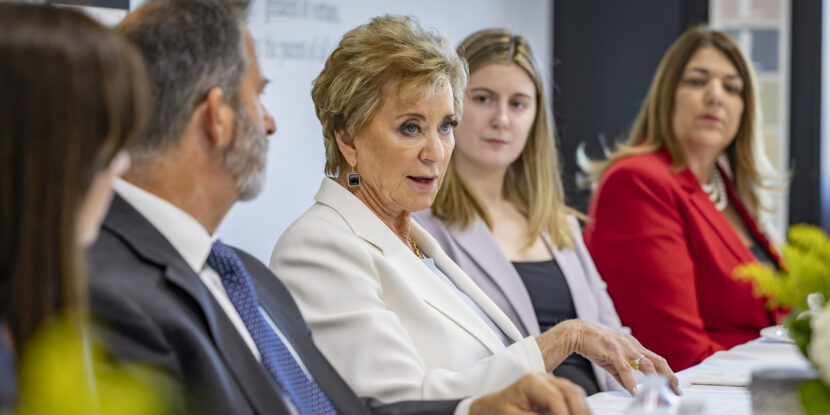
💬KEY QUOTE: “American colleges and universities should be focused on teaching, learning, and research—not influencing elections.” — Secretary of Education Linda McMahon.

🎯IMPACT: Both investigations center on potential violations of the Family Educational Rights and Privacy Act (FERPA), which grants students and their legal guardians the right to control the disclosure of personal data.

IN FULL

The U.S. Department of Education revealed on Thursday that it has launched two investigations into a program at Tufts University that may be illegally collecting and sharing student information to influence elections. The department’s Student Privacy Policy Office (SPPO) is examining whether the National Study of Learning, Voting, and Engagement (NSLVE) complies with federal privacy laws.

The NSLVE program is able to access student data from thousands of campuses through various partnerships. Federal officials say they are concerned that this data may be shared with third-party political organizations aiming to influence American elections. An investigation has also been launched into the National Student Clearinghouse (NSC), which collaborates with NSLVE and has access to data from numerous colleges.

Both investigations center on potential violations of the Family Educational Rights and Privacy Act (FERPA), which grants students and their legal guardians the right to control the disclosure of personal data. Notably, the partnership between NSLVE and NSC was pushed by the former Obama government as part of an effort to boost student voter participation in elections.

“American colleges and universities should be focused on teaching, learning, and research—not influencing elections,” Secretary of Education Linda McMahon stated. She accused the former Biden government of encouraging institutions to share student data recklessly, adding that the department is revoking all Biden-era guidance that promoted such practices.

NSLVE provides reports to over 1,000 campuses to analyze student voting and registration rates, while NSC collects personal information, enrollment details, and academic records from nearly all U.S. colleges. Consequently, the Department of Education has issued guidance reminding institutions of their privacy obligations under FERPA, warning that using NSLVE data could place them in violation of federal law.

Join Pulse+ to comment below, and receive exclusive e-mail analyses.
show less
show more

Top Trump Ally Orban Faces Electoral Disaster. Here’s Why…

PULSE POINTS

WHAT HAPPENED: Hungary has announced its parliamentary elections will take place on April 12, with Prime Minister Viktor Orbán facing a significant political challenge.

👤WHO WAS INVOLVED: Prime Minister Viktor Orbán, opposition leader Péter Magyar, President Tamás Sulyok, and the Hungarian electorate.

📍WHEN & WHERE: The election is set for April 12, with the official campaign period starting on February 21, in Hungary.

💬KEY QUOTE: “One of the cornerstones of democracy is the right to vote freely.” – Tamás Sulyok

🎯IMPACT: The election will determine whether Orbán retains power or if Péter Magyar and the opposition can capitalize on dissatisfaction with the government.

IN FULL

Hungary will hold its next parliamentary election on April 12, President Tamás Sulyok has announced, setting the stage for a closely watched contest that could alter the country’s political trajectory. The vote comes at a difficult moment for Prime Minister Viktor Orbán, who has been in power since 2010 and now faces his most serious challenge in years. Independent opinion polls indicate that Orbán’s national populist Fidesz party is trailing the opposition Tisza party, led by Péter Magyar, a former government insider placed at the head of an alliance of virtually every other party in the country, with the tacit backing of the European Union (EU) and other globalist entities.

Magyar has gained support by focusing on economic stagnation and high living costs—driven in large part by the inflationary impact on Hungary of the war in neighboring Ukraine, where Orbán has long argued for a peace settlement over open-ended support for Ukraine and a damaging Russo-Western sanctions war.

Orbán has pledged to introduce further anti-corruption reforms and to secure the release of billions of euros in EU funds that remain frozen due to alleged concerns over judicial independence and the rule of law in Hungary, which the EU has often used as an excuse to punish the country for resisting initiatives such as Europe-wide migrant quotas.

Orbán described Hungary under his stewardship as an “illiberal democracy,” prioritizing national sovereignty and popular conservative values over liberal globalist values. His Fidesz party has framed the upcoming election as a stark choice between “stability and chaos,” accusing the opposition of serving the European Union’s interests and seeking to undermine Hungarian sovereignty. The ruling party has also warned that the Tisza party would raise taxes and impose austerity measures if elected.

The official campaign period begins on February 21, when parties and candidates will be able to collect voter signatures and display campaign materials.

The election will take place against the backdrop of several conservative policy moves by Orbán’s government that the European Union is trying to block or overturn. For instance, earlier this year, Hungary adopted a constitutional amendment allowing authorities to protect children from LGBT ideology by effectively banning events like Pride parades, which children are likely to be exposed to.

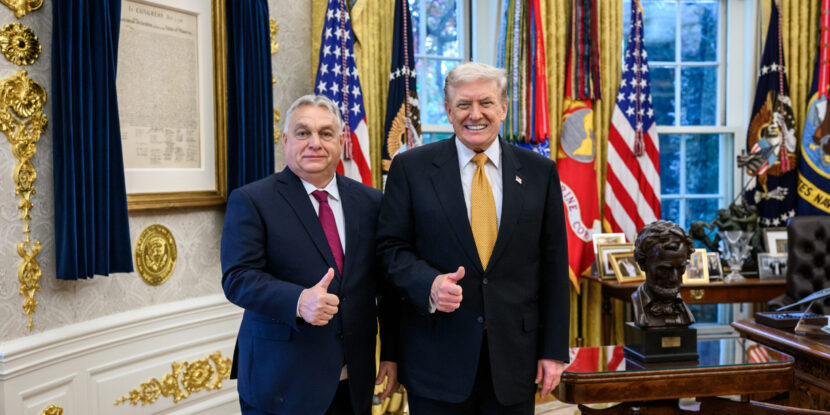
Orbán has also drawn international attention for his close relationship with President Donald J. Trump, being one of the few world leaders to publicly back the America First leader ahead of the 2024 election. In late 2025, Trump suggested that Hungary could be exempted from U.S. sanctions on Russian energy, citing the landlocked country’s heavy dependence on Russian oil and gas for historical and geographical reasons.

Join Pulse+ to comment below, and receive exclusive e-mail analyses.
show less
show more

Le Pen Appeals Ban on Running for Presidency.

PULSE POINTS

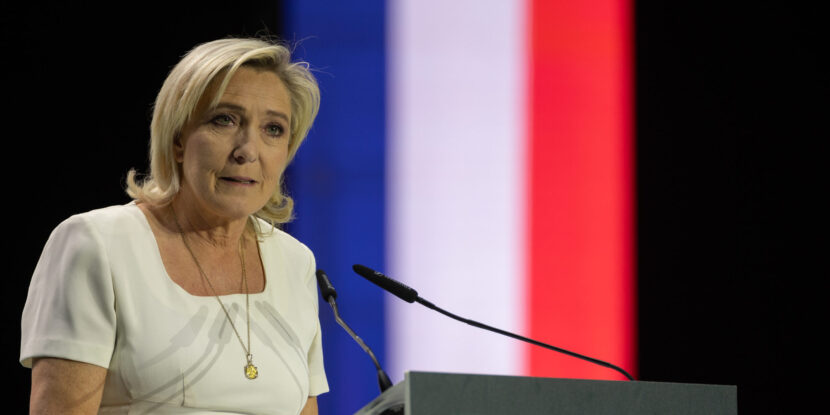
WHAT HAPPENED: French populist leader Marine Le Pen has begun a high-stakes appeal in Paris against a ruling banning her from running for public office for five years, due to a controversial conviction for embezzling European Union (EU) funds.

👤WHO WAS INVOLVED: Marine Le Pen, her National Rally (RN) party, and Court of Appeal judges.

📍WHEN & WHERE: The appeal began in Paris and will last until February 12, with a ruling expected by the summer.

💬KEY QUOTE: Barring Le Pen from the presidential election would be “deeply worrying for democracy,” said Jordan Bardella, president of the National Rally party.

🎯IMPACT: The outcome of the appeal will determine whether Le Pen can run in the 2027 French presidential election.

IN FULL

Marine Le Pen has launched an appeal in Paris against a conviction that bars her from holding public office for five years, a ruling that could end her hopes of running in France’s 2027 presidential election. The case stems from a 2022 judgment in which Le Pen, leader of the populist National Rally (RN), was found guilty of embezzling approximately $3.2 million in European Union (EU) funds. The court ruled that parliamentary assistants paid by the European Parliament had, in fact, worked for her party rather than on EU legislative duties.

Le Pen, 57, received a four-year prison sentence, with two years suspended, a fine of about $110,000, and an immediate ban from standing for public office. It was a highly controversial ruling, with the line between parliamentary and party work being ill-defined, and even anti-Le Pen journalists conceded that the prosecution appeared selective.

The Paris Court of Appeal will re-examine the case in full, reviewing both factual findings and legal arguments. Hearings are scheduled to run until February 12, with a decision expected by the summer. The timing is crucial, as candidates must register for the 2027 presidential race by March of that year. If the ban is upheld, Le Pen would be unable to stand.

Le Pen has long denied wrongdoing and argues that the case represents politically motivated “lawfare” aimed at removing her from public life. She has been a central figure in French politics for well over a decade, reshaping the party founded by her late father into the National Rally and leading it to achieve record electoral performances. She has run for president three times and was widely seen as a leading contender for 2027 before the conviction.

RN president Jordan Bardella warned that preventing Le Pen from competing would be “deeply worrying for democracy.” Bardella has ruled out running for president himself, instead positioning himself as a future candidate for prime minister. However, recent opinion polls suggest he may outperform Le Pen in some hypothetical presidential matchups, highlighting his growing prominence within the party.

International figures have also weighed in. President Donald J. Trump criticized the prosecution against Le Pen last year, calling it politically driven and urging authorities to “FREE MARINE LE PEN!”

Image by Vox España.

Join Pulse+ to comment below, and receive exclusive e-mail analyses.
show less
show more

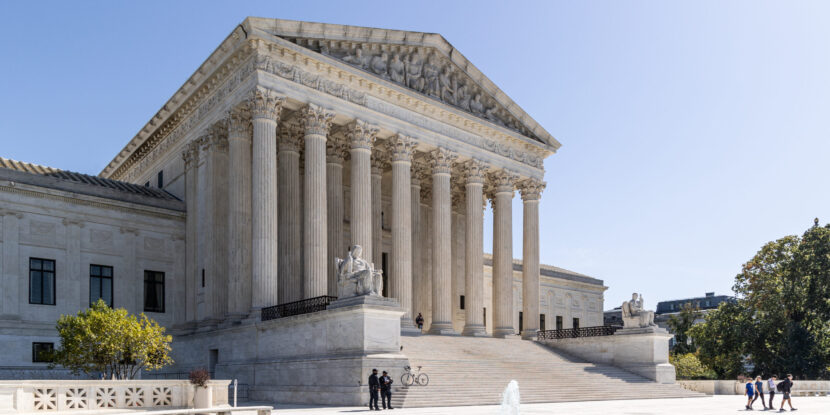
Supreme Court Considers Striking Down Campaign Finance Limits in Republican-Led Case.

PULSE POINTS

WHAT HAPPENED: The Supreme Court heard arguments on the legality of federal limits on coordinated political spending by parties in the case NRSC v. FEC.

👤WHO WAS INVOLVED: The National Republican Senatorial Committee (NRSC), National Republican Congressional Committee (NRCC), Vice President J.D. Vance, former Congressman Steve Chabot (R-OH), the Federal Election Commission (FEC), and court-appointed lawyer Roman Martinez.

📍WHEN & WHERE: Arguments took place on Tuesday at the Supreme Court in Washington, D.C.

💬KEY QUOTE: “The parties have been weakened overall, and this case… starts to restore the strength of parties,” said Justice Brett Kavanaugh.

🎯IMPACT: A decision could reshape campaign finance laws and is expected by mid-2026.

IN FULL

The Supreme Court on Tuesday examined the legality of federal caps on coordinated political spending by parties, a case that could further alter campaign finance restrictions. The dispute, NRSC v. FEC, challenges limits imposed by the Federal Election Campaign Act of 1971, which regulates financing for federal campaigns.

For the current election cycle, coordinated spending limits range from $61,800 to $123,000 for House races and up to $3.7 million for Senate races. The plaintiffs, including Vice President J.D. Vance, former Congressman Steve Chabot (R-OH), the National Republican Senatorial Committee (NRSC), and the National Republican Congressional Committee (NRCC), argue that these limits violate the First Amendment. A federal appeals court previously upheld the caps, relying on a 2001 Supreme Court ruling.

During oral arguments, Justices Clarence Thomas, Samuel Alito, and Brett Kavanaugh seemed inclined to strike down the limits. Kavanaugh expressed concerns about the weakening of political parties compared to outside groups like super PACs, stating, “The parties have been weakened overall, and this case… starts to restore the strength of parties.”

Chief Justice John Roberts and Justice Amy Coney Barrett questioned lawyers sparingly, while Justice Neil Gorsuch remained silent. Liberal justices, including Sonia Sotomayor, warned that removing the caps could lead to corruption. Sotomayor criticized the court’s past rulings on campaign finance, saying, “Every time we interfere with the congressional design, we make matters worse.”

Roman Martinez, the court-appointed lawyer defending the restrictions, argued that overturning the caps could unravel decades of campaign finance law. He cautioned, “You’re going to be deluged with petitions, the dominoes are going to fall, and you’re going to have to reconstruct campaign finance law from the ground up.” The court is expected to issue its decision by mid-2026, ahead of next year’s congressional midterm elections.

Image by Billy Wilson.

Join Pulse+ to comment below, and receive exclusive e-mail analyses.

show less
show more

Bomb Threats Disrupt Voting at Multiple Polling Stations.

PULSE POINTS

WHAT HAPPENED: Bomb threats were made at schools and polling locations across New Jersey, prompting closures and relocations.

👤WHO WAS INVOLVED: New Jersey voters, law enforcement, and state officials, including Attorney General Matthew Platkin (D).

📍WHEN & WHERE: Tuesday in New Jersey, across at least seven counties, including Bergen, Essex, Mercer, Middlesex, Monmouth, Ocean, and Passaic.

💬KEY QUOTE: “Voters should continue to have confidence that they can cast their ballot without fear of intimidation, and we will continue to work tirelessly to ensure a free, fair, and secure election.” – Matthew Platkin

🎯IMPACT: Temporary closures and relocations of polling stations, with law enforcement ensuring voter safety.

IN FULL

Several schools and polling places across New Jersey were disrupted by bomb threats during today’s gubernatorial elections, forcing temporary closures and relocations in at least seven counties, including Bergen, Essex, Mercer, Middlesex, Monmouth, Ocean, and Passaic. Other polling places across the state remain unaffected.

In Paterson, School 2 and School 10 were closed after threats were received. Hackensack High School was also targeted, prompting a K9 sweep before reopening around 7:30 AM. Ridgewood authorities reported a threat at Somerville Elementary School, leading to the closure of the district’s public schools for the day, though voting continued at the building. In Middlesex County, Avanel Middle School was shut down due to what officials described as an “active law enforcement investigation,” and voters were redirected to Woodbine Avenue Elementary School. Lake Como and Passaic also reported similar incidents, with Passaic Mayor Hector Lora confirming threats in his city.

Despite the disruptions, other polling locations across the state continued to operate as scheduled. Authorities quickly secured affected sites, allowing some to reopen once law enforcement determined they were safe. New Jersey Attorney General Matthew Platkin urged residents to remain confident in the state’s election process, saying, “Voters should continue to have confidence that they can cast their ballot without fear of intimidation, and we will continue to work tirelessly to ensure a free, fair, and secure election. Make no mistake: We will not tolerate any attempts to interfere with our elections, and we will swiftly hold accountable anyone who seeks to interfere with the safety or security of our electoral process.”

Concerns about election security have also surfaced in other states. Last year in Arizona, a Democrat election worker in Maricopa County was arrested after allegedly stealing a security fob and keys used for ballot tabulation machines. County officials said all equipment connected to the incident was immediately reprogrammed and retested to ensure the integrity of the elections.

Join Pulse+ to comment below, and receive exclusive e-mail analyses.
show less
show more

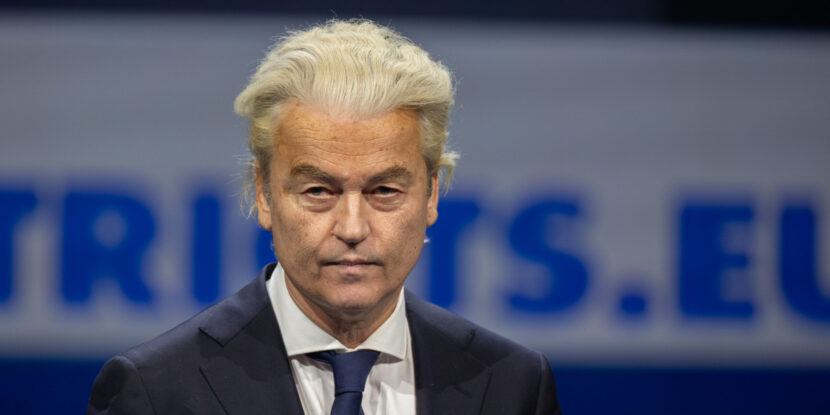
Dutch Elections Appear to Be a Tie Between Populists and Liberals.

PULSE POINTS

WHAT HAPPENED: Dutch populist Geert Wilders and his Party for Freedom (PVV) appear to be tied at 26 seats with the liberal-progressive D66 party following national elections in the Netherlands.

👤WHO WAS INVOLVED: Geert Wilders’s Party for Freedom and Rob Jetten’s D66 party.

📍WHEN & WHERE: The election took place on Wednesday in the Netherlands.

💬KEY QUOTE: “The difference between the two leading parties was just over 2,000 votes nationwide,” according to Dutch national news agency ANP.

🎯IMPACT: The unprecedented tie is expected to delay the formation of a new coalition government.

IN FULL

The Dutch populist Party for Freedom (PVV), led by Geert Wilders, and the liberal-progressive Democrats 66 (D66), led by Rob Jetten, both appear to have secured 26 seats in the Dutch legislature with 98 percent of votes counted, according to figures published by the Dutch national news agency ANP. The difference between the two parties was reported to be just over 2,000 votes nationwide, marking the first time in Dutch history that a national election has concluded in such a tie.

The results show Wilders’s PVV losing 11 seats in the 150-member House of Representatives, while D66 gained 11. This razor-thin outcome is expected to prolong and complicate coalition negotiations, a process already notorious for taking months in the Netherlands’ fragmented political landscape.

Wilders reacted to the results, saying, “At the top with 26 seats just like D66. Nobody beats the PVV. Absolutely nobody! The entire campaign attacked by other parties and ‘journalists’, but they won’t bring us down, we stand tall and proud at the top and no other party has more than our 26 seats!!”

The vote follows years of turbulence in Dutch politics. In 2023, the government of long-serving liberal Prime Minister Mark Rutte collapsed after his four-party coalition failed to agree on asylum policies, particularly family reunification rules. Migration has remained one of the country’s most divisive issues, fueling the rise of populists like Wilders, who has long advocated for tighter border controls and a tougher stance on immigration and Islamization.

Economic and social tensions surrounding immigration have also intensified. A major study found that mass migration cost the Netherlands nearly half a trillion dollars between 1995 and 2019. These findings have intensified public debate over the long-term sustainability of migration policies and the pressure they place on housing, healthcare, and social welfare systems.

As the vote count nears completion, the tie between PVV and D66 has thrown the process of government formation into uncertainty. Building a majority coalition will require negotiations among multiple parties with sharply differing priorities. Analysts warn that forming a stable government could take months, or potentially trigger another round of elections if talks fail.

Image by Vox España.

Join Pulse+ to comment below, and receive exclusive e-mail analyses.

show less
show more

Colonialism: London Politicians Neglect Duties to Run for Office in Bangladesh.

PULSE POINTS

WHAT HAPPENED: Local politicians in Britain’s capital are also running for office in their native Bangladesh, a move the British government says is unacceptable.

👤WHO WAS INVOLVED: London councilors Sabina Khan, Ohid Ahmed, and several others from London’s Tower Hamlets area.

📍WHEN & WHERE: Bangladesh’s national elections are expected in February of 2026.

💬KEY QUOTE: “I don’t believe it is fair. Most of the time she is in Bangladesh. She should resign. We elected her to represent us, not Bangladesh.” – London resident Mohammed Hussein.

🎯IMPACT: If allowed, the move could lead to foreign national governments having direct power in British politics, approaching a form of colonialism.

IN FULL

Criticism is growing over East London councillors in England pursuing parliamentary seats in Bangladesh while serving their British constituents. Several officials in the Borough of Tower Hamlets municipal government have confirmed plans to seek nominations for the South Asian nation’s February 2026 election, the first since protests overthrew the former Prime Minister, Sheikh Hasina, in August 2024.

Sabina Khan, a key figure on the council’s Overview and Scrutiny and Licensing Committees, is campaigning for the Bangladesh National Party (BNP). Elected for Prime Minister Sir Keir Starmer’s leftist Labour Party in Mile End in 2022, she defected to the council’s ruling Aspire party, which only runs Bangladeshi candidates, last year. Council records show she has attended fewer than half of the required meetings since February, with social media posts indicating time spent promoting her bid in Bangladesh.

Mile End resident Mohammed Hussein voiced outrage to the local press: “I don’t believe it is fair. Most of the time she is in Bangladesh. She should resign. We elected her to represent us, not Bangladesh.”

Neighbor Zakir Hussain added: “I am not happy with my councillor. There are a lot of not happy people. Five or six months we have not seen her. Any problems [we have] she cannot answer.”

Independent councillor Ohid Ahmed, representing Lansbury ward in Poplar, is also vying for BNP candidacy. His online activity highlights Bangladesh’s economy, women’s education, and regional infrastructure issues like northeastern potholes. At least one other Tower Hamlets councillor shares similar ambitions.

Bangladesh’s top UK diplomat, Abida Islam, recently noted that “so much of London—especially east London—feels like Bangladesh.” Local governance under Aspire Mayor Lutfur Rahman, a Bangladesh native once removed from office for electoral fraud, has sparked controversy, including allowing Palestinian banners post-October 2023 while removing English flags.

A British Ministry of Housing, Communities and Local Government spokesman condemned the actions of the councillors: “This behaviour is unacceptable. We are clear that councillors must be able to effectively serve the constituents who elected them. All councillors must uphold the Nolan principles including integrity, objectivity, accountability.” In 2025, ministers were dispatched to monitor the council after a 2024 report decried distrust among parties and dominance by Rahman’s inner circle.

A council spokesman noted: “UK law does not automatically disqualify a person from being a councillor in Tower Hamlets solely because they are running for or hold an elected office in another country. The other country however may have laws that restrict dual mandates or foreign office-holding.”

Image by Peter Trimming.

Join Pulse+ to comment below, and receive exclusive e-mail analyses.
show less
show more

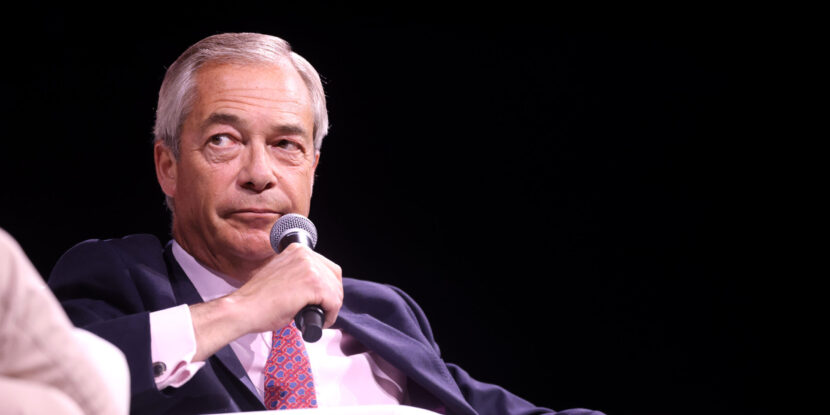
UK Govt Considers Delaying Local Elections AGAIN Amid Fears Farage Will Win.

PULSE POINTS

WHAT HAPPENED: The British government is considering delaying municipal elections for over five million voters amid concerns that victories for Nigel Farage’s Reform Party could disrupt the governing Labour Party’s plans for local government reform.

👤WHO WAS INVOLVED: Conservative (Tory) Party county council leaders, Reform, Labour, and Nigel Farage.

📍WHEN & WHERE: Seven English county councils in Norfolk, Suffolk, Hampshire, Surrey, Essex, East and West Sussex; elections currently scheduled for May 2026.

💬KEY QUOTE: “Now it looks like the Labour government will accede to these demands and once again democracy will be denied in all of these counties. That is a complete total outrage.” – Nigel Farage.

🎯IMPACT: Potential postponements could extend Conservative (Tory) council terms and hinder Reform’s electoral progress.

IN FULL

The British government is considering delaying local council elections for over five million residents following requests from seven Conservative (Tory) county council leaders for a second time. The move would delay elections to 2027.

The Conservative council leaders, representing Norfolk, Suffolk, Hampshire, Surrey, Essex, East Sussex, and West Sussex, expect Reform to win, and argue that holding elections now would be a waste of resources if incoming councils are soon replaced local government reforms proposed by the governing Labour Party.

Reform Party leader Nigel Farage has pushed back against the attmept to postpone the elections again on X, saying, “Now it looks like the Labour government will accede to these demands and once again democracy will be denied in all of these counties. That is a complete total outrage, it’ll mean that people elected back in 2021 will be serving six, seven, who knows how long their terms will be.”

Reform Deputy Leader Richard Tice also strongly condemned the potential delay. “Trying to cancel hundreds more council elections for a second year… Destroying democracy,” he said, accusing the government of being “terrified” of Reform’s rising support.

In early 2025, the Labour government also delayed council elections in nine areas until 2026, citing a supposed need to align them with planned structural changes. Critics called that decision undemocratic, and some peers in the House of Lords attempted to overturn the measure, though the effort was ultimately defeated.

In May 2025, Reform made major gains in local elections, winning hundreds of council seats and securing a parliamentary by-election victory.

Image by Gage Skidmore.

Join Pulse+ to comment below, and receive exclusive e-mail analyses.

show less
show more