




Tuesday, April 21, 2026

FDA Reverses Rejection of Moderna MRNA Flu Vax, Will Now Review for Approval.

PULSE POINTS

WHAT HAPPENED: The U.S. Food and Drug Administration (FDA) has reversed a prior decision from last week and will review Moderna’s flu vaccine for possible approval.

👤WHO WAS INVOLVED: Moderna, the FDA, Dr. Vinay Prasad, and FDA Commissioner Dr. Marty Makary.

📍WHEN & WHERE: February 18, 2026, United States.

🎯IMPACT: The potential approval could make the vaccine available for older adults in the upcoming flu season.

IN FULL

Moderna has announced that the U.S. Food and Drug Administration (FDA) has decided to review its flu vaccine, reversing its previous rejection from last week. The initial rejection cited flaws in Moderna’s research design, but subsequent discussions led the FDA to agree to reconsider. Regulators are now reviewing Moderna‘s vaccine in the United States, Europe, Canada, and Australia for possible commercial sale.

Notably, the company has divided its application by age, seeking traditional approval for individuals aged 50 to 64, and accelerated approval for those 65 and older. An additional study is planned for the older age group once the vaccine is on the market.

Meanwhile, the FDA has set an August deadline to decide on the vaccine’s approval. If approved, it could be available for older adults during next year’s flu season. The vaccine employs mRNA technology, which has been linked to elevated risks of myocarditis and pericarditis, particularly in young males. The National Pulse reported last December that the FDA was considering adding a “black box” warning to COVID-19 vaccines due to the observed risks.

Dr. Vinay Prasad, who initially rejected Moderna’s application, had concerns about the control vaccine used in the study of older adults. Despite this, the FDA is now set to review the application. Moderna’s development of an mRNA flu vaccine is backed by a $750 million investment from Blackstone.

The Wednesday reversal is especially surprising given that FDA Commissioner Dr. Marty Makary addressed the rejection during an event on Tuesday evening, stating, “I think if you’re going to talk about what happened last week, you should know the exact details of the trial results, which are public information.” The remarks—though vague—seemed to allude to Dr. Prasad’s concerns with the study.

Image by Zaldymlg.

Join Pulse+ to comment below, and receive exclusive e-mail analyses.

show less
show more

U.S. Faces Worst Flu Season in Decades as Virus Resists Vaccines.

PULSE POINTS

WHAT HAPPENED: Flu cases in the U.S. have surged to their highest level in 25 years, with new symptoms being reported.

👤WHO WAS INVOLVED: Public health experts and Americans across the country.

📍WHEN & WHERE: Nationwide in the U.S., during the ongoing 2026 flu season.

💬KEY QUOTE: “This is definitely a banner year. It’s the worst we’ve had in at least 20 years.” – Dr. Caitlin Rivers

🎯IMPACT: At least 11 million illnesses, 120,000 hospitalizations, and 5,000 deaths have been reported, with concerns over vaccine effectiveness and rising pediatric deaths.

IN FULL

The United States is currently experiencing its highest level of flu cases in 25 years, with new symptoms and severe impacts being observed across the nation. Experts have highlighted differences in this year’s strain, including prolonged fevers lasting up to seven days and increased gastrointestinal symptoms in adults, such as vomiting and diarrhea.

Dr. Mark Loafman of Cook County Health noted in a recent media interview that there is “More fever with the flu this year than people are accustomed to. And the fever can last up to seven days, so five to seven days. And that’s worrisome.”

Dr. Juanita Mora from the American Lung Association has also noted that some cases are not responding to common medications, such as Tylenol or Motrin.

The U.S. Centers for Disease Control and Prevention (CDC) has reported that 30 states are currently in the worst flu activity tier, with at least 11 million illnesses, 120,000 hospitalizations, and 5,000 deaths recorded so far. Pediatric deaths are also on the rise, with nine child flu deaths reported nationwide, and recent additional cases may not yet be included in the CDC‘s tally.

Dr. Caitlin Rivers, an epidemiologist with the Johns Hopkins Center for Health Security, described the situation as unprecedented: “This is definitely a banner year. It’s the worst we’ve had in at least 20 years. We’re seeing a majority of the country is experiencing very high levels of activity, and we’re still in the thick of it.” She added that the nation is at its highest level of respiratory illness since the 1997-1998 flu season.

Despite concerns that current flu vaccines may not fully inoculate against the new variant, health officials continue to urge Americans to get vaccinated, saying it remains the best way to prevent severe illness.

Image by Nicola Sap De Mitri.

Join Pulse+ to comment below, and receive exclusive e-mail analyses.
show less
show more

RFK Jr. Removes Mercury-Based Thimerosal from U.S. Flu Shots.

PULSE POINTS

WHAT HAPPENED: The mercury-based preservative thimerosal will be officially removed from all flu shots distributed in the U.S. by the Department of Health and Human Services (HHS).

👤WHO WAS INVOLVED: The Department of Health and Human Services and Health Secretary Robert F. Kennedy Jr.

📍WHEN & WHERE: United States, July 23, 2025

💬KEY QUOTE: “After more than two decades of delay, this action fulfills a long-overdue promise to protect our most vulnerable populations from unnecessary mercury exposure. Injecting any amount of mercury into children when safe, mercury-free alternatives exist defies common sense and public health responsibility. Today, we put safety first.” — Robert F. Kennedy Jr.

🎯IMPACT: Removing mercury-based additives from vaccines marks a major shift in U.S. vaccine policy and fulfills a bipartisan health promise made over 25 years ago.

IN FULL

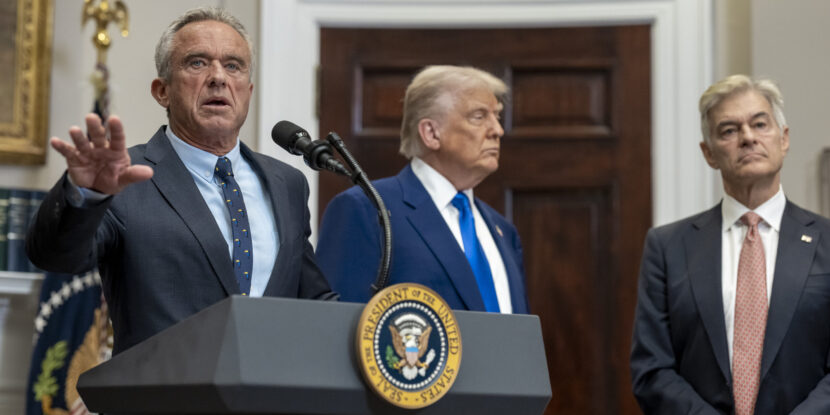
The Department of Health and Human Services (HHS) will officially remove the mercury-based preservative thimerosal from all flu shots distributed in the U.S. to build safer immunization practices. On Tuesday, Secretary Robert F. Kennedy Jr. signed the Centers for Disease Control and Prevention (CDC) Advisory Committee on Immunization Practices (ACIP) recommendations to remove mercury-based preservative thimerosal from all influenza vaccines distributed in the United States.

“After more than two decades of delay, this action fulfills a long-overdue promise to protect our most vulnerable populations from unnecessary mercury exposure,” Secretary Kennedy said. “Injecting any amount of mercury into children when safe, mercury-free alternatives exist defies common sense and public health responsibility. Today, we put safety first.”

Secretary Kennedy’s newly appointed ACIP members broke with long-standing inaction by voting to remove mercury entirely from all influenza vaccines. Kennedy recently fired all members of the panel and replaced them.

Vaccine manufacturers have confirmed that they can replace multi-dose vials containing mercury. The Vaccines for Children (VFC) program and adult vaccine supplies will remain uninterrupted.

Efforts to remove mercury from all childhood vaccines began in 1999, when it was agreed that the potential risks from mercury warranted its removal as soon as possible. Kennedy’s action fulfills the 1999 pledge.

Years before he stepped into his current role, Kennedy wrote a book pushing for thimerosal’s removal from vaccines, citing concerns about its connection to developmental issues.

“With the U.S. now removing mercury from all vaccines, we urge global health authorities to follow this prudent example for the protection of children worldwide,” Secretary Kennedy said.

Join Pulse+ to comment below, and receive exclusive e-mail analyses.

show less
show more