



Monday, June 22, 2026

Scientists Propose Using Genetically Modified Ticks to Make People Allergic to Meat.

An academic paper arguing it is morally justifiable to use genetically modified ticks to spread a potentially life-threatening meat allergy has sparked widespread backlash.

PULSE POINTS
❓ WHAT HAPPENED: Scientists proposed genetically engineering ticks to induce allergies to red meat in the population in an unearthed study.
📺 DETAIL: In a paper published by Western Michigan University last year, researchers Parker Crutchfield and Blake Hereth argued that genetically engineering ticks to spread alpha-gal syndrome (AGS) to cause allergies to red meat, in order to create a meat-free society, would be morally justified. The researchers argued that meat consumption is immoral, citing animal suffering and environmental harm. The paper has since been described as just a “thought experiment.” The authors of the paper have clarified that no experiments have been conducted, although they note that it may be possible to cultivate population-wide allergies to red meat in the future. Critics have called the proposal dangerous and arbitrary, criticizing the researchers’ argument that infecting people with a potentially life-threatening disease from tick bites would not violate their rights. AGS is a serious, potentially life-threatening allergy triggered by the consumption of red meat, such as pork, lamb, and beef, and products coming from mammals. AGS symptoms range from mild to severe, spanning mild hives, stomach pain, and anaphylaxis, a condition in which a person’s blood pressure drops rapidly, making it impossible for them to breathe. Between 2017 and 2022, the Centers for Disease Control and Prevention (CDC) reported roughly 90,000 suspected cases of AGS, with an estimated 15,000 new cases every year. Approximately half a million Americans are suspected of suffering from AGS. There is currently no cure for AGS, and it requires lifelong avoidance of red meat products and several types of medication.
💬 KEY QUOTE: “It is feasible to genetically edit the disease-carrying capacity of ticks. If we are right, then today we have the obligation to research and develop the capacity to proliferate tickborne AGS and, tomorrow, carry out that proliferation,” the paper argues.
📺 FLASHBACK: This story follows a report from late May showing that emergency room (ER) visits caused by tick bites had skyrocketed from 39 per 100,000 to 137 per 100,000. The data covers ER visits between March and April in ten Midwest states. In response to the findings, Health and Human Services (HHS) Secretary Robert F. Kennedy Jr. announced a new effort to treat tick-borne diseases, including AGS.

Image by Robert Webster/xpda.com.

Join Pulse+ to comment below, and receive exclusive e-mail analyses.

show less
An academic paper arguing it is morally justifiable to use genetically modified ticks to spread a potentially life-threatening meat allergy has sparked widespread backlash.

show more

Tick Bites Linked to Rising ‘Red Meat Allergy’ Syndrome Cases.

Emergency room visits due to tick bites have significantly increased in the Midwest, with health experts warning about the risks of alpha-gal syndrome, a red meat allergy caused by Lone Star tick bites.

PULSE POINTS
❓ WHAT HAPPENED: Emergency room visits caused by tick bites spiked from 39 to 137 per 100,000 ER visits between March and April in ten Midwest states, according to the U.S. Centers for Disease Control and Prevention (CDC). Health and Human Services (HHS) Secretary Robert F. Kennedy Jr. has announced a major government effort to treat alpha-gal and other tick-borne diseases.
📺 DETAIL: Health experts say the increase coincides with more people spending time outdoors during warmer months, leading to greater exposure to ticks. Missouri dermatologist and immunologist Benjamin Casterline said the aggressive Lone Star tick, common in the state, can cause alpha-gal syndrome, a food allergy triggered by red meat consumption. Symptoms can include hives, nausea, vomiting, and diarrhea several hours after eating red meat, though not everyone bitten by a tick develops the condition. People are encouraged to spray clothing, use bug repellent, avoid tall grass, and perform regular tick checks during outdoor activities.
💬 KEY QUOTE: “Even if you never recall being bitten by a tick, you still could have alpha-gal syndrome.” – Dr. Benjamin Casterline, dermatologist and immunologist
🎯 IMPACT: The rise in tick bites is increasing people’s risk of developing alpha-gal syndrome, potentially altering the diets and lifestyles of those affected. The National Pulse reported in March on claims that Lyme disease was partly the result of U.S. government and military attempts to develop tick-borne biological weapons in the 1960s. On Friday, Health Secretary Robert F. Kennedy Jr. announced the government would be making a major push to treat Lyme disease, as well as alpha-gal, and bring the tick population under control.

Image by Robert Webster / xpda.com.

Join Pulse+ to comment below, and receive exclusive e-mail analyses.

show less

Emergency room visits due to tick bites have significantly increased in the Midwest, with health experts warning about the risks of alpha-gal syndrome, a red meat allergy caused by Lone Star tick bites.

show more

Cloned Meat Is Circulating in America’s Food Supply.

PULSE POINTS

WHAT HAPPENED: Health Canada has paused its plan to allow cloned meat into the nation’s food supply following significant backlash from consumers and industry, drawing attention to the situation in the U.S.

👤WHO WAS INVOLVED: Health Canada, Canadian and American consumers, industry stakeholders, and the U.S. Food and Drug Administration (FDA).

📍WHEN & WHERE: Announcement made on November 20, 2025, affecting Canada, with related implications in the U.S. and globally.

💬KEY QUOTE: “Until the policy is updated, foods made from cloned cattle and swine will remain subject to the novel food assessment.” – Health Canada

🎯IMPACT: Cloned meat products remain restricted in Canada for now, while Americans face ongoing concerns over unlabeled cloned meat in their food supply.

IN FULL

Health Canada has indefinitely paused its plans to allow cloned meat into the Canadian food supply following widespread public and industry concerns. The move comes after objections to proposals that would have removed pre-market safety assessments and mandatory labeling for cloned meat products.

Under current regulations, cloned meat is classified as a “novel food” in Canada, requiring a safety review before entering the market. Health Canada stated, “Until the policy is updated, foods made from cloned cattle and swine will remain subject to the novel food assessment.” The agency confirmed that no cloned meat or milk products are currently approved or available in Canada.

Consequently, consumers in the United States have voiced frustration over cloned meat circulating there without mandatory labeling. Consumer advocacy groups argue that Americans are denied the ability to make informed choices. The Center for Food Safety highlighted “massive public opposition to animal cloning, widespread scientific concerns about the risks of eating food from clones, and troubling animal cruelty and ethical concerns associated with the cloning process.”

The European Union (EU) has banned cloned meat due to similar concerns. Nevertheless, the U.S. Food and Drug Administration (FDA) maintains that meat and milk from cloned animals, approved in 2008, are safe and nutritious.

Meanwhile, scientists have previously explored the use of powdered insects in processed foods to overcome the so-called “disgust factor” associated with eating bugs. Major companies, including Tyson Foods, have invested heavily in insect and bug proteins as sustainable, high-protein alternatives to conventional meat.

Notably, the “Make America Healthy Again” initiative, launched under President Donald J. Trump and Health and Human Services (HHS) Secretary Robert F. Kennedy Jr., has been influencing major food companies to prioritize natural ingredients. Several large corporations are phasing out artificial food dyes from products in line with the MAHA plan, which aims to improve public health through cleaner, more natural foods. Whether RFK Jr. will address cloned meat remains to be seen.

Image by Mattes.

Join Pulse+ to comment below, and receive exclusive e-mail analyses.

show less

show more

Now Protein is ‘Far Right.’

PULSE POINTS:

What Happened: Vanity Fair published an article linking protein consumption to right-wing MAGA extremism.

👥 Who’s Involved: Vanity Fair, Robert F. Kennedy Jr., Harvard Medical School associate professor and Cambridge Health Alliance internist Pieter Cohen..

📍 Where & When: United States, May 2025.

💬 Key Quote: “I don’t have a good sense on what’s driving that right now, other than if it’s just the usual manosphere—or manomania, here in the United States.” — Pieter Cohen.

⚠️ Impact: The article has sparked debate on social media about the politicization of dietary choices and essential nutrients.

IN FULL:

A recent Vanity Fair article absurdly suggests that the American obsession with protein is linked to right-wing MAGA ‘extremism.’ The piece, titled “Why Are Americans So Obsessed With Protein?” points to figures like Health and Human Services Secretary Robert F. Kennedy Jr. and “podcast bros” as key influencers in this trend, while seemingly dismissing the fundamental health benefits of protein.

The article alleges there is a longstanding “protein mania” in America, claiming it has reached its peak this year. This assertion is supported by the observation that discussions on protein intake and supplementation are ubiquitous. However, the article’s suggestion that this trend is politically motivated is raising eyebrows and allegations that the piece is either politically motivated or steeped in unfounded conspiracy theories.

Harvard Medical School associate professor and internist at Cambridge Health Alliance Pieter Cohen is quoted in the article. He expresses uncertainty about the current drivers of this protein interest. He speculates that it might be linked to what he describes as the “usual manosphere—or monomania” in the U.S. The piece further observes that more men than women appear interested in protein, hinting at a potential gender aspect to the trend.

The article and its narrative are being met with criticism online. Some question why protein, an essential micronutrient vital for muscle, bone, and skin health, is being politicized. Critics argue that the article dismisses the basic nutritional needs of the human body, suggesting instead a political agenda.

In a humorous twist, the decidedly not-right-wing and openly globalist The Atlantic discussed the very topic of protein consumption and how much is too much or too little last year, concluding that the human body, at a biological level, likely knows what source of protein it needs and how much.

Image: Kurman Communications.

show less

PULSE POINTS:

show more

Tim Walz Grants Funds to Firm Accused of Using Child Labor.

Governor Tim Walz (D-MN), running mate of Vice President Kamala Harris, granted over $126,000 to a meat processing company accused of illegally employing childrenThe U.S. Department of Labor found JBS illegally employing at least 31 children to clean its plants overnight in work that was described as dangerous and hazardous.

In June, Minnesota’s Office of Higher Education stated it would be granting JBS of Worthington, Minnesota, $126,000 despite the plant being found to have employed 22 children in the past. The funding is supposedly to train 28 new employees.

Governor Walz expressed enthusiasm about the grant, saying, “These career growth and training opportunities allow Minnesotans to get ahead in their careers while helping businesses recruit and retain talent.”

The issue is just the latest to emerge for Governor Walz since he was announced as Kamala Harris’s running mate in August. For instance, under Walz’s leadership, Minnesota saw the largest COVID-19 fraud case in the United States, with Somalis defrauding the state of around $250 million in aid.

Walz has previously praised the state’s Somali community, arguing they contribute significantly to “cultural and demographic” changes.

Since becoming Minnesota Governor in 2019, Walz has been accused of driving thousands of families out of the state. Minnesota also has one of the highest tax rates in the country, which Walz increased during this tenure. Under the Biden-Harris regime, it has grown economically at a rate of half of the overall U.S. economy.

Image by Gage Skidmore.

show less
Governor Tim Walz (D-MN), running mate of Vice President Kamala Harris, granted over $126,000 to a meat processing company accused of illegally employing childrenThe U.S. Department of Labor found JBS illegally employing at least 31 children to clean its plants overnight in work that was described as dangerous and hazardous. show more

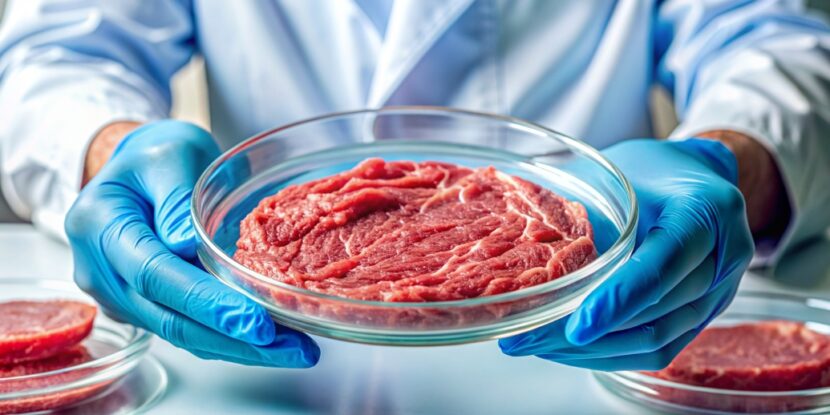
Lab Grown Meat Industry Demands Public Subsidy Because No One’s Buying It.

The laboratory-grown “meat” industry faces significant challenges securing the funding necessary to sustain itself. Industry experts claim they need substantial government assistance to survive; with various sectors within agrifood tech seeing a steep decline in investments since early 2022, and private capital for lab meat almost vanishing.

According to preliminary data from AgFunder, funding in the lab meat sector peaked at $989 million in 2021, decreased to $807 million in 2022, and then sharply dropped by 78 percent to just $177 million in 2023.

The decline in funding has prompted many startups to reduce staff, consolidate operations, or, in some cases, cease operations altogether.

Robert Jones, Vice President of Global Public Affairs at Mosa Meat, warns that “[t]here’s a valley of death we’re not going to cross as an industry without a massive infusion of public investment”—referencing the €60 million ($66 million) allocated by the Dutch government in 2022 as a model.

With the economic case for lab meat deteriorating rapidly, the environmental case for it is also unraveling. Recent studies suggest that—far from being a green alternative to traditional, farm-reared meat—so-called “cultivated meat” produces up to 25 times more CO2.

Lab meat also comes with a range of potential health issues, being a product of “immortalized cell lines” that replicate in perpetuity, like cancer.

show less
The laboratory-grown "meat" industry faces significant challenges securing the funding necessary to sustain itself. Industry experts claim they need substantial government assistance to survive; with various sectors within agrifood tech seeing a steep decline in investments since early 2022, and private capital for lab meat almost vanishing. show more