



Wednesday, September 16, 2026

American Hero Buzz Aldrin, The 2nd Man on The Moon, Endorses Donald Trump.

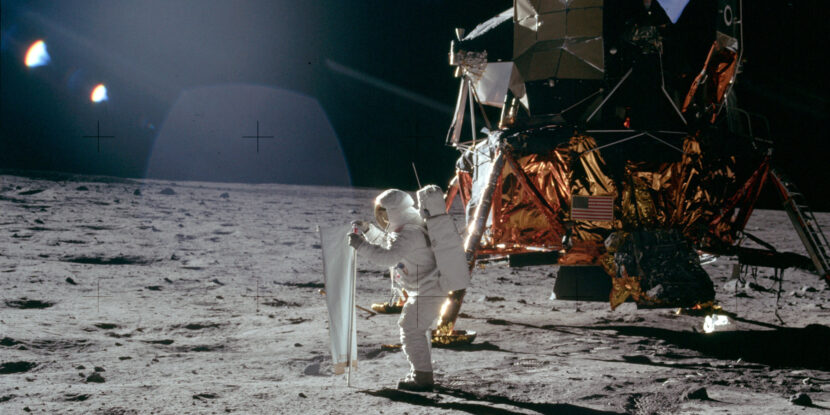
Brigadier General (United States Air Force, retired) Buzz Aldrin is endorsing President Donald J. Trump‘s return to the White House. Aldrin, one of the last true American pioneers and adventures as the second man to set foot on the Moon as part of NASA‘s Apollo Mission program, says he believes America needs a leader with “clarity in judgment, decisiveness, and calm under pressure that few have a natural ability to manage.” The Lunar Module Pilot on Apollo 11 and Gemini 12 Pilot pointed to the need for the president to push and inspire America as the country moves forward.

“Over time, I have seen our government’s approach to space wax and wane. But under the first Trump Administration, I was impressed to see how human space exploration was elevated as a policy of high importance again,” Aldrin wrote on X (formerly Twitter). The NASA astronaut and hero to countless Americans continued: “At the same time, I have been enthused and excited by the great advancements in the private sector space economy, led by visionaries like Elon Musk. These are concrete accomplishments that align with my concerns and America’s policy priorities.”

“For me, for the future of our country, to meet enormous challenges, and for the proven policy accomplishments above, I believe we are best served by voting for Donald J. Trump. I wholeheartedly endorse him for President of the United States. Godspeed President Trump and God Bless the United States of America,” concluded Aldrin, the Apollo astronaut who is just one of 24 men—all Americans—to have set on the Moon.

Trump was previously endorsed by modern space exploration innovator and technology billionaire Elon Musk.

Image by NASA/Apollo 11.

show less
Brigadier General (United States Air Force, retired) Buzz Aldrin is endorsing President Donald J. Trump's return to the White House. Aldrin, one of the last true American pioneers and adventures as the second man to set foot on the Moon as part of NASA's Apollo Mission program, says he believes America needs a leader with "clarity in judgment, decisiveness, and calm under pressure that few have a natural ability to manage." The Lunar Module Pilot on Apollo 11 and Gemini 12 Pilot pointed to the need for the president to push and inspire America as the country moves forward. show more

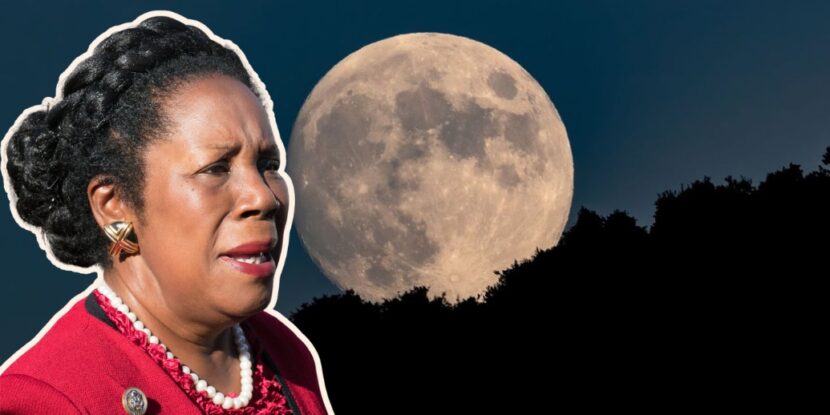
WATCH: Democrat Sheila Jackson Lee 🤪 Claims The Moon 🌙 is Made of Gas! – We Investigated…🕵🏼‍♀️

Representative Shiela Jackson Lee (D-TX) exhibited a deeply concerning lack of basic scientific knowledge while discussing yesterday’s solar eclipse with students at the Booker T. Washington High School in Houston. The Texas Democrat made a series of blatantly and categorically false assertions, including that the moon was made out of gas, that the moon has a gaseous atmosphere, that moonlight produces light energy at night, and that it is ‘almost’ impossible to go near the sun.

Jackson Lee — who previously served on the House Science Committee and on the Subcommittee that oversees space policy and NASA — does not appear to have made an attempt to correct herself despite each of her claims being demonstrably false.

The National Pulse looked into each of Rep. Jackson Lee’s claims and provided the actual scientific facts below.

GASEOUS MOON?

We’ve done some digging, and it turns out the Earth’s moon is not made of gas, despite the Congresswoman’s claim. Instead, it is comprised of a core, mantle, and crust — similar to the Earth. According to NASA, the moon has a “solid, iron-rich inner core,” while its mantle may be partially molten and comprised of “minerals like olivine and pyroxene.” The moon’s solid surface is rocky and contains elements of “oxygen, silicon, magnesium, iron, calcium, and aluminum, with small amounts of titanium, uranium, thorium, potassium, and hydrogen.” 

LUNAR ATMOSPHERE?

Despite Jackson Lee appearing to assert that it is an open question whether the moon’s atmosphere contains gasses that would allow humans to live on its surface, NASA emphatically notes that it does not have habitable conditions. “The Moon has a very thin and weak atmosphere, called an exosphere. It does not provide any protection from the Sun’s radiation or impacts from meteoroids,” the U.S. government space agency says.

MOON POWER?

Despite what the Texas Democrat claimed, the moon does not give off its own light energy. What we observe as moonlight is actually reflected light from the Sun. While this does give off a degree of energy, it is far less than what can be captured from direct sunlight.

TOO CLOSE TO THE SUN.

Finally, it isn’t “almost impossible” to go near the Sun. It is impossible. While estimates vary, most evidence suggests that even getting within a few million miles of the star at the center of our solar system would be fatal — with the heat overwhelming any current terrestrial technology. Additionally, the radiation emitted by the Sun would likely kill any astronaut before the star’s heat did.

WATCH: 

show less
Representative Shiela Jackson Lee (D-TX) exhibited a deeply concerning lack of basic scientific knowledge while discussing yesterday's solar eclipse with students at the Booker T. Washington High School in Houston. The Texas Democrat made a series of blatantly and categorically false assertions, including that the moon was made out of gas, that the moon has a gaseous atmosphere, that moonlight produces light energy at night, and that it is 'almost' impossible to go near the sun. show more

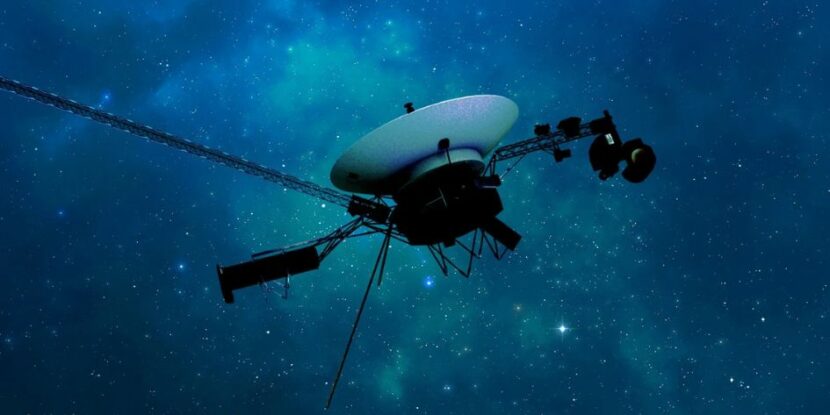
Voyager 1 Sending NASA Bizarre Code As It Leaves The Solar System.

NASA’s venerable Voyager 1 spacecraft, which has been traversing the distant reaches of our solar system for almost half a century, appears to be encountering severe difficulties and is sending NASA a bizarre, incomprehensible code.

The probe, launched in the summer of 1977, has weathered many challenges — including waning power reserves and software malfunctions. Currently situated some 15 billion miles from Earth and past the broadly defined edge of the solar system, Voyager 1 is now sending puzzling and incoherent messages back to our planet. “It basically stopped talking to us in a coherent manner. It’s a serious problem,” stated Voyager project manager Suzanne Dodd.

The Voyager 1 spacecraft, which operates on technology dating back to the mid-1970s, has been transmitting a simple chain of alternating 1s and 0s instead of the usual binary code. Troubleshooting attempts to reboot the probe’s systems have so far been unsuccessful. “The button you press to open the door of your car, that has more compute power than the Voyager spacecrafts do. It’s remarkable that they keep flying, and that they’ve flown for 46-plus years,” Dodd told NPR.

NASA’s Jet Propulsion Lab scientists are now engaged in retracing the technical steps taken by Voyager 1’s original developers in the hope of rectifying the issue. This plunge into the probe’s design past coincides with the absence of critical science data since Voyager’s communications first came into question. Measures are also being taken to conserve the spacecraft’s dwindling plutonium-based power supply.

The Voyager spacecraft were not expected to last much more than 50 years. Astronomer Stamatios Krimigis, who worked on the original project, told NPR: “My motto for a long time was 50 years or bust…” before adding, “…but we’re sort of approaching that.”

show less
NASA’s venerable Voyager 1 spacecraft, which has been traversing the distant reaches of our solar system for almost half a century, appears to be encountering severe difficulties and is sending NASA a bizarre, incomprehensible code. show more

NASA: Solar Storms ‘Could Cause Internet Apocalypse’ by 2025.

NASA is warning that the Sun is entering a period of high volatility as it nears the peak of its 11-year solar maximum cycle. During this time, sunspots have the potential to generate intense solar storms, which — if directed at the Earth — could cause widespread outages to electronics and radio communications.

The last several months have seen a spike in solar activity, with sunspots causing several coronal mass ejections (CMEs) — phenomena responsible for solar storms. NASA, which has been monitoring our Sun’s activity using the Parker Solar Probe (PSP), warns the potential for a solar storm-caused “internet apocalypse” remains a cause for concern through 2025. Such an event could surge currents through our planet’s infrastructure, disrupting navigation, communications systems, and the GPS-enabled time synchronization critical to the functioning of the internet.

Sangeetha Abdu Jyothi, a computer science professor at the University of California at Irvine who coined the term “internet apocalypse,” suggests that the Sun’s “solar maximum” phase in 2025 could trigger a particularly disruptive solar storm. In her research paper titled “Solar Superstorms: Planning for an Internet Apocalypse,” Jyothi posits that an extreme case event could interfere with submarine communication cables and disrupt long-distance connectivity. The economic cost of such an event is staggering — a single day without internet due to a solar storm could cost the US more than $11 billion, according to internet monitoring organization NetBlocks.

show less
NASA is warning that the Sun is entering a period of high volatility as it nears the peak of its 11-year solar maximum cycle. During this time, sunspots have the potential to generate intense solar storms, which — if directed at the Earth — could cause widespread outages to electronics and radio communications. show more