❓WHAT HAPPENED: Three Chinese astronauts are stranded in space after their spacecraft was used to return another crew to Earth due to damage caused by suspected space debris.
👤WHO WAS INVOLVED: The Shenzhou-21 crew currently aboard China’s Tiangong space station and the returning Shenzhou-20 crew.
📍WHEN & WHERE: The Shenzhou-20 crew landed on Friday in the Gobi Desert after a delay caused by spacecraft damage, leaving the Shenzhou-21 crew without an immediate return option.
💬KEY QUOTE: “The path of human space exploration is not smooth. It’s filled with difficulties and challenges. But that is exactly why we choose to walk this path.” – Chen Dong, Shenzhou-20 commander
🎯IMPACT: The incident highlights safety concerns regarding space debris and leaves the current crew on Tiangong without a return vehicle in case of emergency.
IN FULL
A space capsule damaged by space debris has left three Chinese astronauts stranded aboard the Tiangong space station. The astronauts, part of the Shenzhou-21 mission—which includes a six-month rotation aboard the Chinese space station—currently have no means of returning to Earth after the prior mission’s Shenzhou-20 capsule was damaged.
The Shenzhou-20 spacecraft was damaged by suspected space debris, delaying their return by over a week. Instead of using the damaged spacecraft, the Shenzhou-20 crew returned on the Shenzhou-21 capsule, which had just brought their replacements to the station. This decision left the new crew without a dedicated return vehicle.
China’s Manned Space Agency (CMSA) stated that the Shenzhou-20 spacecraft “does not meet the requirements for the astronauts’ safe return and will remain in orbit to continue relevant experiments.” A new Shenzhou-22 spacecraft is expected to be launched, but no specific date has been announced.
Chen Dong, commander of the Shenzhou-20 mission, remarked after returning to Earth on Friday: “The path of human space exploration is not smooth. It’s filled with difficulties and challenges. But that is exactly why we choose to walk this path.” The Shenzhou-20 crew’s landing in the Gobi Desert marked the end of a record-breaking 204-day stay for astronauts aboard China’s space station.
The incident raises broader concerns about the vulnerability of spacecraft to space debris, an issue that has affected other missions, including one by NASA in 2021. The CMSA has not clarified whether the Shenzhou-20 damage will impact future missions.
❓WHAT HAPPENED: An interstellar object, 3I/ATLAS, has picked up speed unexpectedly as it moves away from the sun and closer to Earth, defying gravitational predictions.
👤WHO WAS INVOLVED: NASA scientists, Harvard physicist Avi Loeb, and astronomers tracking the object.
📍WHEN & WHERE: The object reached perihelion on October 29, 2025, and is now six weeks away from its closest approach to Earth.
💬KEY QUOTE: “If 3I/ATLAS is not enshrouded in a much more massive gas cloud after perihelion than it had in the months preceding perihelion, then its recent non-gravitational acceleration must have resulted from a different cause than cometary evaporation.” – Avi Loeb
🎯IMPACT: The object’s unexplained movements and composition raise questions about its nature, with some suggesting it could be an extraterrestrial craft.
IN FULL
The interstellar object 3I/ATLAS has been observed accelerating as it moves away from the sun and closer to Earth, according to NASA. This unexpected speed increase has shifted the object off its predicted path, defying the gravitational forces of the sun, which contains the majority of the solar system’s mass.
3I/ATLAS, initially recorded as the fastest space object entering the solar system at over 130,000 mph, has now reached speeds of around 152,000 mph after its closest approach to the sun on October 29. While NASA attributes the speed boost primarily to the sun’s gravity, the object’s noticeable deviation from its expected trajectory remains unexplained.
Harvard physicist Avi Loeb has pointed out that astronomers have yet to find sufficient evidence of gas emissions from the object, which would typically indicate a cometary nature. “If 3I/ATLAS is not enshrouded in a much more massive gas cloud after perihelion than it had in the months preceding perihelion, then its recent non-gravitational acceleration must have resulted from a different cause than cometary evaporation,” Loeb stated.
The object has exhibited unusual characteristics, including turning blue as it approached the sun, rather than red like typical comets. It also has a massive estimated weight of 33 billion tons, with a composition of nickel and carbon dioxide, unlike the ice and water found in comets formed in our solar system. These anomalies have led some, including Loeb, to theorize that it could be a nuclear-powered ‘mothership’ created by an alien intelligence.
NASA’s latest data shows that the mysterious push on 3I/ATLAS weakened after it passed perihelion, yet it remains detectable. The James Webb Space Telescope is set to observe the object in December to search for any gas cloud that could explain its movements. However, Loeb and others continue to question whether the object’s behavior and composition might point to a non-natural origin.
❓WHAT HAPPENED: Interstellar object 3I/ATLAS is set to reach its perihelion, the closest point to the Sun on its trajectory, on October 29.
👤WHO WAS INVOLVED: Harvard astronomer Avi Loeb, NASA scientist Tom Statler, and the broader scientific community.
📍WHEN & WHERE: October 29, 2025; the object is currently on the opposite side of the Sun relative to Earth.
💬KEY QUOTE: “If you want to take a vacation, take it before [October 29], because who knows what will happen?” – Avi Loeb
🎯IMPACT: Loeb’s theory of extraterrestrial origin has sparked debate, but most scientists believe 3I/ATLAS is a natural comet.
IN FULL
The mysterious interstellar object 3I/ATLAS is expected to reach the nearest point to the Sun on October 29, following its unusual trajectory through the solar system. Currently, the object is opposite the Earth on the other side of the Sun. While most scientists have concluded that 3I/ATLAS is a comet comprising carbon dioxide ice, Harvard astronomer Avi Loeb continues to suggest that the object could be an extraterrestrial “mothership” sent by an intelligent civilization.
As evidence of his claim—which some critics suggest is more of a publicity stunt than a serious proposal—Loeb notes the interstellar object’s unusual trajectory given its size, and claims the object’s path, taking it close to Mars, Venus, and Jupiter, may be more than “extremely rare coincidences.”
Late Thursday, Loeb wrote in a post on Medium, “If you want to take a vacation, take it before [October 29], because who knows what will happen?” He elaborated on the potential for the object to use the Sun’s gravitational pull to accelerate or slow down, referencing the Oberth effect, a principle in physics that allows a spacecraft to generate more energy when its engine is fired at higher speeds.
“If 3I/ATLAS is a massive mothership, it will likely continue along its original gravitational path and ultimately exit the Solar system,” Loeb posits. He speculates: “In that case, the Oberth maneuver might apply to the mini-probes it releases at perihelion towards Solar system planets.”
NASA’s lead scientist for solar system small bodies, Tom Statler, has dismissed Loeb’s theory, stating, “It looks like a comet. It does comet things. It very, very strongly resembles, in just about every way, the comets that we know.” However, Statler did acknowledge that the object has “some interesting properties that are a little bit different from our solar system comets.”
Loeb has admitted that the likelihood of 3I/ATLAS being technological in origin is slim, but emphasized the importance of evidence-based science. “As of now, 3I/ATLAS appears most likely to be a natural comet,” he wrote in a blog post. “But the remote possibility of an Oberth maneuver must be considered seriously as a black swan event with a small probability, because of its huge implications for humanity.”
❓WHAT HAPPENED: A 9.8-foot asteroid, named 2025 TF, passed within 300 miles of Earth, closer than the orbit of the International Space Station, and was only detected after it had passed.
👤WHO WAS INVOLVED: The Catalina Sky Survey detected the asteroid, which was later observed by the European Space Agency’s Planetary Defence Office.
📍WHEN & WHERE: The asteroid flew over Antarctica on October 1, 2025, at 01:47:26 BST.
💬KEY QUOTE: “Objects of this size pose no significant danger. They can produce fireballs if they strike Earth’s atmosphere, and may result in the discovery of small meteorites on the ground.” – European Space Agency
🎯IMPACT: The incident highlighted the difficulty in detecting small space objects, raising concerns about planetary defense capabilities.
IN FULL
An asteroid measuring approximately 9.8 feet, named 2025 TF, flew within 300 miles of Earth on October 1, 2025. The space rock passed closer to the Earth than the orbit of the International Space Station (ISS), at an altitude of just 265 miles. However, scientists only detected the asteroid after it had already passed, with the Catalina Sky Survey identifying it hours later.
The European Space Agency (ESA) stated that 2025 TF posed no significant danger, as objects of its size would likely burn up or explode in the atmosphere rather than impact the surface. “Objects of this size pose no significant danger,” the ESA noted, though they acknowledged such objects can produce fireballs or result in small meteorites reaching the ground.
Following the asteroid’s passage, the ESA’s Planetary Defence Office used the Las Cumbres Observatory in Australia to observe the object. This allowed astronomers to refine their measurements, determining that the asteroid’s closest approach occurred precisely at 01:47:26 BST. Despite its proximity, there were no spacecraft or satellites in its path.
Despite its current public communication limitations due to a government shutdown, NASA has listed 2025 TF on its Center for Near-Earth Object Studies website. The asteroid is expected to make another close approach in 2087, though at a much safer distance of 3.7 million miles. Its small size, however, made it difficult to detect in advance, underscoring the challenges of tracking smaller near-Earth objects.
As of October 4, 2025, there were 39,585 known near-Earth asteroids, with 11,453 measuring over 460 feet in diameter. While most pose no immediate threat, incidents like this highlight the importance of advancing planetary defense systems.
NASA and ESA have conducted tests, such as the Double Asteroid Redirection Test (DART), to explore methods of deflecting potential threats. However, experts emphasize the need for early detection to mitigate risks effectively.
Join Pulse+ to comment below, and receive exclusive e-mail analyses.
❓WHAT HAPPENED: NASA has announced plans to establish a sustainable lunar base by 2035, creating a “village” on the Moon.
👤WHO WAS INVOLVED: Secretary of Transportation and NASA Administrator Sean Duffy and other international space agency leaders.
📍WHEN & WHERE: Announcement made at the International Aeronautical Congress in Sydney, Australia, September 2025.
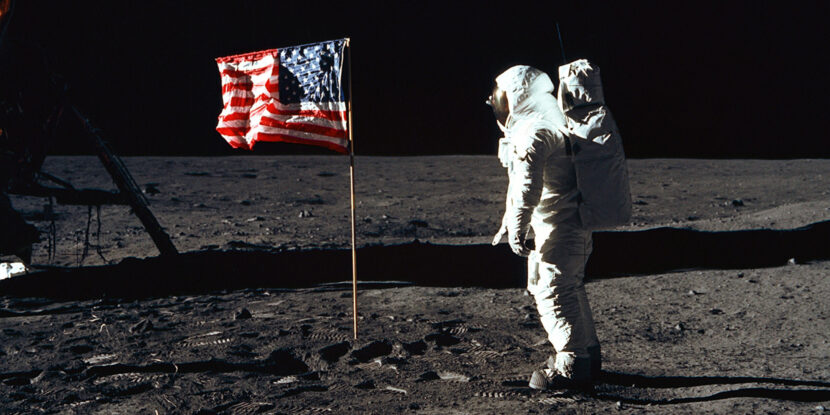
💬KEY QUOTE: “We’re going back to the Moon, and this time, when we plant our flag, we stay.” – Sean Duffy
🎯IMPACT: The lunar base will pave the way for future Mars exploration and enhance U.S. leadership in space exploration.
IN FULL
Secretary of Transportation and NASA Administrator Sean Duffy has announced plans to establish a permanent presence on the Moon by 2035. Speaking at the International Aeronautical Congress in Sydney, Australia, Duffy said, “We are going to have sustained human life on the Moon. Not just an outpost, but a village.”
This initiative will be driven by the Artemis program, which is set to return humans to the lunar surface for the first time since the Apollo era. Artemis II, scheduled for February 2026, will test both the Space Launch System rocket and the Orion spacecraft in a crewed mission around the Moon. The follow-up, Artemis III, targets a 2027 lunar landing. Unlike previous missions, astronauts will remain on the Moon for a full week, gathering critical data to support long-term habitation.
To sustain operations during the Moon’s 14-day night, when solar power is unavailable, NASA plans to deploy a compact nuclear reactor. The Fission Surface Power System, as it is called, must weigh under 15 tonnes and produce 100 kilowatts of electricity, enough to support life-support systems, equipment, and communication infrastructure. NASA is currently seeking industry partners to help develop the reactor.
Construction of the base itself may rely heavily on lunar resources. NASA is exploring ways to mix lunar soil with binding agents to create a form of cement, which could be used with 3D printing technologies to build structures on-site. These methods are not only intended for the Moon but may also play a role in future Mars missions requiring long-term human presence.
“We’re going back to the Moon, and this time, when we plant our flag, we stay,” Duffy said. He framed the effort as part of a new “space race,” with the United States aiming to stay ahead of rivals such as China in space exploration and technology.
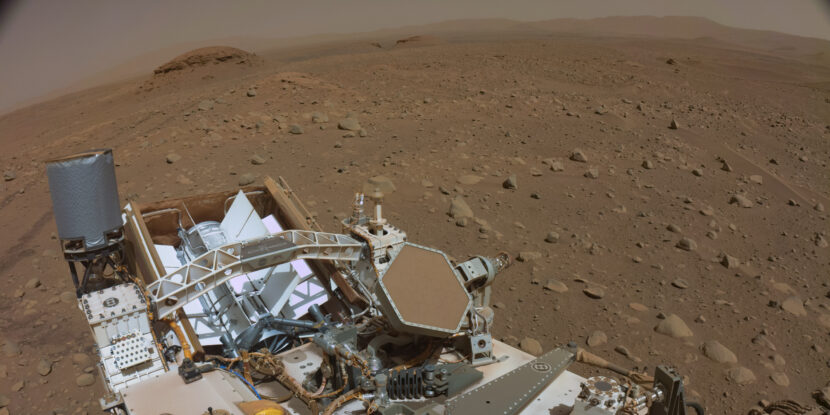
Meanwhile, on Mars, the Perseverance rover recently collected a rock sample that may show signs of ancient microbial life, although scientists caution that the evidence is not definitive. NASA is also monitoring a house-sized asteroid set to pass near Earth, and, in deep space, Voyager 1 has begun transmitting garbled data as it travels beyond the edge of the solar system.
Join Pulse+ to comment below, and receive exclusive e-mail analyses.
❓WHAT HAPPENED: Scientists studying Mars have identified minerals in rock formations that could indicate microbial life, although non-biological explanations are also possible.
👤WHO WAS INVOLVED: NASA’s Perseverance rover team, led by project scientist Katie Stack Morgan, and researchers at NASA’s Jet Propulsion Laboratory.
📍WHEN & WHERE: Data collected since February 2021 at Jezero Crater on Mars, with possible signs of organic life discovered last year, and findings published recently in a peer-reviewed study.
💬KEY QUOTE: “Astrobiological claims, particularly those related to the potential discovery of past extraterrestrial life, require extraordinary evidence.” – Katie Stack Morgan
🎯IMPACT: The findings suggest Mars may have been habitable later in its history than previously thought, and older rocks might hold harder-to-detect signs of life.
IN FULL
The combination of minerals found in rocks on Mars could be a potential indicator of microbial life. These minerals appear to have formed through electron-transfer reactions between sediment and organic matter, a process that microbes could use to produce energy for growth. However, the minerals can also form through non-biological processes, such as high temperatures, acidic conditions, or organic compound binding.
The discovery is particularly notable because it involves some of the youngest sedimentary rocks studied during the mission. This challenges earlier assumptions that evidence of ancient life would only be found in older formations. It also suggests that Mars may have been habitable for a longer period or later in its history than previously believed.
“Astrobiological claims, particularly those related to the potential discovery of past extraterrestrial life, require extraordinary evidence,” said Katie Stack Morgan, Perseverance’s project scientist at the National Aeronautics and Space Administration’s (NASA) Jet Propulsion Laboratory (JPL). She emphasized the importance of peer-reviewed publication to validate findings.
The scientific community utilizes tools like the CoLD scale and Standards of Evidence to evaluate potential signs of life. These frameworks help determine the level of confidence in data suggesting extraterrestrial life, improving the rigor of such claims.
Since landing at Jezero Crater in February 2021, the Perseverance rover has collected 27 rock cores. The rover is equipped with advanced instruments, including a weather station and swatches of spacesuit material for future human mission studies. NASA JPL, managed by Caltech, oversees the rover’s operations as part of NASA’s Mars Exploration Program.
❓WHAT HAPPENED: NASA is tracking a house-sized asteroid, 2025 PR1, expected to pass Earth on August 16 at a speed of approximately 17,717 miles per hour.
👤WHO WAS INVOLVED: NASA’s Jet Propulsion Laboratory (JPL) and its Center for Near-Earth Object Studies (CNEOS).
📍WHEN & WHERE: The asteroid will make its closest approach on Saturday, August 16, at a distance of 609,000 miles from Earth.
🎯IMPACT: While the asteroid poses no immediate threat, its tracking highlights NASA’s ongoing efforts to monitor near-Earth objects.
IN FULL
NASA’s Jet Propulsion Laboratory (JPL) is closely monitoring an asteroid designated 2025 PR1, which is expected to make a relatively close approach to Earth on August 16. Traveling at approximately 17,717 miles per hour, the asteroid is about 55 feet wide, roughly the size of a house, and will pass at a distance of 609,000 miles from our planet.
In addition to 2025 PR1, three more near-Earth asteroids are projected to pass by Earth in the coming week. On August 17, asteroid 2025 PM, comparable in size to an airplane, will come within 654,000 miles. Following that, on August 20, the stadium-sized asteroid 1997 QK1, measuring around 990 feet across, is expected to pass at a distance of 1,870,000 miles. That same day, another asteroid, 2025 OV4, about 160 feet wide, will make its closest approach at 1,800,000 miles.
NASA notes that small asteroids, up to about 30 feet across, typically enter Earth’s atmosphere roughly once per decade. These asteroids often produce bright fireballs and sonic booms but rarely cause serious damage.
Earlier this year, NASA identified a larger potential threat: asteroid 2024 YR4. Initially calculated to have a 3.1 percent chance of impacting Earth in 2032, the highest probability ever recorded for an object of its size, refined orbital projections now indicate it’s more likely to collide with the Moon in December 2032.
“Asteroid 2024 YR4 is now too far away to observe with either space or ground-based telescopes. NASA expects to make further observations when the asteroid’s orbit around the Sun brings it back into the vicinity of Earth in 2028,” NASA stated. Updated data also shows the probability of a Moon impact has slightly increased, from 3.8 percent to 4.3 percent. Even in the event of such a collision, NASA notes that it “would not alter its orbit.”
Meanwhile, scientists in South Korea have been analyzing the potential impact of asteroid Bennu, a much larger object, roughly 1,640 feet wide, with a one-in-2,700 chance of hitting Earth in September 2182. Their research suggests that such an impact could lead to catastrophic effects, including widespread wildfires, earthquakes, and atmospheric changes severe enough to cause significant global cooling and a reduction in photosynthesis for several years.
❓WHAT HAPPENED: China successfully tested its first manned lunar lander in landing and takeoff.
👤WHO WAS INVOLVED: China Manned Space Agency and U.S. Transportation Secretary and interim NASA Administrator Sean Duffy
📍WHEN & WHERE: The test took place on Wednesday in Huailai County, Hebei province, northern China.
💬KEY QUOTE: “We’re in a race to the Moon, in a race with China to the Moon. And to have a base on the Moon, we need energy.” – Sean Duffy
🎯IMPACT: Major breakthroughs for China’s manned lunar exploration program allow China to demonstrate the ability for a crewed spacecraft to land and take off from an extraterrestrial body for the first time.
IN FULL
China is progressing towards its objective of landing astronauts on the Moon by 2030. The communist country announced a significant milestone in its lunar exploration program, successfully completing the first “comprehensive landing and takeoff test” of its manned lunar lander, Lanyue. The test was conducted at a facility in Huailai County, northern China, and was described as a breakthrough by the China Manned Space Agency.
This event was the first time China tested the “extraterrestrial landing and takeoff capabilities” of a manned spacecraft, a major breakthrough in the research and development of its manned lunar exploration program. The Lanyue is a two-part lunar lander with a landing and propulsion module. It’s designed to transport two astronauts between the Moon’s orbit and surface. The design resembles the Apollo Lunar Module, which featured an ascent rocket engine and a lower stage for descent.
In addition to China’s moon landing mission, the country has constructed a network of 16 space facilities in Latin America while operating Tiangong, a modern space station. China is also advancing another moon mission aimed at building the International Lunar Research Station, a scientific experimental facility located on the Moon’s surface and orbit. The project’s completion is scheduled for 2025 and 2050.
Meanwhile, U.S. Transportation Secretary and interim NASA Administrator Sean Duffy announced a plan to construct a nuclear reactor on the Moon on Tuesday, stating, “We’re in a race to the Moon, in a race with China to the Moon. And to have a base on the Moon, we need energy.”
Currently, the United States is the first and only country to land humans on the Moon, with its next planned moon landing mission set for 2027. NASA launched the Apollo program in 1961, which landed the first humans on the Moon in 1969. The program included six lunar missions with twelve astronauts and ended in 1972.
Join Pulse+ to comment below, and receive exclusive e-mail analyses.
A report has revealed that the National Aeronautics and Space Administration (NASA) enacted a plethora of DEI policies under the former Biden-Harris regime. Between 2021 and 2024, the agency spent over $2.3 million on DEI-related contracts.
Over the past four years, NASA introduced various guidelines for its employees, including support for those undergoing gender transitions.
The report details substantial investments in DEI-related contracts and training. Between 2021 and 2024, NASA allotted over $2 million to LMI Consulting to integrate DEI principles into the agency’s culture and operations. Additionally, contracts for diversity training were awarded, including $90,000 to the NeuroLeadership Institute and $74,000 to Cook Ross, Inc. Significantly, a $100,000 grant was provided to the Planetary Science Institute to enhance diversity within the planetary science workforce.
A document shared by a whistleblower revealed a 22-page guide issued in 2022 titled NASA Guidance for Supporting Gender Transition/Affirmation in the Workplace.
NASA also promoted professional development with DEI messaging. One course, “Diversity All In,” and another, “The Power of Inclusion,” emphasized understanding diversity and advancing women in leadership roles.
At the federal level, President Donald J. Trump’s administration has scrapped DEI initiatives across the federal government. Many major corporations have also shifted away from DEI policies due to conservative activist pressure and President Trump’s election win last November.
A report has revealed that the National Aeronautics and Space Administration (NASA) enacted a plethora of DEI policies under the former Biden-Harris regime. Between 2021 and 2024, the agency spent over $2.3 million on DEI-related contracts.
show more
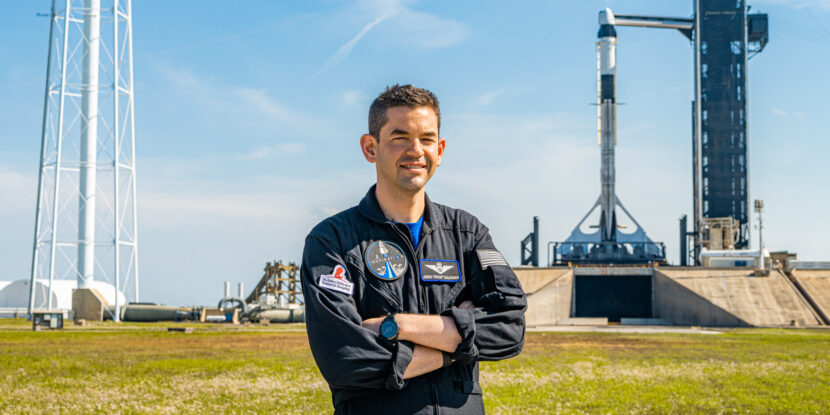
Jared Isaacman, the nominee to serve as administrator of the National Aeronautics and Space Administration (NASA), has a concerning history of being a significant donor to Democratic Party candidates, as well as Democrat-aligned SuperPACs and campaign committees. Additionally, two companies founded by Isaacman heavily promote diversity, equity, and inclusion initiatives (DEI) and environmental, social, and governance (ESG) programs—both of which push a radical progressive political agenda.
Technology and space exploration billionaire Elon Musk is likely pushing for Isaacman’s nomination. Isaacman served as the commander of Musk’s SpaceX’s Inspiration4 private space flight mission, as well as its Polaris Dawn mission launched in 2024. He was the first private citizen to perform an EVA spacewalk.
DEMOCRAT DONOR.
Since 2010, Isaacman has given nearly $300,000 to candidates and political committees—with almost all of the money going to Democratic Party entities and lawmakers. According to Federal Election Commission (FEC) data, Isaacman—during the 2024 election cycle—gave $3,300 to Senate Jon Tester’s (D-MT) failed election bid. Meanwhile, he contributed $6,600 to Representative Elissa Slotkin (D-MI), who narrowly defeated former Congressman Mike Rogers (R-MI) for Michigan’s open Senate seat.
Additionally, the technology entrepreneur invested heavily in Democratic Party efforts in Pennsylvania—giving the state party $10,000 in July of this year, contributing $3,3000 directly to Senator Bob Casey Jr. (D-PA), and giving another $15,400 to Casey’s joint fundraising committee. Casey would go on to lose re-election to his Republican challenger, Dave McCormick.
The NASA administrator nominee was also active on behalf of Democrats during the 2022 mid-term election cycle. Isaacman contributed nearly $60,000 to the Democratic Congressional Campaign Committee (DCCC). Additionally, he gave $100,000 to the Senate Majority PAC controlled by Senator Chuck Schumer (D-NY). Notably, Schumer himself also received $5,800 from Isaacman.
Other Democrats receiving contributions include $2,900.00 for Senator Mark Kelly (D-AZ), $5,800 for Rep. Susan Wild (D-PA), $2,900 for Sen. Mark Warner (D-VA), $2,900 for Sen. Jeanne Shaheen (D-NH), and $2,900 for both Sens. Tester and Casey.
Between 2010 and 2016, Isaacman gave less than $10,000 to Republican candidates.
DEI AND ESG PROMOTOR.
In addition to his significant support for Democratic politicians, Isaacman founded companies Shift4 Payments (a payment processing firm) and Draken International (an aerospace and defense contractor), which are major promoters of diversity, equity, and inclusion (DEI) initiatives and environmental, social, and governance (ESG) programs. Shift4 Payments provides investors with an ESG factsheet that touts the company’s net-zero water usage, net-zero carbon emissions, and its use of renewable energy.
In addition, the Shift4 Payments investor fact sheet notes the company’s commitment to DEI. It states that 35 percent of the company’s workforce is female, while 41 percent is black, indigenous, and people of color (BIPOC). Shift4 Payments also maintains two DEI workforce networks: ‘Women @ Shift4’ and ‘Pride @ Shift4.’
Meanwhile, Draken International similarly promotes a DEI agenda in the workplace. The company sponsored the 2024 Inclusivity in Aviation Reception, which was hosted at the Houses of Parliament in the United Kingdom. Draken announced its sponsorship in a LinkedIn post: “We were thrilled to sponsor this event once again, following the inaugural ‘Women in Aviation’ event in 2022. We did so not because we consider Draken as a paragon of virtue when it comes to inclusivity. Quite the opposite. Like our fellow sponsors Lockheed Martin, we are on a path—and that path will see companies such as ours broaden the appeal of a career in aviation to sectors of society that, to date, have been excluded.”
WHITE GUYS IN SPACE.
Perhaps the most concerning aspect of Isaacman’s background is his comments regarding the need for greater diversity in space exploration. Before the Inspiration4 mission in 2021, Isaacman, speaking with the Unleash Your Greatness Within podcast host TJ Hoisington, lamented that private space flight is dominated by “rich white guys.”
“I did not want four rich white guys that are going up into space,” Isaacman told Hoisington, stressing the importance of having a diverse mission crew for Inspiration4.
Isaacman repeated a similar line during a 2021 interview with the New York Times, stating he deliberately set up the selection of the passengers on the Inspiration4 mission to ensure diversity. “Is it going to represent all of the people of Earth and not just rich white guys?” he told the NYT at the time.
Jared Isaacman, the nominee to serve as administrator of the National Aeronautics and Space Administration (NASA), has a concerning history of being a significant donor to Democratic Party candidates, as well as Democrat-aligned SuperPACs and campaign committees. Additionally, two companies founded by Isaacman heavily promote diversity, equity, and inclusion initiatives (DEI) and environmental, social, and governance (ESG) programs—both of which push a radical progressive political agenda.
show more
Share Story
FacebookTwitterWhatsappTruthTelegramGettrCopy Link
Real News Fan? Show It!
Many people are shocked to learn that because of active censorship, we currently have to spend more time making sure you can even see The National Pulse, than on producing the news itself. Which sucks. Because we do this for the truth, and for you.
But the regime doesn’t want you being informed. That’s why they want us to go away. And that will happen if more people don’t sign up to support our work. It’s basic supply and demand. So demand you get to read The National Pulse, unrestricted. Sign up, today.
We don’t sell ads, and refuse corporate or political cash. It all comes down to you, the reader. I hope you can help.