




Saturday, June 6, 2026

Here’s How Republicans Can Quickly Respond to Virginia’s Gerrymandering.

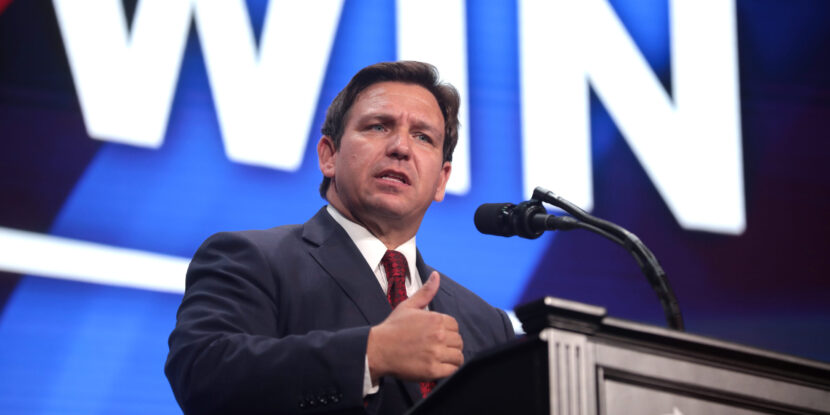
Florida Republicans are convening a special session to consider redistricting following the Democrats’ gerrymandering of Virginia on Tuesday.

PULSE POINTS
❓ WHAT HAPPENED: Following the Democrats’ successful gerrymandering referendum in Virginia on Wednesday, the Florida legislature will hold a special session. The session, which will run from April 28 to May, is being convened mainly “for the purpose of considering legislation related to the drawing of congressional districts,” alongside increased medical freedom and new consumer protections linked to artificial intelligence (AI).
📺 DETAIL: Florida Governor Ron DeSantis issued a proclamation convening the special session shortly before the Virginia referendum, in which the GOP establishment allowed the Democrats to eke out a narrow victory by spending only around $20 million on the referendum campaign, while the Democrats spent $62.3 million. Redistricting in Florida could net Republicans four to five new House seats, balancing out the Democrats’ expected gain in Virginia, but would require a snap referendum and a 60 percent threshold under the state constitution—a high bar with only a few months until the November midterms. DeSantis’s office is expected to transmit a proposal to the Florida Senate, which will be filed as a bill for consideration.
💬 KEY QUOTE: “Florida’s Constitution includes strict guidelines for what information the Legislature can and cannot consider when drawing new congressional districts. Regardless of the forum or format, we can only consider thoughts and feedback in keeping with constitutional standards. Senators should take care to insulate themselves from partisan-funded organizations and other interests that may intentionally or unintentionally attempt to inappropriately influence redistricting.” – Ben Albritton, President of the Florida Senate
🎯 IMPACT: Florida Senate President Ben Albritton (R) has warned state lawmakers that they cannot advance maps that “favor or disfavor a political party or incumbent,” and that anything they decide is likely to be subject to “significant litigation.” While hailing the Democrats’ gerrymandering in Virginia, House Minority Leader Hakeem Jeffries (D-NY) has branded the Florida redistricting effort an “illegal scheme” and vowed to “aggressively target” Republican Florida Representatives Mario Díaz-Balart, Maria Elvira Salazar, Carlos Giménez, Kat Cammack, Anna Paulina Luna, Laurel Lee, Cory Mills, and Brian Mast.
📺 FLASHBACK: Redistricting has become a major issue in the run-up to the midterms in November. In mid-March, Senator Jim Banks (R-IN) invested millions to back GOP redistricting efforts. In December last year, the Supreme Court upheld a high-profile redistricting measure in Texas. In mid-January, the Democrats secured a legal victory at the Ninth Circuit to gerrymander the electoral map in California against Republicans.

Image by F McGady.

Join Pulse+ to comment below, and receive exclusive e-mail analyses.

show less
Florida Republicans are convening a special session to consider redistricting following the Democrats' gerrymandering of Virginia on Tuesday.

show more

Jim Banks Invests Millions to Challenge Senators Opposing GOP Redistricting.

PULSE POINTS

WHAT HAPPENED: Senator Jim Banks (R-IN) is deploying $3 million to oppose seven Indiana state senators who voted against a redistricting bill.

👤WHO WAS INVOLVED: Senator Jim Banks and Indiana state senators, including Travis Holdman, James Buck, Spencer Deery, Greg Goode, and Greg Walker.

📍WHEN & WHERE: Current efforts in Indiana, following the recent redistricting vote.

💬KEY QUOTE: “Hoosiers deserve a more conservative state Senate.” – Jim Banks

🎯IMPACT: The move aims to strengthen Republican influence in the Indiana House by targeting senators who opposed the redistricting bill.

IN FULL

Senator Jim Banks (R-IN) is intensifying a political clash within Indiana by directing $3 million from his 501(c)(4), Hoosier Leadership for America, toward efforts to unseat members of his own party. The move targets seven Republican state senators who opposed a proposed redistricting plan that could have secured the GOP two additional U.S. House seats.

Those singled out include Travis Holdman, James Buck, Spencer Deery, Greg Goode, and Greg Walker. Their votes against the measure derailed a Trump-backed push to redraw district lines, exposing deep divisions within the Indiana Republican Party. “Hoosiers deserve a more conservative state Senate,” Banks said.

The redistricting effort, backed by President Donald J. Trump and which gained traction in late 2025, ultimately failed in the state senate despite pressure from national conservatives. Some Indiana Republicans were hesitant to revisit district boundaries, and reports suggested party leaders effectively abandoned the initiative after internal disagreements stalled progress.

Banks is now challenging what he sees as an unresponsive party establishment. Senator Todd Young (R-IN), Governor Mike Braun (R-IN), and former Governor Mitch Daniels (R-IN) have all faced criticism from conservatives frustrated by the outcome. The dispute has also drawn attention from President Trump, who criticized Young’s political circle, including consultant Cam Savage, for opposing the effort. Trump also expressed disappointment in Braun, saying, “I got that guy elected, and he couldn’t deliver redistricting.”

Redistricting, the redrawing of electoral district boundaries, remains a powerful political tool, often shaping party control in Congress. While Indiana Republicans have struggled to advance their preferred map, Democrats have been more successful elsewhere. In Virginia, party leaders are pursuing a plan that could yield a 10–1 Democratic advantage in the state’s congressional delegation. Additionally, Democrats secured a favorable ruling at the Ninth Circuit Court of Appeals earlier this year, strengthening their position in ongoing redistricting battles.

Image by Gage Skidmore.

Join Pulse+ to comment below, and receive exclusive e-mail analyses.

show less

show more

SCOTUS Allows Democrat-Drawn Districts Ahead of Midterms.

PULSE POINTS

WHAT HAPPENED: The U.S. Supreme Court decided to allow California Democrats to proceed with new, gerrymandered maps ahead of the 2026 midterm elections.

👤WHO WAS INVOLVED: California Democrats, the state GOP, the Department of Justice (DOJ), Justice Elena Kagan, and the U.S. Supreme Court.

📍WHEN & WHERE: The ruling was issued on Wednesday, impacting California and the U.S. as a whole.

🎯IMPACT: The decision allows Proposition 50 to move forward, potentially reducing Republican congressional seats in California from nine to four.

IN FULL

The U.S. Supreme Court on Wednesday declined to block California’s new congressional district map, allowing the state to proceed with new, gerrymandered boundaries ahead of the 2026 midterm elections. The decision rejects an emergency request from California Republicans and the U.S. Department of Justice (DOJ) seeking to halt implementation of the plan, known as Proposition 50.

Proposition 50 dismantled California’s independent redistricting commission and granted the Democratic-controlled legislature authority to redraw congressional lines. Supporters said the measure was intended to counter Republican redistricting efforts in other states and better reflect demographic changes, while critics argued it was designed to boost Democrat power in the U.S. House of Representatives.

Under the new map, Republicans could lose as many as five congressional seats, reducing the number of GOP-held districts in California from nine to four. Republican officials and voters filed suit shortly after the ballot measure passed, claiming the new districts relied too heavily on racial considerations and violated the Constitution and federal voting laws.

The Justice Department joined the legal challenge, arguing that California lawmakers improperly used race as a tool to achieve partisan goals. A three-judge federal district court panel rejected those claims in January. Following that ruling, opponents of the map asked the Supreme Court to intervene. The application was initially submitted to Justice Elena Kagan and then referred to the full Court, which denied the request for an injunction without issuing a written opinion.

California officials argued that blocking the map so close to the 2026 election cycle would disrupt candidate filings, campaign planning, and voter outreach already underway. Governor Gavin Newsom (D-CA) and other Democrats praised the Court’s decision.

The ruling comes amid heightened national disputes over redistricting. In a separate case, the Supreme Court recently allowed Texas to use a Republican-drawn congressional map that could add several GOP seats, despite lower court claims that the plan discriminated against minority voters.

Image by Gage Skidmore.

Join Pulse+ to comment below, and receive exclusive e-mail analyses.

show less

show more

Democrats Win Redistricting Battle at Ninth Circuit.

PULSE POINTS

WHAT HAPPENED: Federal judges dismissed Republican claims that California’s Proposition 50 gerrymandered map is discriminatory, allowing the state to proceed with redrawn congressional districts.

👤WHO WAS INVOLVED: California Governor Gavin Newsom (D), Attorney General Rob Bonta (D), Secretary of State Shirley Weber (D), and Republican challengers led by State Assemblymember David Tangipa (R).

📍WHEN & WHERE: The ruling was issued on Wednesday by the Ninth Circuit Court of Appeals after a December hearing.

💬KEY QUOTE: “The decision upholds the will of the people. It also means that, to date, every single challenge against Proposition 50 has failed.” – Attorney General Rob Bonta.

🎯IMPACT: The ruling could allow Democrats to secure up to five additional seats in the U.S. House, bolstering their efforts in the 2026 midterms.

IN FULL

California Democrats secured a legal victory Wednesday as a panel of federal judges rejected Republican claims that Proposition 50, a measure allowing the state to redraw congressional districts, is discriminatory. The measure, approved by voters last November, is expected to help Democrats gain up to five additional U.S. House seats, potentially aiding their efforts to reclaim Congress in the 2026 midterms.

Governor Gavin Newsom (D), who spearheaded the Prop 50 initiative, celebrated the decision on social media. Newsom’s office posted, “Can’t spell Republican without an L,” on X (formerly Twitter), while Newsom himself posted the phrase “FAFO,” an acronym for “F—k around and find out.”

Republicans argued that the redrawn districts unfairly favor Latino voters at the expense of other racial groups. However, Attorney General Rob Bonta (D) praised the court’s decision, stating, “The decision upholds the will of the people. It also means that, to date, every single challenge against Proposition 50 has failed.” He added, “I couldn’t be prouder of my team for successfully defending this ballot initiative in court on behalf of Governor Newsom and Secretary of State Weber.”

The Ninth Circuit Court of Appeals issued its ruling after a three-day hearing in December. California voters had approved the new district map in November, and this decision further solidifies its implementation. State Assemblymember David Tangipa (R), part of the Republican group challenging the measure, previously indicated plans to escalate the matter to the Supreme Court should the Ninth Circuit rule against the plaintiffs.

Image by Gage Skidmore.

Join Pulse+ to comment below, and receive exclusive e-mail analyses.

show less

show more

DOJ Accuses Democratic Campaign Arm of Obstruction in California Redistricting Case.

PULSE POINTS

WHAT HAPPENED: The U.S. Department of Justice (DOJ) accused the Democratic Congressional Campaign Committee (DCCC) of withholding key redistricting documents related to California’s Proposition 50.

👤WHO WAS INVOLVED: The DOJ, the DCCC, consultant Paul Mitchell, and California Governor Gavin Newsom (D).

📍WHEN & WHERE: The allegations surfaced ahead of a three-day federal court hearing beginning Monday in California.

💬KEY QUOTE: A source familiar with the DOJ’s thinking described the redistricting effort as a “brazen power grab” and accused the Newsom administration of “covering up the racially driven design” of the map.

🎯IMPACT: The DOJ claims the map prioritizes racial considerations, potentially violating constitutional protections, and has asked the court to block Proposition 50.

IN FULL

In a new federal court filing, the U.S. Department of Justice (DOJ) contends the Democratic Congressional Campaign Committee (DCCC)—the House Democrats’ official campaign arm—worked to actively obstruct and interfere with the discovery process in a lawsuit concerning California’s Proposition 50. The DOJ alleges that the DCCC, along with consultant Paul Mitchell, withheld key documents and provided a massive data dump of files just days before a federal court hearing began—in an apparent attempt to prevent DOJ attorneys from having enough time to review the evidence.

According to the DOJ, Mitchell’s records included evidence that racial considerations were prioritized in the redistricting process. One slide deck reportedly promoted how the map would increase voting opportunities for Latino residents. The DOJ further stated that the DCCC misled the court by claiming it lacked control over Mitchell’s records, despite having a contractual right to access them.

The lawsuit, which the DOJ joined alongside the California Republican Party, alleges that Proposition 50 constitutes unconstitutional racial gerrymandering. The ballot measure, passed in November, allows for a new congressional map to be drawn in time for the 2026 midterms. The DOJ argues that the map was designed to favor Democrats and cancel out likely Republican gains from redistricting efforts in Texas.

A source familiar with the DOJ’s position criticized Governor Gavin Newsom‘s (D-CA) administration, telling media it appeared to be “covering up the racially driven design” of the map. The source described the plan as a “brazen power grab” that divides voters based on race and undermines the electoral process.

The DCCC has denied the allegations, claiming the DOJ is overstating its access to Mitchell’s files and attempting to “slam square pegs into round holes” to bolster its case. The DOJ has requested that the court find race to have been a significant factor in the drawing of the map, which would support the broader claim that Proposition 50 violates constitutional protections.

Join Pulse+ to comment below, and receive exclusive e-mail analyses.

show less
show more

Indiana Senate Blocks Trump-Backed Redistricting Plan.

PULSE POINTS

WHAT HAPPENED: The Indiana Senate voted down a redistricting map backed by President Donald J. Trump that aimed to create two more Republican-leaning congressional districts.

👤WHO WAS INVOLVED: President Donald J. Trump, Indiana Senate Republican leader Rodric Bray, Vice President J.D. Vance, and conservative organizations like Turning Point Action.

📍WHEN & WHERE: Indiana, over recent months, with the final vote occurring on Thursday, December 11, 2025.

🎯IMPACT: The vote represents a significant setback for Trump’s efforts to reshape congressional districts in Republican-controlled states ahead of the 2026 midterms.

IN FULL

The Indiana State Senate rejected a plan to redraw the Hoosier State’s congressional map before the 2026 midterm elections. President Donald J. Trump and Governor Mike Braun (R-IN) pushed Republican lawmakers in the legislature to back the plan, but Republican defections scuttled the bill that would have redrawn the map on Thursday.

Under the failed proposal, the congressional districts for Representatives Frank Mrvan (D-IN) and Andre Carson (D-IN) would have essentially been eliminated and replaced with two Republican-leaning seats, making the entire state’s delegation in the U.S. House of Representatives a Republican one. Currently, Republicans hold seven of the state’s nine U.S. House seats.

The setback in Indiana follows a recent Supreme Court decision allowing Texas to use its newly redrawn map, which creates five additional GOP-favorable districts. Indiana had become a focal point in Trump’s nationwide effort to reshape congressional districts ahead of the 2026 midterms, a strategy aimed at maintaining the narrow Republican majority in the U.S. House of Representatives.

Indiana Senate Republican leader Rodric Bray had resisted Trump’s redistricting efforts, stating previously that there wasn’t enough support in the chamber. Trump criticized Bray on social media, warning of potential primary challenges for Bray and others opposing the map. Despite Trump’s campaign to pass the new maps, including calls from Vice President J.D. Vance and House Speaker Mike Johnson (R-LA), the Senate ultimately rejected the measure.

Conservative organizations like Turning Point Action also joined the effort, running ads and pledging to target Republican lawmakers who opposed the map. Trump emphasized the importance of redistricting, stating that “we must keep the majority at all costs” and vowing to continue pushing Republican lawmakers in other states to redraw congressional districts mid-cycle.

Image by Charles Edward.

Join Pulse+ to comment below, and receive exclusive e-mail analyses.

show less
show more

Virginia House Speaker Proposes Redistricting for 10-1 Democratic Majority.

PULSE POINTS

WHAT HAPPENED: Virginia’s House Speaker has suggested redrawing Congressional maps to favor Democrats with a 10-1 advantage.

👤WHO WAS INVOLVED: Virginia House Speaker Don Scott (D) and President Donald J. Trump.

📍WHEN & WHERE: Wednesday, December 3, 2025, at the UVA Center for Politics.

💬KEY QUOTE: “He’s bullying folks in these states to change the rules, and we have an obligation to stand up and do something different.” – Don Scott

🎯IMPACT: The proposed maps could shift the balance of Virginia’s Congressional delegation, though given the state’s population distribution and close partisan party registration, a 10-1 congressional map is unlikely to be realized.

IN FULL

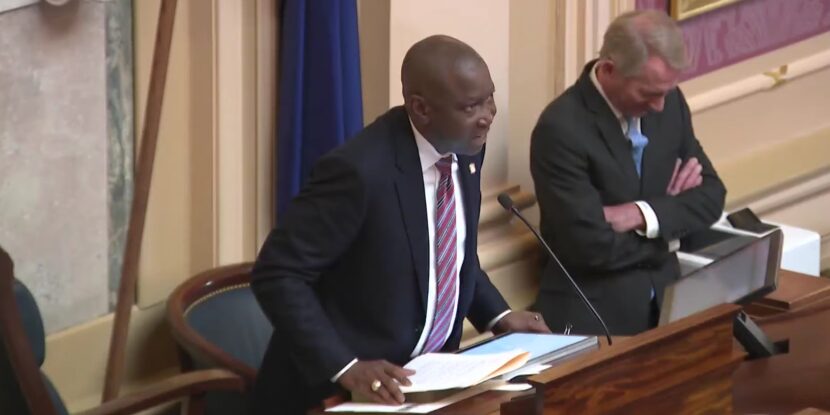
Virginia House Speaker Don Scott says he’s considering a plan to redraw the state’s Congressional maps in a way that could give Democrats a significant advantage, potentially shifting the current 6-5 delegation in favor of Republicans to a 10-1 Democratic majority.

Speaking at the UVA Center for Politics on Wednesday, December 3, Scott outlined the proposal as a response to what he described as “bullying” by President Donald J. Trump in states like Texas. “He’s bullying folks in these states to change the rules, and we have an obligation to stand up and do something different,” Scott said.

The suggestion comes amidst ongoing efforts by both major political parties to redraw state maps ahead of upcoming elections, including the midterms next year. Scott indicated that such a dramatic shift in the delegation’s composition “was not out of the realm” of possibility under the new maps.

However, given that Democrats only enjoyed a slight advantage in state-wide elections, and Virginia‘s population distribution—with a bulk of Democrat voters living in the suburbs of Washington, D.C. in the north of the state—Scott’s idea of a 10-1 map appears more of an exaggerated threat than a possible reality. Redrawing congressional lines in a manner that gives Democrats such an advantage would likely draw considerable legal challenges, as the districts would likely lack compactness, contiguity, and equal population.

Join Pulse+ to comment below, and receive exclusive e-mail analyses.

show less
show more

Supreme Court Upholds Texas Congressional Redistricting.

PULSE POINTS

WHAT HAPPENED: The U.S. Supreme Court (SCOTUS) allowed Texas to redraw its electoral map, adding up to five likely Republican-controlled House districts.

👤WHO WAS INVOLVED: The Supreme Court, Texas state officials, and the Democratic and Republican parties.

📍WHEN & WHERE: The decision was handed down on Thursday, impacting electoral districts in Texas.

🎯IMPACT: The ruling boosts the GOP’s chances of preserving its Congressional majority while highlighting the ongoing partisan battles over redistricting.

IN FULL

The U.S. Supreme Court has sided with Texas, permitting the state to implement a new congressional map that creates as many as five additional Republican-leaning House districts. The ruling reverses a lower-court decision that had found the map illegally dismantled majority-minority districts through racial gerrymandering.

The decision markedly improves Republicans’ odds of holding their House majority in future cycles. However, the Democrats are pursuing parallel tactics: a new California map is projected to net them multiple seats. This decision is being challenged in the courts by the California GOP and the Trump Department of Justice (DOJ), which contend that the Golden State is racially gerrymandering the new districts in favor of Democrat-leaning Hispanic voters. “Race cannot be used as a proxy to advance political interests, but that is precisely what the California General Assembly did,” the DOJ argues.

The recurring redistricting fights highlight how deeply partisan the process has become. Although some advocate for independent, nonpartisan map-drawing commissions, those reforms have struggled to gain traction. As one attorney with the American Constitution Society observed, a party that unilaterally disarmed from redistricting would be “bringing a knife to a gun fight.”

Image by Joe Ravi.

Join Pulse+ to comment below, and receive exclusive e-mail analyses.

show less
show more

Federal Court to Review California’s New Congressional Maps by This Date.

PULSE POINTS

WHAT HAPPENED: A federal court in California has set December 15 as the date to hear arguments about the state’s new congressional maps, which have been redrawn to favor the Democrats.

👤WHO WAS INVOLVED: California Republicans, voters, members of the Trump administration, Democrat Governor Gavin Newsom, Secretary of State Shirley Weber, and Attorney General Rob Bonta.

📍WHEN & WHERE: December 15, 2023, at a Los Angeles court, overseen by a three-judge panel.

💬KEY QUOTE: Democrats have called the allegations “meritless.”

🎯IMPACT: The case could determine the legality of congressional maps, potentially impacting the makeup of the House of Representatives after the 2026 midterms.

IN FULL

A federal court in California has set oral arguments for December 15 on the state’s newly approved congressional maps, which were passed via Proposition 50 earlier this month and are widely seen as boosting Democrats’ chances of winning the House in the 2026 midterms.

The California Republican Party, joined by voters and Trump administration officials, has filed suit against Democrat Governor Gavin Newsom and Secretary of State Shirley Weber, claiming the maps unconstitutionally prioritize Democrat-leaning Latino voters at the expense of other racial groups. Democrats have called the lawsuit “meritless.”

The U.S. District Court for the Central District of California had originally scheduled a hearing for next week, but agreed to Attorney General Rob Bonta’s request to push it to December 15. Bonta, defending Newsom and Weber, had first asked to delay until January 2026, per court filings.

A three-judge panel in Los Angeles will hear the case, and the ruling could shape how far California can go in drawing maps that appear to favor particular demographic groups in future elections.

Image by Gage Skidmore.

Join Pulse+ to comment below, and receive exclusive e-mail analyses.

show less
show more

Democrat Lawfare Orgs Are Challenging Justice Alito’s Order Restoring Texas Congressional Map.

PULSE POINTS

WHAT HAPPENED: Democrat Party-aligned electioneering groups have filed a challenge to Supreme Court Justice Samuel Alito’s order allowing Texas to use its newly drawn congressional map, citing racial gerrymandering concerns.

👤WHO WAS INVOLVED: Justice Samuel Alito, Texas state officials, and so-called voting rights groups opposing the map.

📍WHEN & WHERE: The emergency order was issued on Friday, November 21, 2025, with the challenge filed on Monday; the case is before the U.S. Supreme Court.

💬KEY QUOTE: Texas argued that altering district lines before the March primary would “disrupt election preparations and confuse voters.”

🎯IMPACT: The Supreme Court’s decision will determine whether Texas’s 2026 map remains in place while litigation continues.

IN FULL

Democrat Party-aligned electioneering groups are challenging Supreme Court Justice Samuel Alito’s Friday order allowing Texas to use its newly drawn congressional map. In their filing, made on Monday, the far-left election lawfare organizations contend the state’s redistricting plan is an “extraordinary” case of racial gerrymandering.

The complaint argues the lower court was correct in finding that black and Hispanic voters were likely to prevail on claims that the new congressional map is an illegal gerrymander that is intended to dilute the minority vote in several districts. Alito issued the emergency order on November 21, ruling the Texas map could remain in place while the full court considers the legal challenge.

Texas urged the high court to settle the matter swiftly, warning that any change to district lines months before the March primary would cause logistical chaos for voters and likely disrupt the primary election. In addition, the state is pointing to the Purcell rule, which generally advises federal courts not to intervene in district map challenges and ballot rules close to an election.

“The district court’s injunction comes far too late in the day under Purcell. Campaigns have begun in the 2025 districts. The candidate filing period ends on December 8. Ballots will then soon be printed, checked and re-checked, and sent overseas. In the middle of all of that, the district court has ordered the State to stop,” Texas Solicitor General William R. Peterson wrote in the state’s emergency appeal filed late last week. He continued: “Worse, because there is no time for remedial proceedings by the district court’s own admission, the district court has ordered the State to replace the 2025 districts in medias res with repealed redistricting legislation—reviving the 2021 map that changes all but one of Texas’s 38 congressional districts, in many cases changing them dramatically.”

A three-judge federal panel in El Paso ruled two-to-one last week that Texas’s latest redistricting plan was likely drawn with discriminatory intent. However, the majority’s ruling was blasted by U.S. Circuit Court Judge Jerry Smith in his dissent, with the jurist alleging his colleague, Judge Jeffrey Brown, had engaged in judicial misconduct.

Image by Joe Ravi.

Join Pulse+ to comment below, and receive exclusive e-mail analyses.

show less
show more