


Tuesday, April 21, 2026

Court Blocks GOP Redistricting Reforms to Preserve Black ‘Voting Power.’

PULSE POINTS

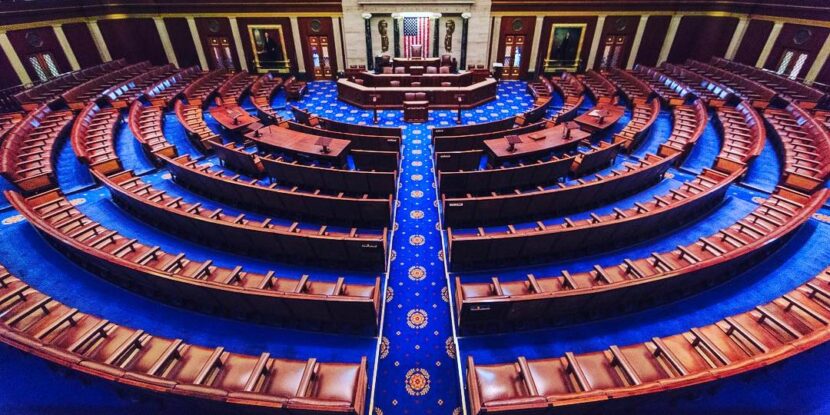
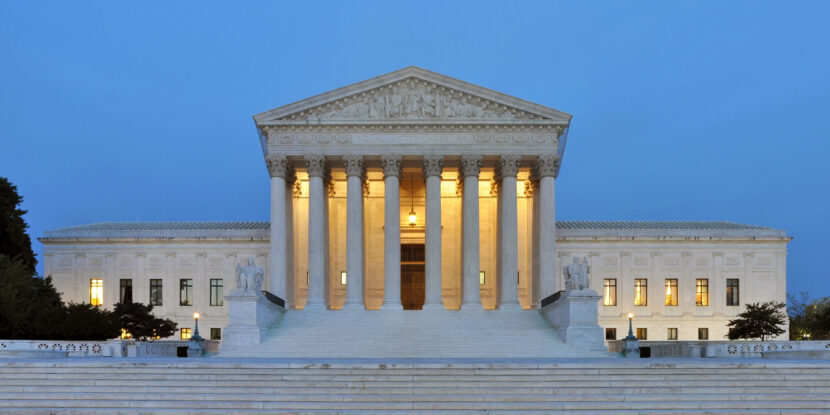
WHAT HAPPENED: Judges for the Fifth Circuit Court of Appeals ruled against Louisiana’s request to enforce a congressional redistricting map, alleging it is an unconstitutional racial gerrymander.

👤WHO WAS INVOLVED: The Fifth Circuit Court of Appeals, Louisiana’s Republican-majority legislature, the American Civil Liberties Union (ACLU), and other plaintiffs.

📍WHEN & WHERE: The ruling was issued recently, and the case centers on Louisiana’s congressional map drawn after the 2020 census.

💬KEY QUOTE: “There is no legal basis for this proposition, and the state offers no evidence that conditions in Louisiana have changed,” the court stated.

🎯IMPACT: The ruling is a temporary win for the ACLU and plaintiffs, with the Supreme Court expected to issue the final decision.

IN FULL

The Fifth Circuit Court of Appeals has denied Louisiana‘s request to enforce its congressional redistricting map, initially passed by the Republican-majority legislature in 2022. Judges ruled the map violated Section 2 of the Voting Rights Act by diluting the votes of black residents through practices described as “packing” and “cracking” black voters, undermining their voting power.

Notably, 83 percent of black voters nationwide backed Democrat candidate Kamala Harris in the 2024 presidential election.

The court rejected Louisiana’s argument that race-based remedies are no longer necessary, stating, “There is no legal basis for this proposition, and the state offers no evidence that conditions in Louisiana have changed.” One judge issued a stay before the decision could take effect, though the Supreme Court had already stayed the map earlier in the year.

The Supreme Court is also currently reviewing the case in Louisiana v. Callais and has requested additional arguments from both sides. The focus remains on whether Louisiana’s redistricting efforts were narrowly tailored to meet constitutional requirements. Justices are expected to weigh in further during the fall term.

The litigation comes amid broader redistricting battles across the country, with both Republican- and Democrat-led states revising their maps ahead of the 2026 midterm elections. States like Texas and California are engaged in legal and political fights over their congressional maps, and the outcomes of these disputes could significantly impact the balance of power in Congress during the next election cycle.

Join Pulse+ to comment below, and receive exclusive e-mail analyses.

show less
show more

Californians Reject Newsom’s Redistricting Plot, Poll Shows.

PULSE POINTS

WHAT HAPPENED: Democratic California Governor Gavin Newsom’s plan to transfer redistricting authority from an independent commission to the Democrat-dominated state legislature faces significant public opposition, according to a recent poll.

👤WHO WAS INVOLVED: Governor Gavin Newsom, California voters, and the state legislature.

📍WHEN & WHERE: Poll conducted between July 28 and August 12, 2025, across California.

💬KEY QUOTE: “If the other states call off their redistricting efforts, we will do the same. And American democracy will be better for it.” – Gavin Newsom

🎯IMPACT: The move could lead to intensified political battles over congressional maps and potential retaliation from other states.

IN FULL

A plan to further gerrymander California’s congressional districts, pushed by Governor Gavin Newsom (D-CA), is being widely panned by Golden State voters. According to a new Politico–Citrin Center–Possibility Lab poll, Newsom’s gerrymander proposal, seeking to shift redistricting authority from California’s independent commission—enshrined in the state constitution—to the California legislature, is opposed by nearly two-thirds of respondents. Notably, the change would require voter approval through a statewide referendum, scheduled for November.

The survey, conducted between July 28 and August 12 among 1,445 registered voters in California, revealed that Californians overwhelmingly favor the independent panel. Only 36 percent of respondents support Newsom‘s plan, including a mere 39 percent of Democrats and 34 percent of Republicans.

Newsom has framed his redistricting effort as a countermeasure to Republican-led initiatives in states like Texas, where GOP lawmakers are pursuing new congressional maps that could secure up to five additional House seats for Republicans. In response, Newsom stated, “If the other states call off their redistricting efforts, we will do the same. And American democracy will be better for it.”

Critics, including Vice President J.D. Vance, have questioned the impartiality of California’s current congressional maps, which some argue already favor Democrats. The Princeton University Gerrymandering Project rated California’s map a “B” overall but gave it an “F” for competitiveness. Republicans currently hold just 17 percent of the state’s congressional seats, despite Donald Trump securing 38.3 percent of the vote in the 2024 presidential election.

The redistricting debate comes as other Democrat-led states, such as Illinois and Maryland—two of the most heavily gerrymandered states in the country—signal their willingness to redraw their maps in response to Republican efforts.

Meanwhile, Texas House Democrats recently returned home after fleeing the state to block a GOP redistricting proposal; however, another special session on the matter is expected to be called soon.

Join Pulse+ to comment below, and receive exclusive e-mail analyses.
show less
show more

Texas AG Ken Paxton Seeks Contempt Charge Against Beto for Funding Runaway Dems.

PULSE POINTS

WHAT HAPPENED: Texas Attorney General Ken Paxton (R) announced legal action to hold former Democratic Rep. Beto O’Rourke (D) in contempt for alleged unlawful fundraising activities.

👤WHO WAS INVOLVED: Texas Attorney General Ken Paxton, former Rep. Beto O’Rourke, and O’Rourke’s organization, Powered by People.

📍WHEN & WHERE: The contempt action was announced on August 12, 2025.

💬KEY QUOTE: “Beto told me ‘to come and take,’ so I did and beat him in court. Now, he still thinks he’s above the law, so I’m working to put him behind bars.” – Ken Paxton

🎯IMPACT: The restraining order halts O’Rourke’s fundraising efforts for Democrat lawmakers who fled Texas to deny the state legislature a quorum, and Paxton is pursuing further legal consequences.

IN FULL

Texas Attorney General Ken Paxton (R) has announced his office is taking legal action against former Democratic Congressman and perennial failed candidate Robert Francis “Beto” O’Rourke, accusing him of violating a temporary restraining order that prohibits fundraising for Democrats who fled the state during the legislature’s special session for redistricting to deny it a quorum. Paxton declared that O’Rourke’s actions constitute a contemptuous and “blatant violation” of the court order.

The restraining order, granted by a Tarrant County District Judge on Friday, came after Paxton sued O’Rourke and his organization, Powered by People. The lawsuit alleges that O’Rourke engaged in a “misleading financial-influence scheme” to support Democrat legislators who broke quorum in protest of Republican redistricting efforts. The judge’s order blocked O’Rourke and Powered by People from further fundraising activities.

In a statement, Paxton remarked, “Robert Francis [O’Rourke] flagrantly and knowingly violated the court order I secured that prevents him from raising funds and distributing any more Beto Bribes. He’s about to find out that running your mouth and ignoring the rule of law has consequences in Texas. It’s time to lock him up.”

O’Rourke, who served in the U.S. House of Representatives from 2013 to 2019 and in former President Joe Biden’s cabinet, has become a well-known figure in Texas politics, mostly due to a series of humiliating statewide election defeats. He lost a challenge against Senator Ted Cruz (R-TX) in 2018 and Republican Gov. Greg Abbott (R-TX) in 2022 and also failed in his bid for the Democratic presidential nomination in 2020.

Paxton emphasized the significance of the legal action in a post on X (formerly Twitter), writing, “I just defeated Beto O’Rourke in court. We secured a major victory stopping runaway Democrats from taking ‘Beto Bribes’ and preventing deceptive fundraising.”

Image by Gage Skidmore.

Join Pulse+ to comment below, and receive exclusive e-mail analyses.

show less
show more

Supreme Court Could Decide Fate of Fugitive Texas Democrats.

PULSE POINTS

WHAT HAPPENED: The Texas House of Representatives has filed lawsuits in Illinois and California courts to domesticate civil arrest warrants for House Democrats who fled the state to block a vote on redistricting. Should the two states reject the warrants, the matter could find its way to the U.S. Supreme Court.

👤WHO WAS INVOLVED: Texas House Democrats, Texas House Speaker Dustin Burrows (R), Illinois Governor J.B. Pritzker (D), and California Governor Gavin Newsom (D).

📍WHEN & WHERE: Lawsuits were filed recently in Illinois and California after Democrats fled Texas during a special session.

🎯IMPACT: If Illinois and California courts refuse to enforce the warrants, the matter could escalate to the U.S. Supreme Court.

IN FULL

The Texas House of Representatives has filed arrest warrants for 56 Texas Democrat lawmakers currently hiding in Illinois and California. They left the state to prevent voting on a redistricting plan during a special session. Each of the lawsuits asks courts in Democrat-controlled California and Illinois to domesticate warrants under the Full Faith and Credit Clause of the U.S. Constitution, enabling the absent lawmakers to be detained and returned to Texas.

However, Illinois Governor J.B. Pritzker (D) has already declared that his state will not comply, insisting that Illinois is not obligated to honor the warrants unless a federal crime has been committed. He stated, “There is literally no federal law applicable to this situation. None.” It is suspected that California Gov. Gavin Newsom (D) will likewise ignore the warrants.

The situation could set up a major showdown before the U.S. Supreme Court if Illinois and California continue to refuse to enforce the Texas warrants. Notably, the U.S. Constitution’s Full Faith and Credit Clause mandates states to recognize and enforce public acts and judicial proceedings from other states. Compounding the situation is the reported involvement of the Federal Bureau of Investigation (FBI) in tracking down and possibly arresting the missing Texas Democrats—a factor that could expedite any federal court challenge.

The lawsuits argue that Illinois and California must treat Texas’s Quorum Warrants as their own civil orders. They cite federal statute 28 U.S.C. § 1738, which codifies the Full Faith and Credit Clause and the Judicial Comity doctrine. Precedent from a 2016 U.S. Supreme Court ruling on the Full Faith and Credit Clause supports Texas’s position, requiring state courts to enforce judgments from other states.

Courts in Illinois and California have yet to schedule hearings on the matter.

Image by Joe Ravi.

Join Pulse+ to comment below, and receive exclusive e-mail analyses.
show less
show more

Trump Declares Illegal Immigrants Will Not Be Counted in Census.

PULSE POINTS

WHAT HAPPENED: President Donald J. Trump announced plans to exclude illegal immigrants from the next U.S. census and instructed the Commerce Department to begin work on a new census based on the 2024 election results.

👤WHO WAS INVOLVED: President Donald Trump, the U.S. Census Bureau, and the Department of Commerce.

📍WHEN & WHERE: The announcement was made Thursday morning on Truth Social, with implications for the 2024 election and 2030 census.

💬KEY QUOTE: “People who are in our Country illegally WILL NOT BE COUNTED IN THE CENSUS.” – Donald Trump

🎯IMPACT: The move could face legal challenges and significantly alter population counts, potentially affecting congressional representation and electoral college votes.

IN FULL

President Donald J. Trump announced Thursday morning that illegal immigrants will not be included in the next census. He directed the Commerce Department to begin work on a “new and highly accurate census” based on data from the 2024 presidential election.

“I have instructed our Department of Commerce to immediately begin work on a new and highly accurate CENSUS based on modern day facts and figures and, importantly, using the results and information gained from the Presidential Election of 2024,” Trump wrote on Truth Social, adding: “People who are in our Country illegally WILL NOT BE COUNTED IN THE CENSUS.”

The U.S. Census Bureau, which is part of the Commerce Department, currently includes illegal immigrants—referred to as “unauthorized migrants”—in its population counts. These figures are used for congressional apportionment and electoral college votes. The bureau defines the “foreign-born” population to include naturalized citizens, lawful permanent residents, temporary migrants, and unauthorized migrants.

Legal challenges could arise from Trump’s directive, as Section 2 of the 14th Amendment states that representatives should be apportioned based on the “whole number of persons in each State.” However, Trump’s focus on census accuracy comes as Republicans and Democrats battle over redistricting in states like Texas ahead of the 2026 midterm elections.

The 2020 census acknowledged errors that led to undercounts in Republican-led states like Florida and Texas, while Democrat-led states such as New York and Massachusetts were overcounted. If Trump’s plan is implemented, states with large illegal immigrant populations—such as California, Texas, and Florida—could see significant changes in their 2030 census numbers.

Join Pulse+ to comment below, and receive exclusive e-mail analyses.

show less
show more
State Representative Matt Pierce

Democratic Lawmaker Threatens ‘Knife Fight’ Prior to J.D. Vance Visit.

PULSE POINTS

WHAT HAPPENED: Indiana Democrats are warning of a potential redistricting battle as Republicans consider redrawing congressional district maps ahead of the 2026 midterms.

👤WHO WAS INVOLVED: State Representative Matt Pierce, Vice President J.D. Vance, Governor Mike Braun (R-IN), Congressman Frank Mrvan (D-IN), and other state and national political figures.

📍WHEN & WHERE: Indiana, with discussions and meetings taking place this week, including a visit from Vice President Vance to Indianapolis.

💬KEY QUOTE: “I’m sounding the alarm because Democrats in Indiana are in a knife fight to preserve democracy, and we better start acting like it.” – Matt Pierce

🎯IMPACT: The potential redistricting could reshape Indiana’s congressional delegation, targeting competitive districts and sparking broader national debates on gerrymandering.

IN FULL

Indiana State Representative Matt Pierce (D) says that Democrats in the state are in a “knife fight to preserve democracy” as Republicans consider redrawing congressional districts. The threat comes as Vice President J.D. Vance is set to visit Indianapolis this week to meet with Governor Mike Braun (R-IN) to discuss redistricting.

A redrawn Indiana congressional map could potentially target Democratic-leaning seats like the state’s 1st Congressional District, currently held by Congressman Frank Mrvan (D-IN), as Republicans work to solidify their 7-2 advantage in the state’s congressional delegation.

Pierce alleges that Vance is being sent by President Donald J. Trump to push Braun into calling a special session to implement “Texas-style gerrymandering.” In a Facebook video, Pierce stated, “I’m sounding the alarm because Democrats in Indiana are in a knife fight to preserve democracy, and we better start acting like it.” The Indiana Democrat continued, alleging Republicans want to “steal away seats from Democrats because they know they can’t win this election with their failed policies that harm the middle class and then give all the benefits to the wealthy.”

A spokesman for Indiana House Democrats revealed that efforts are underway to mobilize public opposition, including calls to representatives and a sit-in protest. However, Indiana’s legislative rules do not require a quorum for Republicans to pass a redistricting bill, removing a tactic used by Texas Democrats to delay similar efforts.

Governor Braun described his discussions with Vance as “exploratory” with “no commitments” yet. Meanwhile, Democrats in other states like California and Illinois are also considering retaliatory redistricting efforts to counter Republican moves in states like Texas, Missouri, and Florida. Congressman Mike Lawler (R-NY) has called for legislation to ban partisan gerrymandering and mid-decade redistricting, emphasizing the need for competitive districts to improve Congress.

Image by Indiana Public Media.

Join Pulse+ to comment below, and receive exclusive e-mail analyses.

show less
show more

Texas Supreme Court Gives Dems Until Friday to Respond to Abbott’s Removal Order.

PULSE POINTS

WHAT HAPPENED: Texas Gov. Greg Abbott filed an emergency petition to the state Supreme Court to remove state Rep. Gene Wu from office after Wu fled with other Democrats to block a redistricting bill. The Texas Supreme Court took up the petition late Tuesday, giving Wu until Friday to respond.

👤WHO WAS INVOLVED: Gov. Greg Abbott (R-TX), state Rep. Gene Wu (D), Texas House Democrats, and Attorney General Ken Paxton (R-TX).

📍WHEN & WHERE: The petition was filed on Tuesday evening in Texas following the Democrats’ departure over the weekend.

💬KEY QUOTE: “Absconding from the State during a constitutionally mandated session… constitutes a flagrant violation of Wu’s oath and is an intentional abandonment of his constitutional duty,” the lawsuit states.

🎯IMPACT: The Texas House Republicans plan to attempt reaching a quorum again on Friday, after failing earlier this week.

IN FULL

Governor Greg Abbott (R-TX) filed an emergency petition with the state Supreme Court on Tuesday to initiate removal proceedings against state Representative Gene Wu (D) and Texas House Democrats. Texas’s high court took up the petition late Tuesday evening, giving Wu until Friday to respond.

Wu, who serves as the Texas House Democratic Caucus chair, was among several Democratic lawmakers who left Texas to deny Republicans the quorum needed to pass a congressional map that could provide them with five additional pickup opportunities in the 2026 midterms.

According to Abbott’s filing, Wu violated the state Constitution by failing to return for the vote, claiming that his actions amounted to abandoning his office. The petition argued that maintaining quorum is “an affirmative constitutional obligation” and accused Wu of “openly renouncing these constitutional mandates by fleeing the State of Texas to break quorum.”

Responding to the accusations in a statement, Wu said: “Let me be unequivocal about my actions and my duty. When a governor conspires with a disgraced president to ram through a racist gerrymandered map, my constitutional duty is to not be a willing participant.” He added, “Denying the governor a quorum was not an abandonment of my office; it was a fulfillment of my oath.”

The Texas Supreme Court quickly took up Gov. Abbott’s petition, giving Wu until 5:00 PM on Friday to respond.

The emergency petition follows remarks from Texas Attorney General Ken Paxton (R), who hinted at potential legal action over the situation. Texas House Republicans are expected to attempt to reach a quorum again on Friday, after failing on Monday and Tuesday.

Image by World Travel & Tourism Council.

Join Pulse+ to comment below, and receive exclusive e-mail analyses.

show less
show more

California Plans to Cut 5 GOP House Seats Through Gerrymandering.

PULSE POINTS

WHAT HAPPENED: California Democrats are proposing new political maps that could reduce five Republican-held House seats while strengthening Democratic margins in battleground districts.

👤WHO WAS INVOLVED: Governor Gavin Newsom (D-CA), California’s Democratic congressional delegation, and Republican Representatives Ken Calvert, Darrell Issa, Kevin Kiley, David Valadao, and Doug LaMalfa.

📍WHEN & WHERE: The proposal was discussed on Monday in California, with a potential special election planned for the first week of November.

💬KEY QUOTE: “California will not sit by idly and watch this democracy waste away,” said Governor Gavin Newsom.

🎯IMPACT: If approved, the new maps could increase Democratic seats in California from 43 to 48, further tipping the balance of the U.S. House in their favor.

IN FULL

California Democrats are advancing a draft proposal to redraw the state’s congressional district lines in a way that could significantly weaken Republican representation, while shoring up Democratic advantages in competitive regions. If enacted, the changes could increase the number of Democratic-held seats in California’s 52-member U.S. House delegation from 43 to 48.

Though the plan hasn’t been formally unveiled, it’s expected to target several Republican-controlled districts by reducing the number of conservative voters and boosting liberal turnout in those areas. Districts currently held by GOP Representatives Ken Calvert, Darrell Issa, Kevin Kiley, David Valadao, and Doug LaMalfa would be among those affected. On the other hand, seats held by Democrats Dave Min, Mike Levin, and Derek Tran would likely become more secure under the proposed boundaries.

Governor Gavin Newsom (D-CA) has indicated he’s prepared to move forward with the partisan redistricting effort, including calling a statewide vote on the matter. “California will not sit by idly and watch this democracy waste away,” Newsom said on August 4, underscoring his frustration with redistricting moves in other states, particularly Texas. He added that a special election could be scheduled for early November to allow voters to weigh in. Still, he emphasized he would reconsider if Texas Republicans paused their redistricting campaign.

This effort comes as a direct response to Texas Republicans’ push to reshape their state’s congressional map, which some claim is being done in favor of the GOP ahead of the 2026 elections. Democrat lawmakers tried to disrupt the process by fleeing the state to avoid voting on the redistricting plans. In response, Texas Governor Greg Abbott ordered the arrest and return of any member caught abandoning their duties.

California’s proposal aims to counterbalance those moves by strengthening Democratic margins in politically mixed regions such as Orange County, San Diego County, and parts of the Central Valley.

Still, the redistricting push faces hurdles. State lawmakers must approve the plan, and voters, who previously opted to hand over redistricting responsibilities to an independent commission, may be wary of what they perceive as a return to partisan gerrymandering.

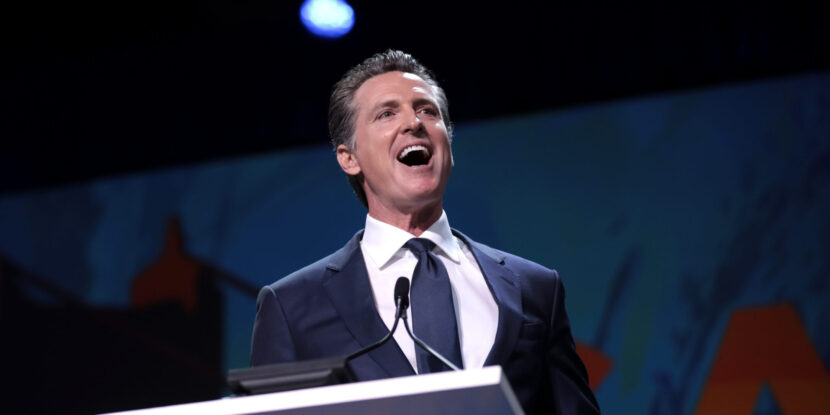
Image by Gage Skidmore. 

Join Pulse+ to comment below, and receive exclusive e-mail analyses.
show less
show more