


Tuesday, July 21, 2026

Trump Wants $88 Billion for Iran War, Ebola, and Farm Support.

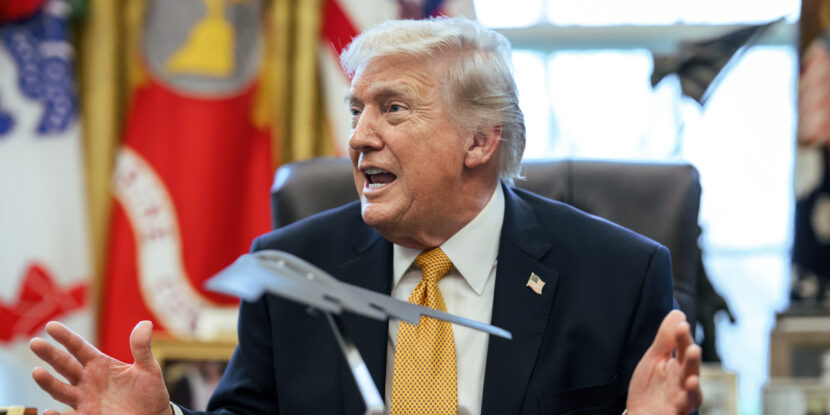
President Donald J. Trump has submitted a significant emergency funding request to Congress, aimed at addressing military, agricultural, and global health priorities following Operation Epic Fury.

PULSE POINTS
❓ WHAT HAPPENED: President Donald J. Trump has formally requested $87.6 billion in supplemental appropriations from Congress to cover expenses related to the U.S.-Israeli military campaign against Iran, economic relief for American farmers, and the Ebola outbreak in Africa. The funding aims to replenish military stockpiles, assist farmers affected by economic and weather challenges, and support humanitarian efforts in Africa.
📺 DETAIL: The largest portion of the request, $67.1 billion, would go to the Pentagon to replenish munitions stockpiles, fund military operations, strengthen cybersecurity capabilities, and support classified programs following Operation Epic Fury, the joint U.S.-Israeli campaign against Iran. The package also includes $11.1 billion for agricultural assistance, including aid for crop producers and Florida farmers affected by storms, and $1.4 billion for Ebola response efforts in Africa. Additional funding would support infrastructure projects, including $1 billion for the modernization of New York City’s Penn Station and $500 million for restoration projects in Washington, D.C. The administration said the request addresses urgent national security, economic, and public health priorities, while describing the Iran campaign as a strategic success. However, the proposal faces an uncertain path in Congress, where Democrats have largely opposed funding the conflict and some Republicans have questioned its costs and long-term benefits.
🎯 IMPACT: The funding request faces a challenging path in Congress, where bipartisan support is required. While many Republicans back military and farm aid, divisions remain over the war’s execution and costs. Democrats are expected to resist the proposal, citing concerns over the necessity and legality of the Iran campaign.

Join Pulse+ to comment below, and receive exclusive e-mail analyses.

show less


President Donald J. Trump has submitted a significant emergency funding request to Congress, aimed at addressing military, agricultural, and global health priorities following Operation Epic Fury.

show more

U.S. Retail Sales Beat Expectations in May, Here’s Why:

U.S. retail sales exceeded expectations in May, driven partly by higher spending at gas stations.

PULSE POINTS
❓ WHAT HAPPENED: U.S. retail sales rose by 0.9 percent in May, reaching $763.7 billion, surpassing the 0.5 percent increase anticipated by economists. This growth was largely driven by higher spending at gas stations amid elevated energy costs. However, core retail sales, which exclude autos, gasoline, building materials, and food services, also rose 0.7 percent, suggesting solid consumer demand and supporting expectations for stronger second-quarter economic growth.
📰 DETAIL: Sales in April were revised down to a 0.4 percent gain, while year-over-year retail sales increased 6.9 percent. Higher fuel costs contributed to the increase, with service station sales climbing 3.4 percent in May and 26.5 percent from a year earlier, though gasoline prices have since eased following the announcement of an imminent agreement between the U.S. and Iran to end hostilities and reopen the Strait of Hormuz. The report adds to the evidence of resilience in the U.S. economy, alongside recent job growth data. Notably, consumer spending, which accounts for more than two-thirds of U.S. economic activity, appears to be accelerating after slowing in the first quarter, with the Atlanta Fed forecasting 2.8 percent annualized growth in the second quarter. However, analysts caution that the recent spending surge may fade as the boost from larger tax refunds diminishes and inflation continues to outpace wage growth.
💬 KEY QUOTE: “The strength of ​May’s retail sales report and the acceleration from April’s spending pace will raise more yellow flags at the Fed as it tries ⁠to tamp down consumer inflation pressures.” – Scott Anderson, chief U.S. economist at BMO Capital Markets.
🎯 IMPACT: The robust retail sales figures suggest that American consumers are not dramatically curbing spending despite rising prices, mitigating recession fears. However, sustained demand could complicate the Federal Reserve’s efforts to lower interest rates, which is a longstanding demand of President Donald J. Trump.

Image by Erik Mclean.

Join Pulse+ to comment below, and receive exclusive e-mail analyses.

show less
U.S. retail sales exceeded expectations in May, driven partly by higher spending at gas stations.

show more

Planned Parenthood Is Suing Trump to Stop Abortion Funding Cuts in ‘One Big Beautiful Bill.’

PULSE POINTS

WHAT HAPPENED: Planned Parenthood filed a lawsuit challenging a provision in President Donald J. Trump’s “One Big Beautiful Bill” that would strip Medicaid funding from its abortion centers.

👤WHO WAS INVOLVED: Planned Parenthood, the Trump administration, and the Centers for Medicare & Medicaid Services.

📍WHEN & WHERE: The lawsuit was filed on Monday, July 7, 2025, in a federal court in Boston, Massachusetts.

💬KEY QUOTE: “The true design of the Defund Provision is simply to express disapproval of, attack, and punish Planned Parenthood, which plays a particularly prominent role in the public debate over abortion,” Planned Parenthood stated in its complaint.

🎯IMPACT: Planned Parenthood claims the provision would have “catastrophic consequences” for over one million patients annually who rely on Medicaid services at its nearly 600 facilities.

IN FULL

Planned Parenthood has filed a lawsuit against the Trump administration, targeting a specific provision in the “One Big Beautiful Bill”—signed into law last week by President Donald J. Trump—that would revoke Medicaid funding from its abortionist clinics. The lawsuit, submitted in a Boston federal court, argues that the provision is unconstitutional and aims to prevent the organization’s abortionists from receiving Medicaid money.

The organization stated that over one million patients annually rely on Medicaid services provided by its nearly 600 facilities. Planned Parenthood described the measure as an effort to “attack and punish” the organization due to its status as the industry leader in aborting babies.

“The true design of the Defund Provision is simply to express disapproval of, attack, and punish Planned Parenthood, which plays a particularly prominent role in the public debate over abortion,” the organization claimed in its filing.

The Centers for Medicare and Medicaid Services (CMS), a division of the Department of Health and Human Services (HHS) that oversees Medicaid, has not commented on the lawsuit. Planned Parenthood asserts that the provision would lead to “catastrophic consequences,” claiming it would negatively impact patients who depend on Medicaid.

In June, the top abortion provider suffered a significant legal blow when the U.S. Supreme Court ruled that state governments have the authority to block Medicaid funding for Planned Parenthood clinics, siding with South Carolina in Medina v. Planned Parenthood South Atlantic. Medicaid and government grants comprise a significant portion of Planned Parenthood’s funding.

Image by Tim Evanson.

Join Pulse+ to comment below, and receive exclusive e-mail analyses.

show less
show more

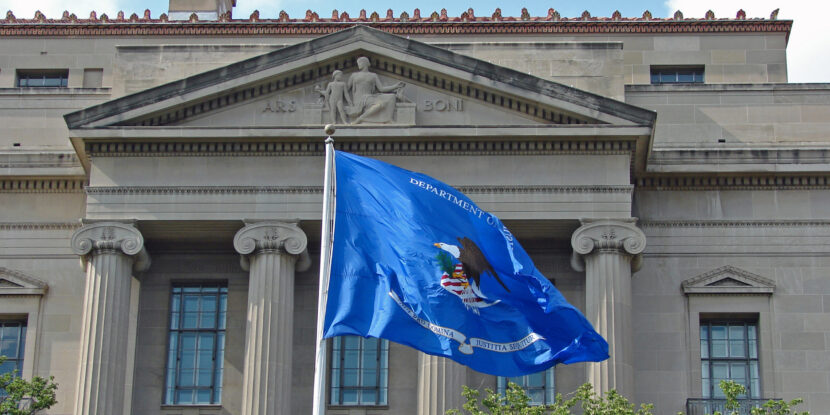
DOJ Redirects Trans, DEI Grants to Bolster Law Enforcement Funding.

PULSE POINTS:

What Happened: The Department of Justice (DOJ) is reallocating funds previously designated for diversity, equity, and inclusion (DEI) and transgender initiatives to support law enforcement and crime prevention.

👥 Who’s Involved: Attorney General Pam Bondi, Senate Judiciary Chair Chuck Grassley, and the DOJ.

📍 Where & When: United States; decision follows a recent inquiry from Grassley about DOJ grant funding cuts.

💬 Key Quote: “The Department of Justice under Pam Bondi will not waste discretionary funds on DEI passion projects that do not make Americans safer,” a DOJ official stated.

⚠️ Impact: Funds will now focus on combating violent crime, aiding victims, and enhancing law enforcement coordination, while grants for DEI programs are terminated.

IN FULL:

The Department of Justice (DOJ), under Attorney General Pam Bondi, has announced a significant shift in funding priorities. Resources will be redirected away from diversity, equity, and inclusion (DEI) projects to focus on law enforcement and public safety initiatives.

The decision comes after Senate Judiciary Chair Chuck Grassley sought clarification regarding the DOJ’s recent move to cut $811 million in grant funding. Grassley’s inquiry prompted the DOJ to disclose that much of the affected funding had been awarded to non-governmental organizations rather than directly to state or local agencies serving communities.

According to a DOJ response, the funds will now be allocated toward efforts such as combating violent crime, protecting children, aiding victims of trafficking and sexual assault, and improving coordination among law enforcement agencies.

“The Department of Justice under Pam Bondi will not waste discretionary funds on DEI passion projects that do not make Americans safer,” a DOJ official said. “We will use our money to get criminals off the streets, seize drugs, and in some cases, fund programs that deliver a tangible impact for victims of crime.”

Under the former Biden-Harris government, the DOJ had awarded grants to organizations promoting DEI and LGBT-related initiatives. For instance, $200,000 was granted to the Diversity Center of Oklahoma for services targeting “Black and Brown women, including Black transgender women,” which included funding for so-called “gender affirming medical care.”

Another $700,000 was awarded to FORGE Inc. to address violent crimes against transgender individuals, with a particular emphasis on trans women and girls of color.

The move is just another part of President Donald J. Trump’s initiatives to scrap DEI policies and rein in wasteful spending. Earlier this year, Trump signed an executive order banning all DEI initiatives within the federal government.

Image by Steve Fernie.

show less

PULSE POINTS:

show more

REPORT: US Halts Funding to WTO.

IN BRIEF:

What Happened: The United States has halted its payments to the World Trade Organization as part of President Trump’s effort to curb international spending.

👥 Who’s Involved: President Donald Trump, U.S. delegates to the WTO, WTO officials, and trade representatives.

📍 Where & When: Geneva; the funding pause began in early 2025, with arrears building since late 2024.

💬 Key Quote: “Generally, arrears can impact the operational capacity of the WTO Secretariat… [we] have plans in place to operate within the financial limitations imposed by any arrears.” — WTO spokesman Ismaila Dieng

⚠️ Fallout: The U.S. now owes over $25 million, is in “Category 1 arrears,” and has lost privileges such as presiding over WTO bodies. The WTO is quietly preparing contingency plans.

🔎 Why It Matters: This deepens the Trump administration’s retreat from global institutions and could weaken the WTO’s ability to manage global trade disputes if prolonged.

IN FULL:

According to sources, the United States has frozen its financial contributions to the World Trade Organization (WTO). The payments have been suspended pending a review of Washington’s support for international organizations.

The freeze aligns with President Donald J. Trump’s America First policy agenda. During his first term, Trump attempted to reform the WTO alongside Japan and the European Union. Now, his administration appears intent on sidelining the Geneva-based body by cutting off funding entirely.

The U.S. was expected to contribute around 11 percent of the WTO’s $232 million annual budget. However, as of December 2024, under the former Biden-Harris regime, Washington already owed around $25.7 million.

Due to the unpaid dues, the United States has been downgraded under WTO rules. This means its representatives can no longer chair WTO bodies or access certain official documents.

The WTO’s spokesman, Ismaila Dieng, confirmed that the Secretariat is managing resources prudently and preparing contingency plans for continued financial pressure. However, if the pause in U.S. contributions persists, it could have broader consequences for the organization’s operational capacity.

“The Secretariat continues to manage its resources prudently and has plans in place to operate within the financial limitations imposed by any arrears,” Dieng said.

The White House and the U.S. mission in Geneva have yet to publicly acknowledge the funding freeze. However, sources familiar with a private WTO budget meeting held on March 4 said the U.S. delegation provided no timeline for a final decision. If left unresolved, the U.S. funding gap could further destabilize the WTO. The administration is also pushing to withdraw from the World Health Organization (WHO) and has slashed support for multiple other international bodies.

Official White House Photo by Molly Riley.

show less

IN BRIEF:

show more

Social Security Announces $800 Million in Savings.

The Social Security Administration (SSA) has announced approximately $800 million in savings through recent cost-cutting measures. This development is part of broader efforts by the Trump administration to increase efficiency across federal agencies.

The savings align with President Donald J. Trump’s executive order establishing the Department of Government Efficiency (DOGE), which aims to enhance government operations through cutting waste and technology and software modernization.

In a March 3 press release, the SSA detailed its “cost-saving and cost-avoidance” strategies. Key savings were realized through payroll reductions following a hiring freeze and overtime cuts, particularly impacting SSA and Disability Determination Services. These changes accounted for $550 million in savings.

The Information Technology Systems budget saw a $150 million reduction from contract cancellations. Additional savings were achieved by decreasing non-Information Technology Systems travel expenses by $10 million and terminating contracts and grants, yielding another $30 million in savings.

Real estate adjustments also contributed to cost reductions. By eliminating 270,000 square feet of non-public-facing office space, the SSA saved $10.2 million, with plans to downsize an additional 30,000 square feet. Multiple lease terminations further saved $4 million annually. Furthermore, adopting a new security staffing model for field offices is forecasted to save $30 million in the 2025 fiscal year.

So far, under the first month of President Trump’s administration, DOGE has saved American taxpayers billions of dollars.

show less
The Social Security Administration (SSA) has announced approximately $800 million in savings through recent cost-cutting measures. This development is part of broader efforts by the Trump administration to increase efficiency across federal agencies. show more

DATA: Even Democrat Voters Support the DOGE ‘Dividend Checks’ Initiative.

President Donald J. Trump‘s proposal to distribute $5,000 “dividend checks” to Americans through savings from the Department of Government Efficiency (DOGE) has significant public support, according to a new poll. Conducted by J.L. Partners on February 24-25, the survey found that 67 percent of the 1,001 registered voters surveyed favor the one-time payment. Of these, 46 percent expressed strong support, while 21 percent were somewhat supportive.Only 12 percent opposed the proposal.

The poll indicates robust cross-party backing for the dividend. Notably, 79 percent of Republicans and 60 percent of Democrats support the measure, revealing potential bipartisan appeal. Additionally, the proposal could sway voting behavior, with 29 percent of independents and 24 percent of Democrats indicating the payout might influence them to vote Republican.

Despite public enthusiasm, the proposal’s success depends on DOGE‘s ability to significantly reduce federal spending. DOGE frontman Elon Musk has acknowledged the challenge, describing the $2 trillion savings goal as ambitious. During an interview with strategist Mark Penn, Musk admitted that achieving even half of the target would be deemed a success.

“It’s money taken away from the things that are destructive to the country, and from organizations that hate you, to you. That’s awesome—that’s, like, glorious. The spoils of battle,” Musk said of the dividend check concept while speaking at the Conservative Political Action Conference (CPAC) last week.

James Fishback—a DOGE adviser and the originator of the dividend check idea—remains optimistic, crediting the proposal’s momentum to President Trump’s support.

show less
President Donald J. Trump's proposal to distribute $5,000 "dividend checks" to Americans through savings from the Department of Government Efficiency (DOGE) has significant public support, according to a new poll. Conducted by J.L. Partners on February 24-25, the survey found that 67 percent of the 1,001 registered voters surveyed favor the one-time payment. Of these, 46 percent expressed strong support, while 21 percent were somewhat supportive.Only 12 percent opposed the proposal. show more

The Truth About Those ‘21 DOGE Staffers’ Who ‘Resigned’ in Protest.

The corporate media is running with a new narrative that 21 federal technology staffers with the Department of Government Efficiency (DOGE) have resigned over proposed cuts to “critical” services. Corporate media outlets like the Associated Press—currently barred from White House press briefings and the press pool on Air Force One—are running headlines claiming, “Federal technology staffers resign rather than help Musk and DOGE.” However, the truth of the matter paints a very different picture.

“We swore to serve the American people and uphold our oath to the Constitution across presidential administrations,” the 21 staffers wrote in a joint resignation letter. “However, it has become clear that we can no longer honor those commitments.”

Notably, the 21 technology staffers who resigned from DOGE predate the department’s creation under President Donald J. Trump. All 21 individuals were employed by the United States Digital Service—the entity renamed as DOGE—which was created by former President Barack Obama. These federal civil service staffers are not political appointees, and their employment predates President Trump’s election.

As for the supposed demands that they use their expertise to “dismantle critical public services,” thus far, DOGE has predominately focused on employment redundancies—recommending the firings of probationary employees to prevent duplicative work. Additionally, DOGE has gone after the federal government’s use of American taxpayer dollars to fund wasteful overseas projects through the United States Agency for International Development (USAID) that often undermine U.S. interests abroad. Neither of these instances reflects what most Americans consider “critical public services” like Social Security, Medicare, or Medicaid.

The National Pulse has previously reported that the Elon Musk-led DOGE has found billions in savings for American taxpayers in a little over a month of its existence.

Image by Ted Eytan.

show less
The corporate media is running with a new narrative that 21 federal technology staffers with the Department of Government Efficiency (DOGE) have resigned over proposed cuts to "critical" services. Corporate media outlets like the Associated Press—currently barred from White House press briefings and the press pool on Air Force One—are running headlines claiming, "Federal technology staffers resign rather than help Musk and DOGE." However, the truth of the matter paints a very different picture. show more

IRS Fires 6,000 Employees After Biden Hired 87,000.

The Internal Revenue Service (IRS) has dismissed an estimated 6,000 probationary employees at the direction of President Donald J. Trump’s Department of Government Efficiency (DOGE). Previously, the number of IRS employees was drastically expanded under the Biden government, with a target of 87,000 new hires by 2031.

Over the past two weeks, DOGE—along with the Trump White House’s Office of Management and Budget (OMB) and Office of Personnel Management (OPM)—has moved to lay off thousands of probationary federal workers hired by the former Biden government. The downsizing is aimed at reducing federal spending and rampant government waste. In the case of the IRS, most of those dismissed are customer service representatives, IT staff, and staff who handle tax disputes and enforcement. Employees deemed essential to the revenue agency’s primary functions are unaffected.

“I think our objective is to make sure that the employees that we pay are being productive and effective,” Kevin Hassett, President Trump’s chief economic adviser, said on Thursday during the White House press briefing. He added: “There are more than 100,000 people working to collect taxes, and not all of them are fully occupied.”

In addition to dismissing probationary employees, the Trump White House had previously offered federal employees a buyout, granting them seven months of severance in exchange for their voluntary resignation. It is estimated that around 75,000 government workers accepted the offer.

While some are criticizing the IRS layoffs, claiming the staff reductions could impact tax season, the reductions only account for about six percent of the agency’s total workforce.

Image by Alpha Photo.

show less
The Internal Revenue Service (IRS) has dismissed an estimated 6,000 probationary employees at the direction of President Donald J. Trump's Department of Government Efficiency (DOGE). Previously, the number of IRS employees was drastically expanded under the Biden government, with a target of 87,000 new hires by 2031. show more

DOGE Reveals Federal Govt Has 4 Million Credit Cards, Racking Up Over 90 Million Charges.

The Department of Government Efficiency (DOGE), headed by Elon Musk, revealed the U.S. government manages over 4 million active credit card accounts, facilitating approximately 90 million transactions. According to DOGE, these transactions amounted to $40 billion in expenditures for Fiscal Year 2024.

A detailed report from DOGE outlined that the Department of Defense (D0D) led in transaction volume, recording roughly 27.2 million purchases across 2.4 million accounts. Other notable agencies in terms of credit card spending included the Department of Veterans Affairs, the Department of Homeland Security (DHS), and the General Services Administration (GSA).

President Donald J. Trump continues to back DOGE’s initiatives, urging a reduction in government waste and advocating for a downsized federal bureaucracy. The National Pulse reported earlier this week that DOGE discovered $4.7 trillion in federal transactions lack a Treasury Account Symbol (TAS), a vital tracking code. This suggests tens of thousands of payments over many years are likely untraceable.

On Tuesday, President Trump issued a memorandum to all federal agencies “requiring radical transparency regarding wasteful spending of taxpayer dollars.” The document emphasizes the need to halt excessive government spending on programs and projects not aligned with American interests.

“For too long, taxpayers have subsidized ideological projects overseas and domestic organizations engaged in actions that undermine the national interest,” the memo states, adding: “The Trump Administration is aggressively investigating Biden-era programs that wasted billions of taxpayer dollars on inefficient and politically-driven projects, including canceling unnecessary government contracts and grants that do not serve the national interest.”

Image by Ted Eytan.

show less
The Department of Government Efficiency (DOGE), headed by Elon Musk, revealed the U.S. government manages over 4 million active credit card accounts, facilitating approximately 90 million transactions. According to DOGE, these transactions amounted to $40 billion in expenditures for Fiscal Year 2024. show more