Tuesday, July 21, 2026

DOGE Saves Taxpayers Billions in First Month.

President Donald J. Trump’s Department of Government Efficiency (DOGE) announced it has saved American taxpayers an estimated $55 billion over the first month of his second presidential term. The savings, reported on the doge.gov website, are based on data up to February 17 and are attributed to fraud detection, contract cancellations, asset sales, and regulatory reforms.

Key savings were identified at the U.S. Agency for International Development (USAID), the Department of Education (USAID), the Office of Personnel Management (OPM), the Department of Health and Human Services (HHS), and the Department of Agriculture (USDA). Notable cuts include canceled contracts for diversity, equity, and inclusion (DEI) training and corporate media subscription services, such as POLITICO Pro.

Elon Musk, at the helm of DOGE as a special government employee and senior adviser to President Trump, has faced public backlash, particularly from Democratic protestors. Detractors view Musk as an unelected figure with excessive influence over federal operations. However, in a court filing, the White House clarified Musk’s role, stating he is not the DOGE Service Administrator and holds the same authority as other senior advisers, without independent decision-making power in government matters.

President Trump has vocally endorsed Musk’s contributions to reducing government wastage, framing the efforts as a realization of his election promises to cut spending and federal workforce size. In a statement last week, Trump highlighted the importance of identifying and eliminating “fraud and abuse.”

Additionally, President Trump continues to express confidence in Musk’s work with DOGE. Along with Treasury Secretary Scott Bessent, HHS Secretary Robert F. Kennedy Jr., White House Deputy Chief of Staff Stephen Miller, and border czar Tom Homan, Musk is a major figure in Trump’s initiative to overhaul the federal government’s handling of contracts, immigration, and spending.

show less


President Donald J. Trump's Department of Government Efficiency (DOGE) announced it has saved American taxpayers an estimated $55 billion over the first month of his second presidential term. The savings, reported on the doge.gov website, are based on data up to February 17 and are attributed to fraud detection, contract cancellations, asset sales, and regulatory reforms. show more

Pentagon Pre-empts DOGE Cuts.

The Department of Government Efficiency (DOGE), led by Elon Musk, is set to tackle the Pentagon’s massive budget. Defense officials report that DOGE members will arrive at the Defense Department as early as Friday, with the Pentagon already receiving a list of assigned DOGE officials. Anticipating DOGE’s scrutiny, some military branches are proactively proposing cuts.

The Army has identified outdated drones and surplus vehicles for elimination, potentially saving billions. Col. Dave Butler, an Army spokesman, emphasized, “We’re taking a proactive approach to making our spending more efficient. There are several systems that we know won’t survive on the modern battlefield.”

Meanwhile, according to sources familiar with the plans, the Navy is also considering cuts to frigates and littoral combat ships. The Air Force, however, declined to comment, though Musk has previously criticized the F-35 program, calling it a “flop” and its builders “idiots,” with lifetime costs projected to exceed $2 trillion.

The Defense Department’s budget, exceeding $800 billion and employing three million troops and civilians, presents DOGE’s most significant challenge yet. Historically, military branches proposed cuts to redirect funding to newer programs, but lawmakers—protecting local spending—have consistently blocked these efforts, leading to a growing Pentagon budget since 9/11. Dan Grazier of the Stimson Center has noted, “It was in the permissive post-9/11 environment that we saw a whole slew of ill-conceived weapons programs. Now we are seeing the results—failed program after failed program.”

Defense Secretary Pete Hegseth is positive about DOGE scrutinizing military spending, stating, “We welcome DOGE to the Pentagon.” However, opposition to cuts from both parties is expected. Sen. Ron Johnson (R-WI), a DOGE supporter, predicted, “We have big [defense] spenders in both parties. I’m expecting all kinds of squealing as you’re trying to come back to some kind of prepandemic level spending.”

Image by Asten.

show less
The Department of Government Efficiency (DOGE), led by Elon Musk, is set to tackle the Pentagon's massive budget. Defense officials report that DOGE members will arrive at the Defense Department as early as Friday, with the Pentagon already receiving a list of assigned DOGE officials. Anticipating DOGE's scrutiny, some military branches are proactively proposing cuts. show more

Report: HHS Went on $22.6 Billion Taxpayer Dollar Migrant Spending Spree Under Biden.

The Department of Health and Human Services (HHS) spent $22.6 billion in taxpayer dollars through federal grants that provided financial assistance to illegal immigrants from 2020 through 2024 under former President Joe Biden. According to a watchdog report issued by Open the Books, Office of Refugee Resettlement (ORR) grants were used to provide cash assistance for illegal immigrants to purchase vehicles and start small businesses.

According to the Open the Books report, ORR dramatically expanded access to federal grants for noncitizens and illegal immigrants—accelerating the agency’s spending even further in the final year of Joe Biden’s only term as president. The report indicates that ORR issued over $10 billion in grants to non-governmental organizations (NGOs) in 2023 alone.

Grant money disbursed by the HHS subagency was used to aid illegal immigrants in purchasing vehicles, homes, college educations, starting small businesses, and repairing credit history. Some of the small business loans made available totaled $15,000 per applicant.

A total of $12.4 billion was earmarked for assistance provided for illegal immigrant minors, with a five-year funding obligation. Consequently, the ORR came under intense scrutiny during Biden’s term in office as part of an Inspector General investigation that revealed policy lapses resulted in the agency being unable to determine the location of over 32,000 illegal immigrant minors across the United States.

Meanwhile, Church World Services and the International Rescue Committee (IRC) were the top two NGOs receiving HHS grant funding. The National Pulse has previously reported that the George Soros-linked IRC is a gargantuan, globalist NGO boasting a total 2021 budget of over $1 billion. David Miliband, former British Foreign Minister, member of the Labour Party, and oft-speculated future Prime Minister, currently serves as its president.

show less
The Department of Health and Human Services (HHS) spent $22.6 billion in taxpayer dollars through federal grants that provided financial assistance to illegal immigrants from 2020 through 2024 under former President Joe Biden. According to a watchdog report issued by Open the Books, Office of Refugee Resettlement (ORR) grants were used to provide cash assistance for illegal immigrants to purchase vehicles and start small businesses. show more

Federal Workers Opt for Buyouts in Record Numbers.

Approximately 75,000 federal workers have opted for President Donald J. Trump’s buyout program. This decision follows a federal judge lifting a temporary freeze on the offer. The initiative is part of President Trump’s strategy to reduce the federal workforce, which currently stands at 2.3 million. If employees resign now, the offer allows them to continue receiving salaries and benefits until October.

On Wednesday, Massachusetts U.S. District Court Judge George O’Toole ruled against unions seeking to block the buyout, stating they lack standing in the legal challenge. Additionally, Judge O’Toole determined his court lacked jurisdiction even to hear the matter.

Consequently, the Trump administration has closed the buyout offer window and is set to prepare for significant job cuts across federal agencies. Some departments have already begun laying off employees lacking job security protections, with potential cuts reaching 70 percent in certain areas.

Elon Musk, appointed by Trump to head the Department of Government Efficiency (DOGE), publicly supported these measures. Musk aims for a 40 percent total reduction in the federal workforce.

Federal agencies have been notified of upcoming reductions, with many departments beginning layoffs. Due to their strategic importance, the Defense (DoD) and Homeland Security (DHS) Departments are expected to remain largely unaffected. The Office of Personnel Management (OPM) has confirmed these cutbacks, describing them as a “reduction in force.”

The buyout program is anticipated to cover 5-10 percent of the workforce and, when the final number of workers who took the offer is determined, save $100 billion annually. Those accepting the program will be exempt from returning to in-person office work during their transition period, unlike their colleagues remaining in federal employment.

Image by Ted Eytan.

show less
Approximately 75,000 federal workers have opted for President Donald J. Trump's buyout program. This decision follows a federal judge lifting a temporary freeze on the offer. The initiative is part of President Trump's strategy to reduce the federal workforce, which currently stands at 2.3 million. If employees resign now, the offer allows them to continue receiving salaries and benefits until October. show more
Screenshot

Musk Details Plan to Slash the Federal Budget Deficit in Half by 2026 in Meeting with Trump.

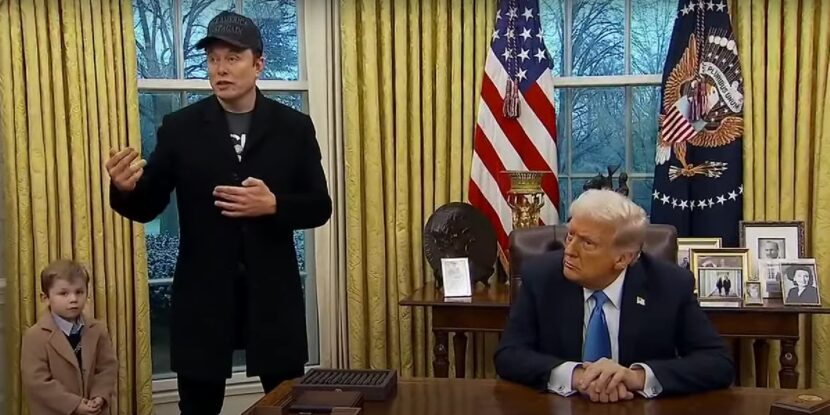
Elon Musk, who heads the Department of Government Efficiency (DOGE), has laid out details on plans to cut the federal deficit in half by 2026 in an Oval Office meeting with President Donald J. Trump. The technology billionaire emphasized that success in tackling the deficit will come down to “competence and caring” among Trump administration officials, especially those working at DOGE.

“[W]hat are the two ingredients that are really necessary in order to cut the budget deficit in half from two trillion to one trillion? And it’s really two things: competence and caring,” Musk said during the Oval Office event, where President Trump signed a new executive order directing DOGE to streamline the federal workforce. The SpaceX and Tesla CEO continued: “[I]f you add competence and caring, you’ll cut the budget deficit in half, and I fully expect to be scrutinized and get, you know, a daily proctology exam, basically… but, with the support of the President, we can we can cut the budget deficit in half from two trillion to one.”

According to Musk, a combination of cuts in federal government spending and an aggressive deregulation agenda will create two fronts aimed at slashing the deficit. The amount of the deficit that isn’t reduced through spending reduction will be wiped out by economic growth, Musk contends. “I think we can get the economic growth to be maybe three or four percent, maybe five percent. And that means, if you can get $1 trillion of economic growth and you can cut the budget deficit by a trillion between now and next year, there is no inflation.”

The DOGE chief notes if the federal government is borrowing less and the economy sees robust growth, the cost of goods and services for average Americans should drop significantly.

WATCH:

show less
Elon Musk, who heads the Department of Government Efficiency (DOGE), has laid out details on plans to cut the federal deficit in half by 2026 in an Oval Office meeting with President Donald J. Trump. The technology billionaire emphasized that success in tackling the deficit will come down to "competence and caring" among Trump administration officials, especially those working at DOGE. show more
big tech

Trump’s House Allies Introduce Bill to Repeal Impoundment Control Act to Assist DOGE.

A faction of House Republicans is working to expand President Donald J. Trump’s power over federal spending by repealing the Impoundment Control Act, enacted in 1974 under President Richard Nixon, to limit the executive’s authority in federal budget matters. Representative Andrew Clyde (R-GA) seeks to empower President Trump and Elon Musk’s Department of Government Efficiency (DOGE) to create a more effective and efficient government.

Clyde’s bill has the backing of over 20 GOP co-sponsors in the House and a corresponding proposal in the Senate led by Senator Mike Lee (R-UT). Russell Vought, who recently assumed the role of Director of the Office of Management and Budget (OMB), has labeled the Impoundment Control Act unconstitutional—a sentiment echoed by Trump himself.

“Since the Empowered Control Act of ‘74, we have seen a tremendous increase in spending. And I think that’s part of the problem right there. The president is required now by law to spend the exact amount that Congress authorizes or appropriates for a specific program,” Clyde noted.

President Nixon had “impounded” money earmarked for various federal programs by Congress—that is, refused to spend it—but the Impoundment Control Act prohibited this practice. This practice undermined the chief executive’s control over the executive branch in a manner that some believe undermines the separation of powers in a constitutionally improper way.

The Trump administration has already moved to halt certain federal funds, including foreign aid, pending reviews. However, parts of his funding freezes have faced legal challenges, resulting in a judge ordering compliance with prior directives to restore funding and threatening the President with contempt.

show less
A faction of House Republicans is working to expand President Donald J. Trump's power over federal spending by repealing the Impoundment Control Act, enacted in 1974 under President Richard Nixon, to limit the executive's authority in federal budget matters. Representative Andrew Clyde (R-GA) seeks to empower President Trump and Elon Musk's Department of Government Efficiency (DOGE) to create a more effective and efficient government. show more

USAID Granted Over 20% of Its Foreign Aid Budget to Just One Country in 2023.

The U.S. Agency for International Development (USAID) disbursed over 20 percent of its foreign assistance funds to Ukraine in 2023. According to data published by the federal government, Ukraine received more than $16 billion out of the $72 billion distributed by the agency.

Ethiopia received the second-highest allocation from USAID. However, at just $1.7 billion, the sum pales in comparison to the funds granted to Ukraine. In addition, Jordan, Afghanistan, and Somalia received just over $1 billion in USAID assistance. Meanwhile, Congo, Syria, Nigeria, Yemen, and South Sudan received aid ranging from $740 million to $936 million.

While the former Biden government saw the expansive distribution of foreign assistance through USAID, President Donald J. Trump and his Secretary of State, Marco Rubio, have moved to freeze current aid programs. The Trump White House says all U.S. foreign assistance will be reviewed to ensure it aligns with American national interests.

However, according to tech leader Elon Musk—who is spearheading Trump White House efforts to cut government costs while increasing efficiency—USAID may be abolished entirely. “As we dug into USAID, it became apparent that what we have here is not an apple with a worm in it but we have actually just a ball of worms,” Musk said. “There is no apple. And when there is no apple you’ve just got to basically get rid of the whole thing. That’s why it’s got to go. It’s beyond repair.”

The United States remains the leading global provider of humanitarian aid through USAID, which manages substantial humanitarian, development, and security assistance across more than 100 nations. Founded in 1961 by President John F. Kennedy, USAID operates as an independent government agency, tasked with foreign aid and development assistance. However, in recent years, the agency has come under intense scrutiny over its funding of programs that promote far-left and anti-American ideologies.

Image via USAID.

show less
The U.S. Agency for International Development (USAID) disbursed over 20 percent of its foreign assistance funds to Ukraine in 2023. According to data published by the federal government, Ukraine received more than $16 billion out of the $72 billion distributed by the agency. show more

Most Voters Back Cuts to Federal Govt, Not Convinced Congress Will Do It.

New survey data suggests most American voters back reducing the size of the federal government. Polling conducted by Rasmussen Reports shows 61 percent of Likey Voters either “somewhat approve” or “strongly approve” of “cutting back the size of the federal government.” Meanwhile, under one-third of respondents say they disapprove. Just 10 percent say they are “not sure.”

Despite voters’ strong desire to reduce the federal bureaucracy and size of government in Washington, D.C., nearly half—49 percent—are unconvinced Congress will achieve cuts. A smaller 44 percent say they think a reduction in the federal government is likely to happen with the Republican-controlled Congress.

Among ideological groups, conservatives were most likely to desire Congress to cut the size of the federal government, with 86 percent saying they approve. Fifty-four percent of political moderates also back government cuts. However, among liberals, just 28 percent said they approved reducing the government’s size.

Conservative voters were also the most likely to believe this Congress will follow through on federal spending cuts, with 56 percent saying it is likely to happen. Moderates and liberals are far less confident cuts to the federal government will happen, with just 36 percent and 34 percent, respectively, saying they believe cuts are likely.

Eliminating federal government waste, fraud, and abuse is one of several top priorities of President-elect Donald J. Trump. Aiding the effort is the newly formed Department of Government Efficiency (DOGE), spearheaded by Elon Musk and Vivek Ramaswamy. The two men intend to end unnecessary, duplicative programs that needlessly siphon taxpayer dollars.

Meanwhile, Congress is set to draft a sprawling reconciliation bill that will address border security, the mass deportation of illegal immigrants, and the extension of provisions from Trump’s 2018 Tax Cuts and Jobs Act (TCJA).

Image by Ted Eytan.

show less
New survey data suggests most American voters back reducing the size of the federal government. Polling conducted by Rasmussen Reports shows 61 percent of Likey Voters either "somewhat approve" or "strongly approve" of "cutting back the size of the federal government." Meanwhile, under one-third of respondents say they disapprove. Just 10 percent say they are "not sure." show more

Biden Treasury Secretary Janet Yellen Admits Failure: ‘I Am Sorry.’

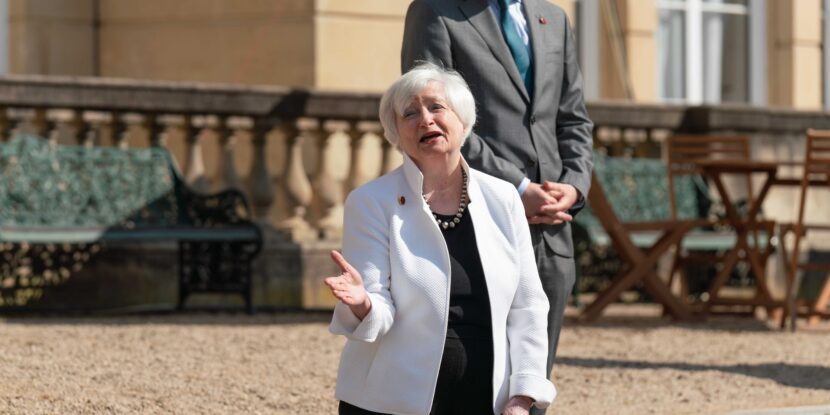
U.S. Treasury Secretary Janet Yellen admits Joe Biden and his government failed to rein in the federal deficit—which ballooned to $1.92 trillion in 2024—and address concerns regarding fiscal sustainability. Yellen, who will leave office in January, made the remarks yesterday at the Wall Street Journal‘s annual CEO Council Summit.

“Well, I am concerned about fiscal sustainability. And I am sorry that we haven’t made more progress,” Yellen said, adding: “I believe that the deficit needs to be brought down, especially now that we’re in an environment of higher interest rates.”

The Treasury Secretary’s admission was prompted by a question posed by Greg Ip, the Journal’s chief economic commentator. Ip pressed Yellen on the significant budget deficit left by the Biden government and asked if she had any regrets regarding the Democratic leader’s fiscal decisions.

Over the course of her four-year tenure, Yellen has drawn controversy on more than one occasion. Early on in Biden’s term, the Treasury Secretary—a former Federal Reserve chief—insisted that the rampant inflation being experienced by Americans was merely transitory, implying it would quickly recede without intervention. However, that was not the case, and the Federal Reserve was forced to increase interest rates. This left Yellen acknowledging an inconvenient truth for the Biden government this last February: high prices will likely be persistent for the foreseeable future.

President-elect Donald J. Trump has named macro fund manager Scott Bessent as his government’s Treasury Secretary. Financial markets rallied following the announcement of Bessen’t nomination in late November.

Image by IMF.

show less
U.S. Treasury Secretary Janet Yellen admits Joe Biden and his government failed to rein in the federal deficit—which ballooned to $1.92 trillion in 2024—and address concerns regarding fiscal sustainability. Yellen, who will leave office in January, made the remarks yesterday at the Wall Street Journal's annual CEO Council Summit. show more

Govt Dependence is Skyrocketing in U.S. Swing States.

American dependence on government assistance has skyrocketed in recent years, especially in critical 2024 battleground states. According to new data from the Economic Innovation Group, government assistance is now crucial for residents in 70 percent of counties in Georgia, Michigan, and North Carolina. In Pennsylvania, 60 percent of counties are reliant on government spending programs.

Reliance on government aid has increased exponentially over the past two decades, with 53 percent of counties nationwide now drawing a bulk of their income from government spending. Just 10 percent of counties were reliant on government spending in the year 2000.

Social safety net programs like Social Security, SNAP, Medicare, and Medicaid account for most of the assistance, with the increased reliance driven—in part—by the aging U.S. population. As more members of the Baby Boomer generation retire from the workforce, these programs will continue to see their budgets balloon.

Additionally, the concentration of high-salaried workers in major U.S. cities is compounding the problem. Almost all of the counties reliant on government aid are rural or recently de-industrialized through outsourcing. This has resulted in American wealth becoming concentrated in just a few major cities.

Runaway healthcare costs are also a contributing factor. According to the Economic Innovation Group report, medical costs “have risen nearly twice as quickly as overall inflation over the past several decades.”

The overreliance on government assistance programs among critical election demographics in battleground states could make tackling the country’s ballooning deficit a politically fraught decision for either major U.S. political party. “Significantly raising taxes and dramatically cutting… programs could choke off the very economic activity that finances [them] and immiserate the lives of people who depend on them,” the report notes.

show less
American dependence on government assistance has skyrocketed in recent years, especially in critical 2024 battleground states. According to new data from the Economic Innovation Group, government assistance is now crucial for residents in 70 percent of counties in Georgia, Michigan, and North Carolina. In Pennsylvania, 60 percent of counties are reliant on government spending programs. show more