Saturday, September 26, 2026

Over 80% of Somali Refugee Households Are Taking Welfare in Walz’s Minnesota.

PULSE POINTS

❓WHAT HAPPENED: New data from the Center for Immigration Studies (CIS) reveals that more than eight-in-ten Somali refugee-headed households in Minnesota are on one or more forms of taxpayer-funded welfare.

👤WHO WAS INVOLVED: Somali refugee households in Minnesota and the Center for Immigration Studies (CIS).

📍WHEN & WHERE: Based on ten years of data from the Census Bureau’s American Community Survey (ACS) in Minnesota.

💬KEY QUOTE: “Nearly every Somali household with children… receives some form of welfare,” said CIS researcher Jason Richwine.

🎯IMPACT: The data highlights significant disparities in welfare use, poverty rates, education, and English proficiency between Somali refugees and native-born Minnesotans.

IN FULL

Minnesota’s Somali refugee community shows significantly higher reliance on welfare compared to native-born residents, according to a new analysis of a decade of American Community Survey data. The Center for Immigration Studies report finds that 81 percent of Somali refugee–headed households in the state use at least one form of taxpayer-funded welfare. That includes 27 percent receiving cash assistance, 54 percent using food stamps, and 73 percent enrolled in Medicaid. Among native-born Minnesotan households, 21 percent use welfare programs, with six percent on cash aid, seven percent on food stamps, and 18 percent on Medicaid.

The gap is even larger among families with children. The study shows that 89 percent of Somali-headed households with children rely on public assistance, compared to 30 percent of native-born households with children. “Nearly every Somali household with children… receives some form of welfare,” said researcher Jason Richwine.

The report also highlights broader socioeconomic issues, including a finding that more than 66 percent of Somali refugees in Minnesota live in or near poverty. Nearly 60 percent report limited English proficiency, and 40 percent lack a high school diploma, compared with five percent of native-born Minnesotans.

World Bank data show that personal remittances—money sent back to Somalia by migrants—have historically accounted for roughly one-fifth of Somalia’s GDP. The United States is also the largest donor of foreign aid to Somalia, providing over $1 billion to the country in 2023 alone.

The release of the welfare data comes as Minnesota faces increasing federal scrutiny over alleged large-scale fraud involving state social programs. The U.S. Treasury Department has launched an investigation into claims that significant amounts of taxpayer money were improperly obtained through Somali-related Medicaid and welfare schemes involving networks of nonprofits and service providers.

Whistleblowers have also alleged that Governor Tim Walz (D) was informed of potential irregularities tied to the Feeding Our Future nonprofit as early as 2019 but failed to take sufficient action. Nearly 500 Minnesota state employees have accused the administration of disregarding warnings and retaliating against whistleblowers who tried to raise concerns.

Federal Medicaid officials have warned that Minnesota could risk losing funding without more aggressive oversight and corrective action. Throughout the controversy, Governor Walz has defended Minnesota’s Somali community and even said he hopes it becomes larger, stating, “Instead of demonizing our Somali community, we’re going to do more to welcome more in.”

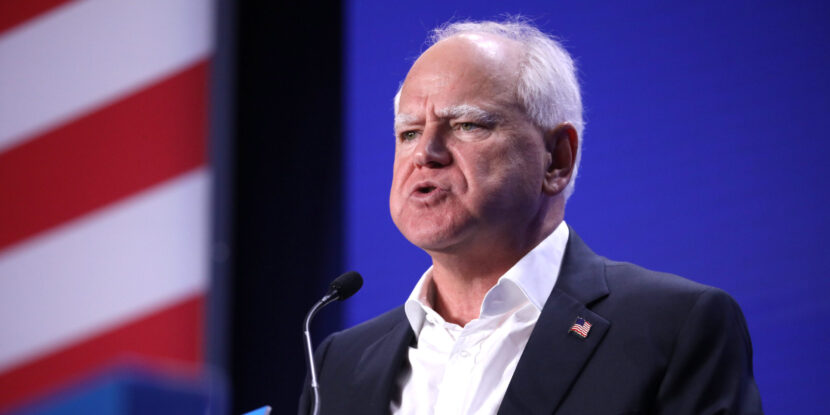
Image by Gage Skidmore.

Join Pulse+ to comment below, and receive exclusive e-mail analyses.

show less
show more

Trump Has REDUCED Food Stamp Dependence by 600,000.

PULSE POINTS

❓WHAT HAPPENED: President Donald J. Trump announced that over 600,000 Americans have stopped claiming Supplemental Nutrition Assistance Program (SNAP) benefits since he took office.

👤WHO WAS INVOLVED: President Donald Trump, the U.S. Department of Agriculture (USDA), and millions of Americans relying on SNAP benefits.

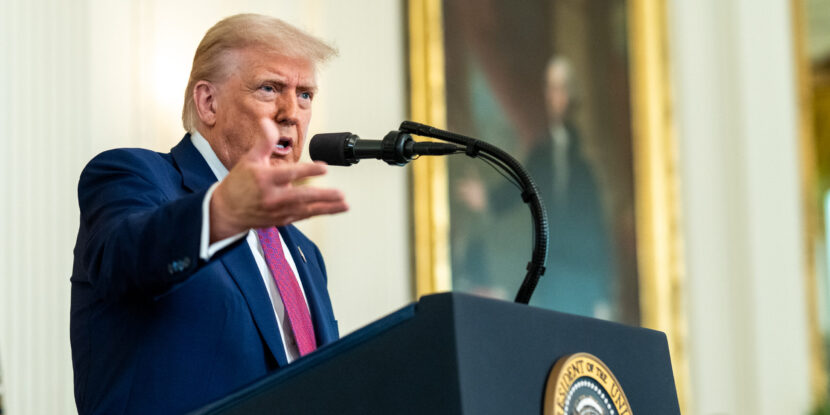
📍WHEN & WHERE: Trump made the announcement during the APEC summit in Gyeongju, South Korea, on Wednesday.

💬KEY QUOTE: “In nine months, we’ve lifted over 600,000 Americans off food stamps.” – Donald Trump

🎯IMPACT: While the exact cause of the drop in SNAP reliance isn’t entirely clear, declining inflation and increasing domestic industrial investment are two likely factors impacting the decline.

IN FULL

President Donald J. Trump announced that the number of Americans receiving Supplemental Nutrition Assistance Program (SNAP) benefits has dropped by more than 600,000 since he took office. The revelation was made during his address at the Asia-Pacific Economic Cooperation (APEC) summit in Gyeongju, South Korea, on Wednesday.

During his remarks, Trump stated, “In nine months, we’ve lifted over 600,000 Americans off food stamps.” According to U.S. Department of Agriculture (USDA) data, between January and May 2025, the number of SNAP recipients dropped by 645,315, from 42,380,525 to 41,735,210. Notably, the number of SNAP recipients has been gradually decreasing since October 2024. USDA data shows a reduction of 1,515,619 recipients between October 2024 and May 2025.

While the exact cause of the drop in SNAP reliance isn’t entirely clear, declining inflation and increasing domestic industrial investment are two likely factors impacting the decline. Since taking office in January, President Trump has secured billions in new corporate investment in American manufacturing to revive domestic production and support well-paying blue-collar jobs.

The USDA recently confirmed that food assistance, issued to just under 42 million low- and no-income Americans, will not be distributed on time in November due to the ongoing government shutdown. The shutdown, which began on October 1 when Senate Democrats blocked a continuing resolution (CR) temporarily extending appropriations, has caused nonessential federal services to cease, including programs like SNAP that depend on federal funding.

Join Pulse+ to comment below, and receive exclusive e-mail analyses.
show less
show more

The Senate Parliamentarian Is Gutting Trump’s ‘Big Beautiful Bill.’

PULSE POINTS

❓WHAT HAPPENED: The Senate Parliamentarian blocked several Republican provisions in the “One Big Beautiful Bill,” including the removal of SNAP eligibility for immigrants, a mandate that states with high SNAP payment error rates cover a larger portion of the costs, and granting President Donald J. Trump greater authority over the hiring and firing of federal workers.

👤WHO WAS INVOLVED: Senate Republicans, Senate Parliamentarian Elizabeth MacDonough, and Senate Democrats, including Sen. Jeff Merkley (D-OR).

📍WHEN & WHERE: The ruling was announced late Sunday in Washington, D.C.

🎯IMPACT: Key provisions of the GOP bill, including changes to federal hiring and firing, face significant procedural hurdles in the Senate.

IN FULL

The Senate Parliamentarian has ruled against Republican efforts to include provisions on federal hiring and firing in their budget reconciliation bill, championed by President Donald J. Trump and popularly known as the “One Big Beautiful Bill.” The decision, announced late Sunday, is the latest in a series of rulings dismantling key provisions of the GOP’s sweeping domestic policy plan.

The blocked provisions included a proposal to require new federal workers to pay higher retirement contributions unless they agreed to be “at-will” employees, effectively waiving traditional civil service protections. The Congressional Budget Office estimated that most workers would likely forgo protections rather than pay the increased contributions.

Other provisions being blocked by the Parliamentarian include the ending of SNAP benefits for immigrants, a requirement that states with high SNAP payment error rates cover a greater share of the program’s cost, a requirement for unions to pay for the use of government resources, and expanded authority for the President to implement federal reorganization plans without congressional approval. The Parliamentarian also blocked a proposal to give Congress greater oversight of agency regulations.

Democrats, predictably, are praising these moves by the Parliamentarian—though Senate Republicans have remained silent on whether they will seek to rework the provisions, drop them altogether, or move to overrule the Parliamentarian. Without changes, provisions deemed ineligible under the Byrd Rule would require a 60-vote threshold to pass, making bipartisan support necessary.

Join Pulse+ to comment below, and receive exclusive e-mail analyses.

show less
show more

Nearly Half of London’s Public Housing Occupied by Foreigners.

PULSE POINTS:

❓What Happened: Census data from 2021 reveals 48 percent of social housing (public housing) in London, England, is occupied by households with a foreign-born head, compared to a national average of 19 percent. This costs taxpayers the equivalent of around $4.8 billion annually.

👥 Who’s Involved: Office for National Statistics (ONS), Shadow Justice Secretary Robert Jenrick, and foreigners in social housing.

📍 Where & When: London, 2021 Census data.

💬 Key Quote: Robert Jenrick: “This research shows how the huge costs of mass, low-skilled migration are often hidden from the public.”

⚠️ Impact: $4.8 billion in taxpayer costs annually, 35 percent of foreign-born lead tenants in working-age groups are unemployed or economically inactive.

IN FULL:

Nearly half of London’s social housing (public housing) is occupied by foreigners, according to 2021 census data, imposing a significant financial burden on taxpayers. Office for National Statistics (ONS) data shows that 48 percent of lead tenants in London’s social housing were born overseas, compared to a national average of 19 percent.

The analysis highlights that 376,700 foreign-born lead tenants in London receive an average discount equivalent to around $15.9k annually compared to private rental costs, resulting in a total taxpayer cost exceeding $4.8 billion annually.

Shadow Justice Secretary Robert Jenrick, of the formerly governing Conservative Party, criticized the findings, stating, “This research shows how the huge costs of mass, low-skilled migration are often hidden from the public.” He added, “When you lift up the [hood], it’s clear that the level and composition of immigration have been hugely economically harmful for decades.”

Further analysis revealed that 68 percent of foreign-born lead tenants in London’s social housing hold British passports. This equates to 257,200 individuals who, while born abroad, have British citizenship.

The data also showed that 35 percent of working-age foreign-born lead tenants in London’s social housing are either unemployed or economically inactive despite living in one of Britain’s most productive regions. The Office for Budget Responsibility (OBR) previously reported that low-paid migrant workers cost taxpayers more than $202,000 each by retirement age, rising exponentially as they age.

Separate data from the English Housing Survey indicates ethnic disparities in social housing use, with 48 percent of Black Caribbean households and 40 percent of Bangladeshi households living in taxpayer-subsidized homes, compared to 16 percent of White British households.

show less

PULSE POINTS:

show more

Trump Blocks Social Security Benefits for Illegal Aliens.

PULSE POINTS:

❓What Happened: President Donald Trump signed a Presidential Memorandum to prevent illegal aliens and ineligible individuals from receiving benefits under the Social Security Act.

👥 Who’s Involved: The Trump Administration, Social Security Administration (SSA), 50 U.S. Attorney Offices, and Medicare and Medicaid fraud-prosecution programs.

📍 Where & When: The Memorandum was signed today in the United States.

💬 Key Quote: “Taxpayer-funded benefits should be provided only to eligible persons and must not encourage or reward illegal immigration to the United States.” – President Trump.

⚠️ Impact: The Memorandum seeks to protect taxpayer funds, expand SSA fraud investigations, reduce incentives for illegal immigration, and stop payments to ineligible individuals.

IN FULL:

President Donald J. Trump has enacted a Presidential Memorandum to prevent illegal aliens and those deemed ineligible from accessing benefits provided through the Social Security Act. The directive involves a series of enforcement measures intended to safeguard taxpayer dollars, remove incentives for illegal immigration, and address instances of benefit fraud.

Key components of this initiative include the Social Security Administration (SAA) collaborating with at least 50 U.S. Attorney Offices to strengthen its fraud prosecutor program. Moreover, it establishes dedicated fraud prosecution initiatives for Medicare and Medicaid across 15 U.S. Attorney Offices. These steps aim to ensure benefits do not reach individuals who do not qualify.

To further combat identity fraud, the SSA Inspector General has been tasked with examining income records for people aged 100 and over with inconsistencies in their Social Security information. Additionally, the agency is exploring whether to reinstate civil monetary penalties for those committing Social Security fraud, a measure that has been dormant for several years.

According to the Federation for American Immigration Reform (FAIR), American taxpayers incur expenses surpassing $182 billion yearly due to the presence of approximately 20 million illegal aliens and their offspring, based on both federal and state expenditures. Despite some illegal aliens contributing taxes, reports suggest they remain a net fiscal burden, estimated at roughly $150.7 billion.

show less

PULSE POINTS:

show more
Border Invasion

This Senate Republican Wants to Block Illegal Immigrants from Public Benefits.

New legislation to restrict access to public benefits for individuals illegally residing in the United States has been put forward by Senator Mike Lee (R-UT). Lee’s proposal, referred to as the “America First Act,” seeks to amend the Personal Responsibility and Work Opportunity Reconciliation Act. The bill would bar illegal immigrants in the U.S., including asylum seekers and individuals granted parole, from being eligible for various public benefits.

The bill is part of a broader effort coordinated by President-elect Donald J. Trump and Congressional Republicans to end incentives for foreign nationals to enter and stay in the country illegally. In effect, Lee’s legislation could result in many of those in the U.S. illegally self-deporting to their home country.

“Millions of illegal immigrants ‘paroled’ into the United States, many for fraudulent asylum claims, have gained the ability to access welfare and aid programs originally designed to help American families, not attract and support massive populations of foreign citizens,” Sen. Lee said in a statement announcing the bill. The Utah Republican continued: “The America First Act pulls the plug on this criminal redistribution scheme forced upon the American people by Joe Biden and generations of dishonest politicians.”

Lee’s proposal complements plans made by Trump and his border czar, Tom Homan, to deport the 11 to 20 million illegal immigrants currently unlawfully residing in the U.S. On Monday, Homan met with New York Democrat Mayor Eric Adams to discuss how local and state officials can aid the initial phase of deportations targeting primarily violent illegals.

show less
New legislation to restrict access to public benefits for individuals illegally residing in the United States has been put forward by Senator Mike Lee (R-UT). Lee's proposal, referred to as the "America First Act," seeks to amend the Personal Responsibility and Work Opportunity Reconciliation Act. The bill would bar illegal immigrants in the U.S., including asylum seekers and individuals granted parole, from being eligible for various public benefits. show more

Govt Dependence is Skyrocketing in U.S. Swing States.

American dependence on government assistance has skyrocketed in recent years, especially in critical 2024 battleground states. According to new data from the Economic Innovation Group, government assistance is now crucial for residents in 70 percent of counties in Georgia, Michigan, and North Carolina. In Pennsylvania, 60 percent of counties are reliant on government spending programs.

Reliance on government aid has increased exponentially over the past two decades, with 53 percent of counties nationwide now drawing a bulk of their income from government spending. Just 10 percent of counties were reliant on government spending in the year 2000.

Social safety net programs like Social Security, SNAP, Medicare, and Medicaid account for most of the assistance, with the increased reliance driven—in part—by the aging U.S. population. As more members of the Baby Boomer generation retire from the workforce, these programs will continue to see their budgets balloon.

Additionally, the concentration of high-salaried workers in major U.S. cities is compounding the problem. Almost all of the counties reliant on government aid are rural or recently de-industrialized through outsourcing. This has resulted in American wealth becoming concentrated in just a few major cities.

Runaway healthcare costs are also a contributing factor. According to the Economic Innovation Group report, medical costs “have risen nearly twice as quickly as overall inflation over the past several decades.”

The overreliance on government assistance programs among critical election demographics in battleground states could make tackling the country’s ballooning deficit a politically fraught decision for either major U.S. political party. “Significantly raising taxes and dramatically cutting… programs could choke off the very economic activity that finances [them] and immiserate the lives of people who depend on them,” the report notes.

show less
American dependence on government assistance has skyrocketed in recent years, especially in critical 2024 battleground states. According to new data from the Economic Innovation Group, government assistance is now crucial for residents in 70 percent of counties in Georgia, Michigan, and North Carolina. In Pennsylvania, 60 percent of counties are reliant on government spending programs. show more

DATA: Migrants Committing 80% of ALL Welfare Fraud.

Around 80 percent of all welfare benefit fraud money in Sweden goes to foreign-born migrants, according to research from the Swedish Social Insurance Agency, who claim migrants are vastly overrepresented in fraud cases.

The report, which was initially only published internally, shows that migrants are particularly overrepresented in cases of “assistance compensation” as well as child benefits and parental benefits.

Regarding assistance compensation, migrants are eight times as likely to receive money they are not entitled to.

The report categorizes fraud into two categories: intentional and unintentional. One reason migrants are overrepresented is that many still claim welfare benefits after leaving Sweden and moving abroad.

While the number of unintentional welfare fraud cases is higher, the report highlights that the amount of money in intentional cases is much higher, averaging around $2,000 per case.

Across Europe, migrants tend to have both higher rates of unemployment than natives as well as higher usage of welfare systems.

In Germany, 60 percent of all the welfare recipients in the country are from migrant backgrounds, with the number as high as 70 percent in some areas of the country.

During the migrant crisis in 2015 and 2016, Germany saw a massive influx of Syrian nationals, and despite many having now lived in the country for nearly a decade, most are still on welfare benefits.

Parts of the United States have an even higher rate of migrant welfare use. In the city of Westbrook, Maine, 95 percent of the welfare dependents are illegal aliens.

Earlier this year, local Democrats were considering an ordinance to allow private homes, churches, and community centers to serve as homeless shelters, essentially creating an immigration resettlement program funded by taxpayers.

show less
Around 80 percent of all welfare benefit fraud money in Sweden goes to foreign-born migrants, according to research from the Swedish Social Insurance Agency, who claim migrants are vastly overrepresented in fraud cases. show more

One in Twenty Syrians Are Now in Germany, and Most Are on Welfare.

Germany has seen a substantial increase in its Syrian population since the 2015-16 migrant crisis, with the number reaching at least 972,000 by the end of 2023. This represents a sixteenfold increase from 2014, when there were only 60,000 Syrians in the country. Syrians in Germany now represent nearly five percent of all Syrians.

Over half of the Syrians in Germany, 513,534 people, receive German welfare known as Burgergeld, according to the Federal Employment Agency. Even those not on welfare receive aid via the Asylum Seekers’ Benefits Act. The government’s expenditure on migrants was nearly €50 billion in 2023, largely contributing to record-high debt levels. Since 2010, Germany has paid over $145 billion in welfare to foreigners.

Afghan migrants have also increased significantly, with their numbers reaching 419,410 in 2023, representing a sixfold rise since 2014.

Nearly half of these, approximately 197,551, receive social welfare payments. This rapid influx has continued, with an announcement from Foreign Minister Annalena Baerbock indicating that 10,000 more Afghans are expected to arrive soon.

Official data reveals that 47.3 percent of all welfare recipients in Germany are foreigners.

Alongside overrepresentation in welfare usage, migrants are overrepresented in crime. Statistics reveal that Afghans have higher criminality rates than native Germans, including serious offenses like assault and gang rape.

Germany’s new citizenship law will allow migrants who have been in the country for five years to apply for naturalization, with some eligible after just three years. Last year, at least 70,000 Syrians became German citizens.

show less
Germany has seen a substantial increase in its Syrian population since the 2015-16 migrant crisis, with the number reaching at least 972,000 by the end of 2023. This represents a sixteenfold increase from 2014, when there were only 60,000 Syrians in the country. Syrians in Germany now represent nearly five percent of all Syrians. show more

49 States Are Now Supplying ‘Non-Citizens’ With Voter Registration Forms.

Illegal aliens and other “non-citizens” can receive voter registration forms without needing to show proof of citizenship in at least 49 states. They can use these forms to access welfare benefits and obtain driver’s licenses and mail-in ballots. Only Arizona has passed a law preventing this—but it applies only to state forms, not federal ones.

The National Voter Registration Act (NVRA) of 1993 mandates that states facilitate voter registration at the Department of Motor Vehicles (DMV) and welfare offices. These agencies must provide voter registration forms alongside application papers. Without a federal law requiring proof of citizenship for voter registration forms, migrants can simply claim to be U.S. citizens to register to vote, easily bypassing the official ban on non-citizens voting.

The House Administration Committee has approved the Safeguard American Voter Eligibility (SAVE) Act to combat this. House Speaker Mike Johnson (R-LA) also emphasizes the need for increased enforcement measures. However, with foreign aid and spending bills desired by the Democrat-controlled Senate and the White House already passed, the GOP has little chance of compelling them to pass new election integrity bills.

Federal prosecutions, state investigations, and audits reveal numerous non-citizens registered to vote. Former Federal Election Commission (FEC) member Hans von Spakovsky highlights various instances of non-Americans voting illegally in elections at different levels.

Polling suggests at least a fifth of mail-in ballots in 2020 were tainted by fraud, compromising the legitimacy of an election that came down to a few thousand votes in a handful of states.

show less
Illegal aliens and other "non-citizens" can receive voter registration forms without needing to show proof of citizenship in at least 49 states. They can use these forms to access welfare benefits and obtain driver’s licenses and mail-in ballots. Only Arizona has passed a law preventing this—but it applies only to state forms, not federal ones. show more