





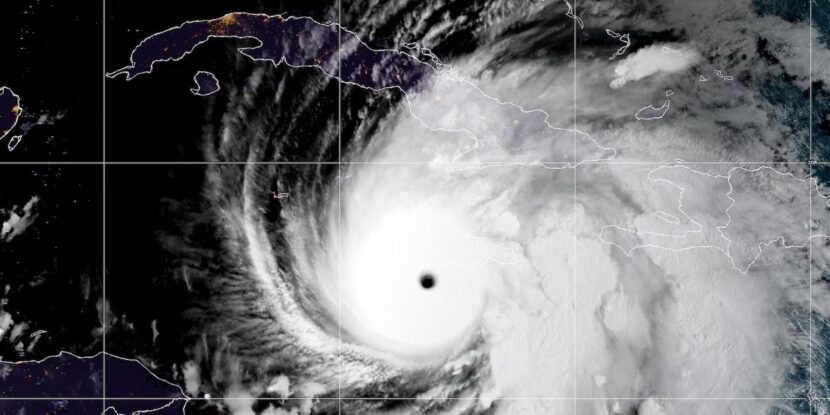

❓WHAT HAPPENED: The 2025 Atlantic hurricane season ended with no hurricanes making landfall in the United States, with the corporate media largely ignoring it.
👤WHO WAS INVOLVED: Climate change alarmists and the corporate media.
📍WHEN & WHERE: Atlantic hurricane season runs from June 1 until November 30, with its peak usually in September.
🎯IMPACT: In August, Colorado State University—which is known for its severe weather forecasting program—projected a slightly above average hurricane season, with nine total hurricanes and four major ones. Notably, the actual number of storms fell far short of this.
For the first time in a decade, not a single hurricane made landfall in the continental United States during hurricane season. Running from June 1 to November 30, the Atlantic hurricane season, on average, sees 1.62 hurricanes make landfall along the United States’ Gulf of America coast or Atlantic coast. The absence of landfalls and, more importantly, the lack of significant storms, except for one, has left climate alarmists and the corporate media puzzled.
For decades, members of the scientific community and so-called climate change experts have insisted that increasing global temperatures—allegedly caused by human activities—would result in an increase in powerful Atlantic hurricanes and landfalls along the United States coast. While there have been sporadic years of increased activity, in 2025, the Gulf of America and the Atlantic coast were incredibly quiet. For the past five years, hurricane season has been very active, with the United States seeing 17 hurricane landfalls.
The Caribbean experienced one powerful Category 5 storm, Hurricane Melissa, which unfortunately struck Jamaica, causing significant destruction. Two other Category 5 storms never made landfall and were isolated far out to sea.
AccuWeather Chief Meteorologist Jonathan Porter claims the United States avoided hurricane landfalls due to “unique atmospheric conditions” and “a lot of luck.” However, in August, Colorado State University—which is known for its severe weather forecasting program—projected a slightly above average hurricane season, with nine total hurricanes and four major ones. Notably, the actual number of storms fell far short of this.
It is not just Atlantic hurricanes on which climate change alarmists have been wrong. The National Pulse reported in June 2024 that several Pacific islands, which climate alarmists had projected would experience significant land loss due to rising sea levels, have actually either expanded their land area or remained stable. Only 11 percent of the islands have seen a reduction in land area.
The lack of apocalyptic environmental changes appears to have caused even some top climate change alarmists to lose interest. In October, billionaire globalist Bill Gates announced that he no longer believes climate change will result in humanity’s demise, urging world leaders instead to shift their focus toward addressing poverty and diseases like malaria. In an open letter, Gates criticized the United Nations’ emphasis on short-term emission targets, instead advocating for improving living conditions and health outcomes globally.
Join Pulse+ to comment below, and receive exclusive e-mail analyses.


















.jpg)

.jpg)


