





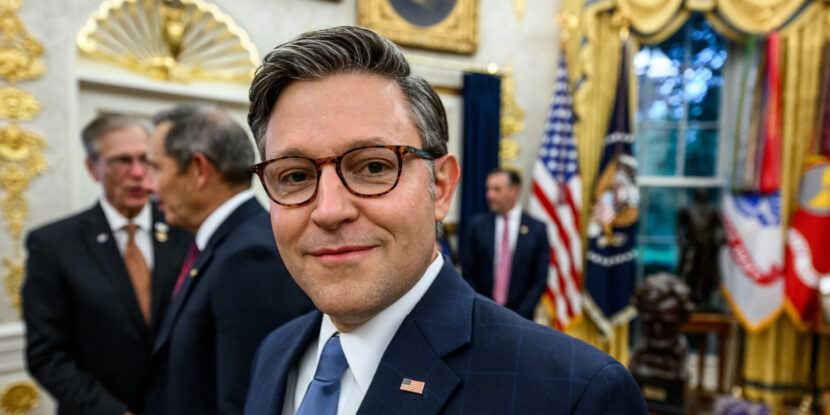
❓WHAT HAPPENED: The House of Representatives passed a $900 billion National Defense Authorization Act (NDAA) to fund defense initiatives, increase troop pay, and provide aid to Ukraine and Israel.
👤WHO WAS INVOLVED: 197 Republicans and 115 Democrats voted in favor, with House Speaker Mike Johnson (R-LA) voicing strong support.
📍WHEN & WHERE: The NDAA passed in the House of Representatives on Wednesday.
💬KEY QUOTE: “With the NDAA, President Trump and Congressional Republicans are restoring American strength, defending our homeland, standing with our allies, and ensuring the United States remains the most powerful and capable military force the world has ever known.” – Speaker Johnson
🎯IMPACT: The bill codifies 15 Trump-era executive orders, increases troop pay, funds Ukraine, and repeals outdated war authorizations, but drew criticism from some Republicans for excessive spending and missing provisions.
The House of Representatives passed the $900 billion National Defense Authorization Act (NDAA) on Wednesday, allocating funds for troop pay increases, defense infrastructure, $800 million in aid to Ukraine, and $650m in aid to Israel. The 3,000-page bill passed with bipartisan support, as 197 Republicans and 115 Democrats voted in favor.
House Speaker Mike Johnson (R-LA) praised the legislation, stating, “With the NDAA, President Trump and Congressional Republicans are restoring American strength, defending our homeland, standing with our allies, and ensuring the United States remains the most powerful and capable military force the world has ever known.”
The bill includes provisions to codify 15 Executive Orders from the Trump administration, such as removing diversity, equity, and inclusion (DEI) mandates from the military, declaring an emergency at the southern border, banning men from competing in women’s sports at military academies, and funding a “Golden Dome” missile defense system. It also repeals the authorizations of force for the 2003 Iraq War and the Persian Gulf War.
Eighteen Republicans, including members of the House Freedom Caucus, opposed the bill. Concerns ranged from the level of spending and foreign aid to the absence of provisions like a ban on central bank digital currencies (CBDCs) . Rep. Keith Self (R-TX) criticized the omission, calling a central bank digital currency “the ultimate tool for government surveillance and control over every American’s finances.”
Rep. Tim Burchett (R-TN) expressed frustration over the rushed timeline, saying, “Over 100 Democrats voted to pass this. That ought to tell you right there what this is about. Got some liberal stuff tucked in there, and it’s over 3,000 pages. We get it on Sunday, and they’re voting on it today. There’s no way we will ever know what was in there.” The bill now heads to the Senate for consideration.
Join Pulse+ to comment below, and receive exclusive e-mail analyses.






















.jpg)


.jpg)


