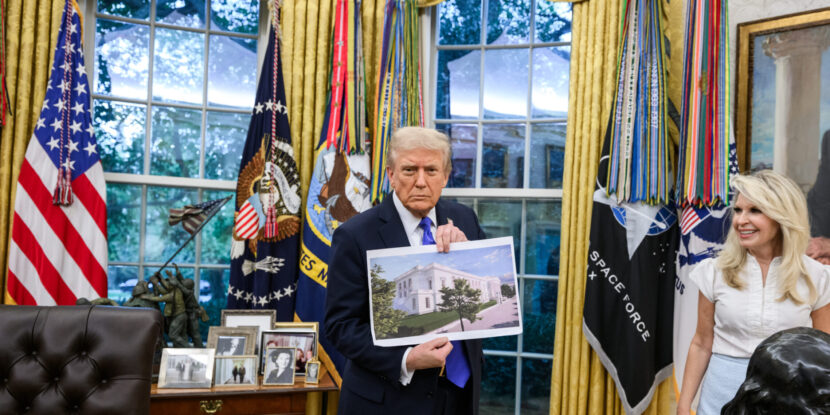
❓WHAT HAPPENED: President Donald J. Trump stopped his motorcade at a Florida strip mall to purchase materials for his $400 million White House ballroom project.
👤WHO WAS INVOLVED: President Donald Trump, White House officials, and staff at Arc Stone & Tile.
Newsletter
Need to Know.
Your free, daily feed from The National Pulse.
Thank You!
You are now subscribed to our newsletter.
📍WHEN & WHERE: Friday morning at a shopping center in Lake Worth, Florida.
🎯IMPACT: The project has drawn criticism for its costs and scope, though Trump maintains it is privately funded.
IN FULL
President Donald J. Trump had his motorcade pull into a Florida strip mall Friday morning, where he purchased supplies for his $400 million White House ballroom project. According to White House pool reports, the motorcade arrived at a shopping center in Lake Worth, Florida, at 9:46 AM, and Trump visited Arc Stone & Tile, an importer of Italian marble.
A White House official stated that the president was buying lake and onyx marble at his own expense for the ballroom. However, some criticisms arose, with some leftist websites like The New Republic claiming that Trump was shopping for his construction project “on the taxpayer’s dime.”
Trump has a long history of incorporating marble into his projects. He previously remodeled the bathroom in the White House Lincoln Suite entirely in marble, sharing photos of the makeover on Truth Social. “I did it in black and white polished Statuary marble,” Trump wrote, adding that the design was appropriate for the Lincoln era.
The ballroom construction has faced scrutiny since it began with the demolition of the East Wing. Initially estimated to cost $200 million, the project’s budget was later revised to $400 million. Trump has emphasized that the project is privately funded. At least one previous attempt to derail the ballroom construction through lawfare has thus far failed.
Later on Friday and into Saturday morning, President Trump oversaw the operation to capture alleged narco-terrorist Venezuelan president Nicolas Maduro.
❓WHAT HAPPENED: President Donald J. Trump imposed tariffs on patented pharmaceuticals and their ingredients under Section 232 of the Trade Expansion Act of 1962, to enhance national security and public health.
👤WHO WAS INVOLVED: President Trump, the Department of Commerce, and the Department of Health and Human Services (HHS).
Newsletter
Need to Know.
Your free, daily feed from The National Pulse.
Thank You!
You are now subscribed to our newsletter.
📍WHEN & WHERE: The tariffs take effect in 120 days for large companies and 180 days for smaller companies, with pathways for compliance provided by the U.S. government.
💬KEY QUOTE: “America must manufacture pharmaceutical products in order to be safe, secure, and healthy.” – The White House
🎯IMPACT: The action aims to strengthen domestic manufacturing, reduce reliance on foreign imports, and protect national security.
IN FULL
President Donald J. Trump issued two directives on Thursday as part of his White House’s effort to reinstitute tariffs that were struck down by the U.S. Supreme Court earlier this year. In February, the high court, in a mixed decision, ruled that Trump’s imposition of trade duties under the International Emergency Economic Powers Act (IEEPA) was unlawful, as the regulatory powers granted to the President by Congress do not extend to forms of taxation like tariffs.
The new tariff order targets patented pharmaceuticals and their ingredients under Section 232 of the Trade Expansion Act of 1962, with President Trump citing the law’s national security provisions as grounds for the measure. Importantly, the use of the 1962 trade law allows Trump to circumvent objections to his use of IEEPA, though the implementation process for the tariffs is more drawn out.
According to the order, a 100 percent tariff rate will be imposed on foreign patented pharmaceutical products. However, countries and regional blocs that have already entered into established trade deals with the United States—such as the European Union, Japan, Korea, Switzerland, and the United Kingdom—will only face a 15 percent rate.
Notably, pharmaceutical companies entering into Most Favored Nation (MFN) pricing agreements with the Department of Health and Human Services (HHS) and onshoring agreements with the Department of Commerce can secure a zero percent tariff through January 20, 2029. Generic pharmaceuticals and specialty products are exempt from tariffs, though they will be reassessed next April.
“America must manufacture pharmaceutical products in order to be safe, secure, and healthy,” the White House stated in announcing the new trade measures, adding that the tariffs take effect in 120 days for large companies and 180 days for smaller companies.
In addition to imposing new pharmaceutical tariff rates, President Trump also issued updated guidance to strengthen existing tariffs on imported steel, aluminum, and copper. Under the new rules, products made entirely or almost entirely of aluminum, steel, or copper will face a flat 50 percent tariff on their full value, while derivative articles will incur a 25 percent tariff. Certain metal-intensive industrial and electrical grid equipment will face a 15 percent tariff through 2027 to support the ongoing expansion of the United States’ industrial base. Products manufactured abroad but composed entirely of American steel, aluminum, or copper will benefit from a lower tariff of 10 percent. Additionally, items with 15 percent or less steel, aluminum, or copper content will no longer be subject to Section 232 tariffs.
The preferential tariff treatment of foreign products containing U.S.-sourced aluminum, steel, or copper will likely face challenges from foreign governments at the World Trade Organization (WTO). In January this year, a WTO panel report found that certain tax credits enacted through the Inflation Reduction Act (IRA) violated international trade rules by favoring U.S. steel. According to the WTO, the measures violate international trade rules against subsidies contingent upon the use of domestic over imported products.
Join Pulse+ to comment below, and receive exclusive e-mail analyses.
show less
show more
By Popular Demand.
The National Pulse Now has an on-site comments section for members. Sign up today and be part of the conversation in our community of almost 15,000.
WE ARE 100% INDEPENDENT AND READER-FUNDED. FOR A GUARANTEED AD-FREE EXPERIENCE AND TO SUPPORT REAL NEWS, PLEASE SIGN UP HERE, TODAY.
❓WHAT HAPPENED: Democrat lawmakers are retracting their support for the Laken Riley Act, backed by President Donald J. Trump, as they face primary pressure from the pro-illegal immigrant far left.
Newsletter
Need to Know.
Your free, daily feed from The National Pulse.
Thank You!
You are now subscribed to our newsletter.
👤WHO WAS INVOLVED: Representative Angie Craig (D-MN), Sen. Mark Warner (D-VA), Rep. April McClain Delaney (D-MD), and Rep. Jahana Hayes (D-CT) are among those disavowing the law.
📍WHEN & WHERE: The disavowals are occurring in 2026 as the party prepares for internal primaries.
💬KEY QUOTE: “I regret my vote,” wrote Rep. Angie Craig in a local newspaper.
🎯IMPACT: The shift in stance reflects the growing influence of the far left in the Democrats’ internal party dynamics.
IN FULL
As the Democratic Party faces internal primary contests, several of its lawmakers have begun to distance themselves from the Laken Riley Act, a law championed by President Donald J. Trump that mandates the detention of non-citizens arrested for various crimes committed within the United States. The Act was passed with some Democrat support in late January 2025, following the murder of Laken Riley, a 22-year-old university student from the state of Georgia, by Venezuelan illegal immigrant José Antonio Ibarra. At the time of the murder, he was at large despite having previously been charged with “acting in a manner to injure a child less than 17 and a motor vehicle license violation.”
Representative Angie Craig of Minnesota, facing criticism from a progressive opponent in the race for the Democrat Senate nomination in Minnesota, said of her prior support for the Act, “I regret my vote.” Joining Craig in retracting support are Senator Mark Warner (D-VA), Rep. April McClain Delaney (D-MD), and Rep. Jahana Hayes (D-CT), all of whom have faced increasing pressure from leftist factions within their party.
Ibarra was convicted of both felony and malicious murder, kidnapping with bodily injury, aggravated battery and aggravated assault with intent to rape, false imprisonment, hindering an emergency phone call, concealing the death of another person, and criminal invasion of privacy.
Join Pulse+ to comment below, and receive exclusive e-mail analyses.
show less
show more
By Popular Demand.
The National Pulse Now has an on-site comments section for members. Sign up today and be part of the conversation in our community of almost 15,000.
WE ARE 100% INDEPENDENT AND READER-FUNDED. FOR A GUARANTEED AD-FREE EXPERIENCE AND TO SUPPORT REAL NEWS, PLEASE SIGN UP HERE, TODAY.
❓WHAT HAPPENED: The United States is in talks with Denmark to expand its military presence in Greenland.
👤WHO WAS INVOLVED: The United States, Denmark, Greenland, and General Gregory Guillot, head of U.S. Northern Command.
Newsletter
Need to Know.
Your free, daily feed from The National Pulse.
Thank You!
You are now subscribed to our newsletter.
📍WHEN & WHERE: Negotiations are ongoing as of April 2026, involving sites at Narsarsuaq and Kangerlussuag in southern and western Greenland, respectively.
💬KEY QUOTE: “I’m working with our department and others to try to develop more ports, more airfields, which leads to more options for our secretary and for the president, should we need them up in the Arctic.” – Gen Gregory Guillot
🎯IMPACT: Potential restoration and expansion of several U.S. bases in Greenland, strengthening the U.S. in the High North.
IN FULL
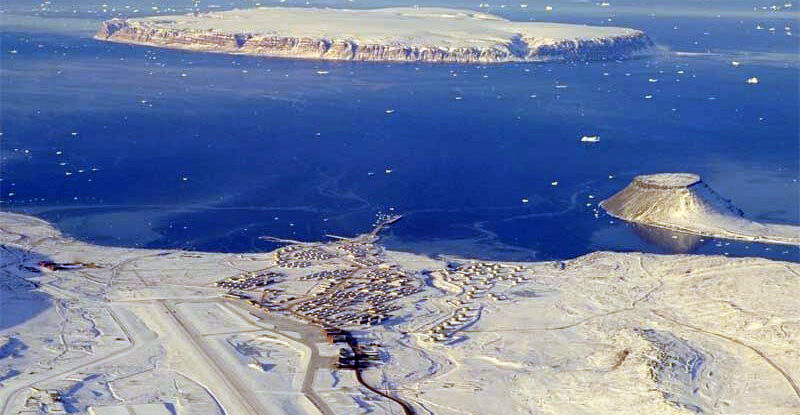
The United States is in talks with Denmark to establish three new military bases in Greenland. According to U.S. Northern Command, the U.S. intends to develop bases near Narsarsuaq, situated at Greenland’s southern tip, and Kangerlussuaq, situated on Greenland’s western coast. These talks involve the potential development of airfields and ports at three sites, including two abandoned former U.S. bases.
“I’m working with our department and others to try to develop more ports, more airfields, which leads to more options for our Secretary and for the President,” General Gregory Guillot, head of U.S. Northern Command (NORTHCOM), told a congressional hearing last month. Under the 1951 U.S-Denmark Defense Agreement, the U.S. is permitted to establish and expand military sites in Greenland.
These talks represent the first major step towards increasing U.S. presence in Greenland since President Donald J. Trumpagreed on a new framework with NATO earlier this year. The new framework covered defense cooperation between the U.S. and Denmark, as well as rights to rare-earth minerals.
The Trump administration has repeatedly expressed a desire to acquire Greenland from Denmark. “For the purposes of National Security and Freedom throughout the World, the United States of America feels that the ownership and control of Greenland is an absolute necessity,” Trump said.
According to U.S. Vice President J.D. Vance, despite vocal public opposition from Europe, the U.S. has received far greater concessions on Greenland in private from European leaders.
Join Pulse+ to comment below, and receive exclusive e-mail analyses.
show less
show more
By Popular Demand.
The National Pulse Now has an on-site comments section for members. Sign up today and be part of the conversation in our community of almost 15,000.
WE ARE 100% INDEPENDENT AND READER-FUNDED. FOR A GUARANTEED AD-FREE EXPERIENCE AND TO SUPPORT REAL NEWS, PLEASE SIGN UP HERE, TODAY.
❓WHAT HAPPENED: A federal judge has permanently blocked Kentucky’s policy of granting in-state tuition to illegal immigrants, ruling it violates U.S. law.
👤WHO WAS INVOLVED: U.S. District Court Judge Gregory F. Van Tatenhove, Kentucky Attorney General Russell Coleman (R), and the Trump administration.
Newsletter
Need to Know.
Your free, daily feed from The National Pulse.
Thank You!
You are now subscribed to our newsletter.
📍WHEN & WHERE: The ruling was issued earlier this week in Kentucky following a months-long legal challenge.
💬KEY QUOTE: “Federal law is clear: illegal immigrants don’t get preferential treatment at Kentucky’s public universities, and Kentucky taxpayers certainly shouldn’t be footing the bill.” – Russell Coleman
🎯IMPACT: Kentucky’s higher education system must end in-state tuition discounts for illegal immigrants, ensuring compliance with federal law.
IN FULL
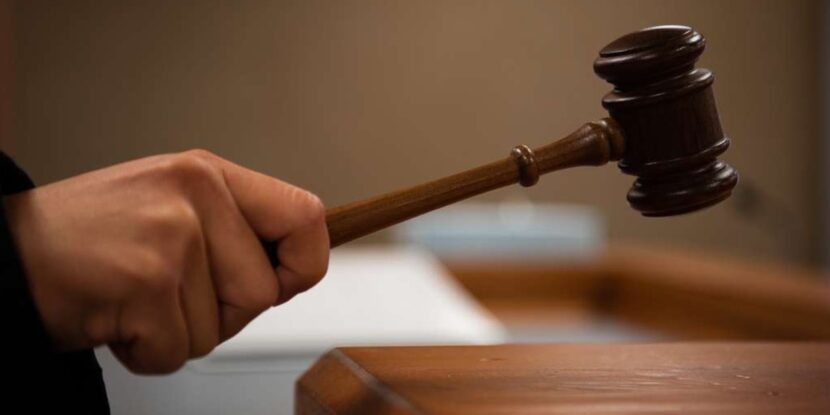
A federal judge has ruled against Kentucky‘s policy of granting in-state tuition to illegal immigrants, declaring it unlawful under federal statute. U.S. District Court Judge Gregory F. Van Tatenhove—a Bush appointee—issued the decision, permanently blocking the state’s tuition law on the grounds it violates the Constitution’s Supremacy Clause.
The ruling follows a legal challenge by Kentucky Attorney General Russell Coleman (R) and the Trump administration, who argued the policy unlawfully provided benefits to migrants in the country illegally. Federal law states that “an alien who is not lawfully present in the United States shall not be eligible on the basis of residence within a state for any post-secondary education benefit unless a citizen or national of the United States is eligible for such a benefit … without regard to whether the citizen or national is such a resident.”
“Federal law is clear: illegal immigrants don’t get preferential treatment at Kentucky’s public universities, and Kentucky taxpayers certainly shouldn’t be footing the bill. As Kentucky’s chief law officer, I was proud to join the Trump Administration to make sure our Commonwealth is upholding federal law and fundamental fairness for American citizens,” Coleman stated regarding the ruling, adding: “We’ll continue focusing on helping Kentucky students reach for their full potential.”
The lawsuit initially named Kentucky Governor Andy Beshear (D) as a defendant. However, Beshear’s office clarified that the Kentucky Council on Postsecondary Education (KCPE), which enforced the regulation, operates independently. Although the KCPE agreed with the Trump administration that the regulation was preempted, the court found it necessary to issue a ruling on the matter’s constitutionality.
Judge Van Tatenhove’s 22-page decision noted that states can extend certain benefits to illegal immigrants but must do so through laws passed by legislatures, not through agency-based regulations. The court’s ruling also highlighted a February 2025 Executive Order signed by President Donald J. Trump, aimed at ending taxpayer subsidization of open borders, as a factor influencing the decision.
Join Pulse+ to comment below, and receive exclusive e-mail analyses.
show less
show more
By Popular Demand.
The National Pulse Now has an on-site comments section for members. Sign up today and be part of the conversation in our community of almost 15,000.
WE ARE 100% INDEPENDENT AND READER-FUNDED. FOR A GUARANTEED AD-FREE EXPERIENCE AND TO SUPPORT REAL NEWS, PLEASE SIGN UP HERE, TODAY.
❓WHAT HAPPENED: A coalition of leftist organizations filed a lawsuit against President Donald J. Trump’s executive order on mail-in ballot reform.
Newsletter
Need to Know.
Your free, daily feed from The National Pulse.
Thank You!
You are now subscribed to our newsletter.
👤WHO WAS INVOLVED: President Trump, the American Civil Liberties Union (ACLU), the NAACP, the Brennan Center for Justice, and others.
📍WHEN & WHERE: The executive order was signed on Tuesday, with the lawsuit filed on Thursday.
💬KEY QUOTE: “[The order is] a recipe for chaos and ultimately disenfranchisement,” alleged Davin Rosborough of the ACLU.
🎯IMPACT: The coalition aims to overturn the executive order through court challenges, undermining Trump’s efforts to improve election security.
IN FULL
A coalition of leftist organizations is launching a lawfare campaign against President Donald J. Trump’s recent executive order on mail-in ballots and combating electoral fraud. “It’s a recipe for chaos and ultimately disenfranchisement,” alleged Davin Rosborough, Deputy Director of the Voting Rights Project at the American Civil Liberties Union (ACLU).
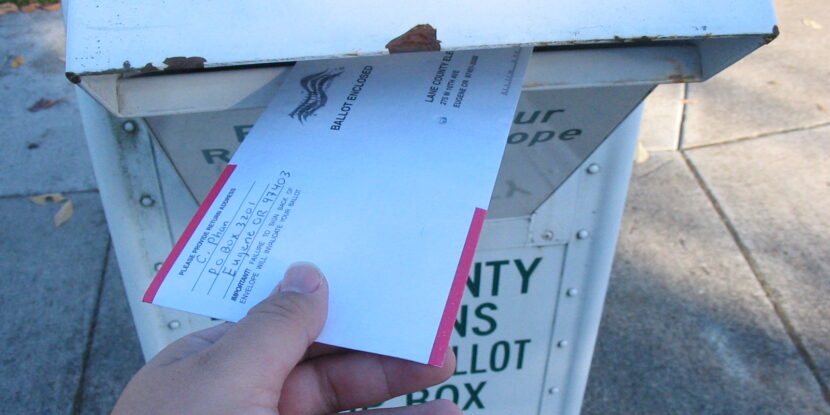
On Thursday, the coalition of activist groups sued over the President’s latest executive order, signed on Tuesday, which instructs the federal government to compile a national list of citizens eligible to vote, strengthening election integrity. The groups hope to overturn these reforms via the courts.
Organizations preparing for lawfare against the President include national and Massachusetts chapters of the American Civil Liberties Union (ACLU), the National Association for the Advancement of Colored People (NAACP), the Brennan Center for Justice, the League of Women Voters, as well as Asian American Advancing Justice (AAJC) and the Delta Sigma Theta Sorority.
Democrat-aligned judges have sought to quash anti-fraud reforms in the past, such as a Biden-appointed judge in Washington state, who blocked reforms in late January that would set Election Day as the deadline for mail-in ballots. The Supreme Court, however, permitted legal challenges to mail-in ballots to proceed earlier this year, such as in Illinois, where a law sought to permit the counting of mail-in ballots well after votes were cast.
❓WHAT HAPPENED: The Trump administration has added microplastics and pharmaceuticals to the Environmental Protection Agency’s (EPA) draft list of contaminants for the first time.
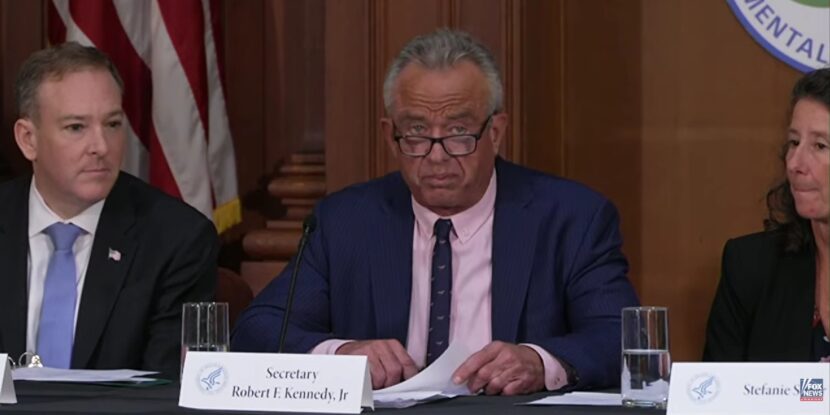
👤WHO WAS INVOLVED: The Department of Health and Human Services (HHS), Health Secretary Robert F. Kennedy Jr., Environmental Protection Agency (EPA), EPA Administrator Lee Zeldin, public health officials, and government regulators.
Newsletter
Need to Know.
Your free, daily feed from The National Pulse.
Thank You!
You are now subscribed to our newsletter.
📍WHEN & WHERE: Announced Thursday as part of the EPA’s Contaminant Candidate List update under the Safe Drinking Water Act.
💬KEY QUOTE: “One analysis estimates that the average person ingests tens of thousands microplastic particles each year through food, water, and air. Another study reports concentrations in the brain equivalent by mass to roughly a spoonful of plastic in every human brain.” – Robert F. Kennedy Jr.
🎯IMPACT: The move allows local regulators to evaluate risks and may lead to further research and regulation.
IN FULL
The Trump administration on Thursday moved to list, for the first time, microplastics and pharmaceuticals under the Environmental Protection Agency’s (EPA) draft list of contaminants impacting the nation’s drinking water. In announcing the decision, the EPA billed the inclusion of microplastics and pharmaceuticals as a “historic step” for the Make America Healthy Again (MAHA) agenda, which aims to address toxic chemicals and plastic pollution in the environment that negatively impact human health.
“One analysis estimates that the average person ingests tens of thousands microplastic particles each year through food, water, and air. Another study reports concentrations in the brain equivalent by mass to roughly a spoonful of plastic in every human brain,” noted Health and Human Services Secretary Robert F. Kennedy Jr.
“For too long, Americans have vocalized concerns about plastics and pharmaceuticals in their drinking water. That ends today,” concurred EPA Administrator Lee Zeldin said in a statement.
Under the Safe Drinking Water Act, the EPA is required to update its Contaminant Candidate List every five years. The draft list now includes microplastics, pharmaceuticals, and per- and polyfluoroalkyl substances (PFAS), among other chemicals.
The inclusion of these contaminants provides local regulators with tools to evaluate risks and lays the groundwork for further research and regulatory action, although it does not guarantee immediate action.
The National Pulse reported in February last year that researchers from the University of New Mexico identified microplastics in human brain tissue, with concentrations far exceeding those in other organs. The study reveals a 50 percent increase in brain microplastics over the past eight years. Notably, other studies have found that micro- and nanoplastic particles are more concentrated in the placentae of infants born prematurely than in those delivered at term, suggesting that plastic accumulation in the placenta may be linked to the risk of preterm birth.
🚨BREAKING: @EPA and @HHSGov are acting together to confront microplastics as a growing public health threat.@SecKennedy: “One analysis estimates that the average person ingests tens of thousands microplastic particles each year through food, water, and air. Another study… pic.twitter.com/c8EZRBW3dQ
❓WHAT HAPPENED: Over two-thirds of the French population say “anti-white racism” has become a significant problem in their country.
Newsletter
Need to Know.
Your free, daily feed from The National Pulse.
Thank You!
You are now subscribed to our newsletter.
👤WHO WAS INVOLVED: The CSA (Institut d’Études), the French people, and French political parties.
📍WHEN & WHERE: The polling was published on April 2, 2026.
🎯IMPACT: French views on anti-white racism are highly polarized based on political identification; with the far-left rejecting that it exists, while the center-left and political right both acknowledge that it is a problem in France.
IN FULL
Over two-thirds of the French population say “anti-white racism” has become a significant problem in their country. According to a new survey conducted by the CSA (Institut d’Études), a prominent French research institute, 67 percent of respondents see discrimination against white people as a reality in modern France.
Notably, French views on anti-white racism are highly polarized based on political identification. The CSA survey found that political leftists overwhelmingly reject the idea that the country has fostered a culture of anti-white discrimination, with 64 percent of voters who affiliate with far-left La France Insoumise (France Unbowed) saying it is not a problem, and 72 percent of Green Party voters denying that anti-white racism exists.
However, on France’s center-left, 52 percent of respondents affiliated with President Emmanuel Macron‘s Renaissance party say anti-white racism exists. Likewise, 51 percent of Socialist Party voters acknowledge that discrimination against whites in France does occur.
Respondents who identify with France’s political right overwhelmingly say they believe anti-white racism is a problem in the country. Eighty-one percent of those affiliated with Les Républicains, a center-right party, say discrimination against white people is a problem, while 91 percent of respondents who support Marine Le Pen’s National Rally party believe anti-white racism exists in France.
The National Pulse reported this past January that French authorities had barred ten members of the British anti-mass migration activist group Raise the Colours from entering or remaining in France, citing their involvement in actions protesting boats along France’s northern coastline carrying illegal immigrants to Britain. In a statement, the French Interior Ministry accused the activists of having carried out “propaganda activities” along the coast.
❓WHAT HAPPENED: Chinese airlines are increasing fuel surcharges on domestic flights due to rising oil prices.
Newsletter
Need to Know.
Your free, daily feed from The National Pulse.
Thank You!
You are now subscribed to our newsletter.
👤WHO WAS INVOLVED: Air China, China Southern, Xiamen Airlines, Spring Airlines, Juneyao Airlines, Cathay Pacific
📍WHEN & WHERE: Starting Sunday, across China
🎯IMPACT: The Islamic Republic of Iran’s ongoing disruption of oil tanker and other shipping traffic through the Strait of Hormuz has wreaked havoc on fuel and energy prices across Asia, with many nations imposing strict rationing measures.
IN FULL
Continued volatility in Asian energy markets is forcing several Chinese airlines to raise fuel surcharges on domestic flights. Air China, China Southern, and Xiamen Airlines announced that, starting Sunday, all domestic flights within a 500-mile radius will have a 60 yuan (~$8.70) surcharge added to each ticket. For longer flights, passengers will have to pay a 120 yuan (~$17.40) surcharge.
Several other Chinese airlines, including Spring Airlines and Juneyao Airlines, subsequently announced they would also increase surcharges to offset rising fuel prices. Notably, Hong Kong’s Cathay Pacific recently raised its fuel surcharge by 34 percent.
The National Pulse reported in mid-March that the Islamic Republic of Iran’s ongoing disruption of oil tanker and shipping traffic through the Strait of Hormuz has wreaked havoc on fuel and energy prices across Asia. Countries like Vietnam, China, Taiwan, Japan, and South Korea are being hit especially hard by disruptions to oil tankers passing through the strait.
In response to the energy supply crunch, many Asian nations have imposed strict rationing measures. China, which accounted for 80 to 90 percent of Iran’s oil sales, has been forced to increase its price cap on gasoline and diesel.
Meanwhile, in an address to the nation on the evening of April 1, U.S. President Donald J. Trump stated that the U.S. military operation against Iran, which commenced a month ago, has nearly achieved its core objectives, but added that there will be two to three weeks of more military activity. During his speech, President Trump emphasized the responsibility of other nations, particularly those reliant on oil passing through the Strait of Hormuz, to ensure their own security.
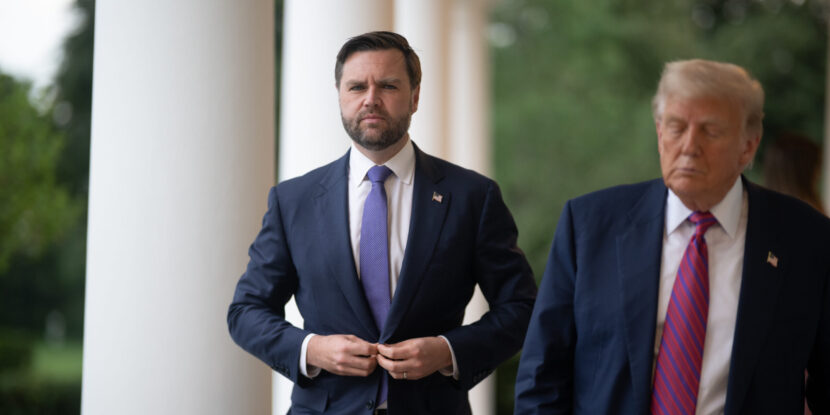
❓WHAT HAPPENED: A crackdown by Vice President J.D. Vance’s anti-fraud task force has led to the suspension of 221 healthcare providers in Los Angeles for suspected fraud.
Newsletter
Need to Know.
Your free, daily feed from The National Pulse.
Thank You!
You are now subscribed to our newsletter.
👤WHO WAS INVOLVED: Vice President J.D. Vance, the Federal Bureau of Investigation (FBI) and other federal authorities, SWAT teams, and California healthcare providers.
📍WHEN & WHERE: Early Thursday morning in Los Angeles, California, with ongoing efforts expected.
💬KEY QUOTE: “The Administration’s War on Fraud once again yields results as more suspensions take place and fraudsters face justice for ripping off hard-working Americans and stealing their tax dollars and social services.” – Vance spokesman
🎯IMPACT: The task force has uncovered significant fraud, with suspensions increasing by over 215 percent in one week and expectations of more action to come.
IN FULL
At least 221 healthcare providers in Los Angeles, California, have had their operations suspended as of Thursday after the federal anti-fraud task force led by Vice President J.D. Vance found widespread evidence of corruption. The latest total of suspended healthcare providers marks a significant increase of over 215 percent from the 70 providers whose operations were halted last week. Federal authorities, including the Federal Bureau of Investigation (FBI) and SWAT teams, conducted raids early Thursday morning as part of the operation.
“The Administration’s War on Fraud once again yields results as more suspensions take place and fraudsters face justice for ripping off hard-working Americans and stealing their tax dollars and social services,” a spokesman for Vice President Vance stated. Notably, the Trump administration has indicated that it expects the number of suspensions to continue to rise significantly in the coming weeks.
Arrests have already been made in the anti-fraud operation, which has predominantly targeted hospice care facilities and home health providers, including two individuals accused of orchestrating $7 million in fraudulent activity. Centers for Medicare & Medicaid Services (CMS) Administrator Dr. Mehmet Oz highlighted the speed of the task force’s progress, stating, “In 10 weeks, we’re getting close to what Governor Newsom did in four years.”
The National Pulse reported in January that President Donald J. Trump revealed he suspects that California is “more corrupt than Minnesota.” Notably, federal prosecutors have suggested the systemic social servicesfraud tied to Minnesota’s Somaliimmigrantcommunity could top $9 billion.
Meanwhile, California Governor Gavin Newsom (D) has denied claims of insufficient action on fraud, asserting that his administration has blocked $125 billion in fraud and made numerous arrests. Newsom’s former chief of staff, Dana Williamson, was arrested by the FBI last November and currently faces federal charges for public corruption.
Join Pulse+ to comment below, and receive exclusive e-mail analyses.
show less
show more
By Popular Demand.
The National Pulse Now has an on-site comments section for members. Sign up today and be part of the conversation in our community of almost 15,000.
WE ARE 100% INDEPENDENT AND READER-FUNDED. FOR A GUARANTEED AD-FREE EXPERIENCE AND TO SUPPORT REAL NEWS, PLEASE SIGN UP HERE, TODAY.
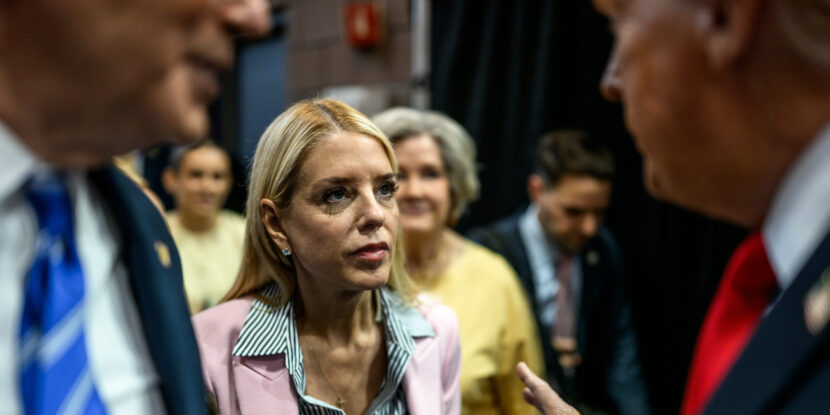
❓WHAT HAPPENED: President Donald J. Trump has fired Attorney General Pam Bondi.
👤WHO WAS INVOLVED: President Trump, Attorney General Pam Bondi, Deputy Attorney General Todd Blanche, and Environmental Protection Agency Director Lee Zeldin.
Newsletter
Need to Know.
Your free, daily feed from The National Pulse.
Thank You!
You are now subscribed to our newsletter.
📍WHEN & WHERE: The decision reportedly occurred Wednesday night in the Oval Office before Trump’s speech on Iran.
💬KEY QUOTE: “We love Pam, and she will be transitioning to a much needed and important new job in the private sector, to be announced at a date in the near future, and our Deputy Attorney General, and a very talented and respected Legal Mind, Todd Blanche, will step in to serve as Acting Attorney General.” – President Trump
🎯IMPACT: The firing comes amid reports of dissatisfaction with Bondi’s performance, with Lee Zeldin being considered as a potential replacement.
IN FULL
UPDATE: President Trump has confirmed Pam Bondi’s ouster in a Truth Social post, writing that she “did a tremendous job overseeing a massive crackdown in Crime across our Country, with Murders plummeting to their lowest level since 1900.” He added that she will be “transitioning to a much needed and important new job in the private sector, to be announced at a date in the near future, and our Deputy Attorney General, and a very talented and respected Legal Mind, Todd Blanche, will step in to serve as Acting Attorney General.”
Original report continues below:
President Donald J. Trump reportedly dismissed Attorney General Pam Bondi during a meeting in the Oval Office on Wednesday night, according to two sources familiar with the situation. Bondi is said to have been notified of her removal before Trump delivered a speech on the war in Iran on Wednesday.
One source said that by the time the President gave his address, Bondi had already been ousted and was heading back to Florida. The reported firing came on the same day she had accompanied Trump to the U.S. Supreme Court for oral arguments as the administration attempts to overturn birthright citizenship.
Reports indicate Trump is considering Environmental Protection Agency (EPA) Director Lee Zeldin as Bondi’s replacement. Trump and Zeldin met on Tuesday to discuss the possible transition, although no final decision has been made.
The reported dismissal follows a New York Times article that said Trump had grown dissatisfied with Bondi’s performance and was preparing to replace her. In recent weeks, Bondi has faced mounting criticism over the influence of Republican attorney and lobbyist Mike Davis regarding Department of Justice (DOJ) antitrust cases.
The National Pulse previously reported that the House Judiciary Committee opened an investigation into the circumstances surrounding the ouster of Assistant Attorney General Gail Slater—a staunch populist ally of President Trump—who oversaw the Justice Department’s Antitrust Division.
Numerous sources close to the Antitrust Division and lobbying operations in Washington, D.C., who spoke with The National Pulse, claim Davis oversaw a public relations campaign targeting Slater on behalf of alleged clients, including Compass, Hewlett-Packard (HP), and Live Nation.
This story is developing…
Join Pulse+ to comment below, and receive exclusive e-mail analyses.
show less
show more
By Popular Demand.
The National Pulse Now has an on-site comments section for members. Sign up today and be part of the conversation in our community of almost 15,000.
Share Story
FacebookTwitterWhatsappTruthTelegramGettrCopy Link
Real News Fan? Show It!
Many people are shocked to learn that because of active censorship, we currently have to spend more time making sure you can even see The National Pulse, than on producing the news itself. Which sucks. Because we do this for the truth, and for you.
But the regime doesn’t want you being informed. That’s why they want us to go away. And that will happen if more people don’t sign up to support our work. It’s basic supply and demand. So demand you get to read The National Pulse, unrestricted. Sign up, today.
We don’t sell ads, and refuse corporate or political cash. It all comes down to you, the reader. I hope you can help.