❓WHAT HAPPENED: The Trump administration has added microplastics and pharmaceuticals to the Environmental Protection Agency’s (EPA) draft list of contaminants for the first time.
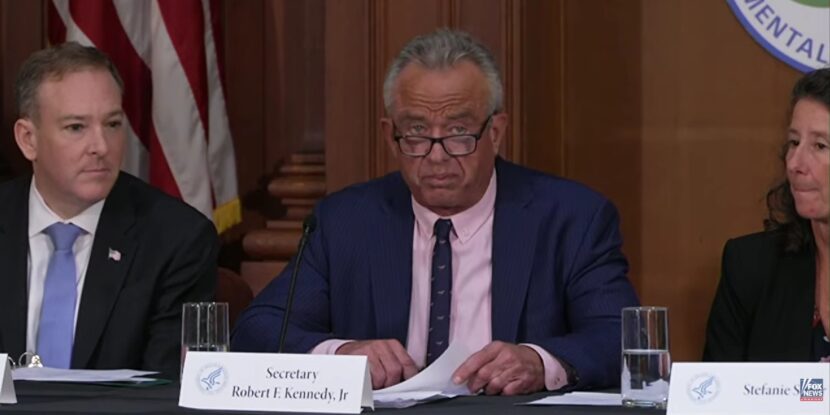
👤WHO WAS INVOLVED: The Department of Health and Human Services (HHS), Health Secretary Robert F. Kennedy Jr., Environmental Protection Agency (EPA), EPA Administrator Lee Zeldin, public health officials, and government regulators.
📍WHEN & WHERE: Announced Thursday as part of the EPA’s Contaminant Candidate List update under the Safe Drinking Water Act.
💬KEY QUOTE: “One analysis estimates that the average person ingests tens of thousands microplastic particles each year through food, water, and air. Another study reports concentrations in the brain equivalent by mass to roughly a spoonful of plastic in every human brain.” – Robert F. Kennedy Jr.
🎯IMPACT: The move allows local regulators to evaluate risks and may lead to further research and regulation.
The Trump administration on Thursday moved to list, for the first time, microplastics and pharmaceuticals under the Environmental Protection Agency’s (EPA) draft list of contaminants impacting the nation’s drinking water. In announcing the decision, the EPA billed the inclusion of microplastics and pharmaceuticals as a “historic step” for the Make America Healthy Again (MAHA) agenda, which aims to address toxic chemicals and plastic pollution in the environment that negatively impact human health.
“One analysis estimates that the average person ingests tens of thousands microplastic particles each year through food, water, and air. Another study reports concentrations in the brain equivalent by mass to roughly a spoonful of plastic in every human brain,” noted Health and Human Services Secretary Robert F. Kennedy Jr.
“For too long, Americans have vocalized concerns about plastics and pharmaceuticals in their drinking water. That ends today,” concurred EPA Administrator Lee Zeldin said in a statement.
Under the Safe Drinking Water Act, the EPA is required to update its Contaminant Candidate List every five years. The draft list now includes microplastics, pharmaceuticals, and per- and polyfluoroalkyl substances (PFAS), among other chemicals.
The inclusion of these contaminants provides local regulators with tools to evaluate risks and lays the groundwork for further research and regulatory action, although it does not guarantee immediate action.
The National Pulse reported in February last year that researchers from the University of New Mexico identified microplastics in human brain tissue, with concentrations far exceeding those in other organs. The study reveals a 50 percent increase in brain microplastics over the past eight years. Notably, other studies have found that micro- and nanoplastic particles are more concentrated in the placentae of infants born prematurely than in those delivered at term, suggesting that plastic accumulation in the placenta may be linked to the risk of preterm birth.
🚨BREAKING: @EPA and @HHSGov are acting together to confront microplastics as a growing public health threat.@SecKennedy: “One analysis estimates that the average person ingests tens of thousands microplastic particles each year through food, water, and air. Another study… pic.twitter.com/c8EZRBW3dQ
— HHS Rapid Response (@HHSResponse) April 2, 2026
Join Pulse+ to comment below, and receive exclusive e-mail analyses.