


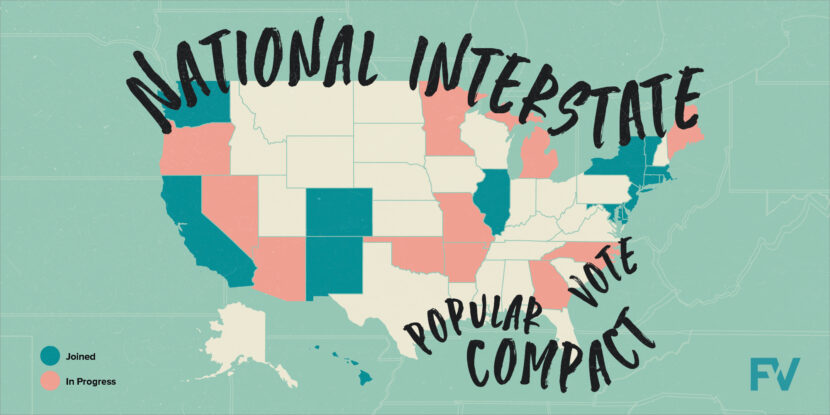
Virginia’s decision to join the National Popular Vote Interstate Compact marks a significant change in how the state could allocate its electoral votes in future presidential elections.
| PULSE POINTS |
❓ WHAT HAPPENED: Virginia Governor Abigail Spanberger signed a bill entering the state into the National Popular Vote Interstate Compact, which ties the allocation of Virginia’s presidential electoral votes to the national popular vote winner once a sufficient number of states join the agreement. 📰 DETAIL: The compact requires participating states to collectively hold at least 270 electoral votes—the threshold to win the presidency—before taking effect. Currently, 18 states and Washington, D.C., have joined, representing 222 electoral votes. Until the compact is activated, Virginia will continue using its traditional winner-take-all system based on statewide results. Organizers are, however, gloating about the fact that they only need 48 more electoral votes, claiming significant progress in states like Arizona, Michigan, New Hampshire, Nevada, Pennsylvania, and Wisconsin. 🎯 IMPACT: The anti-constitutional move undermines voters by prioritizing national results over statewide decisions. Supporters, however, claim the compact ensures every vote nationwide carries equal weight and prevents scenarios where candidates win the presidency without winning the popular vote. 💰 FOLLOW THE MONEY: The National Popular Vote group was founded by gambling pioneer John Koza, a Democrat, in 2006. The group has been funded with Soros money, as well as the far-left Stephen M. Silberstein Foundation, and the far-left Sadler Foundation. The Tides Foundation, which supports the far-left Media Matters as well as Planned Parenthood, has also donated to the cause, 🎯 CAVEAT: The compact’s legality may face challenges, particularly over whether congressional approval is required for such interstate agreements. Additionally, the partisan divide on this issue could complicate further adoption by states. 🤓 REQUIRED READING: AEI has a must read on the matter, here. Penned in 2018 by former Reagan White House counsel Peter J. Wallison, it doesn’t have the urgency required today, but is a good primer on the subject. |
Join Pulse+ to comment below, and receive exclusive e-mail analyses.