The Democratic Republic of Congo’s Ebola outbreak has become the largest in the country’s history, with health workers facing violent attacks amid rising social unrest.
PULSE POINTS
❓ WHAT HAPPENED:Over 2,500 people have diedin the Democratic Republic of Congo’s latest Ebola outbreak, according to the United Nations (UN).
📺 DETAIL: The most recent crisis represents the largest Ebola outbreak in the historyof the Democratic Republic of Congo (DRC). The previous largest outbreak lasted from 2018 to 2020. Roughly 160 health workershave fallen ill with Ebola, and 43 have died. In addition, over 260 attacks on health workershave been reported over the past six months, with eight being killed. The current outbreak is caused by the Bundibugyo strain of Ebola, for which there are no approved vaccines or treatments,contributing to the climate of panic. “The Ebola outbreak is growing exponentially…And all of this is happening in an area that has had three decades of conflict and is generating huge humanitarian needs… Fear translates into angry young menwho start throwing stones at their object of fear, the ambulance,” announced Julien Harneis, Senior Ebola Coordinator at the UN. The announcement came on Friday as Harneis warned that funding for the emergency response is set to run out within weeks.
💬 KEY QUOTE: “The epidemic is spreading to an area that is bigger than France, and the outbreak is growing faster and wider than the Ebola response.” – Julien Harneis.
🎯 IMPACT: The escalating outbreak threatens to overwhelm the country’s already strained healthcare system. The ongoing violence against health workers undermines the increasingly unsustainable containment operation. This report comes just a few months after former Director of the Centers for Disease Control and Prevention (CDC) Robert Redfield warned that the outbreak, which is concentrated in the DRC but has spread to various East African countries, could spiral into a significant pandemic. “I suspect this is going to become a very significant pandemic, probably going to leak into Tanzania, leak into Southern Sudan, maybe leak into Rwanda,” said Redfield back in May.
Join Pulse+ to comment below, and receive exclusive e-mail analyses.
Newsletter
Need to Know.
Your free, daily feed from The National Pulse.
Thank You!
You are now subscribed to our newsletter.
By Popular Demand.
The National Pulse Now has an on-site comments section for members. Sign up today and be part of the conversation in our community of almost 15,000.
More From The Pulse
WE ARE 100% INDEPENDENT AND READER-FUNDED. FOR A GUARANTEED AD-FREE EXPERIENCE AND TO SUPPORT REAL NEWS, PLEASE SIGN UP HERE, TODAY.
Brazil’s political establishment succeeded in keeping former President Jair Bolsonaro, a major ally of President Donald J. Trump, off the ballot in 2026. It did not succeed in killing Bolsonarismo, the right-wing populist movement he inspired. In Sunday’s first round of Brazil’s presidential election, Bolsonaro’s eldest son, Senator Flávio Bolsonaro, finished ahead of incumbent left-wing President Luiz Inácio Lula da Silva, setting up a decisive runoff on October 25.
The National Pulse shows you the big picture on international politics. If you value this work, please JOIN THE NATIONAL PULSE or MAKE A DONATION today.
Newsletter
Need to Know.
Your free, daily feed from The National Pulse.
Thank You!
You are now subscribed to our newsletter.
According to Brazil’s Superior Electoral Court, Flávio received 56.1 million votes, or 47.03 percent, compared with 53.9 million, or 45.16 percent, for Lula. Despite years of prosecutions, court orders, political bans, and the imprisonment of Jair Bolsonaro, Brazil’s populist right may be closer than ever to returning to power.
They Removed Bolsonaro, But Not Bolsonarismo.
Jair Bolsonaro’s fall from power following his razor-thin defeat to Lula in 2022 was followed by a series of legal battles. Brazil’s electoral authorities barred the former president from running for office until 2030, and prosecutors subsequently accused him of participating in a plot to overturn the result of the 2022 election. In September 2025, Brazil’s Supreme Court convicted Bolsonaro and sentenced him to more than 27 years in prison.
Bolsonaro has denied wrongdoing, while his allies have portrayed the cases against him as a politically motivated attempt to remove the most powerful figure on the Brazilian right. President Donald J. Trump’s administration explicitly accused Brazilian authorities of “persecuting former President of Brazil Jair Bolsonaro” in a July 2025 executive order. The White House described the criminal charges against Bolsonaro as unjustified and warned that the prosecution threatened Brazil’s ability to hold a free and fair presidential election in 2026.
The irony now confronting Lula and Bolsonaro’s opponents is difficult to miss: they succeeded in preventing Jair Bolsonaro from running, only to find themselves facing another Bolsonaro who received more votes than Lula in the first round.
Trump Went to Bat for Bolsonaro.
The similarities between Jair Bolsonaro and President Trump have been apparent since Bolsonaro entered Brazil’s presidential palace in 2019. Both built populist movements around nationalism, opposition to the political establishment, tougher policies on crime and immigration, hostility toward socialism, conservative social values, and an often combative relationship with the mainstream media.
But the relationship became considerably more important after Trump returned to the White House in January 2025.
The Trump administration repeatedly attacked the treatment of Bolsonaro and focused particular attention on Brazilian Supreme Court Justice Alexandre de Moraes, who became one of the central figures in the investigations of Bolsonaro and his supporters. The administration accused Moraes of abusing his authority, censoring political speech, targeting political opponents, and placing unacceptable demands on American technology companies.
Trump eventually transformed those objections into American foreign policy. In July 2025, the White House announced an additional 40 percent tariff on Brazilian goods, bringing tariffs on affected products to 50 percent. The administration specifically cited what it described as the “politically motivated persecution, intimidation, harassment, censorship, and prosecution” of Bolsonaro and his supporters.
The 2026 election has also demonstrated that Bolsonarismo is no longer dependent entirely upon its founder. Flávio’s presidential campaign has been accompanied by remarkable electoral success for the rest of the Bolsonaro family. Former First Lady Michelle Bolsonaro won a Senate seat representing the Federal District, while Jair’s son Carlos Bolsonaro won a Senate seat in Santa Catarina. Jair Renan Bolsonaro was elected to the Chamber of Deputies, as was Renato Bolsonaro, Jair’s brother. The family emerged from Sunday’s elections with four new members of Congress while Flávio advanced to the presidential runoff.
The results for Bolsonaro’s Liberal Party were even more consequential. The party increased its representation from 15 to 28 senators, the strongest Senate result for a single party since Brazil returned to democracy in 1985, and was projected to win 121 seats in the lower house.
Latin America Is Moving Right.
Flávio Bolsonaro’s success is also part of a much broader political transformation underway across Latin America. The early 2020s were dominated by leftist political victories. Lula returned to power in Brazil, Gabriel Boric won in Chile, Gustavo Petro captured Colombia, and left-wing governments appeared ascendant throughout much of Central and South America. That political map has changed dramatically.
Argentina elected libertarian Javier Milei in 2023. Ecuador reelected center-right President Daniel Noboa in 2025. Bolivia subsequently shifted right after two decades dominated by the Movement for Socialism, while conservative José Antonio Kast won Chile’s presidency. Honduras and Costa Rica also moved right, followed by major conservative victories in Peru and Colombia during 2026.
With more than 200 million people and Latin America’s largest economy, a Flávio Bolsonaro victory in Brazil would place the region’s dominant country alongside an increasingly powerful bloc of governments hostile to the socialist and progressive movements that dominated regional politics only a few years ago.
The USAID Factor.
The Trump administration moved rapidly in 2025 to gut the U.S. Agency for International Development (USAID), terminating thousands of foreign aid awards and transferring the remnants of American foreign assistance to tighter State Department control. The move dramatically reduced the vast network of grants that had previously financed nongovernmental organizations, civil society groups, media initiatives, and other programs throughout Latin America.
Since Trump’s overhaul of USAID and American foreign policy, Latin American voters have delivered a remarkable succession of defeats to left-wing candidates and governments.
The shift has removed a major component of the U.S.-funded NGO and civil-society ecosystem that conservatives had long accused of disproportionately empowering progressive organizations abroad. At the same time, Trump has openly cultivated friendly governments in the Western Hemisphere and made rolling back socialism in the Americas a central feature of his regional strategy.
The Bolsonaros Bounce Back.
Flávio Bolsonaro enters the October 25 runoff in a position few predicted. He not only finished first, but did so while his father remained imprisoned and prohibited from running himself.
Meanwhile, the Brazilian right has dramatically strengthened its position in Congress. Even another Lula victory could therefore leave the veteran leftist confronting a legislature far more sympathetic to Bolsonaro, including lawmakers who may attempt to secure an amnesty for the former president.
The Brazilian political and judicial establishment spent years attempting to contain Jair Bolsonaro, ultimately barring him from office and putting him behind bars. Yet the movement he created survived, his family expanded its political power, and more than 56 million Brazilians just cast presidential ballots for his son.
If Flávio Bolsonaro defeats Lula on October 25, the attempt to remove the Bolsonaro name from the presidential palace will have produced an extraordinary outcome: another Bolsonaro in power, a vastly strengthened Bolsonaro political dynasty, and the biggest Latin American country joining the region’s growing revolt against the left.
Join Pulse+ to comment below, and receive exclusive e-mail analyses.
show less
Brazil’s political establishment succeeded in keeping former President Jair Bolsonaro, a major ally of President Donald J. Trump, off the ballot in 2026. It did not succeed in killing Bolsonarismo, the right-wing populist movement he inspired. In Sunday’s first round of Brazil’s presidential election, Bolsonaro’s eldest son, Senator Flávio Bolsonaro, finished ahead of incumbent left-wing President Luiz Inácio Lula da Silva, setting up a decisive runoff on October 25.
show more
By Popular Demand.
The National Pulse Now has an on-site comments section for members. Sign up today and be part of the conversation in our community of almost 15,000.
WE ARE 100% INDEPENDENT AND READER-FUNDED. FOR A GUARANTEED AD-FREE EXPERIENCE AND TO SUPPORT REAL NEWS, PLEASE SIGN UP HERE, TODAY.
Over the weekend, protests erupted in Gosport, England, following the arrival of almost 150 illegalmigrants. Instead of deporting the illegal migrants, British authorities cracked down on the protests and banned demonstrations to facilitate their arrival.
The National Pulse brings you the unfiltered truth about Britain’s illegal immigration crisis. To support this work, please JOIN THE NATIONAL PULSE or MAKE A DONATION today.
Newsletter
Need to Know.
Your free, daily feed from The National Pulse.
Thank You!
You are now subscribed to our newsletter.
The Arrivals.
On Sunday, a boat carrying 149 illegal migrants crossed the English Channel from the coast of France. Assisted by the Royal National Lifeboat Institution (RNLI), the largest lifeboat service in the United Kingdom, the boat was brought ashore at Haslar Marina in Gosport, a coastal town in Hampshire, a county in southern England. This follows a series of decisions by the British government to place thousands of illegal migrants seeking asylum in small, traditional communities across the United Kingdom, such as Piddington, a village in the north of England with a population of roughly 350, which is set to house around 1,200 migrants in a local disused military base.
“The government is actively participating in what is nothing short of a human trafficking network,” said Raheem Kassam, Editor-in-Chief of The National Pulse on Stephen K. Bannon’s War Room show on Monday, emphasizing the British government’s role in facilitating the arrival of illegal migrants from the Middle East, Africa, and Asia. After the migrants were brought ashore, a convoy of ambulances and police vehicles arrived in the area.
RAHEEM KASSAM: Ordinary citizens in Gosport are coming out to protest, laying nails in the streets to stop the busloads of migrants being shipped in.
They are taking matters into their own hands, and you cannot blame them when the police and the government are complicit.… pic.twitter.com/zgQAfJ61q7
In response to the migrants’ arrival, approximately 350 local residents gathered to protest. On Sunday evening, a clash occurred between the protestors and the police, including verbal and physical confrontations. Protestors constructed barricades and scattered nails across the road in an attempt to prevent the illegal migrants from being bused out of the marina and into the wider community. Footage from the scene also showed protestors setting off flares and a police cordon being established on the road leading to the marina.
“The citizens of the United Kingdom are taking matters into their own hands, and you cannot blame them when the police and the government are complicit in this,” said Kassam.
Hampshire Police issued a massive “dispersal order” covering the Gosport area, effectively banning protest throughout the town. “Those who refuse to comply with the order are committing a criminal offence and are liable for arrest,” announced the force on Monday afternoon.
The officers also used powers allowing them to require protestors to remove face coverings to expose their identities. The police arrested 12 protestors with charges spanning alleged assault, affray, criminal damage, obstruction of a highway, and racially aggravated public order offenses. Hampshire Police also established a series of police checkpoints around the marina area. Videos have since gone viral of law-abiding locals being stopped and questioned by police while illegal migrants are bused into their communities.
“This is a situation where you have pure anarcho-tyranny on the soil of the United Kingdom,” Kassam noted.
A 73yr old 🇬🇧 veteran wants to go home in Gosport.
The Police:
🗨 "SHOW US YOUR PAPERS"
All the while their colleagues are bussing in hordes of illegals who dumped their ID in the sea.
They'll come a day that the every day copper will need to decide who they stand for & with. pic.twitter.com/rM2vJ4wKdy
The illegal migrants have been taken to Kent, a county on the southeast coast of England, for processing. The illegal migrants were transported by four coaches and escorted by police on motorbikes.
The episode demonstrates the two-tier nature of British policing, in which harsh treatment and overbearing restrictions are imposed on the native British population while illegal migrants are protected and enabled by the authorities.
In response to the protests, Zia Yusuf, Shadow Home Secretary for Nigel Farage’s Reform UK party, visited locals in Gosport to discuss their concerns. “Zia Yusuf spoke with concerned locals in Gosport today. Open Borders Burnham has thrown them under the bus. Only Reform UK has a plan to stop the boats forever,” declared Reform UK on X (formerly Twitter). “The locals are devastated… their lives have been turned upside down by illegal immigration,” said Yusuf on GB News.
While their asylum applications are processed, the migrants are left at large among the public, resulting in multiple instances of serious criminal activity, including rape and other forms of sexual assault.
🔺Four coaches of illegal small boat migrants leave Gosport Haslar Marina flanked by police motorbike outriders and a heavy procession of vans and cars pic.twitter.com/P0LvZN7okM
If you want to help Raheem J. Kassam and his team report the facts about the issues that matter, please JOIN THE NATIONAL PULSE or MAKE A DONATION today.
Join Pulse+ to comment below, and receive exclusive e-mail analyses.
show less
Over the weekend, protests erupted in Gosport, England, following the arrival of almost 150 illegal migrants. Instead of deporting the illegal migrants, British authorities cracked down on the protests and banned demonstrations to facilitate their arrival.
show more
By Popular Demand.
The National Pulse Now has an on-site comments section for members. Sign up today and be part of the conversation in our community of almost 15,000.
WE ARE 100% INDEPENDENT AND READER-FUNDED. FOR A GUARANTEED AD-FREE EXPERIENCE AND TO SUPPORT REAL NEWS, PLEASE SIGN UP HERE, TODAY.
The National Pulse Editor-in-Chief Raheem Kassam believes the murder of veteran British stateswoman Ann Widdecombe, immigration and justice spokeswoman for Nigel Farage’s Reform UK party, could have been avoided if an attempted firebombing of Farage’s house, which is now being treated as an attempted terrorist attack, had been taken seriously. The initial mishandling of the firebombing attempt, which reportedly involved Miss Widdecombe’s alleged murderer, raises serious questions about whether British authorities are failing to recognize potentially deadly threats from the political left.
The National Pulse strives to provide you with original news and analysis every week. If you want to support Raheem J. Kassam and his team, please JOIN THE NATIONAL PULSE or MAKE A DONATION today. We are 100% reader-funded.
Newsletter
Need to Know.
Your free, daily feed from The National Pulse.
Thank You!
You are now subscribed to our newsletter.
“What we’re talking about here… is the summer assassination of a former Member of Parliament, a former member of the European Parliament, a beloved national figure, Ann Widdecombe, who was brutally bludgeoned to death in her home,” Kassam told Stephen K. Bannon this week on his War Room show.
Widdecombe, 78, a former Conservative Party government minister who later joined Reform, was found dead at her Devon home in July. Prosecutors have charged 28-year-old Joshua Kerry with her murder. She was allegedly struck in the head 21 times with a hammer.
Police initially claimed there was no indication of a political motive, but Counter Terrorism Policing subsequently described the killing as a “targeted attack,” with investigators reportedly discovering far-left and communist material during searches connected with the suspect. Authorities also reopened an investigation into an April 2025 incident at a property linked to Farage that police had originally treated as an attempted burglary. The handling of that investigation was referred to Britain’s Independent Office for Police Conduct (IOPC) after authorities acknowledged that a potentially relevant line of inquiry had not initially been pursued.
“If the police had taken Nigel Farage’s firebombing of his home seriously, then Ann Widdecombe may be alive today,” Kassam said. The Crown Prosecution Service announced on October 2 that Kerry had been charged with preparing acts of terrorism “including against Nigel Farage MP,” relating to alleged activity between May 2024 and July 2026.
For Kassam, the cases point to a wider institutional problem in Britain: two-tier policing and two-tier justice. “This is anarcho-tyranny that you see here in the United Kingdom,” Kassam said. “It’s the police not just refusing to do their jobs to protect people on the political right, but actively going out of their way, it seems, to defend left-wing political terrorism.”
WATCH:
RAHEEM KASSAM: If UK Police Had Taken The Firebombing Of Nigel Farage’s Home Seriously, Ann Widdecombe Might Be Alive Today.
Join Pulse+ to comment below, and receive exclusive e-mail analyses.
show less
The National Pulse Editor-in-Chief Raheem Kassam believes the murder of veteran British stateswoman Ann Widdecombe, immigration and justice spokeswoman for Nigel Farage's Reform UK party, could have been avoided if an attempted firebombing of Farage's house, which is now being treated as an attempted terrorist attack, had been taken seriously. The initial mishandling of the firebombing attempt, which reportedly involved Miss Widdecombe's alleged murderer, raises serious questions about whether British authorities are failing to recognize potentially deadly threats from the political left.
show more
By Popular Demand.
The National Pulse Now has an on-site comments section for members. Sign up today and be part of the conversation in our community of almost 15,000.
WE ARE 100% INDEPENDENT AND READER-FUNDED. FOR A GUARANTEED AD-FREE EXPERIENCE AND TO SUPPORT REAL NEWS, PLEASE SIGN UP HERE, TODAY.
President Emmanuel Macron, once the wunderkind of globalism, has become one of France’s most deeply unpopular leaders. Nevertheless, he continues to advance globalist projects like an expanding European Union, recently telling British Prime Minister Andy Burnham “welcome back” after he expressed his openness to reversing Brexit. Macron even claimed Brexit was “the biggest lie of the last 30 years.”
The National Pulse takes time to profile some of the most important politicians in the world. If you value exclusive investigations and analysis from Raheem J. Kassam and his team, please JOIN THE NATIONAL PULSE or MAKE A DONATION today. We are 100% reader-funded.
Newsletter
Need to Know.
Your free, daily feed from The National Pulse.
Thank You!
You are now subscribed to our newsletter.
Ironically, Macron is presenting European integration for Britain at a time when not only is the European project failing, but his own country is descending into chaos. French polling shows he is historically unpopular, with just 16 percent of the French favorable to him. So how did the face of globalism become one of the most hated leaders in the world?
Making of Macron: The Insider Presented as an Outsider.
Following his graduation in 2004 from France’s elite École Nationale d’Administration, Macron took a job in France’s vast civil service at the Inspectorate General of Finance, where he spent four years before joining the investment banking industry, where he worked for the powerful Rothschild & Cie Banque in 2008. Within the span of just two years, he became a managing partner of the firm and, between 2008 and 2012, helped carry out important deals worth billions of euros with global corporations like Nestlé.
Macron left banking in 2012, transitioning into politics by serving in the deeply unpopular socialist President Francois Hollande’s government as deputy secretary-general and then as economy minister from 2014 to 2016. Hollande was the most unpopular French president of the Fifth Republic, leaving office with a four percent approval rating.
Despite his ties to the unpopular Hollande regime, Macron distanced himself by creating a new movement ahead of the 2017 presidential elections, called En Marche! (“On the Move”) and presenting himself as somewhat of a political outsider. He made it clear that he believes in globalism, European integration, and technocratic government. He decisively defeated populist then-Front National presidential candidate Marine Le Pen, 66.06 percent to 33.94 percent, after the establishment rallied around him following the collapse of old parties like the Socialists and the notionally conservative Les Républicains.
Upon taking power, Macron began presenting himself as a semi-monarchical president, going as far as to call himself “Jupiter” after the king of the Roman gods, and declaring that his mind was so complex that journalists could not understand it. The “Jupiterian” style of governing was meant to reflect a strong presidency and a president unafraid to use the broad executive power of the French presidential office, while limiting his interactions with the press and other political figures to remain “above” them.
Coupled with a majority in the legislature, Macron set out to make reforms to France’s labor regulations, abolish the wealth tax on financial assets, and cut housing benefits. He also championed greater “European integration,” meaning the surrender of more national sovereignty to European Union agencies.
The wind appeared to be at Macron’s back in the early days of his presidency, with a lack of any serious, organized political opposition. However, this lasted only a little over a year, when November of 2018 changed everything.
A tax on fuel was the catalyst for one of the longest-lived protests in modern French history. The Gilets Jaunes, or “Yellow Vests,” were a spontaneous movement of regular people across the political spectrum who were fed up with cost-of-living increases in the country. The fuel tax especially hurt those living in rural areas and small French towns, as they relied on fuel to work and travel.
Gilet Jaunes marching for the 25th consecutive week. A movement of workers fighting for greater democracy, economic justice and national sovereignty. Totally ignored by the ‘internationalist’ British Left. (They’re just a bit *too* working-class, you see.) pic.twitter.com/6LrneaSlu1
Every Saturday from November 17 to June 28, 2020, Yellow Vest protesters took to the streets of Paris and other major cities and towns across France. At the height of the protests in 2018, Macron even considered fleeing Paris via helicopter amid rumors that protesters could storm the Elysee Palace.
Ultimately, Macron backed off on the fuel tax increase, announced a series of economic concessions, and then the COVID-19 pandemic put a halt to outdoor gatherings, ending the protests. Many thought at the time that Macron’s popularity had hit its lowest point, but eight years later, his popularity is even lower than it was at the height of the Gilets Jaunes movement.
On the international stage, Macron called for Europe to exercise greater autonomy, especially from the United States, and he has been a major proponent of a single European army. During his first term, he also repeatedly engaged with Russian President Vladimir Putin over the issue of Ukraine, but he was wholly unable to prevent or resolve the war in 2022. In the end, Macron’s desire to make France a major diplomatic power was hampered by France’s inability to actually determine anything among the major powers.
Second Term: Survival, Failed Gambles, and Decline.
France’s 2022 presidential election came as the country was just emerging from some of the strictest COVID-19 lockdowns and restrictions in Europe. It played out largely as a repeat of 2017, with Macron facing and defeating Marine Le Pen, but this time by a smaller margin of 58.55 percent to 41.45 percent.
The French parliament, which usually sees the president’s party win a majority, was another story altogether. Macron’s movement, now renamed Renaissance, fell 44 seats short of a majority due to the rise of the National Rally, as Le Pen’s Front National was now called, and Nouvelle Union Populaire Ecologique et Sociale (NUPES), a broad leftist coalition. Macron’s ability to govern the country alone had ended.
The largest and most ambitious reform of Macron’s second term was his attempt to raise the French retirement age from 62 to 64. When Macron finally pushed the reform through without a parliamentary majority vote in 2023, thanks to an enabling power in the French constitution, France erupted into strikes, riots, and enormous protests that lasted more than four months. As with the Gilets Jaunes, Macron eventually halted the reform, pausing the increase in the retirement age until at least 2027, after the next presidential election. It was yet another major defeat, this time of the only major reform of Macron’s second term.
Macron has found it difficult to introduce any other reforms or even govern the country effectively due to a 2024 gamble that spelled the end for his political project. In the spring of that year, the European Parliament elections saw Marine Le Pen and the National Rally easily win the most seats in France, with 31.37 percent of the vote, more than double Macron’s bloc, which won 14.60 percent and came in second place.
In response, Macron gambled everything by calling a snap French parliamentary election, which was held in late June and July of that year. Once again, however, Macron’s bloc could not secure a majority in the parliament. In fact, they did not even come first. The election was won by the leftist NUPES bloc, which also failed to win a majority. Le Pen, National Rally, and their allies also increased their seat count in the parliament from 89 seats to 142.
While trying to gain stability domestically, Macron had unleashed even more instability, and this was reflected in the tenure of his Prime Ministers, of which there have been four in the last two years. Prime Minister Michel Barnier and his government, for example, lasted barely three months before a no-confidence vote, pushed by Marine Le Pen, relieved him of his duties.
Macron’s second-term foreign policy has fared no better, with France effectively kicked out of the Sahel region in Africa, as coups and upheaval in countries like Mali, Burkina Faso, and Niger have led to Russia-aligned governments that no longer wish to have a French military presence.
Unable to prevent the Russian invasion of Ukraine in 2022, Macron has been ineffective in his attempts to end the conflict, though he has constantly presented himself as Europe’s principal interlocutor on the issue. Macron has become increasingly hostile to Russia, sometimes suggesting he may send French troops to Ukraine, though this has yet to happen. His relationship with President Donald J. Trump also soured following Trump’s second term election victory, and he has accused the Trump administration of being “openly anti-European.”
A Legacy of Failure, and an Unstable Future.
France in 2026 is fundamentally an unstable country. The parliament continues to be unstable, with its fifth prime minister in two years, and the streets are filled with youths, many of them migrants or their children, burning down schools across the country, while far-left politicians like Jean-Luc Mélenchon appear to be attempting to fan the flames.
Migration also remains a major problem in France, with asylum seeker applications only dipping below 100,000 during the height of the COVID-19 pandemic in 2020. Since 2023, the number of asylum applications has consistently been above 140,000 per year. A number of high-profile migration-background crimes have also occurred in France under Macron’s rule, including the murder of 12-year-old Lola Daviet in 2022, who was raped, tortured, and killed by an Algerian illegal alien.
Macron’s political legacy is one of failure on nearly every front, especially in his second term. New polls suggest that next year’s presidential election is unlikely to feature anyone linked to Macron in the second round, with Marine Le Pen and Jean-Luc Mélenchon the favorites to face off. Instead of bringing France together, Macron has left it more divided and more unstable than it was prior to his presidency, and closer than ever to real civil conflict.
As Macron prepares to leave the Elysee Palace next year, the question many are asking is not whether he could have done better, but whether he could have done any worse. A looming potential war with Russia before then may very well answer that question.
Join The National Pulse or donate today to support more exclusive analysis from Raheem J. Kassam and his team. Every membership and contribution helps fund the research, reporting, and data work behind stories like this.
Join Pulse+ to comment below, and receive exclusive e-mail analyses.
show less
President Emmanuel Macron, once the wunderkind of globalism, has become one of France's most deeply unpopular leaders. Nevertheless, he continues to advance globalist projects like an expanding European Union, recently telling British Prime Minister Andy Burnham "welcome back" after he expressed his openness to reversing Brexit. Macron even claimed Brexit was "the biggest lie of the last 30 years."
show more
By Popular Demand.
The National Pulse Now has an on-site comments section for members. Sign up today and be part of the conversation in our community of almost 15,000.
WE ARE 100% INDEPENDENT AND READER-FUNDED. FOR A GUARANTEED AD-FREE EXPERIENCE AND TO SUPPORT REAL NEWS, PLEASE SIGN UP HERE, TODAY.
The Democratic Socialists of America (DSA), the far-left organization currently taking over the Democrat Party’s ballot line, has made many promises, from Medicare for all to a 32-hour workweek, Universal Rent Control, and a Green New Deal. However, these promises come with a price tag, outlined in the new The Real Cost of Socialism in America report from the White House Council of Economic Advisors (CEA).
According to the CEA’s report, ‘Medicare for All’ would cost approximately $47.41 trillion over the course of a decade. The CEA predicted a decline in medical productivity of 22 percent over the same period. Medical productivity is “a measure of health status achieved relative to the amount invested in care.” The report estimates that the program would require about $49.4 trillion in additional federal healthcare spending, only partly offset by savings elsewhere.
Student Debt and Free Tuition.
The CEA projects that canceling all student debt, along with providing free tuition, would cost approximately $3.6 trillion over ten years. More conservative estimates place the cost at roughly $2.1 trillion. The report points out that, because the highest-income fifth of U.S. households holds roughly 34 percent of student debt, compared with about eight percent for the lowest fifth, the subsidies would disproportionately benefit wealthier Americans.
A 32-Hour Workweek.
A 32-hour workweek would cost just under a trillion dollars, totaling $918 billion. The CEA model assumes workers retain their weekly pay while receiving overtime at one-and-a-half times their normal rate during a mandatory 32-hour week. It shows that GDP would contract by 1.5 percent annually and employment would decline by somewhere between eight and 12 percent. The model also predicted that unemployment would rise to somewhere between 6.6 percent and 8.2 percent, up from 4.1 percent. This would result in a loss of $5.2 trillion to GDP over ten years.
Open Borders and Amnesty.
The DSA has also promised open borders and amnesty for all illegal immigrants. The CEA’s lowest estimate places the cost of open borders and amnesty at approximately $440 billion, and the higher end at approximately $613 billion. This assumes a lifetime net fiscal cost for every illegal immigrant of $166,716. Amnesty, in particular, is projected to cost between $36 billion and $47 billion due to welfare programs.
According to the CEA, the type of Green New Deal proposed by the DSA would cost $370 billion. Over a 25-year period, it would cost over $12 trillion, encompassing costs related to reaching net zero emissions and the resulting economic losses, costing around $8.4 trillion and $3.6 trillion, respectively. The report further notes that a Green New Deal could increase electric bills by 16.3 percent for the average gas household.
This is particularly important as a Green New Deal is a key commitment of Groundwork, one of the largest caucuses on the National Political Committee (NPC), the DSA’s governing body.
Universal Rent Control.
The cheapest item on the DSA’s wishlist, universal rent control, would still cost $16.2 billion over ten years. The report predicts a knock-on effect of roughly 3.3 million fewer rental units over the same period, assuming rent is capped at 1.875 percent. It also predicted that this would coincide with a 4.5 percent drop in housing quality.
Wealth Taxation.
Wealth Taxation is fast becoming the left’s favored way of explaining how it would pay for its policies. However, the CEA predicts that a five percent tax on the net wealth of billionaires would only raise $3.94 trillion over a decade. The parameters are based on a bill introduced by Senator Bernie Sanders (I-VT) earlier this year. The report also estimates that after a decade, the amount of wealth liable to taxation would shrink, resulting in $2.54 trillion in revenue.
Net Cost.
Taken together, the DSA’s key policies amount to a net cost of $48.9 trillion for American taxpayers. The CEA projects that this would result in approximately $355,000 in net fiscal costs per American household over a decade. It also projects that the federal debt would reach 254 percent of GDP over the same period, assuming the DSA’s policies were funded through borrowing.
Join Pulse+ to comment below, and receive exclusive e-mail analyses.
show less
The Democratic Socialists of America (DSA), the far-left organization currently taking over the Democrat Party's ballot line, has made many promises, from Medicare for all to a 32-hour workweek, Universal Rent Control, and a Green New Deal. However, these promises come with a price tag, outlined in the new The Real Cost of Socialism in America report from the White House Council of Economic Advisors (CEA).show more
By Popular Demand.
The National Pulse Now has an on-site comments section for members. Sign up today and be part of the conversation in our community of almost 15,000.
WE ARE 100% INDEPENDENT AND READER-FUNDED. FOR A GUARANTEED AD-FREE EXPERIENCE AND TO SUPPORT REAL NEWS, PLEASE SIGN UP HERE, TODAY.
The man accused of murdering veteran British stateswoman Ann Widdecombe earlier this year was charged with preparing terrorist acts targeting Reform UK party leader Nigel Farage last week, adding Britain to a growing list of Western countries confronting the rise of far-left extremist political violence. British authorities announced Friday that 28-year-old Joshua Kerry, already accused of killing Miss Widdecombe, Reform’s immigration and justice spokeswoman, at her Devon home in July, has been charged with preparing acts of terrorism between May 2024 and July 2026, conduct police say related in part to Farage. Counter-terrorism investigators have also reexamined a 2025 incident at Farage’s home.
The National Pulse brings you deeply researched news and analysis from around the world with no corporate or government backing. If you want to help keep us RADICALLY INDEPENDENT, please JOIN THE NATIONAL PULSE or MAKE A DONATION today.
Newsletter
Need to Know.
Your free, daily feed from The National Pulse.
Thank You!
You are now subscribed to our newsletter.
In the United States, researchers at the Center for Strategic and International Studies (CSIS) found that left-wing terrorist attacks and plots increased sharply in 2025. CSIS found five such incidents through July 4 alone, putting 2025 on course to become the most active year for left-wing terrorism in more than three decades.
Attempts to Kill Trump.
The escalation in American political violence from the left has been ongoing for around a decade. In 2017, for instance, there was a mass shooting of Republican members of Congress in Alexandria, Virginia, by left-wing activist James T. Hodgkinson, including senior Republican lawmaker Steve Scalise (R-LA), who was critically injured. Hodgkinson was killed in a shootout with law enforcement. Deemed an act of domestic terrorism by the FBI, the shooting was said to have been motivated by President Donald J. Trump’s 2016 election win.
During the 2024 presidential campaign, President Trump faced two assassination attempts within roughly two months. On July 13, Thomas Matthew Crooks opened fire on Trump’s rally in Butler, Pennsylvania, striking Trump in the ear, killing rallygoer Corey Comperatore, and seriously wounding two others, one of whom, James Copenhaver, passed away in recent days. The FBI investigated the shooting as an assassination attempt and potential act of domestic terrorism.
Then on September 15, 2024, Secret Service agents discovered Ukraine supporter Ryan Wesley Routh concealed outside Trump International Golf Club in West Palm Beach with a scoped rifle, loaded ammunition, armor plates, and a camera pointed toward the course. Prosecutors later presented a letter in which Routh, who once helped recruit foreign soldiers for Ukraine, explicitly described his actions as an assassination attempt. He was sentenced to life in prison in February 2026.
The Assassination of Charlie Kirk.
After years of attempted assassinations of right-wing political figures and activists, September 10, 2025, saw the public murder of Turning Point USA founder Charlie Kirk, who was shot and killed while appearing at a debate event at Utah Valley University.
Prosecutors have charged Tyler Robinson with aggravated murder and said they intend to seek the death penalty. At a July 2026 hearing, investigators testified that surveillance footage showed the accused traveling around the campus before and after the shooting. Prosecutors say Kirk was deliberately targeted because of his political and religious views.
The case remains before the courts, and questions as to his motivations, which may be connected to transgender ideology, remain open. Nevertheless, Kirk’s killing marked the successful assassination of one of America’s most recognizable conservative activists less than 14 months after the first attempt on Trump’s life.
Writing and researching these articles takes time and resources. If you value the work of Raheem J. Kassam and his team and want to support it, please JOIN THE NATIONAL PULSE or MAKE A DONATION today.
Antifa’s Armed Attack on ICE Facility.
Some of the clearest evidence of organized far-left violence emerged in Texas. On July 4, 2025, an armed group attacked the Prairieland ICE Detention Center in Alvarado, Texas, using firearms and explosives in an assault that targeted law enforcement personnel.
Unlike cases in which political motives remain disputed, federal prosecutors explicitly identified the defendants as members of a North Texas Antifa cell. In March 2026, nine defendants were convicted of offenses connected with the attack, including attempted murder, weapons and explosives offenses, obstruction, and providing material support to terrorists.
According to evidence presented at trial, members obtained firearms, trained together, and produced radical literature. The Justice Department said the network subscribed to an ideology calling for the overthrow of the U.S. government, law enforcement authorities, and the existing legal system. Eight defendants were subsequently sentenced to a combined 450 years in federal prison, including a 100-year sentence for Benjamin Hanil Song.
The Zizians.
Another unusual extremist network emerged following the January 2025 killing of Border Patrol Agent David Maland during a traffic stop in Vermont. The incident led investigators toward the so-called Zizians, a small, cultlike network of computer scientists associated with a series of violent incidents around the country.
Associated Press reporting linked people associated with the group to six deaths. Their writings incorporated radical veganism, artificial intelligence, gender identity, and other extremist ideas, and several members identified as transgender. Teresa Youngblut, who has pleaded not guilty, is accused of opening fire during the Vermont encounter, in which Maland and her companion Felix Bauckholt were killed.
Transgender Mass Shooters.
The August 2025 attack on Annunciation Catholic Church and School in Minneapolis presents a particularly relevant case because federal authorities investigated the shooting as both domestic terrorism and an anti-Catholic hate crime.
Robin Westman opened fire on young children attending Mass, killing two and wounding numerous others before committing suicide. Authorities recovered writings and videos displaying an obsession with previous mass shooters alongside anti-Christian material. The attack illustrates the increasingly complicated overlap between ideological grievance, personal pathology, and the online mass shooter subculture.
Europe’s Anarchist Resurgence.
The phenomenon is not confined to the United States. Europol recorded 21 left-wing and anarchist terrorist attacks in the European Union in 2024, including 17 completed attacks and four failed attacks. Eighteen occurred in Italy and three in Greece. Authorities also made 28 arrests connected to left-wing and anarchist terrorism, twice the 14 recorded in 2023.
Germany witnessed one of the most economically disruptive incidents in March 2024, when the far-left Volcano Group claimed responsibility for sabotaging the electricity network supplying a Tesla factory near Berlin. An arson attack on electrical infrastructure shut down production at Elon Musk’s European Gigafactory and temporarily cut power to thousands of nearby residents.
The Big Picture.
The cases since 2024 reveal a broad ideology of far-left extremism that appears to be more and more willing to use extreme violence against political and ideological opponents.
There is clear evidence that left-wing and anarchist political violence has increased. CSIS concluded that 2025 saw left-wing terrorism reach its highest levels in decades in the United States, while Europol conservatively documented 21 left-wing or anarchist attacks in the EU in 2024.
The assassination attempts against President Trump, Charlie Kirk’s killing, an armed Antifa assault on immigration authorities, anarchist attacks on European infrastructure, and now allegations of a terrorist plot against Nigel Farage following the home invasion murder of his immigration spokeswoman demonstrate a broader reality: leftist political violence and acts of terrorism are becoming a serious security concern across Western democracies.
To keep independent reporting at The National Pulse alive, we need your support. Please JOIN THE NATIONAL PULSE or MAKE A DONATION today. We are 100% reader-funded.
Join Pulse+ to comment below, and receive exclusive e-mail analyses.
show less
The man accused of murdering veteran British stateswoman Ann Widdecombe earlier this year was charged with preparing terrorist acts targeting Reform UK party leader Nigel Farage last week, adding Britain to a growing list of Western countries confronting the rise of far-left extremist political violence. British authorities announced Friday that 28-year-old Joshua Kerry, already accused of killing Miss Widdecombe, Reform's immigration and justice spokeswoman, at her Devon home in July, has been charged with preparing acts of terrorism between May 2024 and July 2026, conduct police say related in part to Farage. Counter-terrorism investigators have also reexamined a 2025 incident at Farage's home.
show more
By Popular Demand.
The National Pulse Now has an on-site comments section for members. Sign up today and be part of the conversation in our community of almost 15,000.
WE ARE 100% INDEPENDENT AND READER-FUNDED. FOR A GUARANTEED AD-FREE EXPERIENCE AND TO SUPPORT REAL NEWS, PLEASE SIGN UP HERE, TODAY.
The Socialist Party government of Spain has collapsed, and Prime Minister Pedro Sanchez has called a snap election. Why has Sanchez’s leftist government collapsed, how did Spain get here, and what is likely to happen next?
The National Pulse keeps you updated on global affairs. If you value the work of Raheem J. Kassam and his team, please JOIN THE NATIONAL PULSE or MAKE A DONATION today.
Newsletter
Need to Know.
Your free, daily feed from The National Pulse.
Thank You!
You are now subscribed to our newsletter.
Why Has The Spanish Government Collapsed?
Last week, Spain’s Congress of Deputies, the country’s equivalent of the United States House of Representatives, voted on two emergency housing policy decrees. The measures included extended protections against evictions, regulating temporary and room-by-room rentals, tenants’ rights, and measures to curb speculative pressures. The emergency decrees aimed to combat the country’s housing crisis, caused by rising costs and dwindling supply amid surging immigration.
Both decrees were defeated in the Congress of Deputies after Junts, a center-left party that supports independence for Catalonia, in northeast Spain, voted with the opposition against the government. Junts is one of several parliamentary parties whose support Sánchez needed to pass legislation. Following the 2023 Spanish general election, Sanchez’s party, the left-wing Spanish Socialist Workers’ Party (PSOE), did not secure enough seats to govern alone. As a result, Sánchez struck deals with Junts, the far-left Sumar coalition, and several minor regional parties, allowing him to form a minority government. This allowed PSOE to enter government even though the People’s Party (PP), Spain’s establishment center-right party, won the largest number of seats at the last election.
The Many Failures and Scandals of the Sánchez Government.
The defeat of the Spanish government’s proposed emergency decrees follows a series of high-profile controversies and policy failures. The first major controversy revolved around PSOE’s decision to grant amnesty to Catalan activists prosecuted for organizing an unconstitutional secession referendum and declaring independence in 2017. The decision was one of the concessions offered in exchange for support in the Congress of Deputies, leading many Spaniards to view PSOE as surrendering to forces intent on breaking apart the Spanish state just to preserve its own power.
Despite the deal between PSOE and smaller parties, Sánchez’s government has failed to pass a new national budget since the 2023 budget was approved in late 2022.
The Sánchez government has also been hit by a series of corruption scandals, including allegations surrounding pandemic-era procurement. Koldo García, an adviser and close associate of former Transport Minister José Luis Ábalos, was investigated over alleged kickbacks linked to Covid-era contracts for masks and medical equipment.
The investigation subsequently expanded to include senior PSOE figures, including Santos Cerdán, PSOE’s former organizational secretary and one of Sánchez’s closest allies and key parliamentary negotiators. Cerdán resigned in June 2025 after being implicated in an investigation into alleged commissions linked to public-works contracts, while denying any wrongdoing.
In June 2026, Spain’s Supreme Court convicted Ábalos and Koldo García over the corruption scheme, sentencing them to 24 years and three months and 19 years and eight months in prison, respectively.
Even members of Sánchez’s family have been accused of corruption. In 2024, Begoña Gómez, Sánchez’s wife, was alleged to have used her position to obtain sponsorship and business support for a university program she directed. Gómez denied wrongdoing. In June 2026, she was called to stand trial, although the charges of alleged business corruption and misappropriation of funds were dropped, leaving her to face charges of influence peddling and embezzlement.
Also in 2024, David Sánchez, the Prime Minister’s brother, was investigated over allegations that he obtained a public sector position through nepotism. He also denied wrongdoing. In July this year, he was convicted of administrative prevarication (misconduct) and has since been barred from holding public office for nine years.
Putting Foreign Nationals First.
Since the Socialists came to power, the cost of rent in Spain has skyrocketed. As of October 2026, the cost of rent has reached roughly 99 percent of the average Spanish young person’s salary, according to Spain’s Youth Council.
Yet in April earlier this year, the Sanchez government approved a plan to grant amnesty to approximately 500,000 illegal migrants in the country. This was despite warnings from civil servants that the policy would overwhelm municipal government services. The actual number of migrants admitted under the scheme surpassed one million by the application deadline in late June.
Then in late July, tens of thousands of illegal migrants from Morocco rushed the border of Ceuta, a Spanish exclave a few miles from the European mainland on the coast of North Africa. The Ceuta crisis caused several European Union (EU) countries to suspend their free movement agreements with Spain and significantly damaged the Sanchez government’s credibility on border security, inviting criticism from around the world, including from the United States. It was followed by boat migrant landings on the coast of mainland Spain.
Deprived of a working majority in the House of Deputies, Sanchez called an early general election on Monday. It has been scheduled for November 29. According to SocioMétrica, a Spanish polling firm, PP is expected to secure 33 percent of the vote, roughly what it received in the last general election, while PSOE’s vote share will decline to 27 percent from the 32 percent it achieved in 2023. Early polling suggests that Vox, the eurosceptic, anti-mass migration populist party led by Santiago Abascal, is on track to significantly increase its vote share to 18 percent, having secured 12 percent at the last general election. Support for the Socialists’ Sumar allies has plummeted from the 12 percent it secured in 2023 to approximately five percent.
A poll by Sigma Dos, another Spanish polling firm, showed similar results. If trends hold, PP will secure 140 seats in the Congress of Deputies, up three from the last election. Meanwhile, PSOE is projected to secure 103 seats, down 18. Vox is projected to win 63 seats, almost doubling the 33 seats it won at the last election. Sumar is on track to lose most of its seats, plummeting to just nine, down 22 from the last general election. In order to wield a majority in the Congress of Delegates, a party requires 176 seats. Therefore, speculation is likely to grow regarding whether PP will seek an agreement with Vox or attempt to govern alone. While PP has historically preferred to govern without Vox at the national level, much as the establishment right shuts out the populist AfD in Germany, the two parties have increasingly cooperated at the regional level.
In June, PP leader Alberto Núñez Feijóo stated he would be prepared to form a coalition with Vox if the results required it.
If you want to help Raheem J. Kassam and his team keep you informed about Europe’s shifting political landscape, please JOIN THE NATIONAL PULSE or MAKE A DONATION today.
Join Pulse+ to comment below, and receive exclusive e-mail analyses.
show less
The Socialist Party government of Spain has collapsed, and Prime Minister Pedro Sanchez has called a snap election. Why has Sanchez's leftist government collapsed, how did Spain get here, and what is likely to happen next?
show more
By Popular Demand.
The National Pulse Now has an on-site comments section for members. Sign up today and be part of the conversation in our community of almost 15,000.
WE ARE 100% INDEPENDENT AND READER-FUNDED. FOR A GUARANTEED AD-FREE EXPERIENCE AND TO SUPPORT REAL NEWS, PLEASE SIGN UP HERE, TODAY.
Prime Minister Andy Burnham’s first public instinct, after an independent commission found Manchester City Football Club guilty of more than 100 charges, was to worry about losing the owners. “I would be really concerned to lose them,” the former Mayor of Greater Manchester told the BBC. “They’ve been such a huge partner in the building of modern Manchester and obviously the building of Manchester City into the global force that it is. I do actually thank the City Football Group and the wider ownership for the money that they didn’t just put into the Etihad [Stadium] and the campus around it but also into the city.”
The National Pulse takes no handouts from corporate sponsors or activist donors. If you want reporting that follows the public record on who built Burnham’s Manchester, please JOIN PULSE+ or MAKE A DONATION.
Newsletter
Need to Know.
Your free, daily feed from The National Pulse.
Thank You!
You are now subscribed to our newsletter.
The commission found a conspiracy to inflate revenues and hide costs between 2009 and 2018, by more than £900 million, largely through what it called sham commercial deals. City denies wrongdoing and has appealed. Etihad, the shirt and stadium sponsor, has threatened to sue the league. Number 10 Downing Street, the Prime Minister’s official residence, then issued a statement saying “if wrongdoing is established” there should be consequences.
The Paper Trail.
City’s line for years has been that the club is not state-owned. On paper, that is correct. Sheikh Mansour bin Zayed Al Nahyan holds the majority through Newton Investment and Development, a private company registered in Abu Dhabi. He is also Deputy Prime Minister and Vice President of the United Arab Emirates (UAE) and half-brother of the UAE’s ruler, Mohamed bin Zayed Al Nahyan.
Chairman Khaldoon Al Mubarak runs Mubadala, a sovereign fund with $385 billion under management. He chairs the Executive Affairs Authority, which advises the president, and sits on the board of the Abu Dhabi National Oil Company. In 2020, he was granted British diplomatic immunity. When Burnham’s predecessor, former Prime Minister Keir Starmer, landed in the Emirate of Abu Dhabi in April for talks on the Strait of Hormuz, Al Mubarak was the official who met him on the runway.
In the early years of the ownership, Al Mubarak told The Guardian there was “almost a personification of the club with the values we hold as Abu Dhabi,” and that “how we are handling this project is telling a lot to the world about how we are.”
There is a Burnham-Manchester-UAE scandal brewing about this Abu Dhabi-Man City stuff.
As people find more out about the scale of corruption by Man City's owners, they'll also learn of the "sweetheart deals" handed to them in Manchester.
Burnham did not negotiate the land deal. The deal was with Manchester City Council, not the Greater Manchester Combined Authority, which he later led. That is the defense. The dates still run through his mayoralty.
In December 2015, the council and Abu Dhabi United Group (ADUG) signed a ten-year collaboration agreement, described by critics as a “sweetheart” deal. It gave ADUG right of first refusal on council land around Ancoats and New Islington. Agreed schemes went through Manchester Life, a joint venture set up in 2014. The council’s named contact was Sir Howard Bernstein, chief executive from 1998 to March 31, 2017. The contract ended in 2025.
Burnham became mayor on May 8th, 2017. He was automatically disqualified from the role on June 19th, 2026, when he returned to the House of Commons as Member of Parliament (MP) for Makerfield as part of a successful bid to oust Starmer as leader of the Labour Party and Prime Minister. He was appointed Prime Minister on July 20th. For eight of the ten years the first-refusal contract was live, he was the elected face of the city-region whose growth story depended on it.
A 2022 University of Sheffield report, Manchester Offshored, said the council “sold the family silver too cheap”: 999-year leases, prices below some comparable plots, rental, and sales income sitting with ADUG-linked entities in Jersey. The Sunday Times later called Manchester the city that “sold out” to Abu Dhabi. The council says independent valuers were used, market interest was thin, and the return was the best available. External auditors last year found weaknesses in the joint ventures, particularly on overage—the extra payments due to the council when land values rose.
The Friend Who Changed Sides.
Bernstein was the officer who, with council leader Sir Richard Leese, drove the 2002 Commonwealth Games, Metrolink, and the Devo Manc deals that created the mayoralty Burnham won.
In November 2017, months after leaving the council, he was appointed strategic development adviser to City Football Group. City Football Group announced it. The job put him on the board of Eastlands Strategic Development Company, the council–ADUG joint venture for the Etihad Campus. He was already honorary president of the club. He died in June 2024.
Burnham’s tribute to Bernstein after his death was intimate. “I am privileged to have known and worked with Sir Howard since I was first elected to Parliament in 2001,” he said. “I had total admiration for his tenacity in representing his city and its residents, and always valued his counsel and friendship.” He called him “the architect of modern Manchester.”
Crucially, the public record shows a straight line. The named contact on the first-refusal contract retired from the council and, within the year, was paid to develop the same ground for the buyer, while the mayor who called him a friend ran the city-region.
If you want the documents followed rather than the press office line, JOIN PULSE+ or MAKE A DONATION today.
Burnham Wants the Site.
The i Paper reported on October 4th that land covered by the first-refusal deal includes the former Central Retail Park in Ancoats, the proposed long-term home of Burnham’s “Number 10 North,” a satellite office of 10 Downing Street the Labour leader is establishing in Manchester. The council bought the 10.5 acres in 2017 for £42.35 million, then its most expensive land purchase, and earmarked it for Manchester Life flats. ADUG and the council each put in £750,000. The scheme never happened, but under the council could not offer the land to other partners under the terms of the deal. It sat largely empty for about a decade.
The plot Burnham wants as a northern seat of government is still ground the owners had locked, under a contract his friend signed, during the years he was mayor.
The Shareholders.
Burnham’s conference pitch is that he will take “what I did in Manchester, our plan for good growth,” and drive it into every postcode. In the same speech, he said he was tired of a world where “shareholders never lose” and “the public never win.”
Yet The Guardian has reported that of 10,974 homes built in the Greater Manchester region in the nine years to 2024, 679—six percent—were classed as affordable. The first-refusal contract gave the shareholders the option. The public got a profit-share the council defends and the Sheffield academics called cheap.
On October 1st, Tax Policy Associates said the commission’s findings and leaked documents point to about £12 million in unpaid British tax on payments to former manager Roberto Mancini, routed through a consultancy the commission treated as a sham. With interest and penalties, the same note puts the bill nearer £23–24 million, and says knowingly false accounts may imply Companies Act offenses. That estimate was published in the same week Burnham thanked the ownership.
No Transparency.
Burnham has said his dealings as mayor would “of course” stand up to scrutiny. The Liberal Democrats, a rival left-wing party to Labour, have asked him to publish every meeting and conversation with City Football Group, Abu Dhabi United Group, and UAE representatives, and every piece of Etihad hospitality received during his mayoralty. He has not.
Business Secretary Jonathan Reynolds met Al Mubarak in person within the past month. A government source said the City verdict was not discussed. The Foreign Office has previously refused to release correspondence on the charges because disclosure could harm relations with the UAE.
The question is why a Prime Minister who says shareholders should stop winning opened the week of a guilty verdict by thanking these ones, and why the meetings from nine years as mayor are still unpublished.
This kind of deep dive takes time and research. Please support Raheem J. Kassam and his team by BECOMING A MEMBER or making a ONE-OFF DONATION.
Join Pulse+ to comment below, and receive exclusive e-mail analyses.
show less
Prime Minister Andy Burnham’s first public instinct, after an independent commission found Manchester City Football Club guilty of more than 100 charges, was to worry about losing the owners. “I would be really concerned to lose them,” the former Mayor of Greater Manchester told the BBC. “They’ve been such a huge partner in the building of modern Manchester and obviously the building of Manchester City into the global force that it is. I do actually thank the City Football Group and the wider ownership for the money that they didn’t just put into the Etihad [Stadium] and the campus around it but also into the city.”
show more
By Popular Demand.
The National Pulse Now has an on-site comments section for members. Sign up today and be part of the conversation in our community of almost 15,000.
WE ARE 100% INDEPENDENT AND READER-FUNDED. FOR A GUARANTEED AD-FREE EXPERIENCE AND TO SUPPORT REAL NEWS, PLEASE SIGN UP HERE, TODAY.
On Tuesday, it was revealed that Abbas Najib, a former police officer and criminal lawyer now running training workshops for the police, implied that Reform UK party leader Nigel Farage should be “locked up” while running a session centered on so-called “Islamophobia.” Najib’s charity, Better Communities Bradford (BCB), has raked in a growing amount of money, including from the government.
In 2021, BCB recorded an income of £97,240 (~$128,959). By 2025, this had spiked to £340,003 (~$450,911). According to its Annual Report and Financial Statements for the year ending June 30th, 2026, it registered a total income of £434,929 (~$576,920).
Newsletter
Need to Know.
Your free, daily feed from The National Pulse.
Thank You!
You are now subscribed to our newsletter.
But where exactly has this money come from?
The National Pulse follows the money to map the networks of the establishment. If you value this work, please JOIN THE NATIONAL PULSE or MAKE A DONATION today.
The Lloyds Bank Foundation for England and Wales.
The Lloyds Bank Foundation is the charitable arm of Lloyds Bank, one of the largest banks in the United Kingdom. BCB was granted £75,000 (~$99,429) by the foundation. The grant was issued by the foundation’s “Racial Equity” fund to help cover BCB’s core costs.
The National Lottery Community Fund.
BCB received six grants from the National Lottery Community Fund, the largest funder of community initiatives in Britain. Funded by National Lottery players and sponsored by the Department for Culture, Media, and Sport (DCMS), the money the fund raises is distributed to charitable groups across the country. BCB has received a combined total of £491,568 (~$651,723) from the fund, with the largest single grant amounting to £394,634 (~$523,207).
One of the grants included £35,790 towards Project UNITY, one of BCB’s two projects (the other being Project FAITH) addressing “anti-Muslim hate.” Project UNITY workshops include “Myths and Misconceptions about Islam” and “The Truth about ‘Grooming Gangs’ — Challenging racial scapegoating with facts and context,” implying that describing the Pakistani grooming gangs phenomenon in Britain is somehow illegitimate. It was provided by the Community Fund’s “Reaching Communities” initiative.
🚨NEW: Reform UK's Nigel Farage compared to those who commit "racially aggregated" offences during a North Yorkshire Police training session.
• Officers were told that he would be locked up if he made the same comments about Jews.
Similar to the Community Fund, the National Lottery Heritage Fund is sponsored by DCMS and funded by National Lottery players. However, whereas the Community Fund donates to charity initiatives, the Heritage Fund donates to causes supposed to be related specifically to natural and cultural heritage. BCB received a single £160,000 (~$212,140) grant from the Heritage Fund for a project called “Hidden Threads: Revealing the Heritage of South Asian Muslim Women in Bradford.”
The Department for Digital, Culture, Media, and Sport.
BCB received a grant worth £9,940 (~$13,180) directly from the British government’s Department for Digital, Culture, Media, and Sport (DCMS) to cover “funding towards responding to Covid-19.”
The National Pulse is 100% reader-funded. We are not influenced by money from government bodies. If you want to keep it that way, please JOIN THE NATIONAL PULSE or MAKE A DONATION today.
The Garfield Weston Foundation.
BCB received two grants from the Garfield Weston Foundation, one of the wealthiest grant-making organizations in the world, totaling £20,000 (~$26,518).
The Smallwood Trust.
The Smallwood Trust is a gender-focused charity billed as helping women achieve financial security and independence. The Trust gave a £60,000 (~$79,557) grant to BCB, which describes itself as a “grassroots, women-led” charity despite Najib being the CEO.
The Sir Halley Stewart Trust.
BCB received a grant worth £44,500 (~$59,000) from the Sir Halley Stewart Trust, a charity dedicated to the “prevention of human suffering,” according to its website. The grant was given to BCB’s Project FAITH to address supposed “systemic Islamophobia in Yorkshire,” the historic English county where Bradford is based, through “interfaith understanding, dialogue, and social cohesion.”
🚨 Police officers have been lectured about @Nigel_Farage and @RobertJenrick as part of a publicly funded training programme on “Islamophobia”.
At a hate crime conference, police officers attended a session in which comments made by the Reform UK leader — particularly his… pic.twitter.com/MTUvvTqrlA
Sport England provided £37,200 (~$49,323) to BCB over three grants, with the largest being £14,900 (~$19,755) and the smallest £7,500 (~$9,943). Sport England is the British government’s official body tasked with engaging people in physical activity.
The Henry Smith Foundation.
BCB received a combined £199,930 (~$265,148) from the Henry Smith Foundation, one of the largest grant-making organizations in Britain. This included a £195,200 (~$258,856) grant and a £4,730 (~$6,272) grant, the largest of which was intended for “sewing skills and counselling” for “ethnically marginalised women in Bradford.”
The Big Picture.
Overall, BCB has received 18 grants totaling over £1,000,000 (~$1,326,420), some of which have gone towards the type of workshops in which Najib accused Farage of so-called “Islamophobia” for suggesting that many Muslims in Britain do not believe in British values.
This is despite the fact that Najib himself is quoted in an article in the left-wing The Guardian newspaper, titled “What faith groups do is offer hope in a hopeless situation” and published in 2018, talking dismissively about British values and the need for Muslims to integrate.
“Just which are the British values, exactly, that I am not supposed to agree with?” Abbas Najib asked testily. “They tell us we ought to integrate, but how integrated do we have to be to show that we belong here? Do we need to be seen drinking beer and eating bacon sandwiches?”
Join Pulse+ to comment below, and receive exclusive e-mail analyses.
show less
On Tuesday, it was revealed that Abbas Najib, a former police officer and criminal lawyer now running training workshops for the police, implied that Reform UK party leader Nigel Farage should be "locked up" while running a session centered on so-called "Islamophobia." Najib's charity, Better Communities Bradford (BCB), has raked in a growing amount of money, including from the government. show more
By Popular Demand.
The National Pulse Now has an on-site comments section for members. Sign up today and be part of the conversation in our community of almost 15,000.
WE ARE 100% INDEPENDENT AND READER-FUNDED. FOR A GUARANTEED AD-FREE EXPERIENCE AND TO SUPPORT REAL NEWS, PLEASE SIGN UP HERE, TODAY.
Since last Monday, France has been gripped by nationwide student protests. On Thursday this week, the French cabinet called a crisis meeting as the protests quickly turned violent, with rioters, many from a migration background, engaging in arson and other acts of violence. Many of the protestors were even seen using Islamist chants and flying foreign flags.
The National Pulse provides deep dive analysis to keep you updated on fast-moving global events. If you value this work and want to support it, please JOIN THE NATIONAL PULSE or MAKE A DONATION today. We are 100% reader funded.
The first protest began at Saint-Exupéry high school in Créteil, a suburb in southeastern Paris, on Monday, September 21. Similar protests spread across the Paris region as news spread via Snapchat, Instagram, and TikTok. On Tuesday, September 29th, the High School Student Union (USL), the primary union representing high school students, called a national blockade, disrupting normal operations at French high schools. Since the blockade, roughly 410 high schools across France have experienced some form of protest. France’s Interior Ministry has recorded around 440 arrests.
The protests began ahead of the unveiling of the French government’s budget on Thursday, October 1st, which included public spending cuts aimed at reducing the country’s growing public deficit and debt. France’s public debt currently sits at 119 percent of GDP, amounting to approximately €3.6 trillion, and the country has run a persistent public sector deficit since 1974.
Young second and third-generation migrants film a French firefighter after setting him on fire during the school protests in Bordeaux
Demonstrations escalated significantly on Thursday with reports of schools being set on fire, including one named after Nelson Mandela, with violent clashes between students and police. They also saw destruction of public and private property and teachers being assaulted by students. Firefighters sent to extinguish the fires were also attacked by students.
In one viral case, the principal of Victor Hugo High School in Marseille, southern France, was doused in gas by students. In another viral case, which was shared by National Rally party leader Marine Le Pen, a policewoman was chased and attacked by rioters. “The image of this young policewoman, chased by a hateful mob, thrown to the ground and assaulted, is unbearable. These acts deserve exemplary punishment. Let her know that tonight, millions of French people are offering her their heartfelt support,” wrote Le Pen on X.
According to data from France’s government, approximately 170 students and 65 staff members have been injured, while over 100 high schools have been dealt serious damage and over 200 have been blockaded. Over 1,000 of France’s roughly 3,700 high schools have been impacted by the protests, French newspaper Le Monde reports.
Roughly 2,000 people were arrested on Thursday alone, with a majority being minors.
Louis Boyard, a French lawmaker representing the far-left France Unbowed (LFI) party, led by far-left French presidential candidate Jean-Luc Mélenchon, attended the original protest at Créteil. Boyard called for the protests to spread, which was echoed by Melenchon and other LFI figures. After the national blockade was announced by USL, LFI MPs were seen partaking in protests outside French high schools. On Thursday, French intelligence services characterized the blockade and the broader rioting as a “maneuver organized by LFI and its ultra-left proxies.”
While LFI has claimed that recent actions represent a spontaneous effort, LFI reportedly has close connections to several far-left activist groups known for agitation and violence. Back in February, the Anti-Fascist Young Guard, one such proxy organization co-founded by LFI MP Raphaël Arnault, murdered Quentin Deranque, a 23-year-old right-wing Catholic university student in Lyons, a city in southeast France. The Youth Guard was dissolved by the French government in June 2025.
L’image de cette jeune policière, poursuivie par une meute qui hurle sa haine, projetée à terre et molestée, est insoutenable.
Ces faits méritent des peines exemplaires. Qu’elle sache que ce soir, des millions de Français lui apportent un soutien chaleureux. pic.twitter.com/3yt96dydeH
In response to the violence, the French government called a crisis cabinet meeting. It has since announced that around 400 high schools will be closed or moved to remote learning. The rioting comes just a few months ahead of France’s 2027 presidential elections, which are scheduled to take place over two rounds in April and May. France uses a two-ballot system, in which all candidates can run in the first round, and the two most popular candidates contest the second round, assuming neither candidate achieves over 50 percent support in the first round. Recent polling suggests that Le Pen and Mélenchon are the most likely candidates to proceed to the run-off, with Le Pen already on track to emerge victorious.
It is possible that the recent riots have damaged Mélenchon‘s standing with the public, boosting the chances of a more establishment-aligned candidate overtaking him as Le Pen’s main rival. While Le Pen is currently predicted to defeat all hypothetical rivals in the run-off, polling suggests that an establishment candidate has a better chance of beating her than Mélenchon, who is seen as extreme and divisive by much of the French electorate.
The next few days are likely to clarify whether the riots are a brief eruption of chaos or become a prolonged issue over the coming weeks and months. They follow a historic breakthrough for the National Rally in the French Senate elections, securing enough seats to form a Senate group for the first time in its history.
Join Pulse+ to comment below, and receive exclusive e-mail analyses.
show less
Since last Monday, France has been gripped by nationwide student protests. On Thursday this week, the French cabinet called a crisis meeting as the protests quickly turned violent, with rioters, many from a migration background, engaging in arson and other acts of violence. Many of the protestors were even seen using Islamist chants and flying foreign flags.show more
By Popular Demand.
The National Pulse Now has an on-site comments section for members. Sign up today and be part of the conversation in our community of almost 15,000.
Share Story
FacebookTwitterWhatsappTruthTelegramGettrCopy Link
Real News Fan? Show It!
Many people are shocked to learn that because of active censorship, we currently have to spend more time making sure you can even see The National Pulse, than on producing the news itself. Which sucks. Because we do this for the truth, and for you.
But the regime doesn’t want you being informed. That’s why they want us to go away. And that will happen if more people don’t sign up to support our work. It’s basic supply and demand. So demand you get to read The National Pulse, unrestricted. Sign up, today.
We don’t sell ads, and refuse corporate or political cash. It all comes down to you, the reader. I hope you can help.








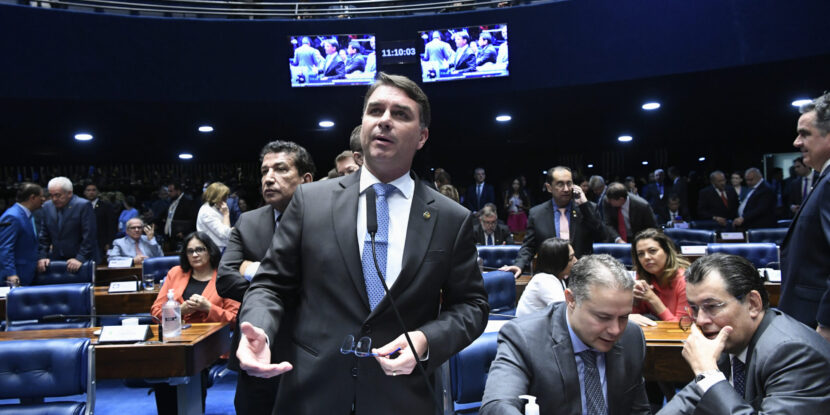

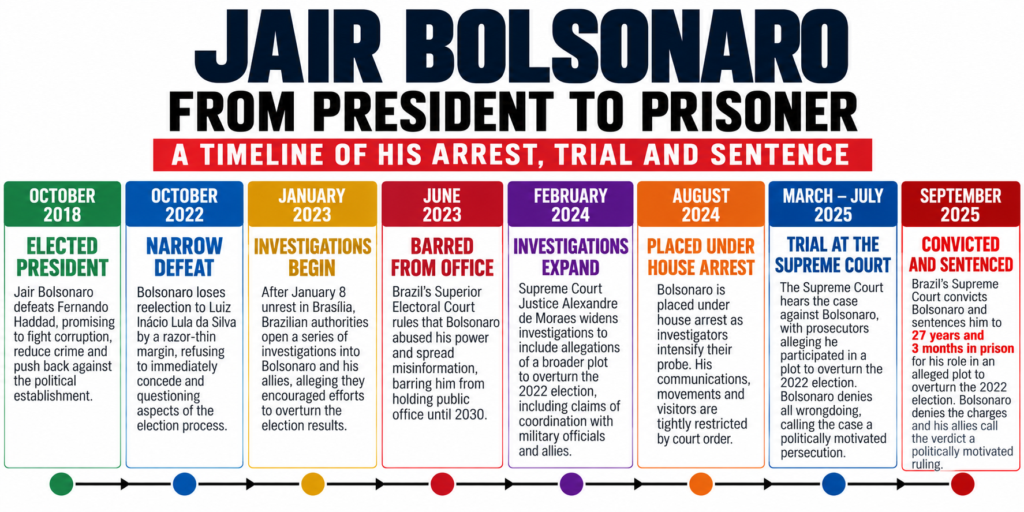
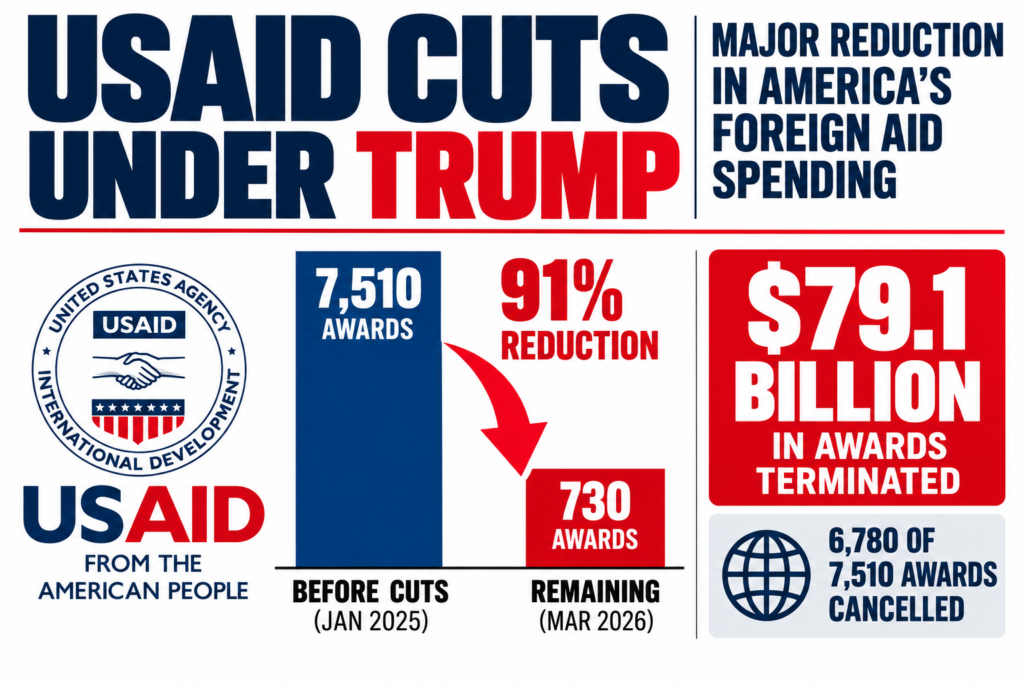
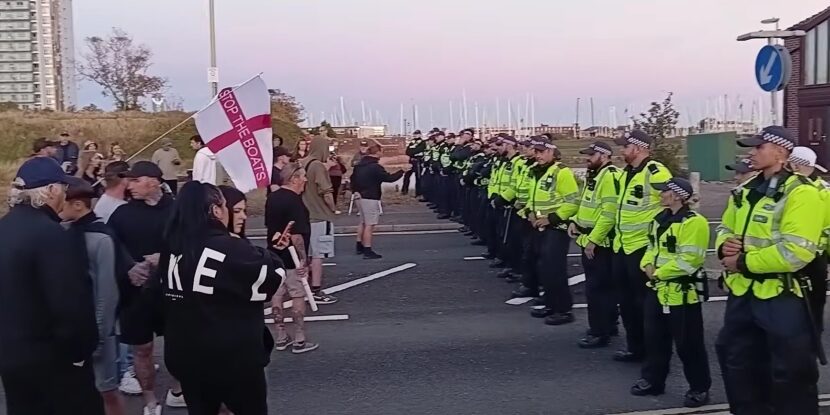



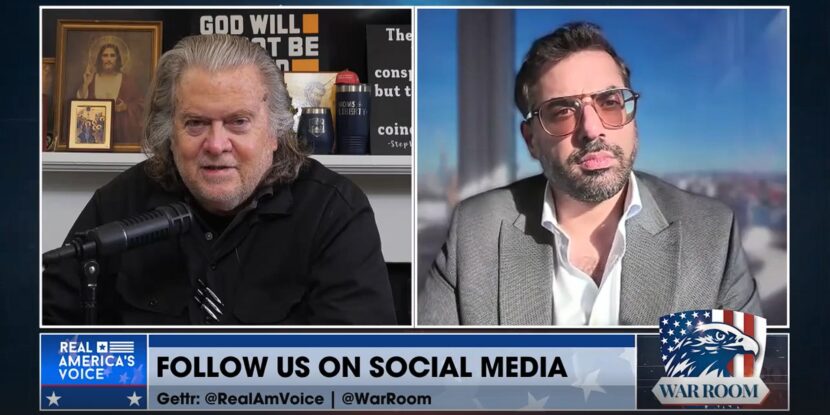
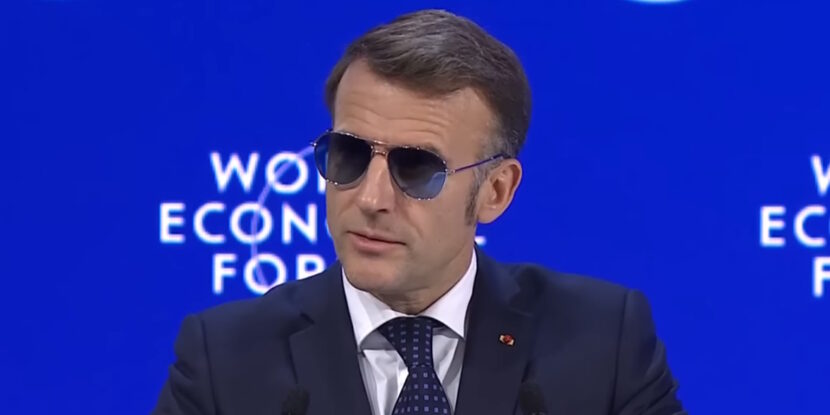
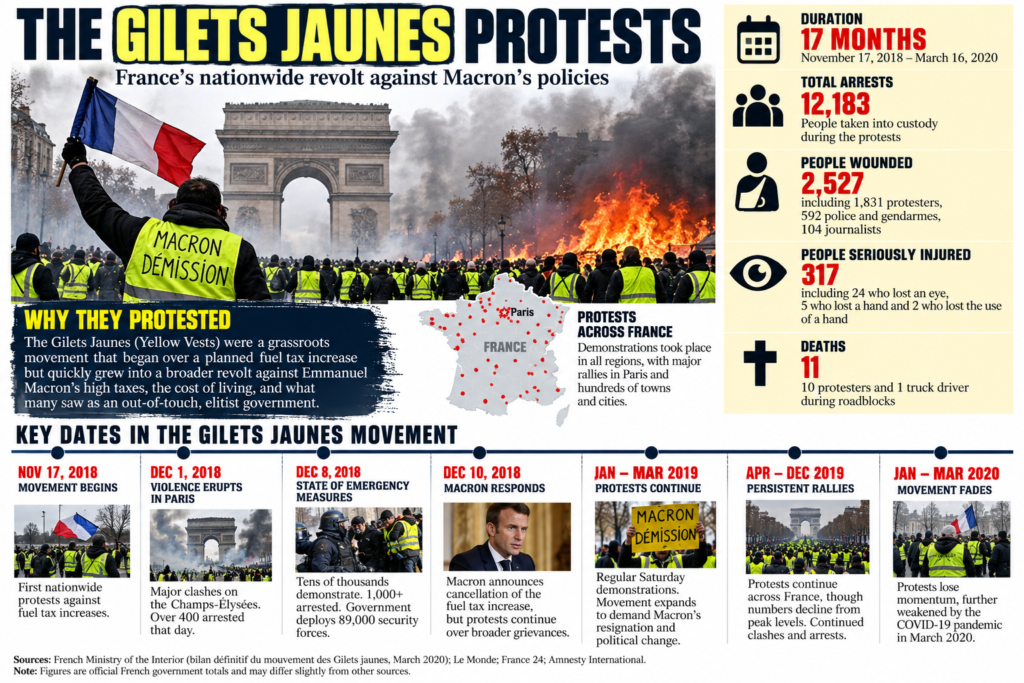
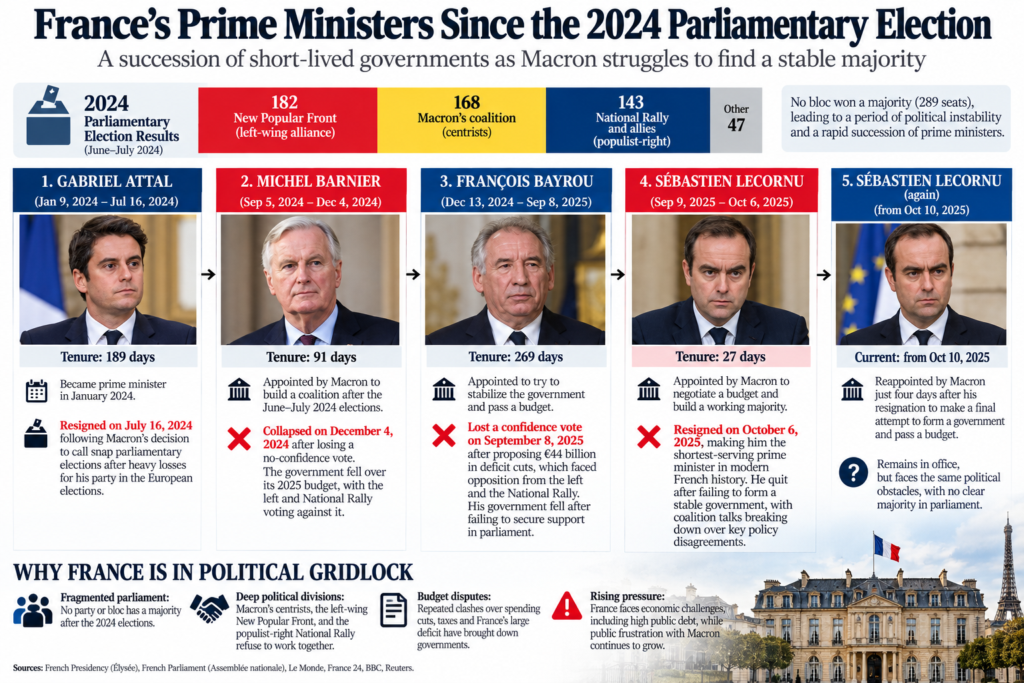

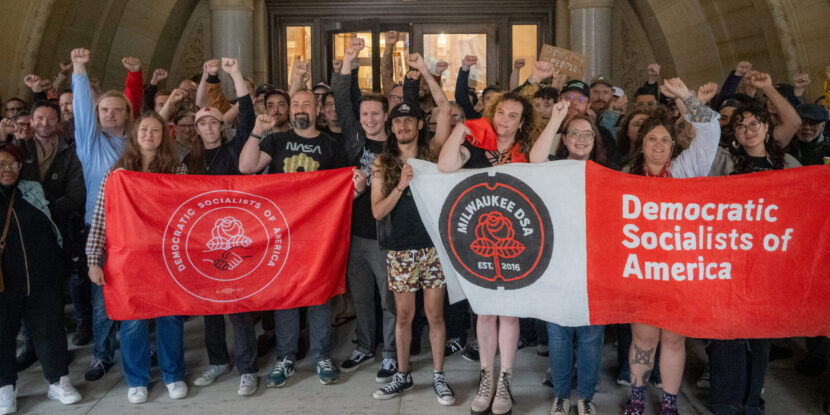

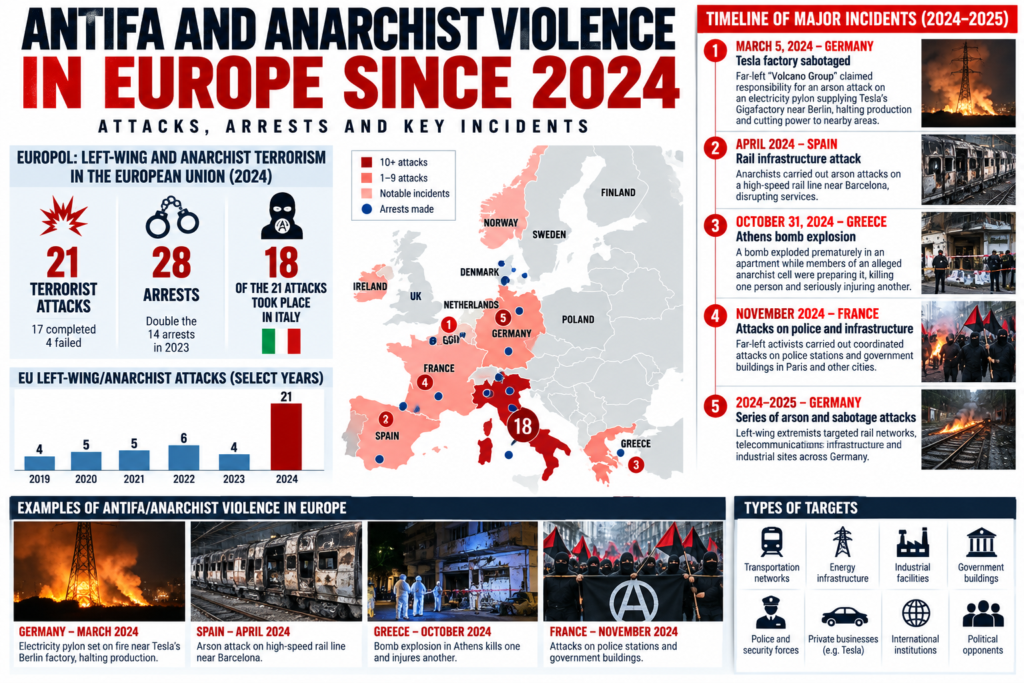
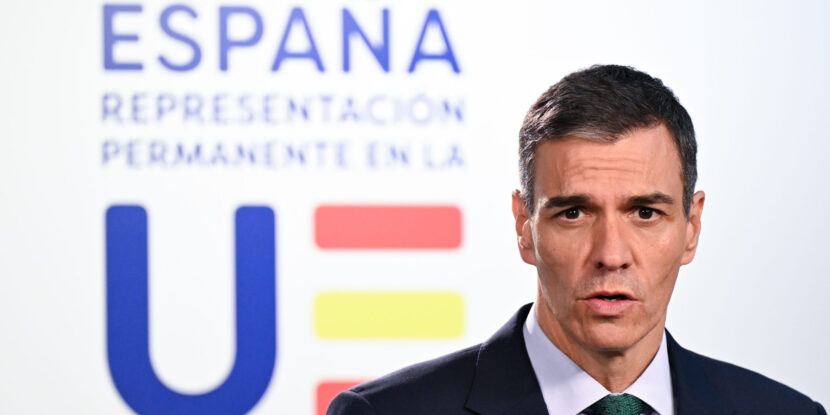
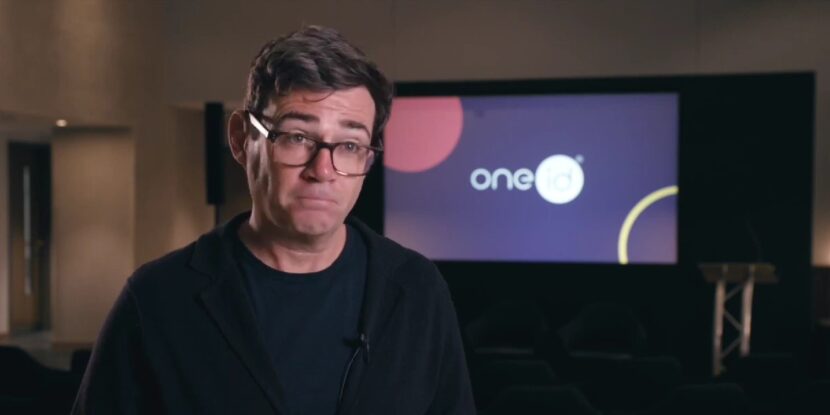
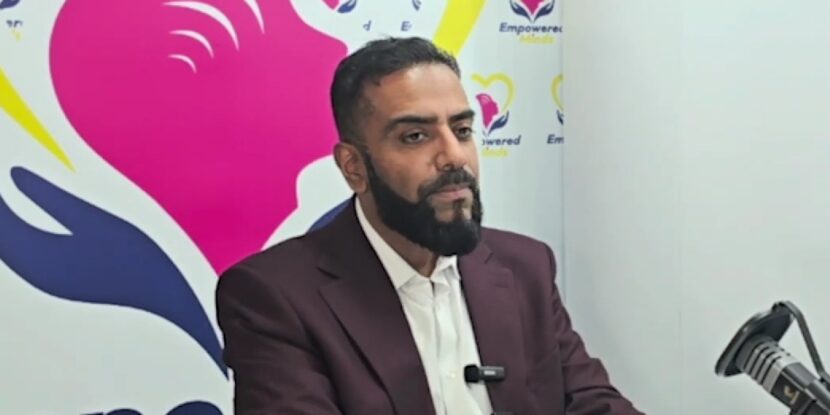
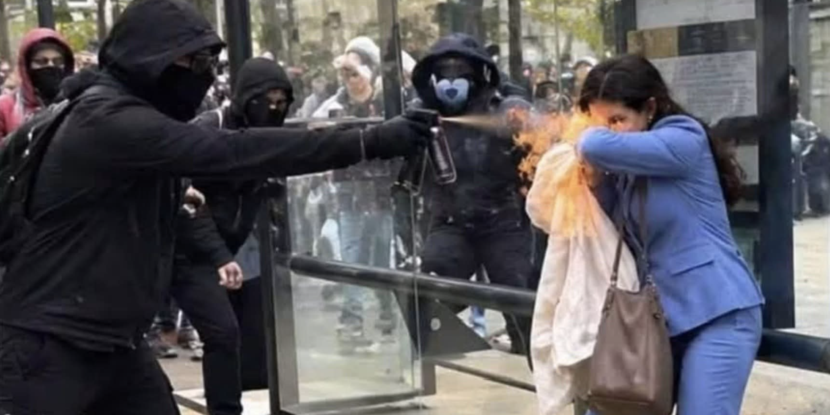


.jpg)


.jpg)


.jpg)


.jpg)
