Britain and France are preparing for the possibility of deploying thousands of European troops into Ukraine, raising the prospect of a direct military confrontation between NATO members and Russia, with potentially disastrous consequences for European governments already struggling to maintain their armed forces.
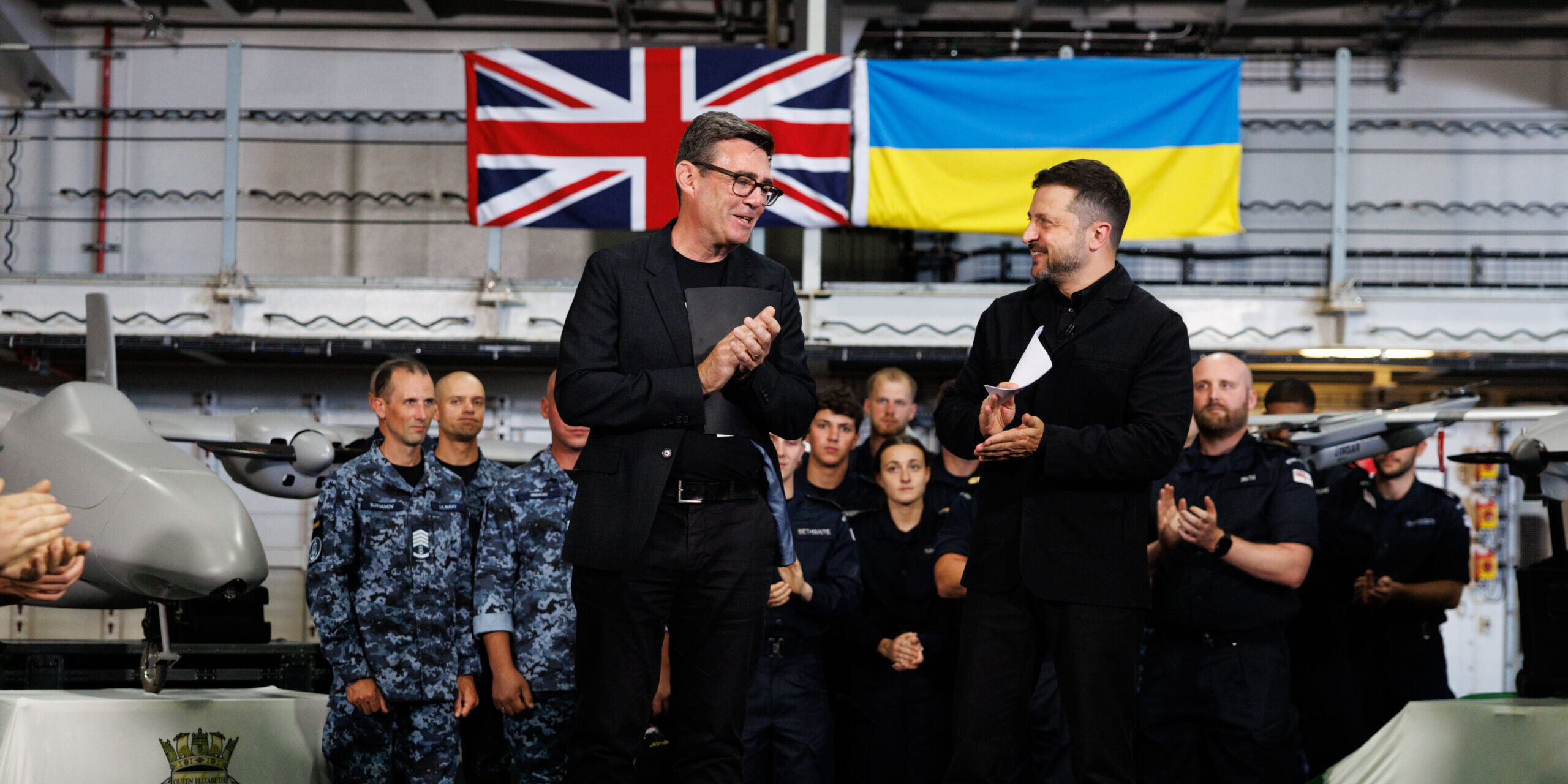
According to plans announced by the British government, approximately 2,800 personnel from 11 countries are preparing for a military exercise in Poland designed to test the readiness of a potential multinational force for Ukraine.
The proposed deployment would follow a ceasefire agreement, although no such agreement has been secured and no deployment has been authorized. European soldiers could reportedly be permitted to return fire if attacked by Russian forces. The question is whether Britain and France actually possess the military capabilities to defend their soldiers against Russia without substantial American assistance.
Britain’s Shrinking Army.
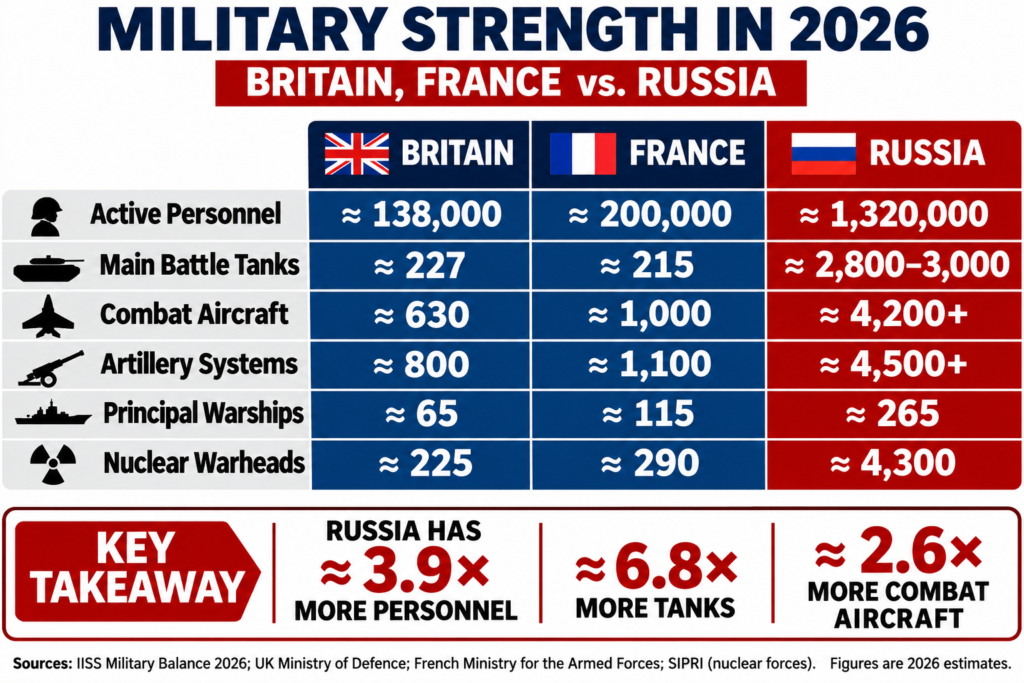
According to official Ministry of Defence figures, Britain’s regular Army has approximately 74,000 personnel, considerably fewer than during the wars in Iraq and Afghanistan. A House of Commons assessment of military manpower has highlighted continuing recruitment and retention difficulties, raising questions about Britain’s ability to sustain additional overseas commitments.
Deploying several thousand troops would require considerably more personnel to support logistics, maintenance, medical services, and troop rotations.
Britain also faces limitations in artillery ammunition, armored vehicles, and ground-based air defenses. These shortages are particularly significant given Russia’s extensive use of drones, missiles, and artillery throughout the Ukraine conflict. A peacekeeping mission could therefore become an expensive and potentially dangerous commitment for an army already under considerable pressure.
France Unlikely to Make Up the Difference.
France possesses one of Europe’s most capable militaries, including nuclear weapons, modern combat aircraft, and substantial experience conducting overseas operations in Africa. However, its experience in expeditionary operations does not necessarily translate into an ability to confront modern state adversaries like the Russian forces, which have been engaged in conventional and cutting-edge drone warfare for years.
A European deployment to Ukraine would require sustained air defense, intelligence gathering, ammunition supplies, and secure logistical routes. France and Britain would also need to maintain their existing military obligations elsewhere. The critical problem is that European NATO members have historically depended heavily on American military capabilities, particularly intelligence, surveillance, strategic transport, and other logistical support.
Without those capabilities, protecting European soldiers against a sustained Russian attack could prove exceptionally difficult, if not impossible.
Russia Attacking Could Be a Disaster.
The greatest danger is that a mission ostensibly designed to preserve peace could instead trigger a wider confrontation. Russian forces could attack European positions using drones, missiles, or artillery. British and French troops might respond under their rules of engagement, creating direct combat between Russia and two nuclear-armed NATO members. Such an incident would leave London and Paris facing three difficult choices: reinforce their positions, withdraw their soldiers, or seek American assistance.
Importantly, NATO’s founding treaty does not automatically guarantee an American military response to any attack against NATO personnel operating inside Ukraine. Article 6 establishes geographic limitations on Article 5’s collective defense.
A Russian attack on European troops in Ukraine would not automatically trigger Article 5 and would leave both France and Britain vulnerable if the United States decided to simply sit it out. Moscow could also exploit the uncertainty, calculating that European governments would be unwilling to escalate without the backing of President Trump and the U.S. military.
Trump’s European Dilemma.
President Donald J. Trump has opposed deploying American ground troops to Ukraine, leaving European governments responsible for demonstrating that they can enforce any future peace agreement.
The proposed Multinational Force Ukraine would consequently represent a major test of Europe’s ambitions for greater military autonomy. Political declarations are no substitute for sufficient soldiers, ammunition, air defenses, or the logistical infrastructure necessary to sustain military operations.
Britain and France may be willing to send troops into Ukraine to guarantee a ceasefire. Whether they possess the resources to fight Russia if that ceasefire collapses is an entirely different question.