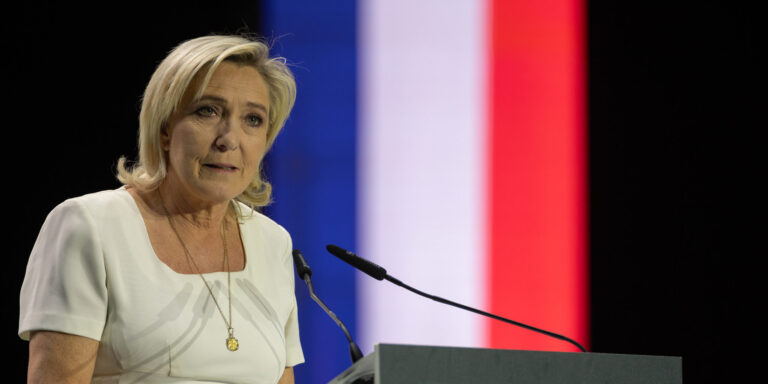
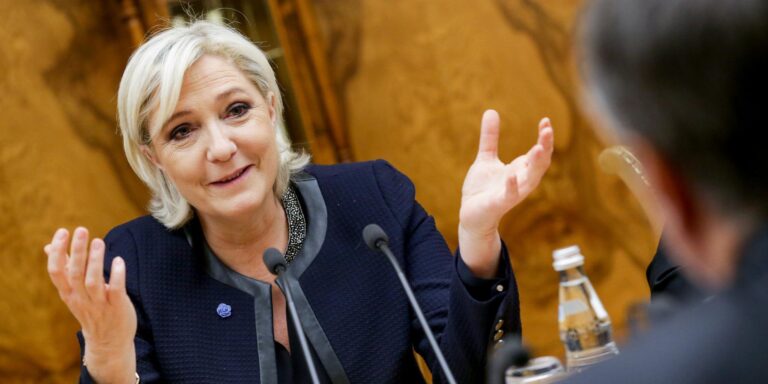
New polling has revealed that President of France Emmanuel Macron’s approval rating has plummeted to another record low following widespread riots, compounded by a unanimous rejection of his government’s budget months before a high-stakes presidential election, which could see his arch-rival, National Rally party leader Marine Le Pen, elected as his successor.
A New Low for Macron.
President Macron’s approval rating has fallen to an unprecedented low of 13 percent, according to a new poll by Elabe, a French polling firm. The poll was conducted between November 3 and November 4 for Les Échos, a French financial newspaper, and surveyed approximately 1,000 adults.
This represents a four-point decline since October and an 11-point decline since August. It is also the lowest confidence rating recorded for an incumbent French president, breaking the previous record of 14 percent held by former Socialist president François Hollande in November 2016, who declined to stand for re-election in 2017 due to his widespread unpopularity.
While President Macron is already term-limited heading into 2027, his approval rating reflects widespread dissatisfaction with his leadership.
Declining Popularity.
President Macron’s decline has consistently declined over the second half of the year. According to polling from Elabe, in June 2026, 26 percent of French respondents said they trusted President Macron to address the country’s problems effectively. This figure declined to 24 percent in July, 20 percent in September, and 17 percent in October, before reaching 13 percent in November.
Based on current projections, President Macron is now competing with German Chancellor Friedrich Merz to be Europe’s most unpopular national leader. According to YouGov’s October 2026 European Leaders Tracker, only 11 percent of German respondents viewed Chancellor Merz positively. While President Macron has a higher net approval rating than Chancellor Merz, if current trends hold, the French president could become the most unpopular leader in Europe.
This polling also shows that declining trust in President Macron’s administration is not only widespread, but an enduring element of French political life.
From Bad to Worse.
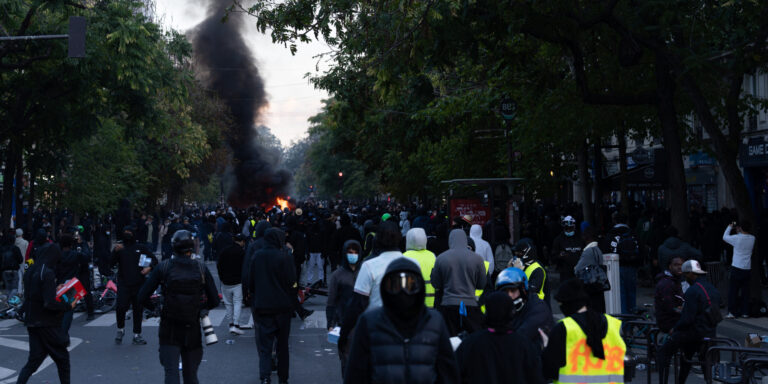
Since September, France has been consumed by student protests ostensibly targeting underfunded schools, which escalated into violence in October. The escalation resulted in the destruction of the Limoges City Hall, an iconic building over a century old. This coincided with polling suggesting that Marine Le Pen, leader of the National Rally party, is set to win the French presidency in 2027, regardless of her opponent in the second round of voting.
Earlier this month, the French National Assembly, the country’s legislature, unanimously rejected the budget put forward by French Prime Minister and Macron ally Sébastien Lecornu. Specifically, French lawmakers rejected the revenue section of the government’s 2027 budget, which included cuts to public spending to deal with France’s ballooning public sector debt. The budget was rejected with 458 votes against and none in favor.
It is possible that the French government will use Article 49.3 of the French constitution, which allows legislation to be implemented without a vote in the National Assembly, to pass a budget. Since the 2024 French legislative elections, no party has a majority in the National Assembly. Consequently, Macron’s government has heavily relied on Article 49.3 to pass legislation, generating controversy and accusations that the President and his allies are circumventing the democratic process.