Even in deep-blue California, where registered Democrats outnumber Republicans by nearly two to one, voters proved unwilling to embrace one of the left’s most ambitious taxation experiments. The result also exposed a major divide within the Democratic Party, with Governor Gavin Newsom opposing the proposal over concerns that it could drive entrepreneurs, investors, and businesses out of the state.
California Rejects a $100 Billion Tax Experiment.
Proposition 40 would have targeted Californians with a net worth exceeding $1 billion, taxing assets including stocks, bonds, and privately held businesses. Supporters estimated the measure would generate approximately $100 billion, with 90 percent directed toward healthcare and the remainder funding education and food assistance.
The initiative was promoted as a response to federal healthcare spending reductions enacted under President Donald J. Trump’s One Big Beautiful Bill Act. Sanders and Democrat Representative Ro Khanna (D-PA) championed the proposal, arguing that wealthier Americans should contribute more toward public services.
However, opponents warned that taxing accumulated wealth rather than realized income could create serious problems for entrepreneurs whose fortunes are tied up in businesses and investments.
Newsom Breaks With the Progressive Left.
Gavin Newsom, the Democrat state governor who is widely considered a potential presidential contender in 2028, warned that the tax could undermine California’s economic competitiveness by encouraging wealthy residents to relocate.
Google co-founders Sergey Brin and Larry Page were among the billionaires who began moving away from California amid the tax controversy. The campaign against Proposition 40 also attracted extraordinary financial support.
Brin and at least 11 other billionaires contributed a combined $269 million to a political committee that spent more than $300 million opposing the measure. Democrat-aligned organizations, including the California Teachers Association and Planned Parenthood’s California affiliates, also opposed the proposal.
Democratic Voters Draw a Fiscal Line.
California voters have rejected Proposition 40 by approximately 53 percent to 47 percent, according to election projections. Concerns about California’s high cost of living, the possibility of wealthy residents fleeing, and the state’s dependence on high-income taxpayers may have contributed to the defeat.
Still, the vote may not be the end of the lefts’ strategy to “tax the rich.” A pre-election survey found more Californians supported higher taxes on billionaires in principle than prioritized retaining wealthy residents, even as support for Proposition 40 itself weakened.
Washington Democrats Face the Same Battle.
The California defeat arrives as Democrats prepare to assume control of Congress, potentially setting the stage for a national confrontation over wealth taxation. Incoming Senate Finance Committee Chairman Ron Wyden has pledged to intensify efforts to tax billionaires, while Sanders and Khanna have also advocated a federal wealth tax.
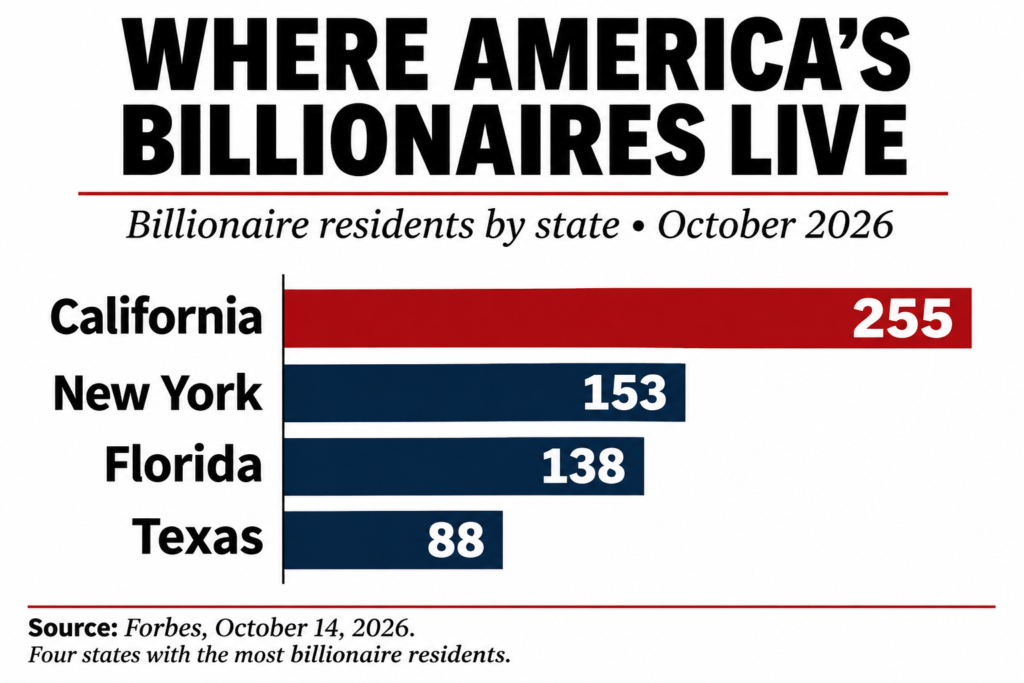
California’s election shows resistance to such a policy in one of the most deeply blue states, but that does not mean other states across America will reject it. California has the most billionaires in the United States and stands to lose more from them leaving, while other states have far fewer and theoretically risk less.
Though Democrats may have won the political battle against the GOP in November, their most ambitious economic proposals remain far from universally popular.