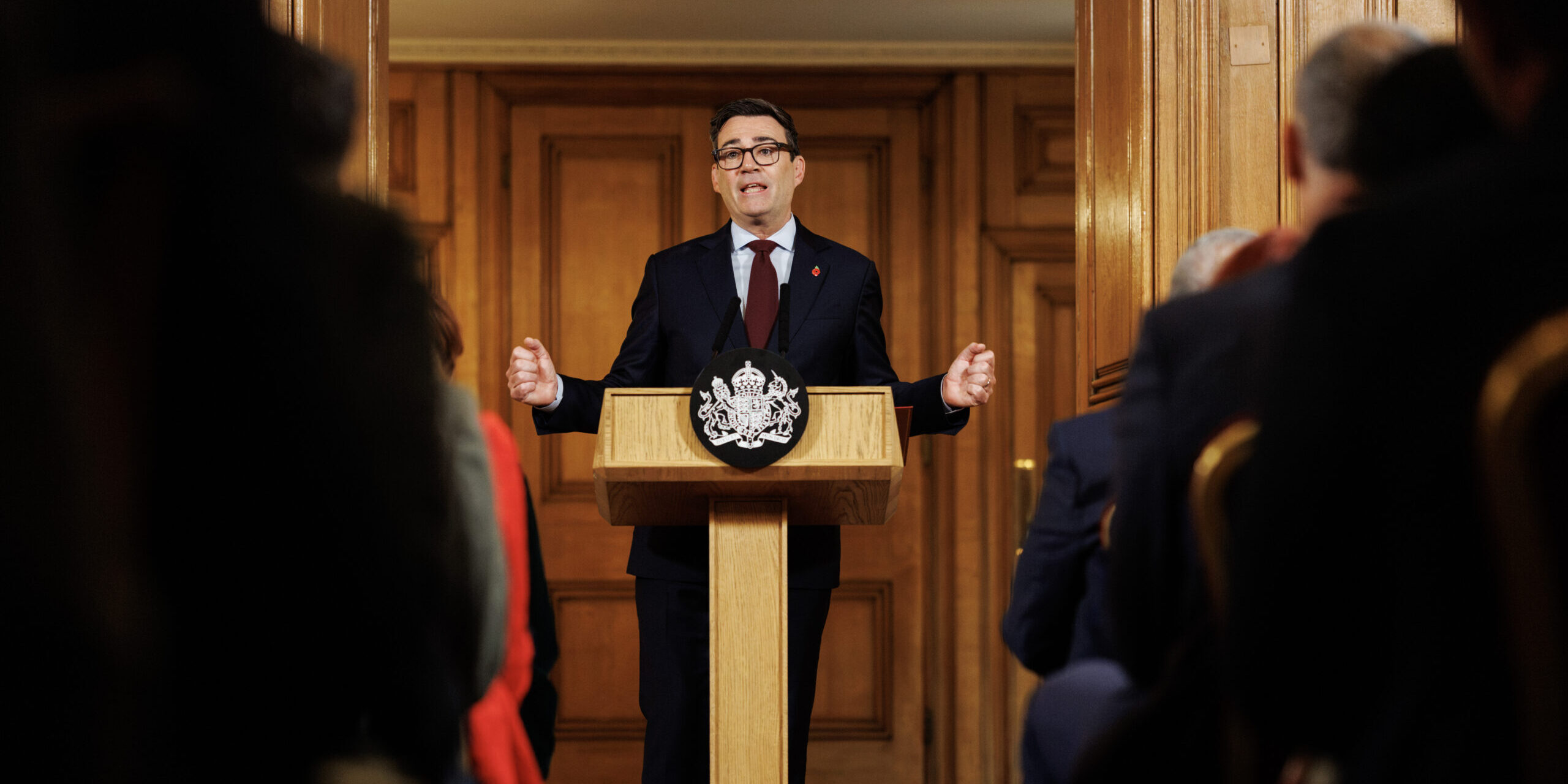
Andy Burnham, who deposed Sir Keir Starmer while Mayor of Manchester and became prime minister without winning a general election, has sold closer ties with the European Union (EU) as the will of “three-quarters” of the country, citing “around 73 per cent” — a YouGov question that excluded rejoining, the Single Market and the Customs Union.
Catherine McBride, of the Briefings for Britain group, tore into his claim that a “huge majority of British businesses” want to rejoin the EU, a figure drawn from just 145 self-selecting consultation replies. Britain Unbound set out how Friday’s reset between the United Kingdom (UK) and the EU leaves Britons worse off.
The YouGov tracker, fielded on 24 and 25 September among 2,062 adults in Great Britain (GB), asked about “Britain having a closer relationship with the European Union, without rejoining the European Union, the Single Market, or the Customs Union.” Total support on that option was 73 per cent. The same survey found a far lower 59 per cent support for rejoining, and that was prior to any detail emerging about said scenario, such as projecting inward immigration rates or membership fees.
Friday’s package still deepens alignment with EU sanitary and carbon-trading rules.
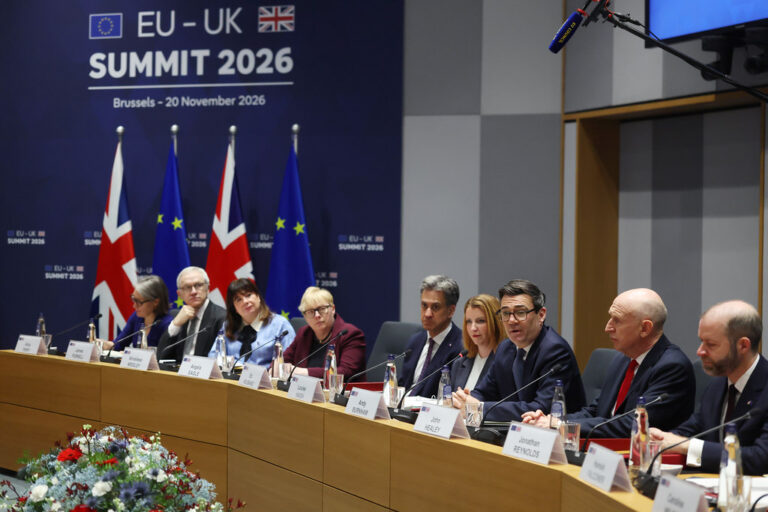
On Thursday, to reporters travelling with him ahead of the Brussels summit, Burnham said that “around 73 per cent in the latest polls, say they favour closer ties with Europe.” “Now, that’s not about rerunning 2016, it’s not about rejoining, but people by and large, three out of four of British people support closer ties,” remarks carried by the Irish News and GB News.
A Majority of 145 Firms.
The 76 per cent figure is 145 written responses to a consultation by the UK Trade and Business Commission, whose secretariat is Best for Britain, the pro-rejoin campaign, between 19 October and 6 November.
Respondents rated four options “on a scale of 1 to 7, according to its likely impact on their business or members.” Seventy-six per cent of those 145 ranked full membership as having the highest, or joint highest, positive impact on their own business or members, in the commission’s findings. The Independent splashed it as a “huge majority of British businesses” backing rejoining. There are about 5.7 million UK businesses. The commission’s chairman is Lillian Jones, a Labour Member of Parliament (MP).
Britain Unbound said the government was presenting the summit as a “win” for Britain: “In reality it will do none of those things.”
The official Treasury note on the Youth Experience Scheme, measured in gross domestic product (GDP), says it “will boost the level of GDP by up to 0.2% by five years after implementation, if the net migration impact follows the trajectory” in its tables, or 0.22 per cent in the detailed modelling, with extra net migration of 18,000 to 43,000 in year one. The impact on GDP per capita is 0.0 per cent.
The National Pulse has reported that Burnham’s own government has called his Brexit doom figures into question. Britain Unbound also points to dynamic alignment of food rules, the linking of carbon markets, and EU fishing access until 2038, under the May 2025 deal still in force.
Burnham is selling a reset on figures that do not say what he claims, and official modelling of the youth scheme leaves GDP per person unchanged.