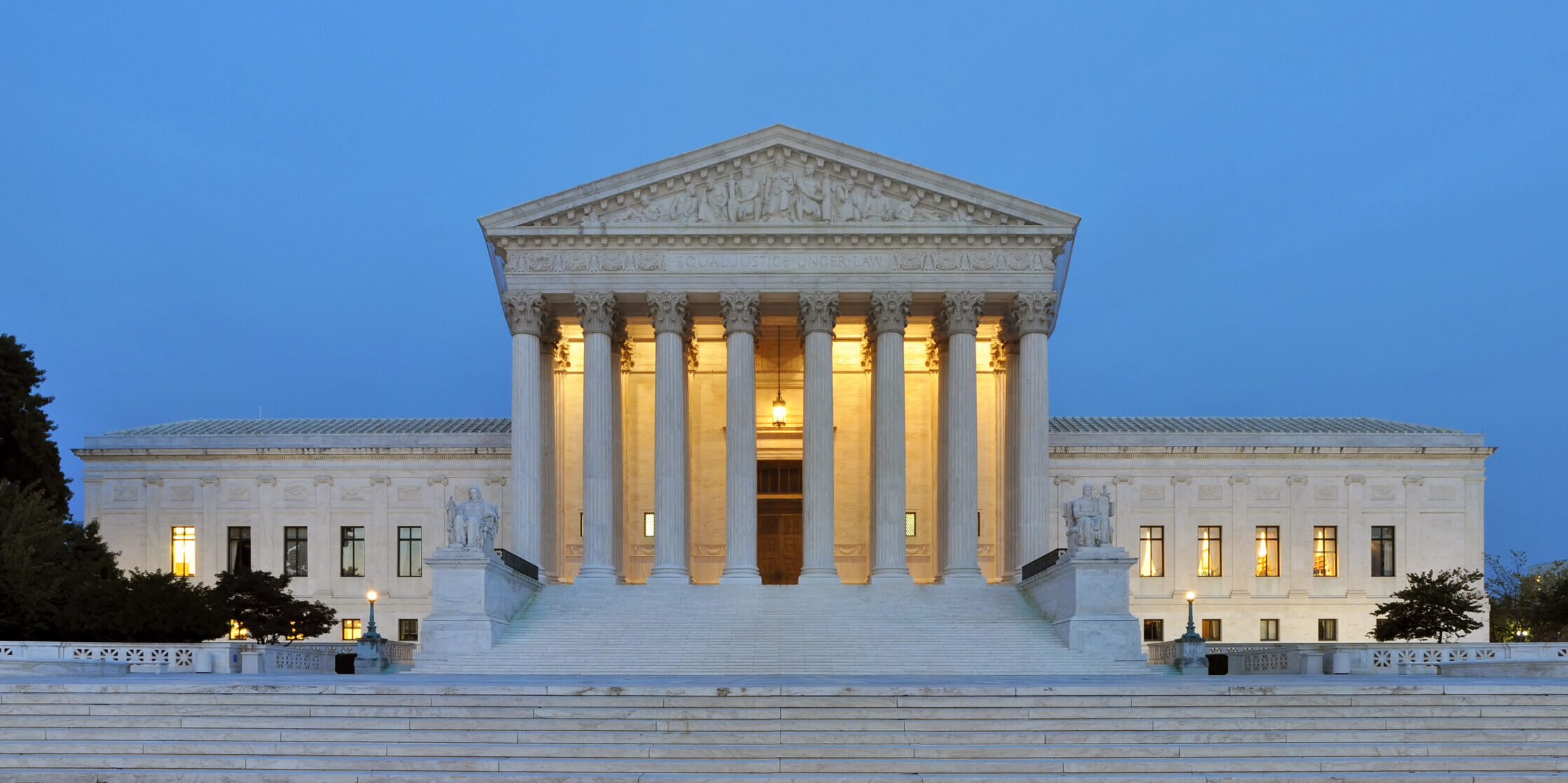
President Donald J. Trump’s campaign to overhaul American election security is facing another legal battle following the November midterm elections, with federal judges and the Supreme Court determining how far the administration can go in tightening voter eligibility requirements and regulating mail-in ballots.
The administration has secured several important temporary victories at the Supreme Court, but its broader election integrity agenda remains entangled in litigation over presidential authority, states’ rights, and the federal government’s ability to identify noncitizens on voter rolls.
Federal judges intervened immediately before the November 3 elections to restrict efforts by the Department of Justice (DOJ) and Department of Homeland Security (DHS) to identify suspected ineligible voters and influence how states handled their ballots. The resulting legal battles could establish precedents governing American elections long after Trump leaves office.
The Supreme Court Sends Mixed Signals.
In August, the Supreme Court ruled 6–3 in favor of the Trump administration, lifting an injunction against portions of an executive order concerning election integrity and mail-in voting. The decision allowed federal agencies to proceed with certain preparations, including compiling citizenship information for state election officials and developing new postal regulations.
The court did not, however, establish whether Trump’s proposals were constitutional. Instead, the majority concluded that the states’ legal challenge was premature because federal agencies had not finalized the regulations. The administration later encountered another obstacle when a federal judge blocked new United States Postal Service requirements governing mail ballots, including tracking barcodes and electronic information-sharing. The White House sought emergency intervention by the Supreme Court to restore the rules.
On September 14, however, the justices declined to lift the injunction, preventing the requirements from taking effect for the midterms.
Trump’s Citizenship Database Scores a Victory.
The administration achieved a more substantial victory on September 25, when the Supreme Court voted 6–3 to permit continued use of an expanded federal citizenship-verification system. The decision in DHS v. League of Women Voters suspended restrictions imposed by a lower court on the Systematic Alien Verification for Entitlements (SAVE) database.
Originally created to verify immigration status for government benefit programs, SAVE has been expanded under Trump to incorporate additional federal information, including Social Security records, allowing election officials to check the citizenship status of registered voters.
These capabilities provide an essential safeguard against unlawful voting by foreigners, which is already prohibited in federal elections.
Federal Judges Challenge Trump’s Election Authority.
Under Article I, Section 4 of the Constitution, states possess primary authority over congressional election administration, although Congress can establish certain overriding federal requirements. Presidential elections operate under a separate constitutional framework.
The President does not possess a general power to rewrite state election procedures through executive orders. That has become central to lawsuits challenging Trump’s election policies.
Immediately before the midterms, federal judges restricted administration efforts to pressure states into segregating ballots belonging to suspected noncitizens. The courts questioned whether federal officials possessed the legal authority to direct state election administrators in this manner.
The administration has also pursued legislation in Congress. The proposed SAVE America Act would establish additional citizenship documentation and voter identification requirements, but the legislation has encountered opposition in the Senate, with some Republicans refusing to pass it.
The Battle Will Continue Beyond the Midterms.
The administration now faces the prospect of pursuing its election agenda through a combination of appeals, executive action, and legislation as the next presidential election approaches. The Supreme Court’s emergency rulings have offered Trump opportunities to advance certain policies, but they have not settled the underlying constitutional questions.
The dispute reaches beyond voter identification, citizenship databases, or mail-in ballots. The stakes are substantial, as a favorable Supreme Court ruling could strengthen federal election enforcement for years to come. An unfavorable decision could sharply restrict presidential authority over election administration.