Brexit Britain has been left off a list of 14 economies facing new American tariffs, as President Donald J. Trump’s administration proposes a 15 percent levy on the European Union (EU), days after Prime Minister Andy Burnham agreed to tie Britain to Brussels’s food rules.
Jamieson Greer, the U.S. Trade Representative (USTR) and America’s chief trade negotiator, found that the 14 targeted economies run industrial policies that create excess manufacturing capacity and “are unreasonable and burden or restrict U.S. commerce.” He proposed extra duties on almost all of their goods. The United Kingdom was never among the 16 economies investigated from March, and it is not among the 14 now in Washington’s sights.
“For decades, many of our trading partners have adopted industrial strategies built on targeting manufacturing, wage and labor suppression, financial and other support, non-market economy inputs, and other market-distorting practices that tilt the trade balance in their favor while eroding America’s manufacturing base,” Greer said.
The EU faces a proposed 15 percent, or up to 20 percent if Washington judges Brussels’s existing commitments unsatisfactory. China faces up to 20 percent, India up to 25 percent, and Vietnam up to 35 percent, with lower rates on offer to countries that strike trade agreements. Singapore faces up to 20 percent; Bangladesh, Cambodia, Indonesia, Malaysia, and Thailand face up to 18 percent; and Japan, South Korea, Taiwan, and Switzerland face up to 15 percent. Mexico and Norway, also investigated, have yet to receive a decision.
Washington’s charge sheet against Brussels includes industrial plans to expand manufacturing, export credits that prop up production, barriers to American goods, cheap loans from state-backed investment banks, and a failure to tackle global overcapacity, including imports and investment from non-market economies such as China. The car, chemicals, and pharmaceutical industries are singled out.
Another Brexit Benefit?
Inside the EU, Britain would have had no say. Trade policy, including tariffs, is an exclusive power of the bloc, and Washington has targeted the EU as a single unit, covering “all goods of the EU,” not individual member states. If Britain were still inside, it would almost certainly have been subject to the same tariffs.
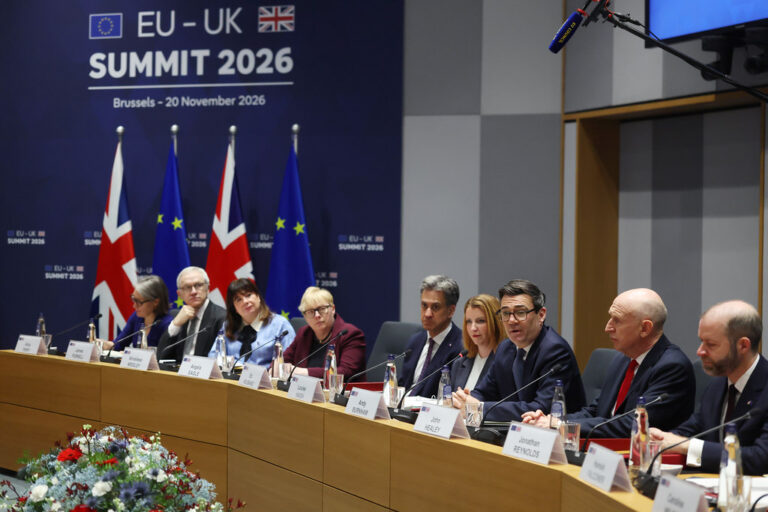
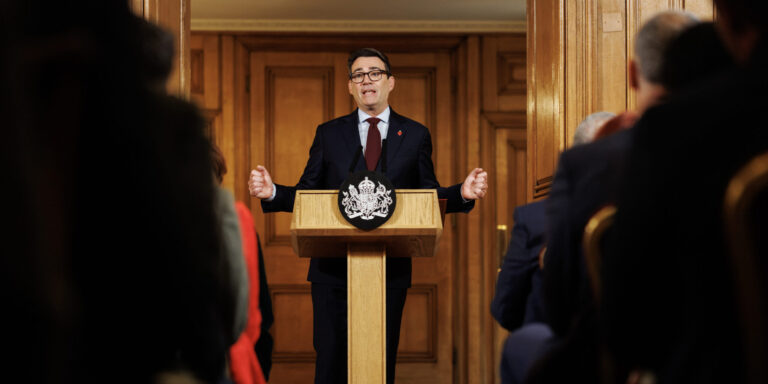
The timing is awkward for Prime Minister Burnham. On November 20, his government and the EU concluded a deal on food and farming standards that will work on the basis of “dynamic alignment,” with “the UK and EU applying the same rules, at the same time, on an ongoing basis,” from March 1, 2028. In practice, this will amount to the British government adopting EU regulations, enforced by EU judges. Burnham told the summit in Brussels on November 20 that legislation to implement the deal, along with a link to the EU’s carbon trading scheme, would go before Parliament the following week.
The National Pulse reported last week that the one EU demand Burnham is resisting is matching the bloc’s tariffs on Chinese goods, even as he signs up to its food rules, carbon trading, and a youth migration scheme. His wider timetable for drawing Britain back towards Brussels now runs into an American administration preparing to tariff the very bloc he is courting.