




❓WHAT HAPPENED: Dr. Robert W. Malone says he has uncovered new evidence that suggests Lyme disease was—at least in part—the result of U.S. government and military attempts at developing a biological weapon in the mid-1960s.
👤WHO WAS INVOLVED: Robert Malone, Kris Newby, the U.S. military, the Central Intelligence Agency (CIA), and Cuba.
📍WHEN & WHERE: Malone published his evidence on March 4, 2026, with the alleged biological weapons experiments occurring in the 1960s.
💬KEY QUOTE: “Between 1966 and 1969, the U.S. military released 282,800 lone star ticks made radioactive with Carbon-14 across Virginia sites along bird migration routes. The radioactive marking allowed researchers to track the ticks’ spread using Geiger counters over several years.” — Dr. Robert Malone
🎯IMPACT: The physician and biochemist, who was a pioneer of mRNA technology, cites a new report that appears to indicate the U.S. Central Intelligence Agency (CIA) attempted to use disease-infected ticks against Cuba in 1962.
Dr. Robert W. Malone says he has uncovered new evidence that suggests Lyme disease was—at least in part—the result of U.S. government and military attempts at developing a biological weapon in the mid-1960s. The physician and biochemist, who was a pioneer of mRNA technology, cites a new report that appears to indicate the U.S. Central Intelligence Agency (CIA) attempted to use disease-infected ticks against Cuba in 1962.
According to author and Lyme disease researcher Kris Newby, a former CIA operative—said to now be in his seventies—came forward and spoke with her about a secret mission in which the “strangest thing he ever did was drop infected ticks on Cuban sugarcane workers,” stating that his C-123 aircraft was “almost skimming the surface of the Caribbean to avoid Cuban radar.” Following the mission and his return to the United States, the operative told Newby that his young son became ill and developed a severe fever that required emergency surgery. The operative further tells Newby that his commander at the CIA subsequently ordered him to “burn all the clothes you took to Cuba. Burn everything.”
The testimony is notable as it builds on long-standing allegations that the U.S. military engaged in dangerous and unethical biological weapons research during the Cold War for use against the Soviet Union and Cuba. Importantly, there is documentation that the military did engage in experimental biological weapons testing, including an Operation Mongoose memo from March 13, 1962, sent to Brigadier General Edward Geary Lansdale directly mentioning a study about an operation aimed at incapacitating Cuban sugarcane workers.
“Task 33b – Plan for Incapacitation of Sugar Workers – completed 2 February. Task as assigned was to develop a plan for incapacitating large sections of the sugar workers by the covert use of BW or CW agents. Study revealed the idea was infeasible and it was cancelled,” the memo states.
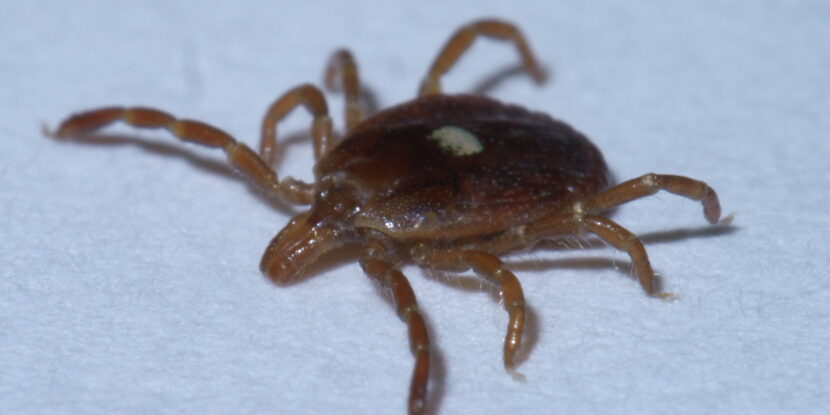
Malone further claims that, “Between 1966 and 1969, the U.S. military released 282,800 lone star ticks made radioactive with Carbon-14 across Virginia sites along bird migration routes. The radioactive marking allowed researchers to track the ticks’ spread using Geiger counters over several years.” He added that prior to the release, “lone star ticks were not found above the Mason-Dixon Line. Within years of the Virginia releases, they had established populations on Long Island for the first time.”
While radioactive tick release does appear to have happened, a Journal of Medical Entomology article authored by Dr. Daniel E. Sonenshine from June 1968 states that the release occurred in the summer of 1966 and only involved the 42,400 radioisotope-tagged D. variabilis larvae. Notably, the D. variabilis tick species is commonly known as the American dog tick, not the lone star tick, which belongs to the species A. americanum.
Though the revelations regarding an alleged mission to incapacitate Cuban sugarcane workers do lend some credibility to the claim that Lyme disease was the result of biological weapons testing, it is also important to stress that the bacteria in ticks that are responsible for the condition, Borrelia burgdorferi, weren’t discovered until 1982.
Image by Robert Webster / xpda.com.
Join Pulse+ to comment below, and receive exclusive e-mail analyses.





























.jpg)


_04.jpg)


