A new report has revealed that the British Broadcasting Corporation (BBC) is under mounting financial pressure due to declining TV license payments, as the British public increasingly turns elsewhere for news and entertainment.
PULSE POINTS
❓ WHAT HAPPENED: The TV Licence sales that fund the British Broadcasting Corporation (BBC) dropped by over 500,000 last year, according to the corporation’s annual report.
📺 DETAIL: According to the corporation’s annual report, the sale of TV Licences, which fund the BBC and are compulsory for anyone watching live television, even if none of it is BBC content, decreased by 540,000. The report also showed that 23.3 million licenses were active by the end of 2025/2026 financial year, while the number of households in Britain not using a license rose to 3.7 million, an increase of 62,000. “We can see that the large majority of the reason for the decline is people… not consuming licensable content,” said Berangere Michel, the BBC’s Chief Financial Officer. “That is a trend that I don’t see changing back. In fact, I see it accelerating, and that is one of the reasons why we would like a reform of the funding,” Michel added. The report also noted that rising production costs, inflationary pressures, and a rapidly changing media market have further strained the organization.
💬 KEY QUOTE: “This is a moment of real jeopardy, not just for the BBC but for public service broadcasting and the UK as a whole,” complained BBC Director General Matt Brittin in reaction to the report.
🎯 IMPACT: The findings of the annual report suggest declining faith and interest in the BBC. The corporation has already announced plans to cut £500 million in costs by 2028/2029, with £160 million in savings targeted from its news and content divisions. The report is likely to push the British government to pursue funding reform. British Culture, Media, and Sport Secretary Lisa Nandy has already proposed expanding the TV License to include households that opt for paid streaming services such as Netflix, Disney+, and Prime Video, rather than BBC content, forcing them to fund the corporation. Last month, it was reported that the British government was drafting a proposal to makesocial media companies prioritize BBC content.
📺 FLASHBACK: The BBC has been implicated in a number of scandals, underscoring the corporation’s ideological bias and causing viewers to switch off. Back in June, the BBC claimed that Reform UK leader Nigel Farage had called for “white cold rage” in response to the wrongful arrest and murderof white British teenager Henry Nowak. Farage had actually called for “pure cold rage.”The BBC subsequently released an apology.In December last year, the BBC was hit by a multi-billion-dollar lawsuit from President Donald J. Trump after the corporation intentionally spliced together clips of remarks made by Trump on January 6, 2021, that were around an hour apart, to create a false narrative of him encouraging violence. The scandal resulted in the resignation of now-former Director General of the BBC Tim Davie, as well as the resignation of then-Director of News Deborah Turness.
Reid Hoffman, the billionaire co-founder of LinkedIn, has established himself as a major benefactor of Democrat causes and politicians, including James Talarico.
Hoffman has donated at least $11.5 million to the campaign of Senate candidate James Talarico. He donated $500,000 in January, $1 million in February, and $10 million in June. The donations were made through Lone Star Rising, the main super PAC supporting Talarico.
Hoffman’s $10 million donation in June accounted for approximately 80 percent of the PAC’s funds during the second quarter. Talarico’s campaign took the money from the billionaire Epstein-linked Hoffman despite campaigning against “billionaires” and the “Epstein Class.”
Talarico has previously suggested that Republican Senate candidate and Texas Attorney General Ken Paxton is aligned with the interests of the “Epstein Class,” but it is Hoffman, a former guest of Epstein’s infamous island, who is Talarico’s biggest backer, with donations over twice as large as the second-largest donor.
In April, it was revealed that Talarico received over $27 million during the first quarter, making his race one of the most well-funded Senate campaigns of the 2026 election cycle.
Nikki Haley.
Despite being a staunch Democrat, Hoffman is prepared to back Republicans if he believes doing so will hurt President Donald J. Trump. In an interview with New York Magazine in 2023, Hoffman said: “The short answer is I will spend as much as I possibly can and it takes and is effective [to beat Trump].”
Hoffman provided financial support for Nimarata ‘Nikki’ Haley’s presidential primary campaign against Trump ahead of the 2024 election, saying, “If America is to avoid another Trump presidency, it will be because Trump loses an election next year. If he is to lose, it will either be to Nikki Haley in the primary, or Joe Biden in the general.”
Hoffman donated at least $250,000 to a pro-Haley Super PAC around the time he made those remarks. After Haley lost to President Trump in the New Hampshire Republican primary, Hoffman withdrew his financial support and focused entirely on backing the Democrats.
E. Jean Carroll.
Hoffman donated $7 million through American Future Republic, a non-profit he created, to Kaplan Hecker & Fink, the law firm representing E. Jean Carroll in her litigation against President Trump, to cover her legal costs. Carroll had initially claimed that her lawsuit received no outside funding. However, Judge Lewis Kaplan, appointed by former President Bill Clinton, did not sanction her.
In January 2024, President Trump blasted Hoffman on Truth Social. The then-former President called the LinkedIn co-founder “piglet Reid Hoffman” and stated that the Democrat megadonor was bankrolling a “Witch Hunt” against him, while proclaiming his innocence. In May this year, the Department of Justice (DOJ) launched a perjury investigation into Carroll over her claims of not receiving outside funding while taking money from Hoffman during her 2022 deposition. Carroll claims that she was unaware of the external funding.
Epstein.
Hoffman’s funding of Carroll’s lawfare campaign against the President was widely seen as hypocritical given his relationship with Jeffrey Epstein. The two met roughly five years after Epstein pleaded guilty to charges of soliciting and procuring a minor for prostitution in July 2013.
The following year, Hoffman visited Little Saint James, colloquially known as Epstein Island. Hoffman later sent an email reading: “Jeffrey has exquisite taste in people (myself excepted).” At Christmas Eve, Hoffman sent ice cream to Epstein, writing that it was for him and “the girls.”
In 2015, Hoffman had dinner with Epstein, and in 2019 Hoffman admitted to helping Epstein gain access to MIT’s Media Lab fundraising network after Joi Ito, then-director of the Media Lab, asked for fundraising assistance. Hoffman participated in discussions about soliciting donations from Epstein. He later admitted that he had “helped to repair [Epstein’s] reputation and perpetuate injustice.”
I only knew Jeffrey Epstein because of a fundraising relationship with MIT, which I very much regret. In 2019 I told Axios the last meeting I had with him was in 2015 but I was mistaken, as according to calendar entries I have become aware there were additional fundraising…
The National Pulse does not take corporate cash, s0 we need your support. Please JOIN THE NATIONAL PULSE or MAKE A DONATION today. We are 100% reader-funded.
MeidasTouch and FusionGPS.
Hoffman is also a backer of MeidasTouch, a Democrat-aligned media organization founded by brothers Ben, Brett, and Jordan Meiselas. The outlet, which began as a Democrat-aligned PAC, spearheaded the March 2024 “bloodbath hoax,” which involved a cropped clip of President Trump predicting an economic “bloodbath” for the American automotive industry under an additional four years of Democrat executive control during a speech in Ohio.
The “bloodbath hoax” was circulated by Democrats and Democrat-aligned corporate media, which portrayed the then-former President’s comments as a threat of political violence if he lost the election. Hoffman was an early financial backer of MeidasTouch, having given $12,000 to “MeidasTouch PAC” back in August 2020.
A few months after the “bloodbath hoax,” Shirley Halperin, then-Editor-in-Chief of Los Angeles Magazine, which is currently owned by Engine Vision Media LLC, a company co-founded by Ben Meiselas, resigned, citing the owners’ refusal to pay staff. Kenny Meiselas, the father of the Meiselas brothers, represented rapper Sean “Diddy” Combs, who was convicted in July 2025 of two counts of transportation for prostitution.
In May 2024, it was revealed that MeidasTouch was selling merchandise themed around “Dark Brandon,” an evil version of former President Joe Biden inspired by allegations that Biden had molested his daughter, Ashley Biden.
The LinkedIn co-founder also donated over $600,000 through Integrity First for America, a nonprofit founded by attorney Roberta Kaplan, to the legal defense fund of Bean LLC, also known as Fusion GPS, the Democrat-aligned opposition research firm behind the fraudulent Steele Dossier used to perpetuate the hoax that President Trump won the 2016 election due to Russian interference.
FusionGPS was funded by Hillary Clinton’s 2016 presidential campaign and the Democratic National Committee (DNC).
Smartmatic.
Hoffman is also prepared to fund opposition to right-wing media. In July 2024, it was reported that Hoffman had invested in Smartmatic, an electronic voting company that sued Fox News and Newsmax for defamation following reporting on allegations of voter fraud during the 2020 presidential election. This came a year after Smartmatic had claimed that no third-party entities were underwriting its litigation efforts.
Hoffman has channeled funds to Clear Choice, a Super PAC set up to undermine Robert F. Kennedy Jr.’s previous independent presidential bid. Founded by Pete Kavanaugh, former deputy campaign manager to then-incumbent President Joe Biden, those behind the PAC feared that RFK Jr.’s campaign was harming Biden’s prospects of re-election. Hoffman contributed $125,000 of the $375,000 collected during the first quarter.
The Future.
In December 2024, Hoffman confessed that he was worried that the Trump administration would investigate him during an episode of the Diary of a CEO podcast. “I hope it’s only in soft ends of the range, like IRS audits or phone calls like Trump made, saying, deny Bezos that [Department of Defense] contract because he owns The Washington Post and I don’t like him… It could get much worse, but I don’t really want to speculate on it because I don’t want to give anybody any ideas,” he said at the time.
This coincided with reports that Silicon Valley moguls, such as Hoffman, were eager for former Vice President Kamala Harris to win the 2024 election due to fears that President Trump would release the Epstein client list. Almost exactly a year later, in November 2025, President Trump signaled that Hoffman should be investigated.
“That creep fund guy was with him all the time. What’s his name? Reid Hoffman. I don’t know Reid Hoffman, but I know he spends a lot of money on the radical left. Reid Hoffman, in my opinion, should be under investigation,” the President said during questions from the press at the White House.
The National Pulse keeps you updated on the latest political news. If you value the work of Raheem J. Kassam and his team, please JOIN THE NATIONAL PULSE or MAKE A DONATION today.
Join Pulse+ to comment below, and receive exclusive e-mail analyses.
show less
Reid Hoffman, the billionaire co-founder of LinkedIn, has established himself as a major benefactor of Democrat causes and politicians, including James Talarico.
show more
By Popular Demand.
The National Pulse Now has an on-site comments section for members. Sign up today and be part of the conversation in our community of almost 15,000.
WE ARE 100% INDEPENDENT AND READER-FUNDED. FOR A GUARANTEED AD-FREE EXPERIENCE AND TO SUPPORT REAL NEWS, PLEASE SIGN UP HERE, TODAY.
British Conservative (Tory) Party leader Kemi Badenoch has been rebuked by the White House after she attacked Reform UK party leader Nigel Farage over recent comments about the Chagos Islands, with a senior official accusing her of spreading “fake news” and undermining the British-American alliance. The rebuke is a major public embarrassment for the gaffe-prone party leader, who has a long history of peddling half-truths and outright deceptions.
The National Pulse brings you in-depth analysis from around the world. To help Raheem J. Kassam and his team keep you informed, please JOIN THE NATIONAL PULSE or MAKE A DONATION today. We are 100% reader-funded.
Newsletter
Need to Know.
Your free, daily feed from The National Pulse.
Thank You!
You are now subscribed to our newsletter.
The Chagos Debacle.
The Chagos row began after Farage said in an interview that, if he was Prime Minister, he would have offered President Trump guaranteed use of the Diego Garcia base—the strategically vital joint British-American facility in the British Indian Ocean Territory, or Chagos Islands—in “perpetuity,” while pressing the American leader to stop counter-signaling Britain on the Falkland Islands, a British territory in the South Atlantic claimed by Argentina. Badenoch responded by calling the remarks “humiliating” for Britain and declaring that “giving away British territory in return for someone keeping quiet is not a deal.”
A senior White House official pushed back sharply. “At no point did anyone in the administration construe Nigel’s comments as suggesting that he was giving away the Chagos Islands. He was obviously referring to the use of the Diego Garcia military base, which is critical to countering threats from China and Iran,” the official said. “Anyone claiming otherwise is peddling fake news and undermining the Anglo-American relationship, including, apparently, Conservative Party leader Kemi Badenoch.”
A second US official adds:
“At no point did anyone in the administration construe Nigel’s comments as suggesting that he was giving away the Chagos Islands.
“He was obviously referring to the use of the Diego Garcia military base, which is critical to countering threats from…
Currently, Britain’s incumbent Labour Party government is attempting to surrender the Chagos Islands to Mauritius, a China-aligned state with no real claim to the archipelago, in deference to a non-binding ruling of the United Nations’ International Court of Justice. The deal would involve Britain paying Mauritius to maintain a lease on Diego Garcia, which it currently owns outright for free, but security on the base would still be undermined by the possibility of Mauritius allowing China or another power to establish a presence on one of the archipelago’s other islands. Significantly, the negotiations to surrender the islands were initiated by Badenoch’s Conservatives.
Badenoch’s misrepresentation of Farage, who has doggedly opposed transferring the islands to Mauritian sovereignty and was instrumental in prompting the U.S. to intervene against the deal, fits a broader pattern: she has repeatedly faced accusations of exaggeration, selective memory, and inconsistency on her personal story, her record in government, and her current policies.
Championing DEI.
As Equalities Minister when the Conservatives were still in government, Badenoch led the so-called ‘Inclusive Britain’ framework that included work on ethnicity pay gaps in the National Health Service (NHS) and other diversity-related measures, such as pushing for increased racial diversity in the judiciary and law enforcement. She now claims to be a sharp critic of DEI schemes in opposition.
Farage has called her “totally disingenuous” on the subject, arguing that she should be judged by what happened under her ministerial watch rather than her current rhetoric.
The European Convention on Human Rights.
Badenoch previously insisted that leaving the European Convention on Human Rights (ECHR), which binds Britain to the jurisdiction of the European Court of Human Rights, would not be a “silver bullet” for immigration control. She now claims she would leave the ECHR, which is regularly used to block the deportation of illegal migrants and foreign criminals on highly dubious human rights grounds, but critics have stressed that the Conservatives had 14 years in government from 2010 to 2024 to do so, and that the promise is likely false, similar to its broken promises to substantially reduce immigration.
More broadly, her time in previous Conservative governments ties her to the party’s record of overseeing unprecedented mass migration, which she now claims ministers “didn’t notice,” corporation tax increases, net zero energy policies, and incomplete delivery of Brexit.
🚨 Statement from Misley Mandarin, First Minister of the Chagossian Government. pic.twitter.com/iSm47N8zDg
The National Pulse relies on the support of readers like you to remain free from corporate influence. To keep us RADICALLY INDEPENDENT, please JOIN THE NATIONAL PULSE or MAKE A DONATION today.
Hypocrisy on Identity.
At the Conservatives’ recent annual party conference, Badenoch took aim at Reform figures, including former colleague Suella Braverman, for suggesting English people have an ethnic identity. She mischaracterized this as a “debate whether my mixed-race children are English” and framed such discussions as divisive, racist identity politics.
Yet Badenoch has previously been explicit about her own pride in her ethnic identity. “I find it interesting that everybody defines me as being Nigerian. I identify less with the country than with the specific ethnicity [Yoruba]. That’s what I really am.” She added that she has “nothing in common with the people from the north of the country… those were our ethnic enemies.”
Critics, including Nigerians, have noted the double standard of resisting any suggestion of an English ethnic identity while asserting an exclusive Yoruba ethnic identity.
Exaggerated Childhood Hardship.
Badenoch has described a difficult upbringing in Nigeria marked by fear, corruption, and material hardship, including claims of limited access to clean water and other struggles. Nigerian officials, media, and people familiar with her family have pushed back. Her father was a family doctor who owned a private clinic serving wealthier clients; her mother held a prominent academic role; and she attended the elite private International School Lagos.
Nigerian officials have publicly accused her of being “someone who has obviously lied about everything she said about her upbringing in Nigeria,” with the Nigerian Vice President personally rebuking her for “denigrating her nation of origin.”
Badenoch has also faced criticism for a profile on her website claiming she was “a bright child, excelling at maths and English, who loved beating boys in her class at chess, at seven winning a national girls’ chess tournament.” It was subsequently revealed that she was one of only two girls who competed.
Born In a Muslim Country?
While attempting to appeal to Muslim voters in April, Badenoch stated on LBC Radio, “My grandmother was a Muslim. I was born in a country that was 50 percent Muslim. I said Muslim prayers on Friday because that’s what happened there when I was at school. I have good friends who are Muslim.”
Badenoch was referring to Nigeria, where she was raised. Officially, however, she was born in London, not Nigeria, in 1980, after her mother flew there specifically to give birth. Because of this, Badenoch was entitled to birthright citizenship in the United Kingdom, even though her parents took her back to Nigeria shortly afterward. She did not return to Britain until she was 16. Significantly, the rules governing birthright citizenship were tightened shortly after she was born, meaning she would not have been eligible for citizenship today.
The Stanford Fantasy.
Badenoch has long claimed that at age 16 she received an offer and partial scholarship to study medicine or “pre-med” at Stanford University on the basis of strong SAT scores, but her family could not afford it. Former Stanford admissions staff, including the officer responsible for international admissions and financial aid at the time, have described this as implausible or even impossible.
Stanford does not offer an undergraduate pre-med degree. Admissions were not made on test scores alone, and partial scholarships of the kind described were not standard practice. Nevertheless, Badenoch has stood by her recollection, while insisting she cannot prove it because she no longer has the paperwork.
Melonigate.
Prior to the public takedown by the Trump administration for her misleading comments about Farage and the Chagos Islands, the most significant foreign policy disaster of Badenoch’s tenure centered on Italy, and an apparently invented conversation between the Conservative leader and Italian Prime Minister Giorgia Meloni.
The Times, Britain’s de facto newspaper of record, reported in August that Meloni had advised Badenoch not to countenance an electoral pact with Reform, urging her to “be your own woman and stand your ground. Shortly afterward, however, sources close to Meloni told The National Pulse that no such discussion took place, with Meloni’s Brothers of Italy party stating publicly that she never suggested that Badenoch should not consider allying with Farage.
The incident became a major scandal for The Times, which had to gut the story with extensive stealth edits, but did not indicate the changes in an editor’s note or issue a correction or contraction. If the false claim came from Badenoch’s team, it likely substantially burned the Conservatives’ credibility with the paper.
Is Walter Kemi “crashing out?”
Between her scholarship claims, her reverse ferret on immigration and net zero, her falling out with VP Vance, and now her retraction of this Meloni story, it appears so.
The National Pulse brings you deep dives that take time and research to put together. To support our work, please JOIN THE NATIONAL PULSE or MAKE A DONATION today.
Join Pulse+ to comment below, and receive exclusive e-mail analyses.
show less
British Conservative (Tory) Party leader Kemi Badenoch has been rebuked by the White House after she attacked Reform UK party leader Nigel Farage over recent comments about the Chagos Islands, with a senior official accusing her of spreading “fake news” and undermining the British-American alliance. The rebuke is a major public embarrassment for the gaffe-prone party leader, who has a long history of peddling half-truths and outright deceptions.
show more
By Popular Demand.
The National Pulse Now has an on-site comments section for members. Sign up today and be part of the conversation in our community of almost 15,000.
WE ARE 100% INDEPENDENT AND READER-FUNDED. FOR A GUARANTEED AD-FREE EXPERIENCE AND TO SUPPORT REAL NEWS, PLEASE SIGN UP HERE, TODAY.
New data from the Centers for Disease Control and Prevention (CDC) reveal a dramatic decline in the number of young American teenagers identifying as lesbian, gay, or bisexual, raising questions about whether a cultural phenomenon that expanded rapidly over the past two decades has reached a turning point.
The National Pulse brings you the latest research on current events. To support Raheem J. Kassam and his team, please JOIN THE NATIONAL PULSE or MAKE A DONATION today. We are 100% reader-funded.
Newsletter
Need to Know.
Your free, daily feed from The National Pulse.
Thank You!
You are now subscribed to our newsletter.
According to the research, the proportion of ninth-grade girls identifying as lesbian or bisexual fell from 30 percent in 2021 to just 17 percent in 2025, an overall decline of 43 percent. The percentage identifying specifically as bisexual was cut in half, falling from 26 percent to 13 percent over the same period. Jean Twenge, a psychology professor at San Diego State University who analyzed the CDC figures, described the decline as a “free fall.”
The figures emerge amid other developments challenging assumptions about younger generations across the West, including increased support for populist-right parties among sections of Europe’s youth and an unexpected surge in young people converting to Catholicism in colleges across the country, suggesting that the progressive cultural consensus that shaped much of the 2010s has begun to lose its influence over the next generation.
LGBT Ideology Became Mainstream.
By the early 21st century, the LGBT movement had achieved several major legal victories in the U.S., culminating in the 2015 Supreme Court decision recognizing same-sex marriage nationwide. The following decade saw LGBT ideology become increasingly promoted in schools, universities, major corporations, entertainment, and political institutions. Pride campaigns exploded into the mainstream, while discussions of gender identity and sexual orientation became commonplace, especially among young people.
According to Gallup’s historical polling, just 3.5 percent of American adults identified as LGBT in 2012. That figure rose to 7.1 percent in 2021 and reached 9.3 percent in 2024. Among Generation Z adults, the numbers were enormous, with 23.1 percent identifying as LGBT in 2024.
The Post-Pandemic Reversal.
The CDC data examined by Professor Twenge indicate that the most dramatic changes have occurred among younger teenage girls, particularly those identifying as bisexual. The proportion of ninth-grade girls identifying as lesbian or bisexual declined by 13 percent between 2021 and 2025. Among high school girls overall, the proportion identifying as lesbian, gay, or bisexual declined from approximately 27 percent in 2021 to 22 percent in 2025.
The pattern was notably different among boys, whose identification rates have remained mostly the same. Older teenage girls also experienced much smaller changes, with their identification rates remaining above pre-pandemic levels. The findings raise questions about the massive growth in bisexual identification among teenage girls during and immediately following the COVID-19 pandemic.
Conservatives have pointed to changing political attitudes and opposition to progressive gender policies as possible explanations. Terry Schilling, president of the American Principles Project, responded to the figures by crediting changes under President Donald J. Trump’s administration.
Meanwhile, Gallup reported that adult LGBT identification declined slightly to nine percent in 2025, compared with 9.3 percent in 2024.
The Battle Over Gender Ideology in Schools.
Many young people are shaped by their education, and the ongoing battles by parents and lawmakers over gender ideology may also be playing a part in the decline of young people identifying as LGBT.
Conservative parents and advocacy organizations have challenged school policies permitting students to adopt different names or pronouns without parental notification, the inclusion of gender identity concepts in classroom materials, and the participation of transgender students in sex-segregated sports.
The order directed federal agencies to develop strategies for eliminating federal support for certain gender identity and DEI-related programs in schools, while strengthening enforcement of existing parental rights protections. It specifically addressed school policies involving the social transition of minors without parental involvement.
The Trump administration subsequently directed the Department of Education to ensure federal education funding complied with its interpretation of federal anti-discrimination law and policies concerning gender identity.
The Decline of Woke.
The latest teenage identification figures do not establish that homosexuality is declining or that LGBT identities are disappearing from American society. Gallup’s adult figures remain more than twice their 2012 level, while the sharpest teenage decline is concentrated among younger girls rather than appearing uniformly across all demographic groups.
However, the changing figures coincide with a significant transformation in the institutional environment surrounding progressive social policies.
Major corporations that once enthusiastically embraced gender ideology and woke DEI initiatives are retreating from some of those commitments. Public schools face mounting disputes over gender ideology and parental authority. The Trump administration has made reversing progressive identity-based policies a central feature of its domestic agenda.
The figures suggest that the rapid growth in sexual-identity labeling among younger teenagers during the early 2020s was not necessarily permanent and may have just been a passing trend.
Join Pulse+ to comment below, and receive exclusive e-mail analyses.
show less
New data from the Centers for Disease Control and Prevention (CDC) reveal a dramatic decline in the number of young American teenagers identifying as lesbian, gay, or bisexual, raising questions about whether a cultural phenomenon that expanded rapidly over the past two decades has reached a turning point.
show more
By Popular Demand.
The National Pulse Now has an on-site comments section for members. Sign up today and be part of the conversation in our community of almost 15,000.
WE ARE 100% INDEPENDENT AND READER-FUNDED. FOR A GUARANTEED AD-FREE EXPERIENCE AND TO SUPPORT REAL NEWS, PLEASE SIGN UP HERE, TODAY.
The murder of three young British girls in Southport, England, in July 2024 prompted Angela Rayner, then Deputy Prime Minister, now Secretary of State for Housing, Communities and Local Government, to announce a £15 million “Community Recovery Fund.” The money was meant to be for areas hit by the riots that followed the stabbing spree, perpetrated by the son of two African asylum seekers. Instead, portions of it reached the Ella Baker School of Organising, a far-left network founded by former Hope Not Hate activists, for training that targeted Nigel Farage, his Reform UK party, and even the establishment Conservatives.
The National Pulse reports on far-left influence in government free from corporate influence. To help Raheem J. Kassam and his team keep their reporting independent, please JOIN THE NATIONAL PULSE or MAKE A DONATION today.
Newsletter
Need to Know.
Your free, daily feed from The National Pulse.
Thank You!
You are now subscribed to our newsletter.
Where the Money Went.
Rayner launched the fund after the attack in which Axel Rudakubana murdered Alice da Silva Aguiar, Bebe King, and Elsie Dot Stancombe, and wounded several others. In her announcement, she claimed communities had “so quickly came together” and that the money would help them “rebuild.” Guidance limited spending to immediate recovery, preventing further disorder, and bringing people together.
Labour-led municipal governments allocated it differently. Birmingham City Council handed the School of Organising an initial £13,450 for a pilot program called “Defeating narratives of division,” an 11-part lecture series plus a manifesto. Blackpool’s Labour council added £9,000 for a local version. Sessions ran for staff in Sheffield, run by Labour and the even farther-left Greens, Walsall, Solihull, and the Liverpool City Region, including Sefton, which covers Southport. Further sessions were planned, including with a Welsh government-linked youth training body.
The partisan thrust of the training was clear, with an online booking form for Glasgow training stating: “Despite the abject failure of the mainstream democratic parties, there is still time to avert the impending disaster of a Reform UK government.”
Taxpayer-Funded Propaganda.
Documents seen by The Telegraph show the training singled out right-wing politicians, including Farage, Suella Braverman, a former Conservative Cabinet minister who is now a Member of Parliament for Reform, and former Conservative Prime Minister Boris Johnson. It even criticized then-Labour Prime Minister Sir Keir Starmer for warning that Britain was becoming an “island of strangers” due to uncontrolled mass migration under the Conservatives, calling the speech “shameful.”
The manifesto called Farage “a classic authoritarian populist” and listed him among figures “undermining democracy.” Lecture material said Reform was “hostile to multiculturalism, hostile to LGBTQ+ rights, opposes ‘woke’ in the classroom, wants out of the European Convention of Human Rights, and will rip up our already limited climate change commitments.”
One lecture warned that “our people (the working classes) are voting Reform UK in the belief that migrants are the problem” and that “toxic forces are asserting a narrative that prioritises the interests of straight, white, men.” It cited the alleged “vulnerability of working class communities to far-Right, alt-Right and Tory-Right narratives of division and blame.” The “far-Right” was defined to include elements of the largely center-left Conservative Party “and beyond.”
Trainees were told to counter “racist narratives,” including the true observation that migrants strain underfunded services and drive down wages. They were instructed to form local groups and recruit “committed activists.” Citing the communist theorist Antonio Gramsci, lectures suggested undermining public beliefs that many asylum seekers are “bogus” or that certain migrant groups fail to assimilate.
Suppressing Anti-Immigration Sentiment.
An entire lecture covered opposing anti-immigration protests through counter-demonstrations, social media, and slogans. Role-playing exercises asked trainees to plan responses in a declining seaside town where local papers had begun reporting petty crimes by migrants and publishing negative editorials about their presence. Another scenario involved a run-down estate with scarce social housing where “racists” argued that council housing should go to British nationals and local people. A third exercise concerned an election in a small town where candidates opposed preferential housing for refugees, falling school standards linked to children with English as a second language, and public grants to ethnic minority groups.
The materials praised Hope Not Hate and also outlined how to pressure a council to call for a Gaza ceasefire by identifying the most useful community figures.
The Group’s Background.
The Ella Baker School of Organising was established by former members of the far-left Hope Not Hate. That organization was reported to the Electoral Commission in June 2026 over alleged campaigning for Labour in the Makerfield by-election. Public funding for the School’s materials came after applications to councils for shares of the Recovery Fund. The fund’s supposed aims were to “reduce the risk of further disorder” after the 2024 riots and “promote cohesion between communities.”
The Broader Pattern.
A government spokesman insisted: “Councils are not permitted to use taxpayers’ money to fund partisan issues or party-political activity. Councils must make sure money is spent in line with their responsibilities, and we have powers in place to recoup money if it is found to have been misspent.” The relevant government department also tried to shift blame by stressing that councils, not the Secretary of State, made the local awards, and that Birmingham and Blackpool chose to give the School of Organising roughly £13,000 and £9,000 respectively.
Nevertheless, training sessions explicitly aimed at stopping working-class communities from moving right on immigration questions, paid for with money allocated after the murder of three girls by the son of two Rwandan asylum seekers admitted to Britain for unclear reasons, raise serious questions about state manipulation of the public discourse and suppression of the public’s legitimate grievances over decades of lax immigration policy.
Join Pulse+ to comment below, and receive exclusive e-mail analyses.
show less
The murder of three young British girls in Southport, England, in July 2024 prompted Angela Rayner, then Deputy Prime Minister, now Secretary of State for Housing, Communities and Local Government, to announce a £15 million “Community Recovery Fund.” The money was meant to be for areas hit by the riots that followed the stabbing spree, perpetrated by the son of two African asylum seekers. Instead, portions of it reached the Ella Baker School of Organising, a far-left network founded by former Hope Not Hate activists, for training that targeted Nigel Farage, his Reform UK party, and even the establishment Conservatives.
show more
By Popular Demand.
The National Pulse Now has an on-site comments section for members. Sign up today and be part of the conversation in our community of almost 15,000.
WE ARE 100% INDEPENDENT AND READER-FUNDED. FOR A GUARANTEED AD-FREE EXPERIENCE AND TO SUPPORT REAL NEWS, PLEASE SIGN UP HERE, TODAY.
Voters across the European Union face a dense run of national and regional contests over the next twelve months. The results could shift the balance of power within the bloc, with governments less willing to tolerate open border policies, green mandates, and open-ended military support positioned to gain substantial influence. Populist-nationalist and softer center-right parties are entering several of these races with strong polling positions, following years of voter frustration with migration surges, energy costs, and centralized mismanagement by EU officials in Brussels.
The National Pulse brings you the big picture on the elections shaping geopolitics. To help Raheem J. Kassam and his team bring you original reporting and analysis, please JOIN THE NATIONAL PULSE or MAKE A DONATION today.
Newsletter
Need to Know.
Your free, daily feed from The National Pulse.
Thank You!
You are now subscribed to our newsletter.
The Starting Gun.
Bulgaria holds its presidential election on October 25th, 2026. President Iliana Yotova, backed by Prime Minister Rumen Radev’s Progressive Bulgaria movement, leads the field by a wide margin in recent surveys. Radev’s parliamentary victory earlier this year already changed the unsung but regionally influential country’s posture, halting further donations of weapons from Bulgarian army stocks to Ukraine after 13 aid packages on the grounds that the country had reached its limit and the war must be settled by negotiation, not military means alone.
A Yotova victory would lock in that preference for a negotiated settlement over continued arms shipments to Kiev, giving war hawk voices less weight in EU foreign policy.
Spain.
Spain will vote on November 29th, 2026, after Prime Minister Pedro Sánchez called a snap election. Multiple polls put the center-right People’s Party in the low-to-mid 30s and populist-nationalist Vox near 19 percent, enough in most seat projections for the two parties to clear an absolute majority together.
Sánchez’s Socialist Workers’ Party has faced sustained criticism for pushing an amnesty for hundreds of thousands of illegal immigrants, with many more coming forward to be regularized than the government initially projected. The Socialists’ mishandling of subsequent mass migrant crossings into Ceuta, a Spanish city a few miles across from the country’s mainland on the coast of North Africa, has drawn further criticism. Tens of thousands of migrants overwhelmed the Spanish exclave in a short period, reinforcing arguments from the PP and Vox that border control is in a state of collapse.
A PP-Vox government would mark the first national-level inclusion of a major populist-nationalist party in government since Spain’s democratic transition, and would likely tighten migration rules.
France.
The first round of France’s presidential election falls on April 18th, 2027. Marine Le Pen of the National Rally (RN) party leads first-round surveys, often in the mid-30 percent range. A substantial share of voters already rate her as competent for the presidency. In September, National Rally president Jordan Bardella signed a memorandum of understanding with Nigel Farage’s Reform UK party at the latter’s conference. The document commits both sides, if in power, to intercept migrant boats in the English Channel and return their passengers to France pending ultimate repatriation to their countries of origin. It also calls for shared costs and tighter controls on illegal working and welfare access.
A Le Pen presidency would place a longstanding critic of open borders at the head of a founding EU member and radically alter discussions on migration returns and EU integration.
🚨NEW: Nigel Farage and the likely next Prime Minister of France, Jordan Bardella, sign a 'Memorandum of Understanding' which pledges to stop the illegal migrant crossings and includes allowing the UK to tow boats back to France pic.twitter.com/VY1cYv3NkF
The National Pulse is 100% reader-funded. To help us stay RADICALLY INDEPENDENT and bring you the news free of corporate influence, please JOIN THE NATIONAL PULSE or MAKE A DONATION today.
Italy.
Italy must hold parliamentary elections by December 2027. Prime Minister Giorgia Meloni’s Fratelli d’Italia (Brothers of Italy) continues to lead individual-party polls near 27 percent.
Some on the right, including President Trump, have voiced misgivings about the surprisingly slow pace of change under Meloni and her apparent willingness to court the EU establishment since she took office, but her government has begun to record some qualified results in reducing seaborne migration after an initially poor performance. Official figures show sharp drops compared with 2023 levels, with repatriations rising and the ratio of returns to arrivals improving markedly.
Deals with Tunisia and Libya, reinforced border measures, and a potentially trend-setting offshore processing center in Albania have contributed to these results, giving Meloni a record she can point to with her base even as newer populist formations test her right flank.
Poland.
Poland’s parliamentary election is due by autumn 2027. Prime Minister Donald Tusk’s Civic Coalition leads individual polls, yet the combined strength of the formerly governing Law and Justice party (PiS), the populist-nationalist Konfederacja (Confederation), and related national-conservative lists remains substantial enough that cooperation among them could produce a right-leaning coalition government in several projections.
Importantly, the right already holds the Polish presidency. In June 2025, Karol Nawrocki, the nationalist candidate backed by Law and Justice, narrowly defeated liberal Warsaw mayor Rafał Trzaskowski. Nawrocki campaigned on sovereignty, opposition to elements of the green agenda, and limits on further EU integration. While he lacks the powers of an American or French president, with the government reporting largely to Prime Minister Tusk, his victory has already constrained the Tusk government’s room to maneuver, given his ability to veto liberal legislation. A stronger parliamentary result for the right in 2027 would likely orient the country further away from permissive immigration policies, climate politics, and a relaxed attitude towards migration.
Other Countries to Watch.
Germany holds multiple state elections in 2027. The eurosceptic, anti-mass migration Alternative for Germany (AfD) party leads national polls in the high 20s and has recently posted decisive results in eastern states, including winning nearly 44 percent in Saxony-Anhalt. Germany’s establishment parties have responded by renewing discussion on potentially banning the populist party.
Estonia votes on March 7th, 2027. The national-conservative Isamaa has frequently led or placed near the top. Finland’s election on April 18th sees the populist Finns Party competitive within the governing center-right coalition, although the Social Democrats lead some surveys. Greece is expected to vote by late July, where Kyriakos Mitsotakis’s center-right New Democracy holds a clear lead.
Slovakia’s contest, due by late September, pits Robert Fico’s Smer-SD against progressive opponents in a close race. Fico has questioned the automatic invocation of NATO’s Article 5, resumed military attaché contacts with Russia, and opposed EU financial packages for Kiev that he argues will prolong the war in Ukraine, instead pushing for negotiations. A Fico victory would strengthen voices favoring diplomatic off-ramps with Russia over prolonged military escalation.
Taken together, the raft of upcoming European elections gives populist-nationalists and softer conservatives who are increasingly open to cooperating with them many openings to expand their influence. Where they succeed, national governments are likely to prioritize border security, energy realism, and de-escalation with Russia. In particular, their cumulative effect could produce a European Union more attentive to public majorities that have already registered preferences for tighter immigration controls in recent national votes.
Join Pulse+ to comment below, and receive exclusive e-mail analyses.
show less
Voters across the European Union face a dense run of national and regional contests over the next twelve months. The results could shift the balance of power within the bloc, with governments less willing to tolerate open border policies, green mandates, and open-ended military support positioned to gain substantial influence. Populist-nationalist and softer center-right parties are entering several of these races with strong polling positions, following years of voter frustration with migration surges, energy costs, and centralized mismanagement by EU officials in Brussels.
show more
By Popular Demand.
The National Pulse Now has an on-site comments section for members. Sign up today and be part of the conversation in our community of almost 15,000.
WE ARE 100% INDEPENDENT AND READER-FUNDED. FOR A GUARANTEED AD-FREE EXPERIENCE AND TO SUPPORT REAL NEWS, PLEASE SIGN UP HERE, TODAY.
Federal immigration agents raided the Washington, D.C., residence of Rep. Ilhan Omar (D-MN) in the early morning of October 12 as part of an ongoing criminal investigation into the Somali-born Democrat’s immigration history, especially concerning allegations that she married her own brother and committed immigration fraud.
The National Pulse team brings you exclusive news and analysis every week. To support Raheem J. Kassam and his team in their work, please JOIN THE NATIONAL PULSE or MAKE A DONATION today. We are 100% reader-funded.
Newsletter
Need to Know.
Your free, daily feed from The National Pulse.
Thank You!
You are now subscribed to our newsletter.
Homeland Security Investigations (HSI) agents reportedly executed a search warrant at Omar’s residence, reportedly examining immigration paperwork submitted by her late father when she was a child. A Justice Department spokesman confirmed that agents had executed a judicially authorized warrant in the Washington area as part of an ongoing federal investigation, although the department did not publicly identify Omar or disclose the precise allegations under investigation.
The raid follows months of public statements from senior officials in President Donald J. Trump’s administration concerning suspected immigration fraud involving Omar, who has repeatedly denied wrongdoing.
The Brother-Marriage Scandal.
Perhaps the most persistent controversy surrounding Omar concerns allegations that she married her brother, Ahmed Nur Said Elmi, to facilitate immigration fraud. The allegations first attracted significant attention during Omar’s 2016 campaign for the Minnesota legislature, when conservative investigators began examining her marriage records and family history.
Omar married Elmi in 2009. Although she maintains that the couple separated in 2011, their legal divorce was not finalized until 2017. During that period, Omar reconciled with Ahmed Hirsi, the father of her children, whom she legally married in 2018. Investigations by conservative journalist David Steinberg raised questions about family relationships, public records, and inconsistencies in Omar’s explanations of her marriages.
The controversy was compounded by a separate, documented financial irregularity. In 2019, the Minnesota Star Tribunereported that Omar and Hirsi had filed joint tax returns in 2014 and 2015, despite not being legally married to one another at the time. Omar was still legally married to Elmi during both years.
A Minnesota campaign finance investigation subsequently ordered Omar to reimburse $1,500 in campaign funds spent on legal services related to correcting those returns.
Her Father’s Alleged Connections to a Marxist Dictator.
Another controversy concerns Omar’s late father, Nur Omar Mohamed, and his reported service in the Somali military under dictator Mohamed Siad Barre. Barre’s Marxist-Leninist regime ruled Somalia from 1969 until 1991 and was responsible for widespread political repression, including atrocities and accusations of genocide against the Isaaq population in northern Somalia during the 1980s.
Omar has frequently discussed her family’s experiences fleeing Somalia’s civil war, spending time in a Kenyan refugee camp before resettling in the United States in 1995. However, some have raised questions about her father’s background, citing accounts identifying him as a colonel in the Somali National Army.
It remains unknown whether American immigration authorities had been fully informed about Mohamed’s service under the Barre regime, and potential falsehoods or discrepancies in the family’s paperwork could have significant implications, especially if Mohamed was involved in any of the atrocities committed by the regime.
Trump Administration Officials Are Demanding Answers.
The investigation follows increasingly public scrutiny of Omar by senior Trump administration officials. Vice President JD Vance previously confirmed that the Justice Department was examining allegations involving Omar’s immigration history, telling conservative commentator Benny Johnson that there appeared to be something suspicious about the circumstances. White House Border Czar Tom Homan subsequently confirmed an ongoing criminal investigation.
President Trump has also repeatedly raised the allegations surrounding Omar’s marriage, arguing that proven immigration fraud should carry serious consequences. Trump previously told reporters aboard Air Force One that Omar had supposedly entered the country by marrying her brother, adding that if the allegation were true, she should not be serving in Congress.
Paperwork submitted by Omar as an adult and documentation completed by her father when she was a minor could also prove legally significant.
Will the Investigation Produce Criminal Charges?
Monday’s search represents a significant development in the federal investigation of one of the left’s leading voices in the Democratic Party, coming just weeks before the November midterm elections. Omar has consistently denied the marriage-fraud allegations and rejected suggestions that she obtained immigration benefits improperly.
For investigators, the central questions now concern what the seized materials might establish about the family’s original immigration applications and whether any discrepancies amount to prosecutable offenses. The investigation may finally establish whether allegations that have been circulating for years have a factual basis, and if Rep. Omar will finally be held to account for them.
To help Raheem J. Kassam and his team keep delivering you the best and most informative news and analysis, please JOIN THE NATIONAL PULSE or MAKE A DONATION today.
Join Pulse+ to comment below, and receive exclusive e-mail analyses.
show less
Federal immigration agents raided the Washington, D.C., residence of Rep. Ilhan Omar (D-MN) in the early morning of October 12 as part of an ongoing criminal investigation into the Somali-born Democrat's immigration history, especially concerning allegations that she married her own brother and committed immigration fraud.
show more
By Popular Demand.
The National Pulse Now has an on-site comments section for members. Sign up today and be part of the conversation in our community of almost 15,000.
WE ARE 100% INDEPENDENT AND READER-FUNDED. FOR A GUARANTEED AD-FREE EXPERIENCE AND TO SUPPORT REAL NEWS, PLEASE SIGN UP HERE, TODAY.
Nigel Farage has announced that his Reform UK party will impose sanctions on Afghanistan, Somalia, Syria, Pakistan, Sudan, and Eritrea if they refuse to accept deportations from a future Reform government. There is a reason he is singling out these six countries in particular.
The National Pulse brings you original reporting and analysis on issues spanning the Atlantic. If you value the work of Raheem J. Kassam and his team, please JOIN THE NATIONAL PULSE or MAKE A DONATION today.
Newsletter
Need to Know.
Your free, daily feed from The National Pulse.
Thank You!
You are now subscribed to our newsletter.
Pakistan.
Back in July, the Islamic Republic of Pakistan refused to take back Shabir Ahmed, the Pakistan-born ringleader of the Rochdale grooming gang, after the British government announced that it would seek his deportation from the country. Ahmed was released from prison earlier this year, having served 14 years of a 22-year sentence for 30 offenses, including rape, aiding and abetting rape, and trafficking for sexual exploitation.
Pakistani officials have blamed Ahmed’s crimes on Britain. “Regardless of where he was born, the onus lies on where he grew up, was raised, groomed, and unfortunately spoiled,” according to Tahir Andrabi, Pakistan’s foreign office spokesman.
The Islamic Republic has consistently refused deportations from the United Kingdom, despite signing a returns and readmissions agreement in August 2022. In January 2025, Pakistan refused to accept a deportation flight from the United Kingdom. In a similar 2020 incident, Pakistan refused to accept another deportation flight.
The Pakistani government has been reluctant to take back Pakistanis who have committed crimes in Britain beyond Shabir Ahmed. In June 2025, Pakistan announced that it would not take back Qari Abdul Rauf and Adil Khan, two other members of the Rochdale grooming gang, after the men tore up their Pakistani passports and claimed that deportation would make them stateless.
Somalia.
The United Kingdom technically already has a returns agreement with Somalia. However, returns of Somali nationals under the agreement remain low. This is even though Somalia remains one of the most common countries of origin of illegalmigrants entering Britain.
According to figures from the British Home Office published back in June, approximately 12 percent of illegal migrants arriving by boat originated from Somalia. As such, Reform’s decision to impose sanctions on the country partially relates to ensuring previously established agreements are upheld.
However, the British government requires a UK Letter (UKL) to deport migrants to Somalia, which is issued after pre-verification of the deportee’s identity and nationality by Somali authorities. This creates an additional administrative hurdle and makes returns dependent on Somali authorities completing the necessary verification and documentation process. Therefore, Reform’s threat of sanctions is intended to pressure the Somali authorities to ensure the process is completed.
Eritrea.
Eritreans are the single largest nationality illegally entering the United Kingdom. According to Home Office data for the year ending March 2026, 96 percent of Eritrean nationals arriving in the United Kingdom via illegal routes did so by boat. The number of Eritrean boat arrivals also increased by 62 percent compared to last year.
Eritreans were also among the leading nationalities claiming asylum in Britain in the year ending June 2026. Farage’s focus on Eritrea seems rooted in a desire to target countries whose nationals are most responsible for the illegal migration crisis.
This is particularly important as Eritrea has historically imposed significant obstacles on enforced returns from Britain. For example, according to evidence from the Home Office back in 2015, Eritrean authorities will only consider Emergency Travel Document applications supported by an Eritrean passport, birth certificate, or identification card. This functionally sabotages the returns process as Eritrean migrants typically do not possess these documents. As such, Reform’s policy of suspending the asylum system is a way to lift the obstacles created by the Eritrean bureaucracy.
Reform UK will impose sanctions on countries such as Pakistan, Somalia, Eritrea, Syria, Afghanistan and Sudan if they refuse to accept deportation flights. ✅
To keep reporting at The National Pulse independent, we need your support. Please JOIN THE NATIONAL PULSE or MAKE A DONATION today. We are 100% reader-funded.
Syria.
Similar to Somalia, Syria refuses to accept enforced returns from the United Kingdom. This is particularly important as, while arrivals from Syria have declined in recent years, Britain has a large Syrian population following the 2015-16 migrant crisis.
Following the overthrow of former President of Syria Bashar Al-Assad in 2024, with some substantial assistance from British and other Western governments, London has sought to begin returning Syrian refugees to the country, but without much success. Breaking the recurring trend of Britain granting asylum to large numbers of migrants and then finding itself unable to return them to their countries of origin once circumstances change in those countries serves as a major justification for Reform’s decision to suspend the asylum system.
Since President Ahmed al-Sharaa came to power in Syria in January 2025, the country has pushed to extract funds from the West in exchange for accepting deportations. In a speech earlier this year to Chatham House, a foreign policy think tank in the United Kingdom, President al-Sharaa said: “The return of the refugees is directly linked to the reconstruction of Syria.”
Therefore, Reform’s policy represents an attempt to override the Syrian government’s attempt at extortion, further demonstrating that war-torn countries can use their large refugee diasporas as a form of political leverage, something which Britain’s current asylum system currently fails to take into account.
Afghanistan.
As with Eritrea, Afghanistan has been one of the biggest nationalities for asylum seekers in Britain, and one of the biggest national groups illegally entering the United Kingdom by boat.
According to the Migration Observatory, 99 percent of Afghan asylum applications were granted in 2023 following the Taliban’s return to power in 2021. As a result, Britain now has a large Afghan population, which research has revealed to be disproportionately involved in serious criminal activity.
According to analysis by the Center for Migration Control, a British immigration think-tank, Afghan nationals are 22 times more likely than British nationals to be convicted of a sexual offense, showing that Reform’s policy is aimed at fixing the conditions and threats created by the current asylum system, rather than an attempt to reinforce pre-existing agreements.
Sudan.
Sudan is one of the biggest nationalities to arrive in the United Kingdom by boat. According to the latest Home Office figures, 92 percent of Sudanese asylum claims that received an initial decision were granted protection. The number of Sudanese nationals arriving illegally by boat has also been rising, with government data from the year ending in June 2026 recording an 11 percent increase compared to last year.
Back in June, a Sudanese asylum seeker attempted to behead a local resident in Belfast, the capital of Northern Ireland, sparking widespread protests and a warning from Farage that unrest would continue to grow as long as the British government fails to tackle mass migration.
He had entered the United Kingdom, which is part of the United Kingdom, via the independent Republic of Ireland, suggesting he was “asylum shopping” when he arrived on British soil rather than facing any genuine threat of persecution—a circumstance that applies to most asylum seekers in Britain, who typically travel through multiple safe European countries before they arrive.
The National Pulse helps you understand the latest political news. If you value the work of Raheem J. Kassam and his team, please JOIN THE NATIONAL PULSE or MAKE A DONATION today.
Join Pulse+ to comment below, and receive exclusive e-mail analyses.
show less
Nigel Farage has announced that his Reform UK party will impose sanctions on Afghanistan, Somalia, Syria, Pakistan, Sudan, and Eritrea if they refuse to accept deportations from a future Reform government. There is a reason he is singling out these six countries in particular.
show more
By Popular Demand.
The National Pulse Now has an on-site comments section for members. Sign up today and be part of the conversation in our community of almost 15,000.
WE ARE 100% INDEPENDENT AND READER-FUNDED. FOR A GUARANTEED AD-FREE EXPERIENCE AND TO SUPPORT REAL NEWS, PLEASE SIGN UP HERE, TODAY.
Republican-controlled states are implementing dozens of new election-integrity measures ahead of the November midterms, advancing key elements of President Donald J. Trump’s agenda even as Democrats in Congress and the federal courts have stifled his attempts to introduce similar requirements on the federal level.
The National Pulse is dedicated to bringing the analysis and news important to you. To support Raheem J. Kassam and his team in their work, please JOIN THE NATIONAL PULSE or MAKE A DONATION today. We are 100% reader-funded.
Newsletter
Need to Know.
Your free, daily feed from The National Pulse.
Thank You!
You are now subscribed to our newsletter.
More than three dozen new voting laws are taking effect for the first time this year in red states, according to an Associated Press investigation published Monday. The legislation includes tougher voter identification requirements, proof of American citizenship, stricter mail-in ballot deadlines, and new procedures for maintaining voter rolls. The new laws are a significant victory for the broader Republican election-integrity agenda, demonstrating how conservative state legislatures can advance policies at the state level.
The Campaign Against Federal Reforms.
President Trump has made election integrity a major objective of his second term, supporting legislation that would require proof of citizenship for federal voter registration and seeking greater federal oversight of voter eligibility. However, resistance from Democrats and various court decisions have prevented several major initiatives from taking effect before November.
The Republican-backed Safeguard American Voter Eligibility (SAVE) Act, which would establish additional citizenship-verification requirements for federal elections, has encountered obstacles in Congress despite Trump repeatedly trying to push the legislation through ahead of the midterms.
Trump has also attempted to implement reforms through executive means. His administration’s March 2026 executive order looked to strengthen citizenship verification using federal databases and introduce additional safeguards for mail voting. Federal judges, however, have challenged the administration’s authority to impose nationwide election procedures without congressional authorization.
Republican-controlled states have taken matters into their own hands, ranging from stricter identification standards to restrictions on absentee voting. In New Hampshire, student identification cards are no longer accepted as valid voter identification. Republican state Rep. Donald McFarlane, who sponsored the measure, argued that colleges do not necessarily maintain the same identification standards as government agencies.
“The change removes a special exception and applies the same government-issued ID standard to all voters,” McFarlane explained, noting that the legislation received bipartisan support and that students can obtain state identification cards free of charge.
Mississippi has implemented citizenship-verification requirements under which certain prospective voters may need to produce passports, birth certificates, or comparable documents when their citizenship cannot otherwise be confirmed.
South Dakota has introduced stricter registration procedures requiring first-time registrants to present specified identification documents in person. The American Civil Liberties Union (ACLU) has challenged the measure, arguing that it could create significant difficulties for rural residents who must travel considerable distances to register.
Meanwhile, Utah has tightened its mail-ballot procedures, requiring additional identifying information on ballot envelopes. A separate state law is also set to end universal mail voting beginning in 2029.
Ohio has introduced citizenship-verification requirements for certain individuals registering or updating their registration through the state’s Bureau of Motor Vehicles. The state has additionally eliminated the four-day grace period previously afforded to mail-in ballots, meaning ballots must now arrive at election offices by Election Day rather than merely being postmarked by that date.
Other Republican-led states have adopted comparable measures. According to the Brennan Center for Justice’s October 2026 review, Arkansas now requires witness signatures on mail ballots, while North Dakota has tightened ballot-return deadlines.
The organization identified 47 laws it classified as restrictive enacted across 22 states between the 2024 election and September 2026, with 38 laws and part of another scheduled to take effect for the midterms. Not every provision has survived legal scrutiny, and some remain subject to ongoing litigation. The overall effect is a substantial change in election procedures across numerous states.
The Battle Over Verifying Citizenship.
Federal law already prohibits noncitizens from voting in federal elections. However, existing registration procedures do not always prevent ineligible individuals from appearing on voter rolls. Noncitizens have repeatedly appeared on voter rolls in various states. In New Jersey alone, thousands of noncitizens were found on the state’s voter rolls earlier this year.
Ohio Republican state Sen. Theresa Gavarone defended her state’s new requirements, saying that hundreds of noncitizens had been removed from Ohio’s voter rolls during the preceding two years. “Every single vote cast by a noncitizen disenfranchises a lawful Ohio voter,” Gavarone said.
The Department of Justice (DOJ) has announced approximately 90 election-misconduct prosecutions, including around 50 cases involving allegations of noncitizen voting. Republican lawmakers maintain that verifying citizenship before registration is a reasonable precaution, rather than waiting for violations to be discovered after elections.
The Trump administration has pursued similar objectives federally, including efforts to compare state voter rolls against the government’s Systematic Alien Verification for Entitlements (SAVE) database. Those efforts suffered another setback on October 9, when U.S. District Judge Sparkle Sooknanan ruled against the Justice Department’s voter-roll verification initiative. The Biden-appointed judge ruled that the administration had exceeded its authority and raised concerns that inaccurate federal records could lead to eligible American citizens being incorrectly removed from registration lists.
The Midterms Test.
The midterm elections will provide an immediate test of the new laws, with Republicans attempting to defend their congressional majorities while Democrats seek to regain control of both the House and the Senate. The new procedures could affect how voters register, which identification documents they must produce, and whether absentee ballots arriving after Election Day are counted.
The legislative developments have already demonstrated that Republican-controlled states can implement significant portions of the president’s preferred election agenda without waiting for Congress to act. The constitutional division of election authority that has complicated Trump’s federal initiatives has simultaneously provided state lawmakers with an avenue for pursuing many of the same objectives.
For Republicans, the state-level campaign is an alternative to a Washington legislative process that has repeatedly frustrated the administration’s ambitions. The Republican-led overhaul of state election laws could also establish the framework for further reforms heading into the 2028 presidential election.
While the president’s national election-integrity agenda remains constrained by Congress and the courts, Republican lawmakers across the country are demonstrating that meaningful changes to America’s voting rules do not necessarily have to begin in Washington.
To help Raheem J. Kassam and his team keep delivering you RADICALLY INDEPENDENT news and analysis, please JOIN THE NATIONAL PULSE or MAKE A DONATION today.
Join Pulse+ to comment below, and receive exclusive e-mail analyses.
show less
Republican-controlled states are implementing dozens of new election-integrity measures ahead of the November midterms, advancing key elements of President Donald J. Trump's agenda even as Democrats in Congress and the federal courts have stifled his attempts to introduce similar requirements on the federal level.
show more
By Popular Demand.
The National Pulse Now has an on-site comments section for members. Sign up today and be part of the conversation in our community of almost 15,000.
WE ARE 100% INDEPENDENT AND READER-FUNDED. FOR A GUARANTEED AD-FREE EXPERIENCE AND TO SUPPORT REAL NEWS, PLEASE SIGN UP HERE, TODAY.
When far-left rioters tore Christopher Columbus’s statue from its pedestal in Baltimore on July 4, 2020, and dumped it in the harbor, it looked like a cultural turning point. The monument had stood for more than 30 years after the late President Reagan dedicated it in 1984. A mob toppled it on Independence Day, and left-wing officials in other cities seized the opportunity to erase similar monuments. Within a year, Joe Biden and Kamala Harris were in government, and the apparatus of state began treating Columbus Day as something else.
Protesters just took down the Christopher Columbus statue in Baltimore’s Little Italy. pic.twitter.com/ViPk5eKOtz
This year, Columbus is back. President Trump installed a statue of the European explorer on the White House grounds, and his Columbus Day proclamation stressed with evident satisfaction that it is “an exact replica of the statue that stood for more than three decades in Baltimore, Maryland.”
While Biden and the Democrats pushed Columbus Day’s rebranding as “Indigenous Peoples’ Day”—an occasion centered more on Western shame and self-flagellation than a genuine celebration of indigenous culture—this year’s proclamation is a reassertion of pride in the European explorers’ courageous spirit: “They unleashed a bold new age of discovery that expanded the horizons of knowledge, carried the splendors of the Western world across an ocean, and set in motion the forces that would culminate in the miracle of July 4, 1776.”
The proclamation is also unashamedly Christian in character, recalling how “as a sign of devotion to God and respect to Ferdinand and Isabella of Spain, Columbus raised a mighty cross in the newly discovered land as a sign that ‘Your Highnesses hold this land for your own, but chiefly as a sign of our Lord Jesus Christ.'”
The National Pulse brings you original articles on American history and American culture, as well as news and current affairs. If you want to help us carry on doing this, without corporate interference, please JOIN THE NATIONAL PULSE or MAKE A DONATION today.
The President also used the holiday to give Italian-Americans their due, which is often overlooked. Italians may have been scarce among the men and women who settled the Thirteen Colonies, but if not for Columbus and his men, the first Americans’ forebears might not have sought to plant their flags in North America until many years later, if at all.
Italian families have built parades, church events, and neighborhood traditions around Columbus Day for a century or more, and the left’s strenuous efforts to make them let those traditions go and look away from Columbus in shame was a serious imposition, which many of them never agreed to submit to.
Trump’s proclamation quotes Pope Leo XIII, who praised the greatness of Columbus’s mind and heart in an 1892 encyclical marking the 400th anniversary of his voyage. A pope writing that way a century and a quarter ago is a useful reminder that the fashion for holding the explorer in contempt is recent. Hopefully, if the shift in tone encapsulated by the proclamation holds, it will also prove to be fleeting.
The timing helps. This is the year the United States marks 250 years since the Declaration of Independence, and the Columbus Day proclamation draws a line from 1492 through Jamestown and the early frontiersmen to July 4, 1776. A nation in the middle of its semiquincentennial ought to be curious about its beginnings. America wears curiosity better than apology, just as their pioneering ancestors did.
So take some time to celebrate Columbus Day. Find a parade, a Mass, or a local Italian-American festival, and take it in. The explorer is back on his pedestal, and the holiday has returned to pride of place in the national calendar. The rest is up to the American people.
The National Pulse is 100% reader-funded. If you value the work of Raheem J. Kassam and his team, please JOIN THE NATIONAL PULSE or MAKE A DONATION today.
Join Pulse+ to comment below, and receive exclusive e-mail analyses.
show less
When far-left rioters tore Christopher Columbus's statue from its pedestal in Baltimore on July 4, 2020, and dumped it in the harbor, it looked like a cultural turning point. The monument had stood for more than 30 years after the late President Reagan dedicated it in 1984. A mob toppled it on Independence Day, and left-wing officials in other cities seized the opportunity to erase similar monuments. Within a year, Joe Biden and Kamala Harris were in government, and the apparatus of state began treating Columbus Day as something else.
show more
By Popular Demand.
The National Pulse Now has an on-site comments section for members. Sign up today and be part of the conversation in our community of almost 15,000.
WE ARE 100% INDEPENDENT AND READER-FUNDED. FOR A GUARANTEED AD-FREE EXPERIENCE AND TO SUPPORT REAL NEWS, PLEASE SIGN UP HERE, TODAY.
For decades since the end of the Second World War, Britain’s “special relationship” with the United States rested on more than shared history and diplomatic rhetoric. Britain provided bases, intelligence, nuclear cooperation, warships, soldiers, and, perhaps most importantly, a government Washington could generally expect to stand beside it during a crisis. But the recent departure of 12 American B-1B Lancer bombers from RAF Fairford following security threats against the base raises an uncomfortable question: Can the United States still rely upon Britain as a serious military ally?
The National Pulse keeps you informed on global affairs. If you value the work of Raheem J. Kassam and his team, please JOIN THE NATIONAL PULSE or MAKE A DONATION today.
Newsletter
Need to Know.
Your free, daily feed from The National Pulse.
Thank You!
You are now subscribed to our newsletter.
The bombers had been deployed to RAF Fairford, the strategically important Royal Air Force base routinely used by the United States for bomber operations in Europe. Following the arrest of several suspects in connection with suspicious activity around the base, and intelligence concerning a potential Iranian-linked drone attack, the entire deployed B-1 force left Britain. President Donald J. Trump subsequently acknowledged that threats played a role in moving the aircraft.
The Fairford Debacle.
Five British men were initially arrested following suspicious activity involving vehicles near the base. They were subsequently released on bail just a day later. A British-Iranian dual national was later arrested and bailed; additional arrests followed.
From Washington’s perspective, the more important question is whether Britain can adequately secure a base housing billions of dollars’ worth of American strategic aircraft against the sort of comparatively cheap drone threat that has transformed modern warfare in places like Ukraine and the Middle East.
Trump himself expressed surprise over the release of suspects, while the B-1s ultimately departed. Whatever conclusions the investigation eventually produces, the sequence of events hardly inspires confidence. Fairford, however, is merely the latest example of a much wider problem.
Chagos and the Limits of the Special Relationship.
Britain’s handling of the Chagos Islands has already raised similar questions over whether Washington can automatically rely upon access to British territory during wartime. Diego Garcia, the largest island in the Chagos Archipelago, is one of America’s most strategically important overseas military facilities. Sitting in the middle of the Indian Ocean, it provides America with a vital staging point for operations stretching from the Middle East to Asia.
London, under former Prime Minister Sir Keir Starmer, pursued a controversial agreement to transfer sovereignty over the Chagos Islands to Mauritius, which has a close relationship to China, while retaining arrangements intended to preserve the Anglo-American base on Diego Garcia in exchange for substantial cash payments.
The problem became especially visible during the Iran conflict. Britain did not completely prohibit American use of British bases. The British government authorized narrowly defined American operations involving British territory. But the Labour government continued to insist that the use of British bases for combat operations was subject to approval on a case-by-case basis.
The question facing the Trump administration is not simply whether Britain technically remains an ally, but whether American commanders can confidently assume access to strategically vital British facilities during a rapidly developing conflict.
The National Pulse keeps you informed about international developments that affect American security. If you value the work of Raheem J. Kassam and his team, please JOIN THE NATIONAL PULSE or MAKE A DONATION today.
Britain’s Vanishing Royal Navy.
Britain is an island nation dependent upon international trade and maritime freedom, making the security of waterways such as the Strait of Hormuz a direct British national interest. However, when tensions escalated in the Gulf, the British government did little to provide any sort of armed response.
Asked in Parliament about deploying forces to Hormuz, the government said it was considering military options while declining to discuss operational planning. The reality is that Britain’s political hesitation coincides with an increasingly severe shortage of available warships. Official Ministry of Defence statistics showed Britain with just 52 Royal Navy surface vessels as of April 2026, following years of contraction and the retirement of additional frigates and amphibious ships, down from 1,176 navy vessels following the Second World War. The Ministry of Defence maintains that the Navy retains high operational readiness, but it has declined to publish precisely how many warships are immediately available for operations, making it unclear how many ships Britain’s navy could send to a theater like the Strait of Hormuz even if it wanted to.
An Army Struggling with Recruitment.
Britain’s Army is faring no better and has undergone a similar decline. According to House of Commons Library figures, the British Army had approximately 70,759 trade-trained regular personnel in April 2026, below its target strength of 73,000. Across the armed forces, Britain was approximately 8,460 trained personnel below target. The Royal Navy and Royal Marines were around seven percent below target, while the Royal Air Force was roughly 12 percent short.
By contrast, Britain had approximately 186,000 full-time armed forces personnel in 2012. By 2026, that number had fallen to roughly 149,000, a reduction of around 37,000 personnel in little more than a decade. Britain’s Army is now smaller than at any point after 1793, just before the Napoleonic wars, according to some estimates.
Despite this, Britain continues to talk like the global military power it was in prior decades, while maintaining armed forces increasingly lacking the manpower and numerical depth traditionally required of one.
From America’s Closest Ally to Strategic Liability?
Britain remains deeply integrated into American defense and intelligence structures. Five Eyes intelligence cooperation, nuclear collaboration, NATO planning, joint special forces operations, and America’s continued access to British facilities still give Britain a privileged position among America’s allies.
For much of the last century, Britain offered Washington a uniquely useful combination: geography, intelligence, military capability, diplomatic support, and governments prepared to fight alongside America from Korea and the Persian Gulf to Afghanistan and Iraq. That is why the image of America’s B-1 bombers departing RAF Fairford is so striking.
American bombers arrived in Britain because Britain was supposed to provide a secure forward operating location from which the United States could project military power to places such as Iran, something Britain seemingly cannot do itself.
The danger for the special relationship is that Washington may increasingly find itself asking a very different question: not whether Britain remains America’s friend, but whether Britain can be relied on.
To keep independent reporting at The National Pulse alive, we need your support. Please JOIN THE NATIONAL PULSE or MAKE A DONATION today. We are 100% reader-funded.
Join Pulse+ to comment below, and receive exclusive e-mail analyses.
show less
For decades since the end of the Second World War, Britain’s “special relationship” with the United States rested on more than shared history and diplomatic rhetoric. Britain provided bases, intelligence, nuclear cooperation, warships, soldiers, and, perhaps most importantly, a government Washington could generally expect to stand beside it during a crisis. But the recent departure of 12 American B-1B Lancer bombers from RAF Fairford following security threats against the base raises an uncomfortable question: Can the United States still rely upon Britain as a serious military ally?
show more
By Popular Demand.
The National Pulse Now has an on-site comments section for members. Sign up today and be part of the conversation in our community of almost 15,000.
Share Story
FacebookTwitterWhatsappTruthTelegramGettrCopy Link
Real News Fan? Show It!
Many people are shocked to learn that because of active censorship, we currently have to spend more time making sure you can even see The National Pulse, than on producing the news itself. Which sucks. Because we do this for the truth, and for you.
But the regime doesn’t want you being informed. That’s why they want us to go away. And that will happen if more people don’t sign up to support our work. It’s basic supply and demand. So demand you get to read The National Pulse, unrestricted. Sign up, today.
We don’t sell ads, and refuse corporate or political cash. It all comes down to you, the reader. I hope you can help.









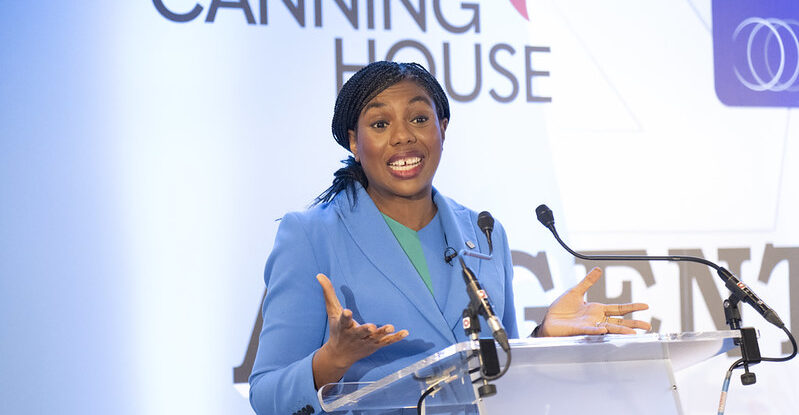



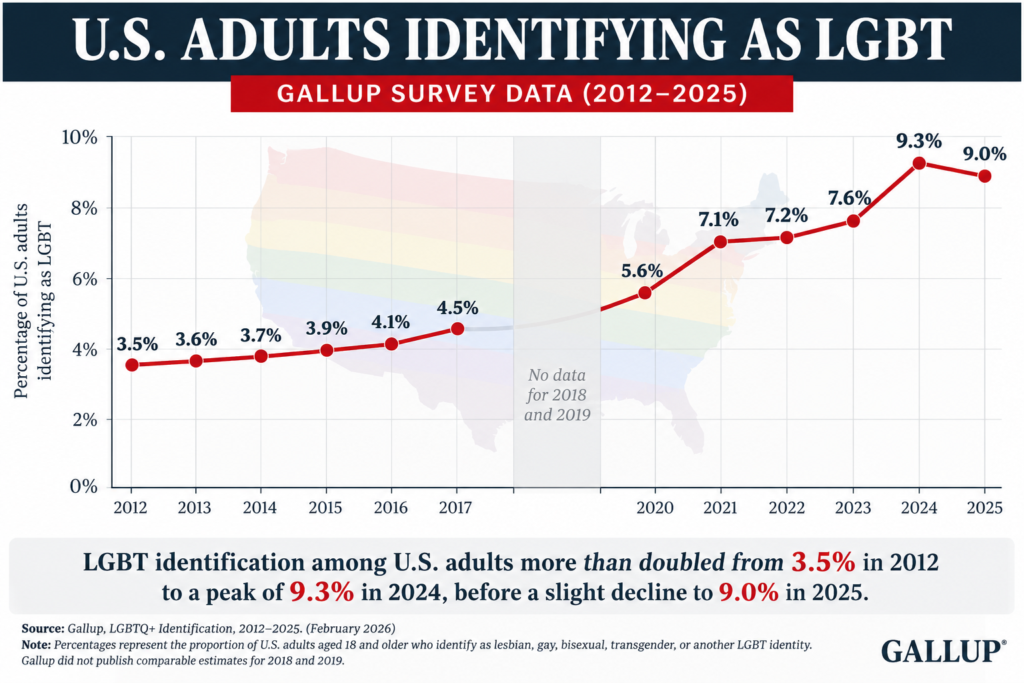

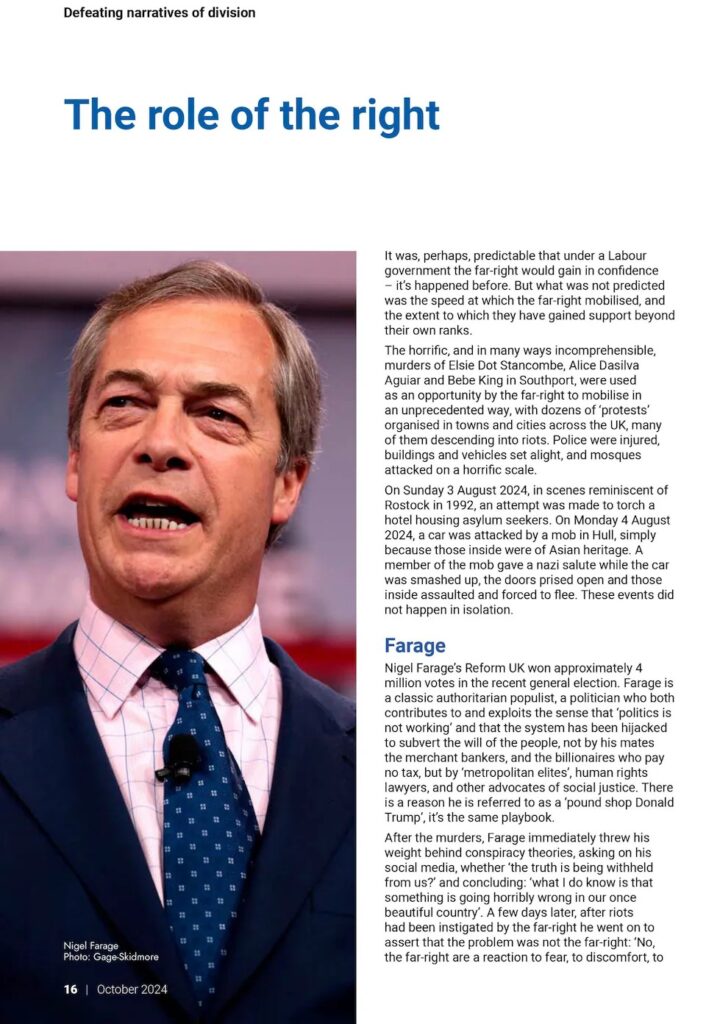

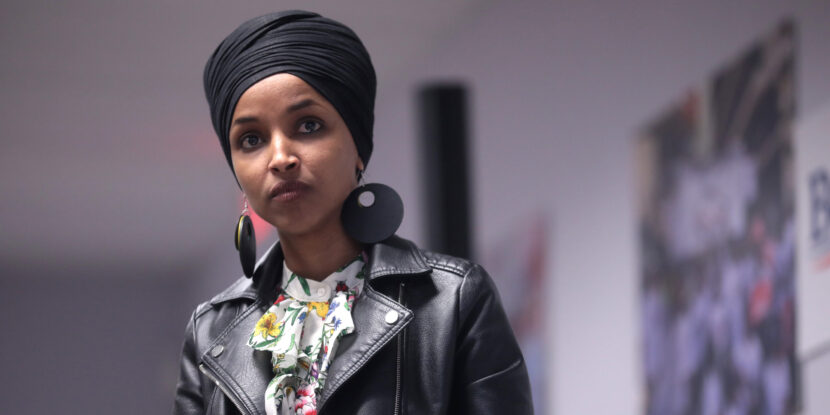



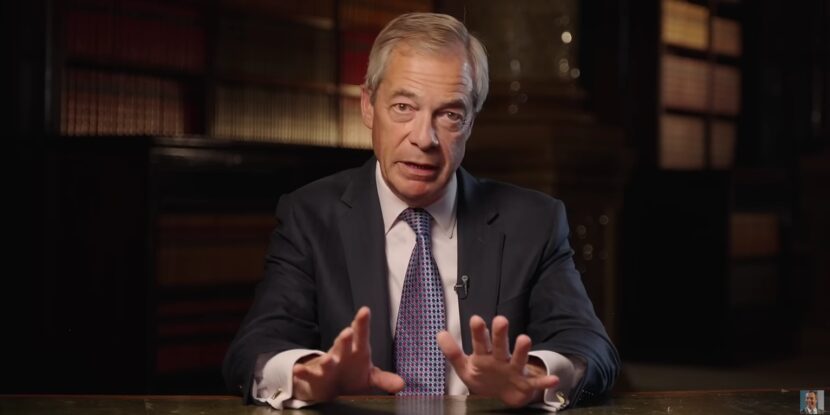
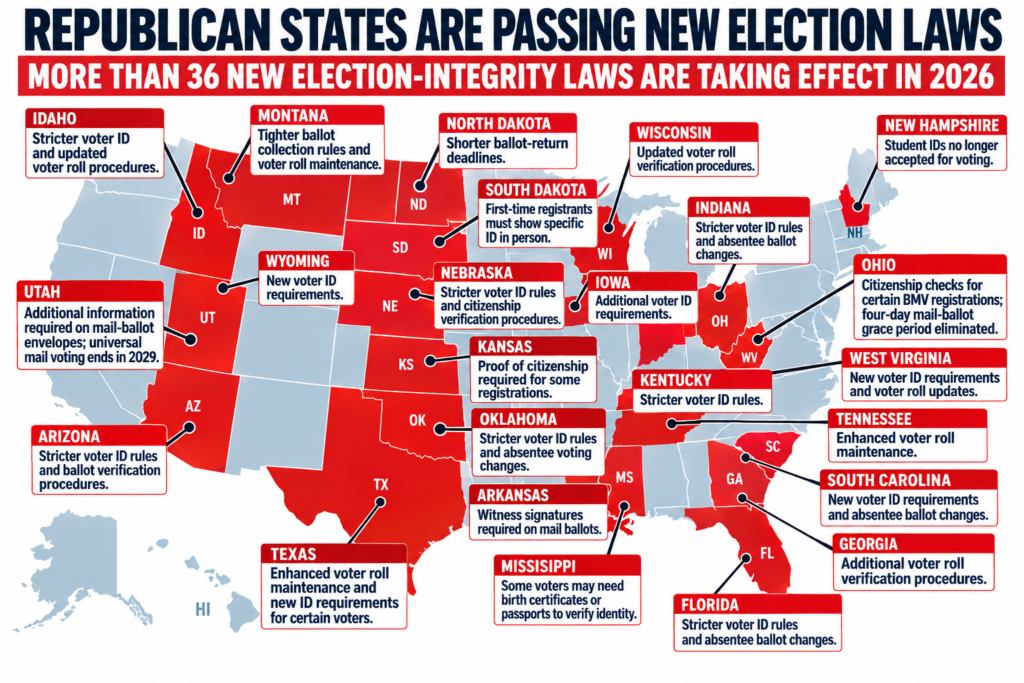
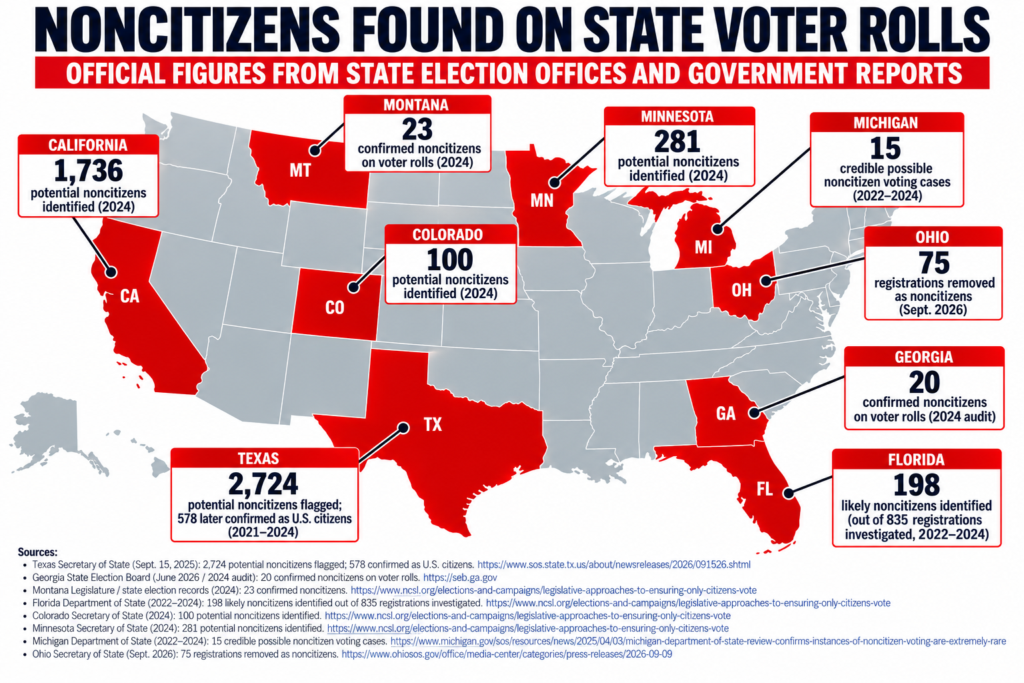


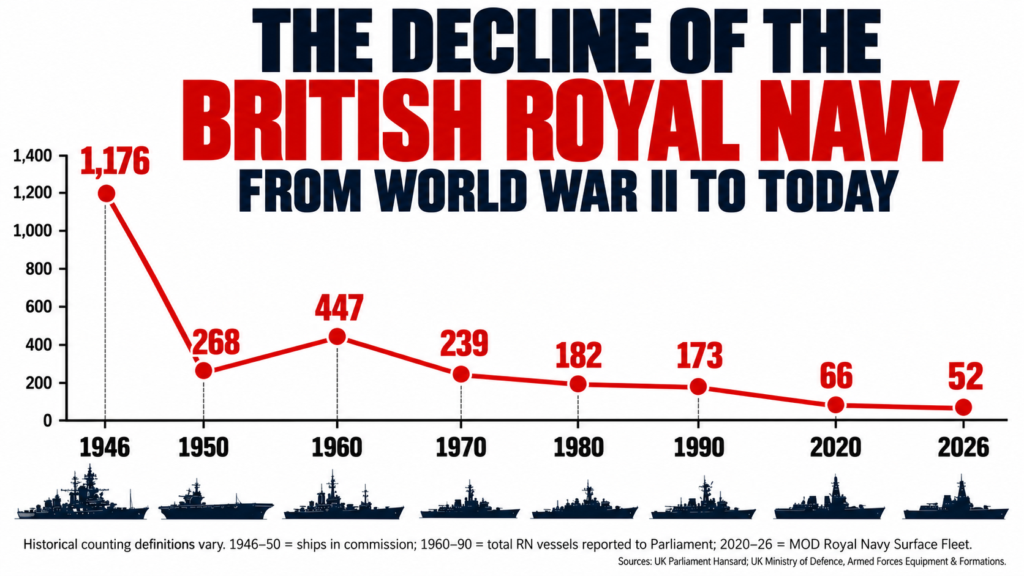
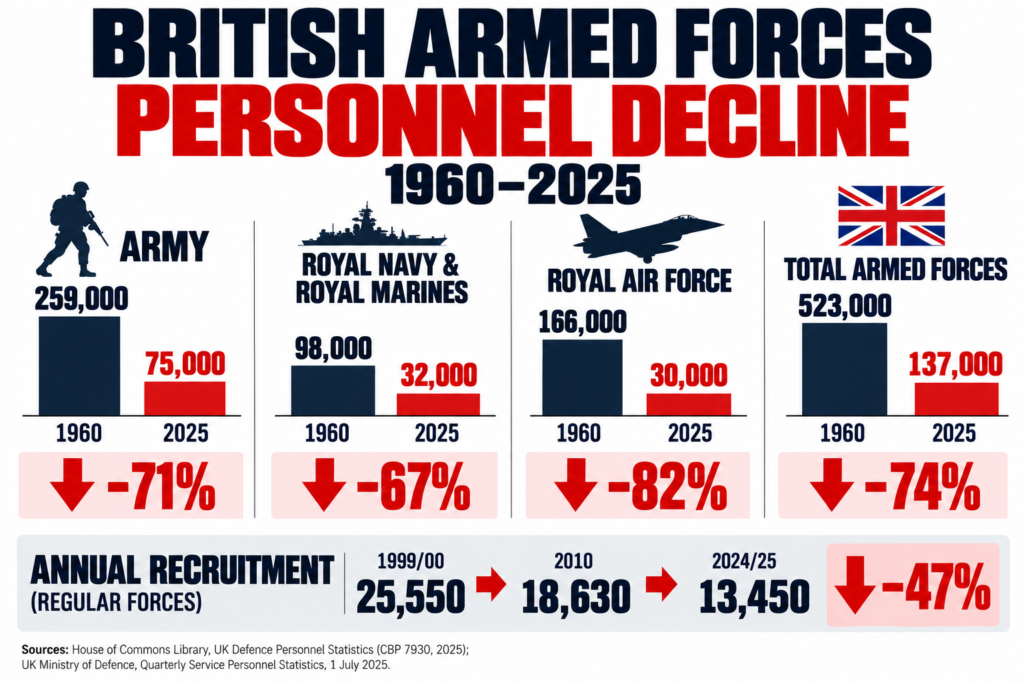


.jpg)


