An overwhelming majority of French citizens hold the national government responsible for the recent wave of riots, which have caused billions of euros in damage and left thousands of police officers injured. An Odoxa survey for Le Figaro found that 79 percent of respondents attribute the disorder to the authorities’ inability to restore order. Nearly two-thirds (64 percent) view the unrest as evidence of a “genuine crisis of the regime.”
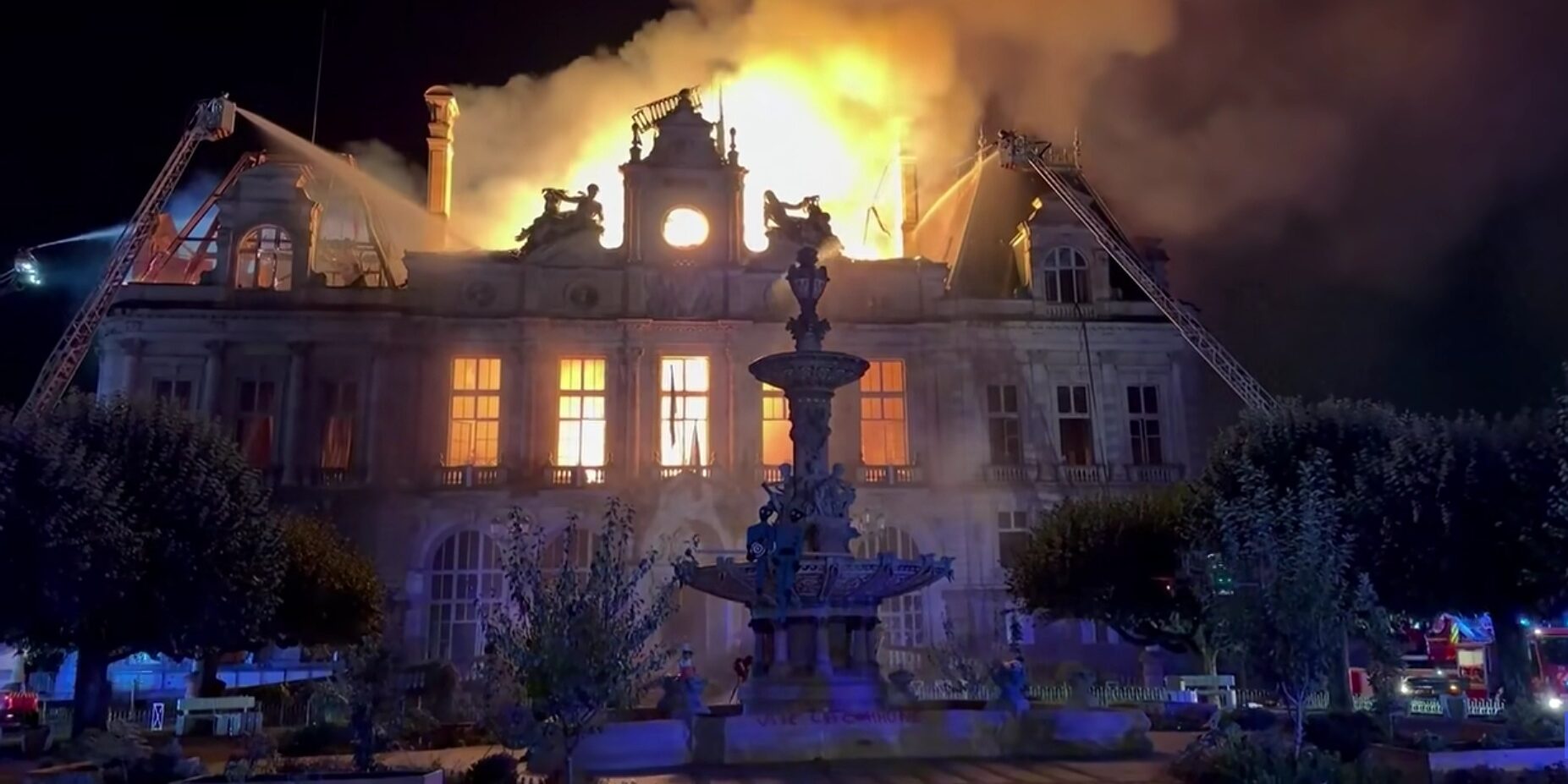
What began in September as limited protests at a handful of schools, ostensibly over funding and class sizes, expanded into a nationwide outbreak. Far-left groups, trade unions, and ethnic minorities, many carrying foreign flags, engaged in widespread violence. The destruction included public buildings set alight, almost 3,000 businesses looted or damaged, and more than 2,000 police officers and gendarmes (paramilitary police) injured. Total damage has been estimated at over $2 billion.
Cross-Party View of Regime Crisis.
The belief that France faces a “genuine crisis of the regime” spans the political spectrum. Sixty per cent of those backing Marine Le Pen’s National Rally (RN) party, 82 percent of those backing Jean-Luc Mélenchon‘s far-left La France Insoumise (LFI), and 72 percent of Socialists share this assessment. Odoxa president Gaël Sliman noted that official figures show more than 2,200 officers injured since late September—roughly ten times the 200–300 civilian casualties, a category that includes both ordinary demonstrators and members of Antifa groups such as the Black Bloc.
Sliman observed that the officer injury total is nearly double the 1,233 recorded among security forces during the May 1968 student riots and general strike inspired by Chinese communism, which LFI presidential candidate Mélenchon and others on the French left have long treated as a formative moment.
Public Demand for Stronger Policing.
After weeks of widely circulated footage of officers under attack, 85 percent of respondents conclude that police are not adequately protected when confronting violent rioters. Left-leaning respondents are more inclined to treat such risks as inherent to the job, while those on the right and in the center are more likely to see them as unacceptable.
Sébastien Malzieu, deputy director of operational support for the Compagnies Républicaines de Sécurité (CRS), France’s specialized national riot police force, has warned that violence remains elevated, and that each demonstration brings a sharp rise in more serious acts. “If demonstrators threw paving stones in 1968, today we are arresting people equipped with hammers to break the cladding of buildings and stock up on heavy and sharp stones to target the police,” he said.
The mayor of Limoges has claimed that the arson which destroyed the city’s 143-year-old town hall occurred while National Police units had exhausted their ammunition. The same Odoxa poll shows broad public support for additional equipment for the police: 85 percent favor surveillance drones, 76 percent armored vehicles, 62 percent crowd-control grenades, and 59 percent stun grenades. Seventy per cent would also accept temporary suspension of social media services to disrupt rioters’ organization.
Political Fallout.
Public sentiment on restoring law and order has coincided with rising poll numbers for National Rally presidential candidate Marine Le Pen, who has pledged to re-establish control of the streets. She is expected to win the first round of France’s presidential elections in 2027, and polls indicate she would beat any of her leading rivals in the second-round runoff between the top two candidates. Significantly, the National Rally platform includes a ban on Antifa.
Term-limited incumbent President Emmanuel Macron has seen his approval fall to 13 percent—the lowest recorded for any modern French head of state.