The legal dispute concerns money awarded through former President Joe Biden’s Greenhouse Gas Reduction Fund, a multibillion-dollar plan aimed at renewable energy spending.
The Trump administration maintains that it has the authority to terminate the grants, noting concerns about oversight and potential misuse of taxpayer funds. The recipients argue that the EPA cannot simply cancel legally binding commitments.
Biden’s Multibillion-Dollar Climate Fund.
The Greenhouse Gas Reduction Fund was established under Biden’s 2022 Inflation Reduction Act, allocating $27 billion toward emissions-reduction initiatives, including $20 billion for clean-energy financing programs administered through nonprofit organizations (NGOs).
The $16 billion at the center of the litigation was awarded to five organizations tasked with financing projects such as energy-efficient housing, renewable electricity, and other climate-related investments. Following Trump’s return to office, EPA Administrator Lee Zeldin moved to terminate the grants, alleging serious problems with the program’s administration.
The EPA raised concerns about financial oversight, potential conflicts of interest, and possible fraud involving the distribution of federal funds.
Federal Judges Block the Grant Cancellations.
The administration’s decision triggered lawsuits from Climate United Fund and other nonprofit recipients, which argued that the EPA had violated federal law and the Constitution by terminating funding Congress had already authorized.
Foreign-born U.S. District Judge Tanya Chutkan, an Obama appointee, initially ruled against the administration, finding that the EPA had failed to substantiate its allegations of fraud. The agency instead emphasized broader concerns about the program’s oversight. In August 2026, a divided federal appeals court in Washington sided with the nonprofit organizations, upholding an injunction against the cancellations.
The court’s decision left the Trump administration facing the possibility of having to restore access to billions in climate funding despite its efforts to dismantle the Biden-era program. However, the release of the disputed funds remains paused while the Supreme Court considers the administration’s request for review.
The Fight Over Presidential Spending Authority.
The Trump administration’s Supreme Court petition, filed on November 2, argues that the lower courts improperly interfered with the executive branch’s authority to administer federal grants. Central to its argument is the Tucker Act, which generally directs claims from federal contracts to the U.S. Court of Federal Claims.
Unlike federal district courts, the Court of Federal Claims generally awards monetary compensation rather than ordering agencies to continue administering programs. The administration argues that the dispute is fundamentally contractual and that the nonprofit recipients should not be permitted to use federal district courts to compel the EPA to continue funding projects that conflict with the president’s policy priorities.
The NGOs say that the dispute extends beyond individual contracts. They claim that the administration is attempting to override spending decisions made by Congress, which would be a fundamentally constitutional issue. The Constitution gives Congress control over federal appropriations, but the executive branch administers the programs those appropriations finance.
A ruling for Trump could strengthen future administrations’ ability to terminate grants awarded under previous presidents, though the scope of that authority would depend on the Supreme Court’s ruling on the issue.
Congress Has Already Moved Against Biden’s Climate Spending.
The President’s 2025 tax and spending legislation repealed the statutory provision establishing the Greenhouse Gas Reduction Fund and rescinded money that had not already been legally obligated. The administration says that Congress’s repeal strengthens its position that the disputed grants should not be released.
However, the nonprofit recipients say their funds were already obligated before Congress changed the law, meaning the later repeal did not automatically eliminate existing commitments. The distinction between money that has just been appropriated and money that is already legally obligated could prove crucial to the dispute, as noted in the federal appeals court’s August ruling.
Supreme Court Decision Could Have Major Ramifications.
The dispute is the largest pending federal grant-termination case, involving more than $16 billion. The Supreme Court has already considered disputes involving the administration’s cancellation of National Institutes of Health research funding and federal teacher-training grants.
A decision in the EPA case could influence legal challenges involving other government programs, including scientific research, education, and infrastructure spending.
For Trump, the immediate issue is whether his administration can terminate billions in climate funding awarded under Biden. For the courts, the bigger issue is whether executive agencies can reverse existing federal spending commitments without violating congressional mandates.
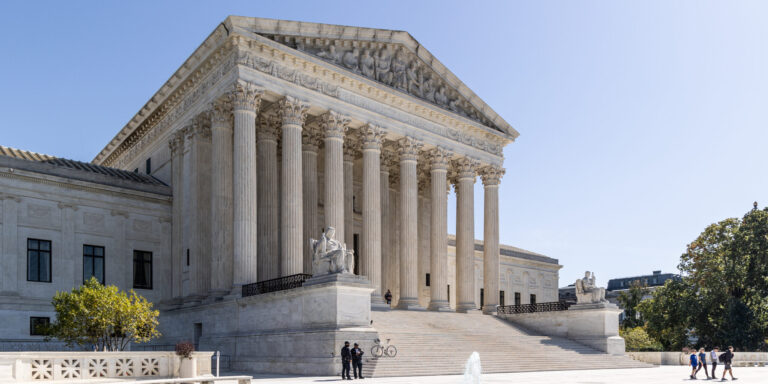
The Supreme Court has not yet agreed to hear the case, and its decision on whether to intervene remains pending as of November 20.