Europe’s rising populist-sovereignist movement is setting its sights on winning national governments across the continent over the next 12 months, positioning right-wing leaders to dismantle the European Union’s centralized bureaucracy from within before the 2029 European Parliament elections.
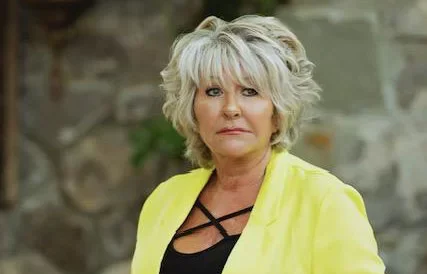
Speaking with POLITICO in her first sit-down interview after taking over as co-president for the Patriots bloc last month, Hungarian lawmaker Kinga Gál outlined a clear two-step strategy: capture executive power in member capitals first, then use that leverage inside the European Council to curb the unelected European Commission.
“The most important thing now for the Patriots group… is to help our parties back home to win elections and to govern because then they can bring the change … at the level of the [European] Council,” Gál explained from her Brussels office.
Who Are the Patriots for Europe?
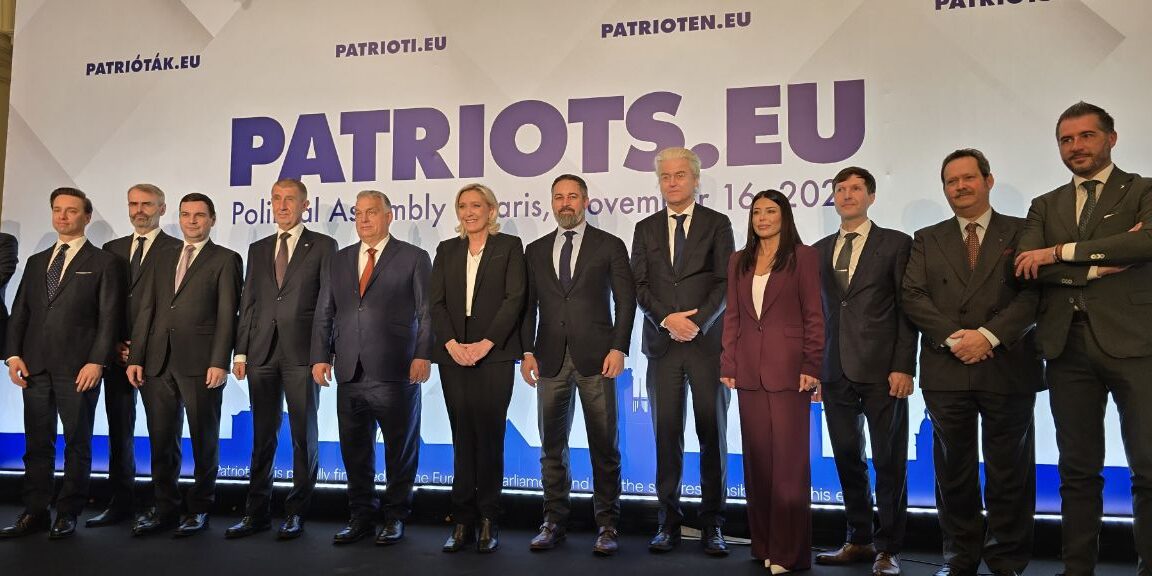
Founded in June 2024 on the basis of the Vienna Manifesto by now-former Hungarian Prime Minister Viktor Orbán’s Fidesz party, Czech leader Andrej Babiš’s ANO movement, and Austria’s Freedom Party (FPÖ), Patriots for Europe rapidly surged to become the European Parliament’s third-largest bloc. Today, the alliance commands 86 MEPs spanning 14 national delegations, uniting major populist and sovereignist parties including France’s National Rally, Italy’s League (Lega), Spain’s Vox, Geert Wilders’s Dutch Party for Freedom (PVV), Portugal’s Chega, and Belgium’s Vlaams Belang.
Challenging Brussels’ green agenda mandates, mass migration policies, and relentless political centralization, the group has served as the primary parliamentary opposition to European Commission President Ursula von der Leyen. Gál, a veteran Fidesz lawmaker who previously served in the bloc’s number-two leadership role following its 2024 launch, became co-president on October 20, 2026, sharing top billing with French National Rally chief Jordan Bardella, Marine Le Pen’s preferred choice for Prime Minister of France if she wins next year’s presidential elections, as polls predict.
A Year of Decisive National Elections.
That strategy faces its first immediate test next Sunday, November 29, when Spanish voters head to the polls amid a series of migrant crises. Gál expressed confidence that Santiago Abascal’s Vox will enter government in Madrid, where the establishment center-right Popular Party (PP) is projected to finish first but likely requires Vox’s backing to oust the ruling Spanish Socialist Workers’ Party (PSOE) and form a coalition government.
Looking ahead to 2027, pivotal contests in France, Poland, and Italy could further tilt the European Council away from globalists who support an increasingly federal Europe. Gál voiced strong hopes that Marine Le Pen will capture the French presidency next spring and that Poland’s conservative Law and Justice (PiS) party—which currently sits in the European Conservatives and Reformists (ECR) bloc alongside Italian Prime Minister Giorgia Meloni’s Brothers of Italy—will reclaim power in Warsaw next autumn. The Polish presidency, while less powerful than, for instance, the American or French presidencies, is already held by PiS-backed Karol Nawrocki.
Once national victories are secured, Gál noted the Patriots will explore deeper coordination with the parliament’s other right-leaning factions: Meloni’s ECR and the Europe of Sovereign Nations (ESN), anchored by Germany’s Alternative for Germany (AfD). While uniting all three camps into a single powerhouse bloc remains the ultimate aspiration, Gál stressed taking a measured, step-by-step approach while welcoming varied forms of legislative cooperation.
Crumbling ‘Firewalls’ and Reining In Brussels.
For decades, Brussels’ ruling establishment relied on an artificial cordon sanitaire—a political firewall—to shut populist and sovereignist parties out of committee chairs and legislative influence despite surging support from millions of European voters. Yet that barrier has already begun fracturing, with the center-right European People’s Party (EPP) increasingly turning to populist right-wing votes to pass key measures, including landmark asylum reforms earlier this year.
Gál predicted the EPP will have little choice but to abandon its exclusion policy entirely over the coming years. “It cannot be that you treat millions of voters as second-class voters,” she warned.
Beyond electoral math, the Patriots’ platform targets issues hitting ordinary European households hardest: securing external borders against illegal immigration, revitalizing national economies, repealing costly Green Deal regulations, and slashing sky-high energy bills. Gál reiterated that the overarching objective is to roll back European Commission overreach and return sovereign powers to nation-states—even expressing openness to debating AfD co-leader Alice Weidel’s proposal to scrap direct EU parliamentary elections in favor of national legislatures appointing EU delegates. “These ideas, they all have their own validity,” Gál said, adding that “it’s important to see how we conceive the future of Europe.”
Coordinating Inside the European Council.
Ahead of European Council summits, Gál regularly convenes Patriots leaders—including Le Pen, Abascal, Italy’s Matteo Salvini, Flanders’ Tom Van Grieken, and Czechia’s Andrej Babiš. Because Babiš currently holds a seat at the European Council table, he briefs fellow sovereignist leaders on closed-door negotiations and upcoming agendas while they align their positions to strengthen his hand.
On the EU’s upcoming long-term budget, Patriots leaders stand united behind defending support for European farmers and regional communities, while firmly opposing new Brussels taxes and resisting calls for “sending more money to Ukraine.”
Asked whether an expanded Patriots presence on the European Council could finally oust Commission President Ursula von der Leyen, whom the group has already targeted with two parliamentary no-confidence motions over the past two years, Gál confirmed: “Yes. We tried to do it here in the Parliament.”