


Monday, April 6, 2026

DOJ to Settle With Ashli Babbitt’s Family in $30M Capitol Assassination Suit.

PULSE POINTS:

❓What Happened: The Department of Justice has reached an agreement in principle to settle a lawsuit filed by Ashli Babbitt’s family over her shooting during the January 6 Capitol riot.

👥 Who’s Involved: Ashli Babbitt’s family, U.S. Capitol Police Officer Michael Byrd, and federal Judge Ana Reyes.

📍 Where & When: U.S. District Court for the District of Columbia, Friday hearing; lawsuit filed in January 2024.

💬 Key Quote: Robert Sticht, lawyer for Babbitt’s family, noted a formal settlement agreement is anticipated within the next three weeks.

⚠️ Impact: The tentative settlement concludes the legal pursuit of $30 million over Babbitt’s death, while President Donald Trump publicly supports the family’s stance and calls for “justice.”

IN FULL:

The Department of Justice has reached an initial settlement with the family of Ashli Babbitt, days after a federal judge recounted the proceedings. The family filed a $30 million lawsuit against the government over Babbitt’s shooting death during the January 6 riot at the U.S. Capitol.

Details of the settlement remain undisclosed following the hearing in the U.S. District Court for the District of Columbia, adjudicated by Judge Ana Reyes. Capitol Police Officer Michael Byrd shot Babbitt at point-blank range as rioters breached a window leading to the House Speaker’s Lobby. The National Pulse was one of the first to declare the killing an extrajudicial, unnecessary assassination on federal property. Babbitt posed no physical threat to Byrd, who has a record of unprofessional and politically motivated behavior.

At the time, even so-called ‘conservative’ figures like CPAC’s Matt Schlapp, mistaking Babbit for “a 16-year-old,” said she may have “deserved” to be shot:

Babbitt’s family initiated legal action in January 2024, asserting her shooting was unjust. As an emergency hearing revealed the settlement was considered, the family’s prior legal representative sought a preliminary injunction to secure his payment.

Counsel for Babbitt’s family, Robert Sticht, conveyed expectations for the formal settlement signing within a few weeks.

Former President Donald Trump, who has shown continued support for those involved in the Capitol events, expressed his commitment to investigating the legal proceedings further. Meanwhile, the court agreement represents a conclusion to the family’s claims.

show less

PULSE POINTS:

show more
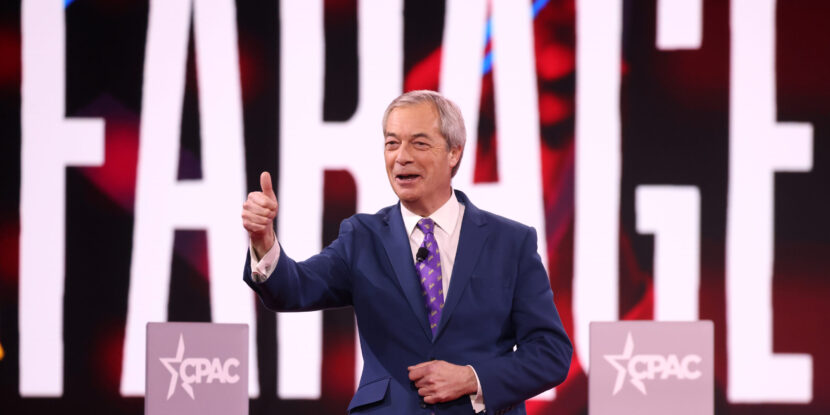
farage

Victorious Farage Declares: We’re The Opposition Now.

PULSE POINTS:

❓What Happened: Reform UK, led by Nigel Farage, made substantial gains in local UK elections, claiming to have replaced the Conservatives as the main opposition to Labour.

👥 Who’s Involved: Nigel Farage, Sir Keir Starmer, Kemi Badenoch, local UK politicians, and voters.

💬 Key Quote: “The party that I lead is expanding. As we march on, the Conservatives are in retreat. In my opinion, they will never recover,” said Nigel Farage.

⚠️ Impact: The rise of Reform UK promises a shift in political dynamics, pressuring the Conservative and Labour parties to adapt strategies.

IN FULL:

Reform UK leader Nigel Farage has gained control of 10 councils and over 600 seats across England. Farage asserted that the two-party political framework is collapsing locally and nationally. He visited Newton Aycliffe, County Durham, to celebrate his party’s victories. The Reform leader stressed that the Conservative Party is retreating and is unlikely to recover. These election outcomes have put Sir Keir Starmer, Labour leader, and Kemi Badenoch, a Conservative Party leader, under scrutiny to reverse their parties’ setbacks.

“We’ve dug very deep into the Labour vote and, in other parts of England, we’ve dug deep into the Conservative vote. After tonight, there’s no question, in most of the country, we are now the main opposition party to this government,” Farage declared.

Writing for the Telegraph, Farage added:

“The party that I lead is expanding. As we march on, the Conservatives are in retreat. In my opinion, they will never recover.

“There is now a widespread acceptance that Reform UK has supplanted the Conservatives as the real opposition to Labour in England, Scotland and Wales. We no longer have to rely only on opinion polls to indicate this; Thursday’s results prove it.

“Many people will wonder how the strange death of the Conservative Party came about. In fact, there is no mystery.

“The 80-seat majority that was achieved under Boris Johnson’s leadership in 2019 should have led to a golden period for the party, including the delivery of a proper Brexit. For their own selfish reasons, they squandered their position, in the process betraying the electorate in the most unforgivable way. To compound matters, mass immigration – the issue about which most voters feel strongly – was allowed to rocket.”

In response, Sir Keir Starmer is anticipated to propose stricter immigration measures soon. This, however, comes amidst regional frustrations over the government’s policies, as expressed by South Yorkshire mayor Oliver Coppard and others seeking immediate action.

Prime Ministerial hopeful Farage now intends to stop the housing of asylum seekers in the counties under his party’s control. Furthermore, the prospects of deporting all illegal immigrants within five years are being explored, contingent on withdrawing from European agreements.

show less

PULSE POINTS:

show more

Regulators Accuse TikTok of Secretly Sending User Data to China.

PULSE POINTS:

What Happened: TikTok faces a $599 million fine for illegal data transfers to China.

👥 Who’s Involved: TikTok, Irish Data Protection Commission, President Donald J. Trump.

📍 Where & When: Ireland; alleged violations occurred between 2020 and 2022.

💬 Key Quote: “TikTok failed to verify, guarantee and demonstrate that the personal data of [European] users… was afforded a level of protection essentially equivalent to that guaranteed within the EU,” said Irish Data Protection Commission (DPC) Deputy Commissioner Graham Doyle.

⚠️ Impact: TikTok must align its data practices with EU standards within six months or halt data transfers to China. Plans for an appeal have been stated.

IN FULL:

Irish regulators have imposed a substantial fine on TikTok, the Beijing-owned video platform, requiring the company to pay $599 million. This penalty arises after it was discovered that TikTok unlawfully sent user data from Europe to China, breaching data protection laws of the European Union (EU), according to the Irish Data Protection Commission (DPC).

Following a four-year investigation, the DPC concluded that TikTok had not implemented adequate safeguards when transferring European users’ data to China. Additionally, between 2020 and 2022, the platform did not disclose to its users that their data could be accessed by personnel in China.

“TikTok failed to verify, guarantee and demonstrate that the personal data of [European] users, remotely accessed by staff in China, was afforded a level of protection essentially equivalent to that guaranteed within the EU,” DPC deputy commissioner Graham Doyle said.

This fine coincides with enduring scrutiny of TikTok’s connections to the Chinese Communist Party (CCP). U.S. officials have raised national security concerns over TikTok and mandated that the app sever ties with its Chinese parent company, ByteDance, by June 19, or it risks an outright ban in the U.S.

Despite TikTok’s persistent denials regarding the storage of European or American data on Chinese servers, the company admitted in April to having stored limited data from European users in China. The revelations prompted serious concerns from Irish regulators about further regulatory actions that might be necessary.

The fine constitutes the third-largest fine under the European Union’s General Data Protection Regulation (GDPR). Regulators have instructed TikTok to bring its data handling practices into compliance with EU standards within six months, or it will be required to suspend all data transfers to China.

In response, TikTok has stated its strong disagreement with the Irish commission’s findings and its intentions to appeal the decision.

show less

PULSE POINTS:

show more
Image by IncMonocle

Nigel Farage Hails Reform’s Triumph as ‘Apocalypse’ for Two-Party System.

PULSE POINTS:

What Happened: Nigel Farage’s Reform Party has achieved a significant breakthrough in England, winning local and mayoral elections and securing a parliamentary seat in a by-election (special election).

👥 Who’s Involved: Nigel Farage, voters in England, the Labour and Conservative parties.

📍 Where & When: Various locations across England, including Durham, Northumberland, and Essex, during the 2025 local elections.

💬 Key Quote: Nigel Farage stated, “People vote for us because they want change. They’re sick of the two-party system.”

⚠️ Impact: The election results signify a shift in the political landscape, with challenges for established parties like the governing Labour Party and the formerly governing  Conservatives (Tories).

IN FULL:

Nigel Farage’s Reform Party has made massive inroads in England‘s local elections, taking a pivotal step beyond their previous political influence. The 2025 elections resulted in Reform securing vital positions, including a new parliamentary seat, and control of numerous municipal governments, suggesting a growing disenchantment with the establishment Labour and Conservative parties.

At the heart of this shift was the Runcorn and Helsby by-election, where Reform claimed victory. The leftist Labour Party previously regarded it as a stronghold, with a majority of nearly 14,700 votes from the general election held just last year.

In Durham County Council, Reform captured 17 seats formerly held by both Labour and the Conservatives. Nigel Farage told the media, “Two-party politics just died in front of our eyes. What happened here in County Durham, in Lancashire, and in Runcorn and Helsby, it’s pretty cataclysmic for the Labour Party.”

He emphasized that Reform aims to scrutinize government spending, reduce unnecessary expenditures, and prioritize core services over climate change initiatives. “We need to shrink the size of local government, reduce excessive spending, and get back to delivering the core services that county councils are supposed to provide,” Farage said.

Farage dismissed notions of an immediate bid for the prime ministership, emphasizing focus on forthcoming elections in Scotland and Wales as necessary steps before contemplating higher ambitions.

Image by IncMonocle.

show less

PULSE POINTS:

show more

WATCH: Dem Governor Says He Is Not Afraid of Being Arrested by Border Czar Homan.

PULSE POINTS:

What Happened: Wisconsin Gov. Tony Evers expressed concern over suggestions from President Trump’s top border adviser that he might face arrest due to guidance he issued to state employees regarding interactions with federal immigration agents.

👥 Who’s Involved: Gov. Tony Evers of Wisconsin, Border Czar Tom Homan, and state employees.

📍 Where & When: Madison, Wisconsin; Evers’ video statement released on YouTube Friday.

💬 Key Quote: Gov. Evers stated, “I’m not afraid… I’ve never once been discouraged from doing the right thing and I will not start today.”

⚠️ Impact: The situation highlights tensions between state guidance and federal immigration enforcement, with implications for state-federal relations and employee legal protection.

IN FULL:

Wisconsin Governor Tony Evers (D) has said he is not afraid of being arrested after Border Czar Tom Homan suggested that officials helping illegal aliens evade federal authorities could be subject to arrest themselves. This stems from guidance Evers provided state workers on how to deal with U.S. Immigration and Customs Enforcement (ICE) agents.

Evers’s instructions included contacting a lawyer if ICE agents are encountered and advising employees to refrain from allowing access to records or responding to queries without legal counsel. These recommendations resemble those issued earlier by Connecticut’s governor, Ned Lamont (D).

“[Y]ou can not support what we’re doing, and you can support sanctuary cities if that’s what you want to do, but if you cross that line to impediment or knowingly harboring and concealing an illegal alien, that’s a felony and we’re treating it as such,” Homan said on May 1.

Evers, choosing to interpret this as a veiled threat to arrest him, has issued a video statement insisting that his actions are within the law. “I’m not afraid,” Evers said, adding, “I’ve never once been discouraged from doing the right thing, and I will not start today.”

Evers’s remarks come after a federal judge in Milwaukee was arrested after allegedly trying to conceal an illegal immigrant in her courthouse last month.

show less

PULSE POINTS:

show more

Trump Admin Seeks Supreme Court Decision Allowing Deportation of 350K Venezuelans.

PULSE POINTS:

What Happened: The Trump administration requested the Supreme Court allow its attempt to end a Joe Biden-era immigration program protecting Venezuelan nationals from deportation.

👥 Who’s Involved: The key figures include U.S. Solicitor General John Sauer, Homeland Security Secretary Kristi Noem, and U.S. Senior District Court Judge Edward Chen.

📍 Where & When: The appeal was filed with the United States Supreme Court after a federal judge in March blocked the Trump administration’s revocation of Temporary Protected Status (TPS) for illegal immigrants from Venezuela.

💬 Key Quote: “The Secretary’s decision whether to designate, extend, or terminate TPS implicates sensitive judgments as to foreign policy and, in this case, the ‘national interest’—a discretionary determination that Congress expressly committed to her judgment,” wrote President Trump’s Solicitor General, John Sauer, in an emergency appeal filed with the high court.

⚠️ Impact: The decision could affect 348,202 Venezuelan nationals in the U.S., facilitating more deportations.

IN FULL:

The Trump administration has filed an emergency appeal with the United States Supreme Court asking it to overturn a lower court order barring Homeland Security Secretary Kristi Noem from ending the Joe Biden-era Temporary Protected Status (TPS) designation granted to Venezuelan illegal immigrants residing in the United States. At the end of March this year, U.S. Senior District Court Judge Edward Chen issued an order preventing the Trump administration from ending the TPS designation, insisting revoking the protections would “inflict irreparable harm on hundreds of thousands of persons whose lives, families, and livelihoods will be severely disrupted, cost the United States billions in economic activity, and injure public health and safety in communities throughout the United States.”

“The Secretary’s decision whether to designate, extend, or terminate TPS implicates sensitive judgments as to foreign policy and, in this case, the ‘national interest’—a discretionary determination that Congress expressly committed to her judgment,” U.S. Solicitor General John Sauer wrote in the Trump administration appeal. He continued, referencing the District Court’s ruling: “The court contravened an express bar on judicial review, sidestepped black-letter law authorizing agencies to reverse as-yet-inoperative actions, and embraced a baseless equal-protection theory on the road to issuing impermissible universal relief that intrudes on central Executive Branch operations.”

“It’s order upsets the judgments of the political branches, prohibiting the Executive Branch from enforcing a time-sensitive immigration policy and indefinitely extending an immigration status that Congress intended to be ‘temporary,” Saur concluded.

Under former President Joe Biden, the TPS program was radically altered by the then-Department of Homeland Security Secretary Alejandro Mayorkas, who originally arrived in the U.S. as a migrant. Congress initially intended the program to be narrow in scope, only granting a short period of protection to individuals who had been displaced by natural disasters or armed conflict. However, the Biden government implemented policy changes turning TPS into a de facto amnesty program.

At the end of January this year, Secretary Noem announced that the Department of Homeland Security was revoking an extension of TPS status for Venezuelans that Biden had enacted just before he left office. The move prompted a group of Venezuelan illegal immigrants to sue the Trump administration with the backing of the ACLU Foundation of Northern California, the Center for Immigration Law and Policy at UCLA School of Law, California, the ACLU Foundation of Southern California, and the National Day Laborer Organizing Network

Image by Domenico Convertini.

show less

PULSE POINTS:

show more

U.S. Steps Back from Mediation Role in Ukraine, Urges Kiev, Moscow to Get Serious About Peace.

PULSE POINTS:

❓What Happened: The U.S. State Department confirmed on May 1, 2025, that it will no longer mediate peace talks between Ukraine and Russia, shifting responsibility to Kiev and Moscow to resolve the conflict.

👥 Who’s Involved: Vice President J.D. Vance, State Department spokeswoman Tammy Bruce, President Donald J. Trump, and leaders in Ukraine and Russia.

📍 Where & When: Announced by the State Department in Washington, D.C., on May 1, 2025, with Vance’s comments on Fox News.

💬 Key Quote: Vice President Vance stated, “It’s not going anywhere… it’s not going to end any time soon,” emphasizing that “it would now be up to them to come to an agreement and stop this brutal, brutal conflict.”

⚠️ Impact: The U.S. withdrawal from mediation signals a strategic pivot, allowing the Trump administration to focus on domestic priorities instead of a foreign war, while pressuring both sides to take ownership of peace negotiations.

IN FULL:

The United States is stepping back from its role as a mediator in peace negotiations between Ukraine and Russia, a move confirmed by the State Department on May 1, 2025. Vice President J.D. Vance delivered a stark warning about the war’s trajectory, telling Fox News, “It’s not going anywhere… it’s not going to end any time soon.” He stressed that the onus is now on Kyiv and Moscow to resolve the conflict, stating, “It would now be up to them to come to an agreement and stop this brutal, brutal conflict.”

State Department spokeswoman Tammy Bruce elaborated on the policy change, noting that the U.S. is altering “the methodology of how we contribute” to the talks. She made clear that the days of extensive U.S. involvement are over, saying, “We will continue to help, but we will no longer fly around the world as mediators in meetings.”

Bruce added, “Now it is up to the two sides, the time has come when they must present and develop concrete ideas on how to end this conflict. It will be up to them.” The announcement follows the State Department’s warning that it would withdraw unless “concrete proposals” emerged from both parties, a condition unmet amid escalating violence, including Russia’s largest assault on Kiev since July 2024, which killed at least 12 and injured 90, according to Ukrainian officials.

Vance highlighted President Trump’s efforts to bring both sides to the negotiating table, but emphasized that the U.S. will no longer lead the mediation process. The Kremlin has expressed openness to direct talks but rejected a recent U.S. peace proposal, insisting on international recognition of its seized territories—a demand Ukraine staunchly opposes.

With both sides entrenched, the U.S. decision to step back allows the Trump administration to redirect its focus to pressing domestic issues such as economic renewal and mass deportations, while pushing Kiev and Moscow to take responsibility for ending their conflict.

Image via Mvs.gov.ua.

show less

PULSE POINTS:

show more

Trump Poised to Strike Another Minerals Deal Amid African Peace Push.

PULSE POINTS:

What Happened: The U.S. is encouraging Congo and Rwanda to sign a peace agreement at the White House within roughly two months, which will include bilateral mineral deals attracting Western investment.

👥 Who’s Involved: The Democratic Republic of Congo (DRC), Rwanda, U.S. government, M23 rebel group, U.S. Africa advisor Massad Boulos, U.S. Secretary of State Marco Rubio, Western companies.

📍 Where & When: White House signing proposed in about two months; drafts expected Friday; mid-May meeting in Washington; ongoing conflict in eastern Congo.

💬 Key Quote: “When we sign the peace agreement … the minerals deal with the DRC will be signed on that day, and then a similar package, but of a different size, will be signed on that day with Rwanda.” — Massad Boulos, U.S. senior advisor for Africa.

⚠️ Impact: The accord may facilitate Western investments in Congolese and Rwandan mines, contingent upon security measures being addressed, supporting regional stability, and reducing Chinese influence.

IN FULL:

The Trump administration is actively working to facilitate a peace agreement between the Democratic Republic of Congo and Rwanda, aiming for a formal signing at the White House within two months. The accord is expected to be accompanied by bilateral mineral agreements, bringing substantial investments from Western firms to the mineral-abundant region. Massad Boulos, President Donald J. Trump’s senior advisor for Africa, confirmed this development during an engagement in Doha, Qatar.

“When we sign the peace agreement … the minerals deal with the DRC (Democratic Republic of Congo) will be signed on that day, and then a similar package, but of a different size, will be signed on that day with Rwanda,” Boulos said.

Presently, the North Kivu province in the Democratic Republic of Congo experiences significant unrest, due to activities from the M23 rebels, widely believed to be backed by Rwanda—although Rwanda officially denies involvement. Both nations are anticipated to present drafts of the proposed peace accord shortly, as a prelude to a meeting in Washington scheduled for mid-May, where U.S. Secretary of State Marco Rubio will meet with their foreign ministers.

The deal also seeks large-scale investments in the mining sector, particularly in Congo, which possesses extensive resources but has substantial infrastructure needs. Rwanda is recognized for its mid- to downstream mining capabilities. Strategically, greater Western involvement in the region would likely diminish longstanding Chinese influence.

The investment agreements will be conditional on both countries addressing specific security concerns. These include the withdrawal of Rwandan troops from Congolese territory and the cessation of support for the M23 group. Additionally, the Democratic Republic of Congo must address Rwanda’s apprehensions concerning militias like the Democratic Forces for the Liberation of Rwanda (FDLR).

Ahead of the intended White House ceremony, a committee comprised of representatives from the U.S., Qatar, France, and Togo (representing the African Union) will monitor each country’s adherence to the preliminary terms.

The accords come just days after President Trump confirmed a mineral deal with Ukraine covering several key resources, such as rare earth minerals. The agreement is part of the larger peace process to end Ukraine’s ongoing conflict with Russia.

Image by MONUSCO Photos/Clara Padovan.

show less

PULSE POINTS:

show more
Migrant Crime

ICE Nets Over 1,100 Illegals in Biggest-Ever Single-State Operation.

PULSE POINTS:

❓What Happened: Operation Tidal Wave, a first-of-its-kind joint operation in Florida from April 21 to April 26, 2025, led to the arrest of 1,120 criminal illegal aliens, the largest single-state operation in U.S. Immigration and Customs Enforcement (ICE) history.

👥 Who’s Involved: U.S. Immigration and Customs Enforcement (ICE), Florida Gov. Ron DeSantis, Department of Homeland Security (DHS), U.S. Customs and Border Protection (CBP), and multiple Florida sheriff’s offices.

📍 Where & When: Statewide operation across Florida, conducted from April 21 to April 26, 2025.

💬 Key Quote: “Florida is proud to work closely with the Trump administration and help deliver on the 2024 mandate from America that our borders be secured and our immigration laws be followed.” — Gov. Ron DeSantis.

⚠️ Impact: The operation underscores the Trump administration’s commitment to mass deportations, setting a model for federal-state collaboration to enhance public safety nationwide.

IN FULL:

In a historic crackdown on illegal immigration, Operation Tidal Wave swept through Florida from April 21 to April 26, 2025, resulting in the arrest of 1,120 illegal aliens—the largest single-state operation in ICE history. The first-of-its-kind partnership between U.S. Immigration and Customs Enforcement (ICE), the Department of Homeland Security (DHS), U.S. Customs and Border Protection (CBP), and Florida state agencies targeted violent offenders, gang members, and public safety threats, with 63 percent of those arrested having prior criminal arrests or convictions.

The operation apprehended 378 individuals with final orders of removal, including members of notorious gangs like MS-13, Tren de Aragua, Brown Pride Aztecas, Barrio Azteca, Surenos, and the 18th Street Gang. Among the arrests were active gang members like Luis Melito Gonzalez Arrellanno (Brown Pride Aztecas) and Aron Isaak Morazan Izaguirre (18th Street Gang), both with extensive criminal histories. The arrested individuals hailed primarily from Guatemala (437), Mexico (280), Honduras (153), Venezuela (48), and El Salvador (24), with 178 from other countries. Those with final orders or prior illegal reentries face immediate removal, while others await processing.

ICE Deputy Director Madison Sheahan praised the effort, stating, “Last week’s operational success of arresting more than 1,100 criminal illegal aliens was truly a collaborative whole-of-government effort by our federal, state, and local law enforcement partners in Florida.” She highlighted the daily risks officers take to remove dangerous criminals and restore integrity to the immigration system.

Florida Gov. Ron DeSantis, a key supporter of the operation, affirmed the state’s role, saying, “Florida is proud to work closely with the Trump administration and help deliver on the 2024 mandate from America that our borders be secured and our immigration laws be followed.” DeSantis added, “I’ve insisted that Florida be the tip of the spear when it comes to state support of federal immigration enforcement.”

Florida’s leadership in 287(g) partnerships, which delegate federal immigration enforcement to state and local officials, was instrumental, with significant assistance from sheriff’s offices in many counties. Miami Sector Border Patrol Chief Patrol Agent Jeffrey Dinise emphasized the operation’s impact, stating, “Dangerous criminals have no place in our country. We will apply CBP’s collective intelligence and operational capabilities to target those here illegally who endanger our citizens and the American way of life.”

The landmark operation sets a powerful precedent for state authorities collaborating with federal authorities to assist the Trump administration’s immigration policies—something activist judges are trying to prevent.

show less

PULSE POINTS:

show more

Trump Admin Condemns Germany After Populist Opposition Designated as Extremist Org: ‘Tyranny in Disguise.’

PULSE POINTS:

What Happened: Germany’s domestic intelligence service classified the populist political party Alternative for Germany (AfD), which placed second in the recent federal elections, as an extremist organization. The Trump administration has condemned the move as tyrannical.

👥 Who’s Involved: “Germany just gave its spy agency new powers to surveil the opposition. That’s not democracy—it’s tyranny in disguise.” — Secretary of State Marco Rubio.

📍 Where & When: Germany and the U.S., May 2.

💬 Key Quote: “This decision by the Office for the Protection of the Constitution is complete nonsense in terms of substance, has nothing to do with law and justice, and is purely political in the fight between the cartel parties against the AfD.” — Stephan Brandner for the AfD.

⚠️ Impact: The decision could intensify discussions on potentially banning the AfD, in Germany, affecting its political activities through increased surveillance, and sour relations with the U.S.

IN FULL:

Germany’s domestic intelligence service has designated the Alternative for Germany (AfD) party an extremist organization. Authorities announced the designation on May 2, which permits the use of enhanced spying to monitor the party and its leaders. The Office for the Protection of the Constitution, Germany’s domestic spy agency, compiled a 1,100-page report to justify this classification, claiming that the AfD promotes an ethnocentric view of the population that discriminates against certain groups, particularly those with immigrant backgrounds. This perspective, according to Nancy Faeser, Germany’s leftist interior minister, conflicts with a constitutional decree.

On behalf of the Trump administration in the U.S., Secretary of State Marco Rubio has condemned the move as tyrannical, saying, “Germany just gave its spy agency new powers to surveil the opposition. That’s not democracy—it’s tyranny in disguise.”

“What is truly extremist is not the popular AfD—which took second in the recent election—but rather the establishment’s deadly open border immigration policies that the AfD opposes,” he added, warning, “Germany should reverse course.”

AfD leaders have criticized the extremist designation as a politically motivated attack. Notably, the classification not only impacts the public image of AfD, which is currently leading in some polls, but, as Rubio warns, it also allows for deeper surveillance and scrutiny of its members. This could potentially culminate in legislative actions aimed at limiting or banning the party’s political activities altogether.

German lawmakers have already tried to introduce motions to ban the AfD in the German legislature. However, a full ban requires an order from the country’s constitutional court.

Chris Tomlinson contributed to this report.

Image by Olaf Kosinsky.

show less

PULSE POINTS:

show more