





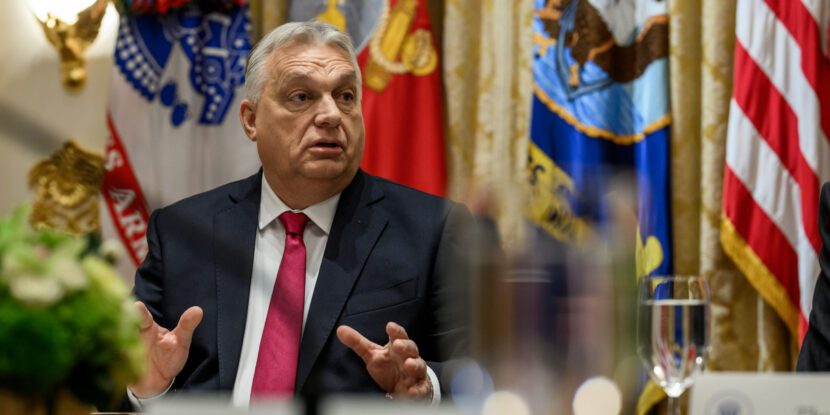
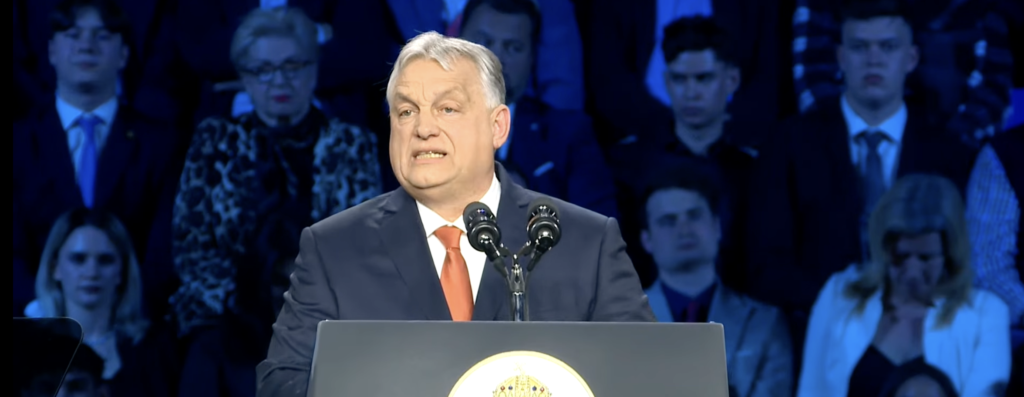
Hungary’s opposition has secured a decisive victory, ending populist nationalist Prime Minister Viktor Orbán’s 16-year rule.
| PULSE POINTS |
❓ WHAT HAPPENED: Hungary’s Prime Minister Viktor Orbán, a leading figure in the populist nationalist movement, and his Fidesz party were defeated in a sweeping election victory for challenger Péter Magyar and his Tisza party on Sunday. The opposition coalition secured 138 of 199 parliamentary seats—sufficient to change the national constitution—despite Orbán’s pre-election endorsement by President Donald J. Trump and Vice President J.D. Vance, and other leading populists such as Nigel Farage, ending the Hungarian premier’s 16-year rule. 📺 DETAIL: Orbán’s defeat has been hailed by globalists across the Western world, including former President Barack Obama, European Commission President Ursula von der Leyen, and George Soros’s son and chosen heir, Alex Soros. This signals how globally consequential Orbán was as a right-wing leader, despite Hungary’s relative obscurity as a landlocked country of just ten million people. However, Orbán leaves behind national institutions transformed to favor populist nationalist governance, and even with a constitutional majority, the new government faces a complex and prolonged process should it wish to fully dismantle this apparatus. 💬 KEY QUOTE: “We will restore the system of checks and balances.” – Péter Magyar 🎯 IMPACT: Globalists are hailing Orbán’s defeat as a signal that the “populist tide has turned,” but Péter Magyar was a member of Orbán’s party until 2024, and ran to the right of Fidesz on immigration and natalist policies, signaling that Orbán has shifted the Overton window on policy. Magyar is praised abroad mainly for his pro-European Union, pro-Ukraine stance, while Orbán has frequently been at odds with the EU and Ukraine, particularly over illegal immigration and the need to secure Hungary’s supply of Russian pipeline oil. Despite Magyar’s anti-Russian stance, there is widespread acknowledgment that some pragmatic energy cooperation with Russia must continue. 📺 FLASHBACK: Orbán was an anti-communist activist in his youth, and has served five terms as Prime Minister since 1998, the last four consecutively. His supermajority victory in 2010, after eight years in opposition from 2002 onwards, suggests a political comeback for Fidesz remains possible, although at 62, he may no longer be at the helm when it happens. Join Pulse+ to comment below, and receive exclusive e-mail analyses. |



















.jpg)


