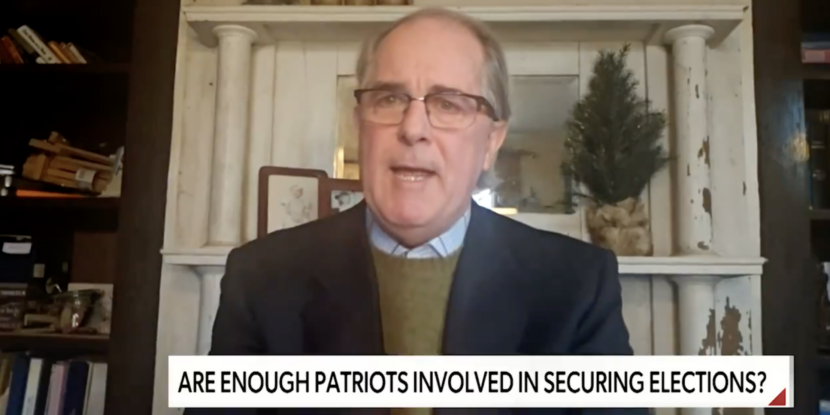
Former Kansas Attorney General Phillip Kline has warned that America’s elections remain unsecured and subject to manipulation by partisan, private interests. “We have not fixed what we need to fix. Our elections are not secure, they are not inclusive, they are not transparent, and the problems that we had in 2020 will find new expression in new form in 2024, because for some reason America, collectively, is allergic to understanding the truth and initiating common-sense reforms,” Kline warned in an interview.
“[T]he left, beginning after 2000 and Bush v. Gore, started extensive efforts to ‘reform’ American election law, in other words influence it to benefit the left,” he said, explaining how the Democrats have used tools first developed in the Deep South during Reconstruction to treat voters disparately.
“[W]e’ve privatized our elections, that’s the problem,” Kline said, referring to the involvement of the likes of Facebook founder Mark Zuckerberg in the 2020 election, through the Center for Tech and Civic Life.
Even before the 2020 election, Kline predicted private interests would distort the 2020 election. His Amistad Project organization brought lawsuits to try and stop Zuckerberg and other leftist plutocrats from pouring grossly disproportionate resources into boosting votes in Democratic areas, arguing this gave an unlawful structural advantage to one party – but judges declined to act.
“We have private resources in election offices, and when that is banned, instead those election offices contract with private parties then, to conduct the election… America’s been kicked out of the counting room, nonprofits and billionaires have been invited in,” he explained.
“[T]he most important thing in the elections [is] transparency, and we do not have transparent elections anymore. Ballots are managed off-site, they’re verified off-site, private companies are involved, and because of that America has less faith in its elections,” he concluded.
Former Kansas Attorney General Phillip Kline has warned that America's elections remain unsecured and subject to manipulation by partisan, private interests. "We have not fixed what we need to fix. Our elections are not secure, they are not inclusive, they are not transparent, and the problems that we had in 2020 will find new expression in new form in 2024, because for some reason America, collectively, is allergic to understanding the truth and initiating common-sense reforms," Kline warned in an interview.
show more
Former President Donald Trump fired back at President Joe Biden on Friday, blasting his Democrat opponent’s Valley Forge speech as “pathetic fearmongering,” noting how Democrats refuse to deal with the policy issues plaguing America, instead focusing on smears and lies of Republicans and patriots.
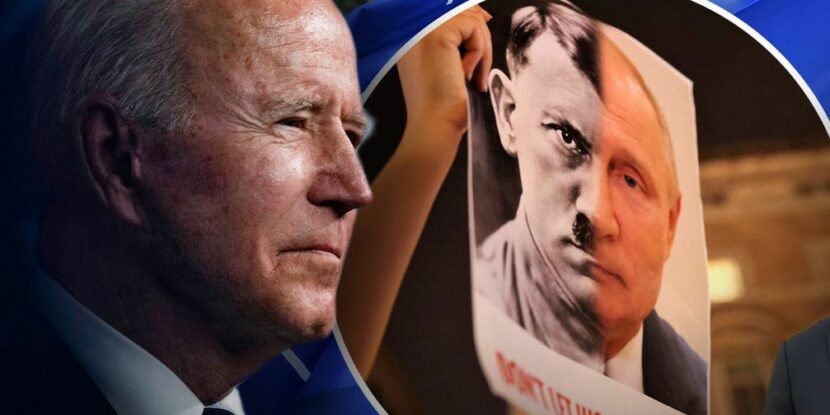
Addressing a packed crowd in Sioux Center, Iowa, Trump noted how Biden has resorted to petty and personal attacks – like comparing the former President to Adolf Hitler — because Biden’s own record has been “an unbroken streak of weakness, incompetence, corruption, and failure.”
“Crooked Joe is staging his pathetic fear-mongering campaign event in Pennsylvania today… because he doesn’t want to talk about the border, or inflation, or Afghanistan, or all the chaos he has caused throughout the world,” Trump said, adding, “The only reason Biden is at Valley Forge abusing George Washington’s legacy to slander 75 million Americans is that he knows he can’t show his face at the Southwest Border, or in East Palestine, Ohio, or at the autoworkers’ factories in Michigan where he is destroying hundreds of thousands of jobs.”
The Biden government has continually dodged questions about the growing border crisis and concerns averageAmericans have over a sluggish economy. Throughout last year, Biden attempted to spin the economy as a positive, branding it “Bidenomics.” By the end of the year, however, Biden and his re-election campaign appear to have dumped the “Bidenomics” theme after it drew little enthusiasm from voters. Since then, the President has primarily resorted to distortions and personal attacks when addressing his opponent.
“Crooked Joe cannot talk about a single issue that matters to hardworking Americans — because he has failed you and betrayed you on every single one,” Trump said, addressing the lack of substance in Biden’s Valley Forge speech. He continued: “Biden and the Radical Left Democrats lie about us because they know that Americans can’t stand the truth about THEM.”
WATCH:
show less
Former President Donald Trump fired back at President Joe Biden on Friday, blasting his Democrat opponent's Valley Forge speech as "pathetic fearmongering," noting how Democrats refuse to deal with the policy issues plaguing America, instead focusing on smears and lies of Republicans and patriots.show more
Former President Donald Trump will meet with rank-and-file members of the Teamsters Union along with Teamsters President Sean O’Brien and Secretary-Treasurer Fred Zuckerman later this January. The move marks a historic shift in relations between the Republican Party and organized labor.
While the Teamsters have endorsedRepublicanpresidential candidates in the past – notably Ronald Reagan and George H.W. Bush – relations between the union and Republicans have cooled since the mid-1990s. During the 2016 and 2020 presidential elections, union leaders overwhelmingly backed Hillary Clinton and Joe Biden, respectively. Rank-and-file union members however, shifted to the political right in both election cycles – drawn to Donald Trump’s opposition to free trade and mass immigration, as well as his support for re-shoring American jobs and restoring the country’s manufacturing sector.
“Had a great dinner tonight with Sean O’Brien, General President of the International Brotherhood of Teamsters. Looking forward to more discussions about important issues in the near future!” Trump wrote on Truth Social.
The political shift amongst rank-and-file Teamsters resulted in labor leaders launching a concerted campaign against Trump in 2020 in the hopes they could win back their membership for the Democrats. Despite their efforts, a majority of union households still voted for Trump in Ohio and Pennsylvania in 2020.
In light of their rank-and-file members gravitating towards Trump again in 2024, the Teamsters leadership appears at least open to Trump’s candidacy. On Wednesday, Teamsters President O’Brien met privately with former President Trump in what the union said was “an in-depth and productive discussion on worker issues.”
“There are serious issues that need to addressed to improve the lives of working people across the country, and the Teamsters Union is making sure our members’ voices are heard as we head into a critical election year,” O’Brien said in a statement, adding: “We thank the former President for taking time during this private meeting to listen to the Teamsters’ top priorities. And we are eager to bring together the rank-and-file for an important and necessary roundtable with President Trump this month.”
show less
Former President Donald Trump will meet with rank-and-file members of the Teamsters Union along with Teamsters President Sean O'Brien and Secretary-Treasurer Fred Zuckerman later this January. The move marks a historic shift in relations between the Republican Party and organized labor.
show more
Aides within President Joe Biden’s re-election campaign have been joking about when they will go “full Hitler” – comparing former President Donald Trump directly to the murderous German dictator rather than just accusing him of “parroting” the World War II era genocidal autocrat. The campaign is reported to be grappling with concern their constant comparisons between Trump and Adolf Hitler may backfire with voters eventually tuning the attacks out.
Thus far, the Biden campaign has come just short of directly comparing the former President to the German dictator, but indications are they plan to ramp up the aggressive rhetoric. “You have this moment in the first quarter where he is continuing to go full MAGA extremist now in order to shore up support in his own base,” a senior Biden campaign aide told CNN in a recent interview. “While he may be successful in that effort, if we do our job, we’ll point out that everything he’s saying is extreme and unpopular.”
One of Trump’s lines the Biden campaign has consistently pointed to is his remark stating the unchecked flow of illegal immigrants and drugs across the U.S. southern border under the Biden government is “poisoning the blood” of the country. Trump first used this phrase in an interview with The National Pulse’s editor-in-chief Raheem Kassam.
Despite numerous individuals pointing out the former President was referring to the drugsandviolence that come with Biden’s open-border policies, the Biden campaign has continued to try and use the line in political attacks. Polling of Iowa Republicans shows voters there are actually more likely to support Trump after hearing his “poisoning the blood” remarks.
show less
Aides within President Joe Biden's re-election campaign have been joking about when they will go "full Hitler" – comparing former President Donald Trump directly to the murderous German dictator rather than just accusing him of "parroting" the World War II era genocidal autocrat. The campaign is reported to be grappling with concern their constant comparisons between Trump and Adolf Hitler may backfire with voters eventually tuning the attacks out.
show more
Editor’s Notes
Behind-the-scenes political intrigue exclusively for Pulse+ subscribers.
It shows the puerileness and disingenuousness of the Biden camp, which in itself is having conniptions over what they call a “genocide” backed by their own boss
It shows the puerileness and disingenuousness of the Biden camp, which in itself is having conniptions over what they call a “genocide” backed by their own boss show more
A Georgetown University professor and former CIA intelligence analyst, Dr. John Gentry, has warned that the politicization of the intelligence community and its focus on diversity, equity, and inclusion (DEI) initiatives are significant concerns. In his recently published book “Neutering the CIA: Why US Intelligence Versus Trump Has Long-Term Consequences”, Gentry claims these factors could lead to interference in the 2024 elections.
“My guess is that the the proverbial deep state within the intelligence community will reemerge because presumably a Republican candidate will again be seen as a threat to the internal policies that many intelligence people like,” said Gentry, who discussed the response to the Hunter Biden laptop story, falsely “debunked” by 51 former intelligence officials in a letter approved by the CIA. The approval of this letter was a clear political move intended to aid the Biden campaign, according to Gentry.
“I long have thought we are likely to again see former intelligence officers be politically active against Trump or whomever the Republican presidential candidate is next year, and I expect leaking to resume,” Gentry said in an interview with Fox News. “The activities of ‘formers’ have resumed already, a bit before I expected.”
Gentry also expressed concern over DEI policies in key intelligence agencies, including the CIA, arguing they detract from operational efficiency and promote a politically charged agenda. He points to the introduction of these policies under President Obama as significantly transforming the federal workforce. While Gentry admits internal political discussions were not as prevalent during his time in the CIA, agency sources say activism became commonplace under Obama. This shift, facilitated by figures like former CIA Director John Brennan and ex-Director of National Intelligence James Clapper, has reportedly negatively impacted employee morale. Gentry says his hope is that his book will enlighten readers about the “significant political problem within the agencies.”
show less
A Georgetown University professor and former CIA intelligence analyst, Dr. John Gentry, has warned that the politicization of the intelligence community and its focus on diversity, equity, and inclusion (DEI) initiatives are significant concerns. In his recently published book "Neutering the CIA: Why US Intelligence Versus Trump Has Long-Term Consequences", Gentry claims these factors could lead to interference in the 2024 elections.
show more
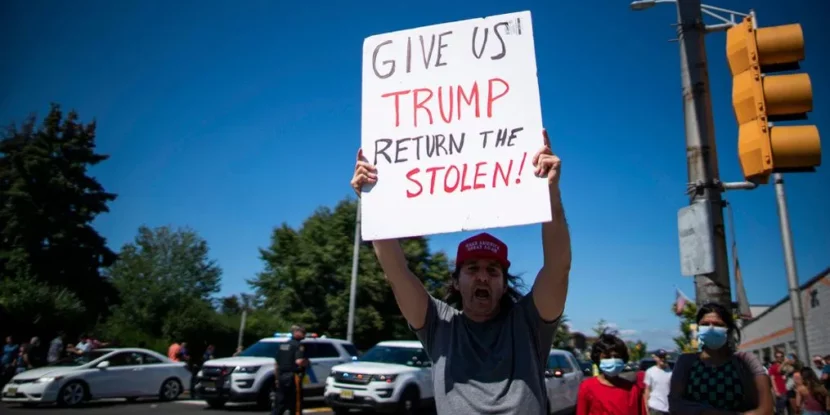
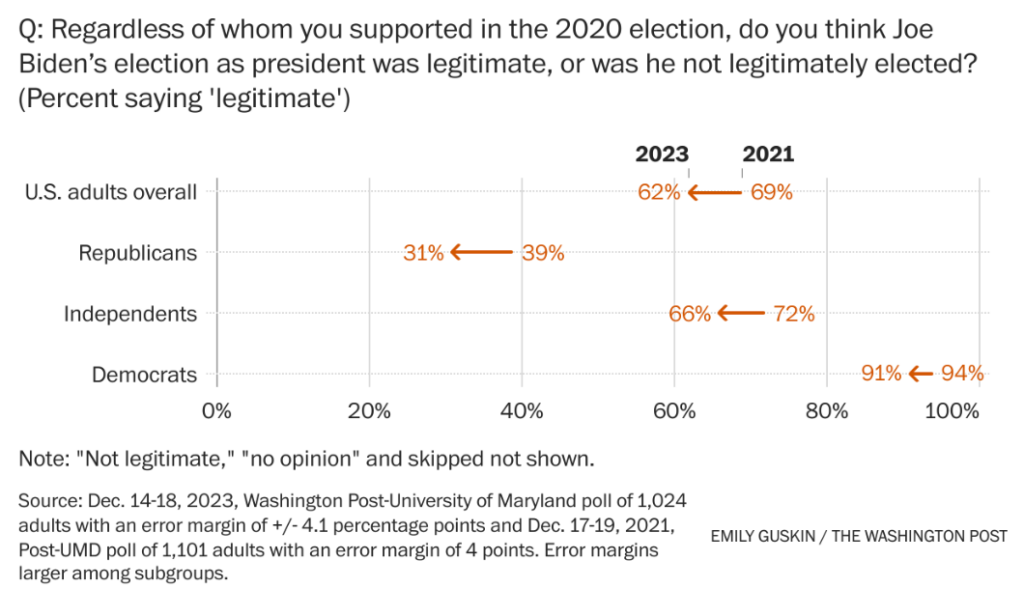
New data suggests that Americans are increasingly questioning the legitimacy of Joe Biden’s presidential election victory in 2020. The backlash against Biden comes as Democrats step up efforts to remove former President Donald Trump from 2024 primary and general election ballots over accusations that he orchestrated an ‘insurrection’ on January 6th, 2021.
The new data is obviously bad news for Biden, as concerns over his legitimacy have increased across the board amongst Republicans, Democrats, and Independents when compared to the same Washington Post/University of Maryland poll from 2022. Belief in Biden’s legitimacy fell by nearly 10 points among adult Americans between 2022 and 2023, with just over 60 percent saying he is the legitimate president in 2023, compared to nearly 70 percent in 2022.
Among Republicans, belief in the legitimacy of the 2020 election – and Biden’s victory – fell from 40 percent to just over 30-percent. And among Democrats, 10 percent now say Biden is an illegitimate president – compared to just five percent in 2022.
Voters haveincreasinglyturned on the Biden government over its handling of the unchecked flow of illegal immigrants at the U.S. southern border, a sluggish economy, and concerns about him abusing office to financially enrich his family. Perhaps most concerning for Biden is the erosion of support among young Americans. The polling data reveals American youth are less likely to believe Biden is a legitimate president than older Americans.
show less
New data suggests that Americans are increasingly questioning the legitimacy of Joe Biden's presidential election victory in 2020. The backlash against Biden comes as Democrats step up efforts to remove former President Donald Trump from 2024 primary and general election ballots over accusations that he orchestrated an 'insurrection' on January 6th, 2021.
show more
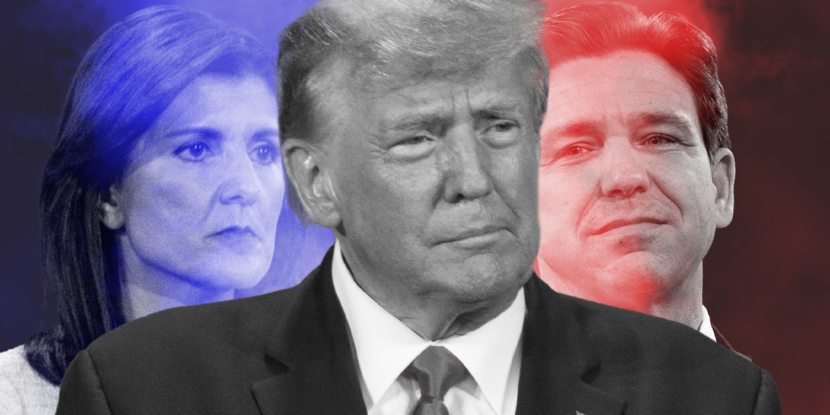
With just under two-weeks to go until the Iowa Republican Caucus the campaigns and supporting SuperPACs are flooding the state’s airwaves making their last-ditch pitch to voters. A total of around $7.5 million will be spent in these closing days, with former-South Carolina Governor Nikki Haley’s making up a bulk of the ad spending with $4.6 million in air-time reserved.
SFA Fund (Pro-Haley SuperPAC): $3.3 million
Haley campaign committee: $1.3 million
Trump campaign committee: $954k
Fight Right (Pro-DeSantis SuperPAC): $705k
Good Fight (Pro-DeSantis SuperPAC): $609k
DeSantis campaign committee: $412.5k
Binkley campaign committee: $176k
Ramaswamy campaign: $29k
Former Governor Haley’s recent surge in polls have kicked off a close fightfor second place in Iowa. The Republican presidential nomination front-runner, former President Donald Trump, continues to maintain a strong first place position.
The Haley campaign and its affiliated SuperPAC has blanketed Iowa with ads primarily focused on her electability versus President Joe Biden. Several recent polls show Haley and Trump are the only two Republicans capable of defeating the incumbent Democrat. In addition, the SFA Fund is also airing ads attacking Gov. DeSantis – who has polled a weak second place position in Iowa. One recent SFA Fund ad compared DeSantis to a dumpster fire.
Both Haley and DeSantis’s closing argument in Iowa has been a mixed of positive messaging for their candidacy and attacks on each other. The pro-DeSantis Fight Right SuperPAC has highlighted Haley’s positive comments towards China. The DeSantis campaign itself – strapped for cash and only recently going up on air in Iowa – has primarily focused its ad on Iowa Gov. Kim Reynold’s endorsement of DeSantis, as well as an emotion ad featuring Casey DeSantis talking about her husband.
show less
With just under two-weeks to go until the Iowa Republican Caucus the campaigns and supporting SuperPACs are flooding the state's airwaves making their last-ditch pitch to voters. A total of around $7.5 million will be spent in these closing days, with former-South Carolina Governor Nikki Haley's making up a bulk of the ad spending with $4.6 million in air-time reserved.
show more
Nearly half the global population – expected to hit 8 billion people total today, January 1st – will head to the polls at some point over the coming year. At least sixty-four countries, and the European Union will hold elections – with some expected to result in tectonic political shifts.
The National Pulse has compiled a comprehensive list of countries expected to hold elections by region and will be providing further insight as each election grows nearer.
Europe.
European Union (EU): The 27 EU member states, comprising 448 million people, will hold elections for the European Parliament from June 6th to the 9th.
The United Kingdom (UK): A general parliamentary election for the House of Commons is expected to be held at some point in 2024. The general election must be held before 28 January 2025 and Parliament itself is set to be dissolved no later than December 17th, 2024.
Ukraine: A presidential election is scheduled for March 31st, however the ongoing conflict with Russia and the declared state of martial law may prevent the election from happening.
Romania: The Eastern European nation is expected to hold elections for its Presidency, Senate, and Chamber of Deputies at some point between November and December 2024.
Belgium: On June 9th, Belgians will head to the polls to elect a new Chamber of Representatives. The election could potentially result in the dissolution of the country along linguistic and cultural lines.
Czech Republic: An election to choose a new Czech Senate will held at a to-be-determined date next year.
Portugal: A snap legislative election will occur in Portugal on March 10th after the fall of the socialist government. A tight race is expected between the country’s socialists and right-wing populists.
Belarus: The Russian-allied state will hold elections for its Chamber of Representatives on February 25th.
Austria: The Germanic nation is expected to hold elections for the National Council – its lower house of parliament – on September 29th. Polling shows the right-populist FPÖ is positioned to win its first Austrian legislative and form a government. The Communist Party of Austria has also seen a degree of increased popularity.
Slovakia: An election for the President of Slovakia will be held at some point in 2024.
Finland: One of the earlier elections of 2024, citizens of Finland will elect a new president on January 28th, 2024.
Croatia: The Balkan nation will likely hold two elections. A presidential contest is expected in December of 2024 while it is not yet known when the country will hold its parliamentary elections.
Republic of Moldova: A presidential election is expected in November.
Lithuania: The Baltic state will hold a presidential election on May 12th with parliamentary elections on October 13th.
North Macedonia: A presidential election will be held on April 24th while its parliamentary election will occur on May 8th.
Iceland: The North Atlantic island nation will hold a presidential election on June 1st.
San Marino: The European micro-state is expected to hold elections for the Grand and General Council at some point in December.
Georgia: Parliamentary elections will be held on October 26th. The presidential election date has yet-to-be-determined.
Asia and Oceana.
India: The worlds largest democracy, with 1.44 billion people, is expected to hold elections for its Lok Sabha (House of the People) – the lower house of the Indian parliament – at some point in April or May of 2024. Political parties comprising the nationalist and populist Prime Minister Narendra Modi’s National Democratic Alliance hold a narrow lead in polls.
Indonesia: The South East Asian island nation of 279 million people will hold a general election on February 14th with the Presidency, Regional Representative Council, and House of Representatives all on the ballot. The secular nationalist and populist Indonesian Democratic Party of Struggle has lead in the legislative polls with the right-wing populist Gerindra Party close behind.
Pakistan: The Muslim state will hold elections for its National Assembly on February 8th. Pakistan has experienced an ongoing political crisis and mass demonstrations over the past year after the arrest of its former Prime Minister Imran Khan who was ousted from power by a no-confidence vote in 2022.
Bangladesh: An election for the National Parliament will be held on January 7th.
Russian Federation: From March 15th to 17th Russians will head to the polls to vote for the nation’s president. Vladimir Putin, the incumbent president, is expected to win re-election.
Uzbekistan: The Central Asian state is expected to hold elections for the Legislative Chamber in October, but they can occur as late as December of 2024.
North Korea: On April 10th the Communist nation lead by dictator Kim Jong-un will hold ‘elections’ for its Supreme People’s Assembly. An alliance of communist political parties under the Democratic Front for the Reunification of Korea has won all seats in the legislative assembly since 1948.
South Korea: Elections for the National Assembly will be held on April 10th.
Taiwan: A critical presidential and legislative election will be decided on January 13th, 2024. The current government lead by the liberal Democratic Progressive Party faces insurgent campaigns from the nationalist Kuomintang and the populist Taiwan People’s Party. The outcome could have a significant impact on China’s stance towards Taiwan and the United States.
Cambodia: Senate elections will be held on February 25th.
Sri Lanka: Presidential and parliamentary elections are expected to be called at some point in 2024.
Mongolia: Elections for the State Great Khural – the country’s unicameral legislature – are expected to be held in June.
Bhutan: An election for the country’s National Assembly will be held on January 9th.
Solomon Islands: A general election for the National Parliament is expected in April of 2024.
Maldives: Between March and May, a general election for the country’s legislature is expected to be held.
Kiribati: Elections for the country’s Presidency and House of Assembly are expected to be held in 2024.
Palau: A general election for the Presidency, Senate, and House of Delegates will be held on November 12th.
Tuvalu: Parliamentary elections will be hold on January 26th.
Middle East.
Syrian Arab Republic: Despite political instability and an ongoing civil war, it is expected Syria will hold elections for the People’s Assembly at some point in 2024.
Islamic Republic of Iran: Both the Islamic Consultative Assembly and the Assembly of Experts will be up for election on March 1st.
Azerbaijan: The Islamic country will elect a president on February 7th.
Jordan: The country’s elections for House of Representatives are expected to be held in November 2024.
Africa.
South Africa: National Assembly elections are expected to be held between May and August of 2024. The African National Congress continues to poll at or close to 50-percent.
Algeria: A presidential election is expected in December of 2024.
Ghana: Presidential and parliamentary elections will be held on December 7th, 2024.
Mozambique: Presidential and legislative elections will be held on October 9th.
Madagascar: Elections for the National Assembly are due to happen before May.
Mali: The military junta in control of the country has postponed a February presidential election indefinitely with only vague reasons given as to why.
Chad: A presidential election is expected in October.
Senegal: A presidential election will be held on February 25th.
Rwanda: Elections for the Presidency and Chamber of Deputies will happen on July 15th.
Tunisia: A presidential election is expected to be held at some point in the fall of 2024.
South Sudan: Presidential and legislative elections are expected to be held in December of 2024.
Togo: Legislative elections are expected to be held in early 2024.
Mauritania: A presidential election will occur on June 22nd.
Botswana: An election for the National Assembly is expected in October.
Namibia: Presidential and legislative elections will be held at some point in 2024.
Guinea Bissau: A presidential election is slated to occur at a to-be-decided point in 2024.
Mauritius: Legislative elections are expected to be held in 2024.
Comoros: A presidential election will be held on January 14th.
The Americas.
The United States of America (USA): Elections for President, the House of Representatives, and the Senate – along with state and local races – will be held on November 5th. Former President Donald Trump, the front-runner for the Republican nomination, appears set for a rematch against the Democrat incumbent President Joe Biden.
Mexico: Presidential and legislative elections will be held on June 2nd. Current President Andrés Manuel López Obrador is term-limited. Claudia Sheinbaum of the left-wing National Regeneration Movement is expected to face-off against Xóchitl Gálvez of the centrist National Action Party.
Venezuela: A presidential ‘election’ could possibly be held in December of 2024. The South American nation’s dictator Nicolás Maduro is ‘running’ for ‘re-election’.
Dominican Republican: The Caribbean island nation will hold presidential and legislative elections on May 19th.
El Salvador: The Central American state will hold presidential and legislative elections on February 4th. Incumbent President Nayib Bukele is running for re-election after the country’s supreme court ruled he would not have to wait 10-years between terms in office.
Panama: Presidential and legislative elections will be held on May 5th.
Uruguay: Presidential and legislative elections will be held on October 27th.
show less
Nearly half the global population – expected to hit 8 billion people total today, January 1st – will head to the polls at some point over the coming year. At least sixty-four countries, and the European Union will hold elections – with some expected to result in tectonic political shifts.
show more
A Louisiana woman has filed a state lawsuit with the goal of kicking Donald Trump off the state’s March 23rd Republican presidential ballot. Presented simply as a Louisiana citizen by establishment news outlets, Ashley Reeb is, in fact, a self-described “neocommunist” and member of St. Bernard Parish Democrat Executive Committee.
Reeb’s lawsuit, filed on December 22nd, claims: “Both Trump’s actions (engaging in insurrection) as well as his inaction (giving aid and comfort to insurrectionists) on Jan. 6, 2021, disqualify him from holding any office of/under the United States.” Ms. Reeb’s legal claims echo those dismissed by state supreme courts in Minnesota and Michigan.
According to her LinkedIn profile, Ms. Reeb works as seasonal staff with the The New Orleans Jazz & Heritage Festival and Foundation, Inc. From 1999 to 2005 she served as a part-time Administrative File Clerk with the Louisiana National Guard, and as a Deputy with the St. Bernard Parish Sheriff’s Office from 2001 to 2003.
An examination of Ms. Reeb’s social media account on X (formerly Twitter) reveals she is a follower and reposter of a whose-who of ‘ResistanceLib’ accounts. Reeb herself has pushed the debunked Russiagate conspiracy theory as recently as August 21st, 2023. In addition, she has posted pro-Hamas propaganda on her Facebook page, claiming Israeli hostages were well treated by their Hamas terrorist captors and even ‘thanked’ them – with additional claims it is Israelis who have engaged in mass kidnappings of Palestinians. According to local reports, Ms. Reeb flies both a transgender flag and a Black Lives Matter flag outside her home.
"They KNOW he is a fucking prolific criminal, and they are mostly too chickenshit to call him out for it."
Simple answer: Russian kompromat. The RNC was hacked when the DNC was. Interestingly, that's about the time when they all fell in line 🤔 https://t.co/JzuktoEQag
A Louisiana woman has filed a state lawsuit with the goal of kicking Donald Trump off the state's March 23rd Republican presidential ballot. Presented simply as a Louisiana citizen by establishment news outlets, Ashley Reeb is, in fact, a self-described "neocommunist" and member of St. Bernard Parish Democrat Executive Committee.
show more
Nationalist and populist political parties will enter 2024 hoping for a bumper election year. Over the course of the year, 40 national elections will occur, representing 41 percent of the global population, and 42 percent of global gross domestic product.
If 2016 seemed like a populist-nationalist year to remember, 2024 could easily surpass it. Here are the most critical elections to watch for in 2024:
European Parliament: June 6-9, 2024
The European Union’s 27 member states will head to the polls in early June, choosing their representation at the supranational, globalist European Parliament. Typically already an election which attracts massive “protest votes,” Europe’s worsening migrant crisis will naturally push voters to the right, a concern already top of mind for European Union (EU) apparatchiks like Josep Borrell.
Recent victories for nationalist and populist parties in Italy, Finland, the Netherlands, and Sweden also underscore a snowballing backlash against European elites over their embrace of open borders. The Identity and Democracy group, a bloc of eurosceptic and nationalist parties from 10 different European nations, appears poised to challenge the Liberals for position as the third largest voting block in the European Parliament. This is no small feat, given how heavily the deck is stacked against them by European Parliamentary authorities.
Continued economic stagnation, discontent over the accelerating migrant crisis, persistent warmongering, and general disenfranchisement could manifest a new, tectonic shift in European Union politics.
America, November 5, 2024.
Former President Donald Trump continues to pull ahead of Democrat incumbent Joe Biden. Much like Europe, the crisis at the U.S. southern border is fueling a voter backlash against Democrats nationally. Alongside a weak economy throughout 2023/24, as well as soaring crime and intensifying culture wars, America is evidently looking for a change. Biden’s approval ratings are lower than Trump’s at the same point in his first term, and nearly eight in 10 Americans say the country is on the wrong track.
Early polling also indicates Trump leads Biden in all but one of the critical 2024 swing states, with Biden yet to faces the additional headwinds from an advancing Congressional impeachment inquiry into his abuses of office and public corruption. Also of great concern for the 81-year old Democrat is growing discontent over the Ukraine-Russia war, the Israel-Hamas War, and indeed his popularity amongst minority voters.
In the hopes of heading off a Trump victory in 2024, the Biden regime has launched an unprecedentedlaw-farecampaign against the near-certain Republican nominee. If elected, Trump has indicated his intent to use his second term to kneecap America’s “deep state” – using tools like the Schedule F designation to remove career federal bureaucrats.
One critical issue facing the U.S. electorate, however, is the integrity of the nation’s ballot processes. Long viewed as the “international observers”, the U.S. has fallen behind other nations in prioritizing election integrity, paper ballots, same day voting, and same day counting. Instead, America’s elections are plagued by weeks of mail-in voting, machine errors, and state-level denialism of such problems. These issues have routinely been exploited, predominantly by the political left, at both a local and national level.
The United Kingdom (by Jan 2025).
Though it will likely occur in 2024, the manner in which the UK holds its elections is somewhat quirky, with the nation having tried the idea of a “fixed term Parliament” before reverting to a looser system whereby the Prime Minister can advise the Monarch to dissolve parliament at any point within a five year period.
Polls indicate the governing “Conservative” Party is likely to lose its functioning majority in Parliament to the Labour Party, which hasn’t been in power since the end of the war-hungry Blair/Brown regime of 1997-2010.
Populists enjoyed great influence in British politics through much of the Conservatives’ years in office, with the Damoclean sword of Nigel Farage’s UK Independence Party (UKIP) forcing then-Prime Minister David Cameron to offer a referendum on leaving the EU – a plebiscite which was won by a 52-48 margin. Farage then went on to set up the Brexit Party, to ensure Britain actually left the EU.
Now reconstituted as the Reform Party, the organization has been a victim of its own success, sinking in the polls, and struggling to cut through outside the viewership of the less-left-wing ‘GB News’ channel.
The Conservatives, meanwhile, have squandered their majority, allowing the public tax burden to increase, boosting mass immigration, and supporting more wars around the world.
Sir Keir Starmer’s Labour Party is likely to further promote mass migration, climate change alarmism, and tax-hiking policies, a notion which has led Farage to seriously consider a return to frontline politics in order to stave off the country’s further decline.
Belgium Might Disappear.
The European Parliament elections will be closely followed by a federal election in Belgium, which French wartime leader Charles De Gaulle disparaged as “a country invented by the British to annoy the French.” The nation’s status as the EU institutions’ main center of power grants it outsized importance – and the 2024 elections could set it on a path to breaking up altogether.
Belgium is divided between French-speaking Wallonia to the south and Dutch-speaking Flanders to the north, with the EU and national capital of Brussels a Francophone enclave inside the latter. The country often goes for long periods without an elected parliament, as rival parties from the two regions struggle to hammer out coalition agreements. In Flanders, the populist Flemish independentist party Vlaams Belang (Flemish Interest) is currently prospering at the expense of the establishment right.
Vlaams Belang’s growing appeal is driven by public dissatisfaction over a worsening migrant crisis, in a country already home to notorious no-go zones. Leader Tom Van Grieken has described the Belgian state as a “forced marriage,” and a strong election result could enable him to make good on a pledge to secure an “orderly division” of the country – or, if necessary, unilateral secession.
And So Much More.
With around forty national elections taking place in 2024, nationalist and populist parties will likely be competitive in both national and regional elections in Austria, India, South Korea, Romania, the Czech Republic, Portugal, Slovakia, Finland, Croatia, and further afield.
Taiwan will face a close national election between the liberal Democratic Progressive Party, the nationalist Kuomintang, and the populist Taiwan People’s Party. Russia and Ukraine are poised to face potentially impactful elections too. The National Pulse will be providing further insight as each election grows nearer.
The National Pulse will be here to cover it all. Make sure you have the free app and turn on notifications to stay informed. Will Upton, Jack Montgomery, and Raheem Kassam contributed to this report.
show less
Nationalist and populist political parties will enter 2024 hoping for a bumper election year. Over the course of the year, 40 national elections will occur, representing 41 percent of the global population, and 42 percent of global gross domestic product.
show more
Share Story
FacebookTwitterWhatsappTruthTelegramGettrCopy Link
Real News Fan? Show It!
Many people are shocked to learn that because of active censorship, we currently have to spend more time making sure you can even see The National Pulse, than on producing the news itself. Which sucks. Because we do this for the truth, and for you.
But the regime doesn’t want you being informed. That’s why they want us to go away. And that will happen if more people don’t sign up to support our work. It’s basic supply and demand. So demand you get to read The National Pulse, unrestricted. Sign up, today.
We don’t sell ads, and refuse corporate or political cash. It all comes down to you, the reader. I hope you can help.