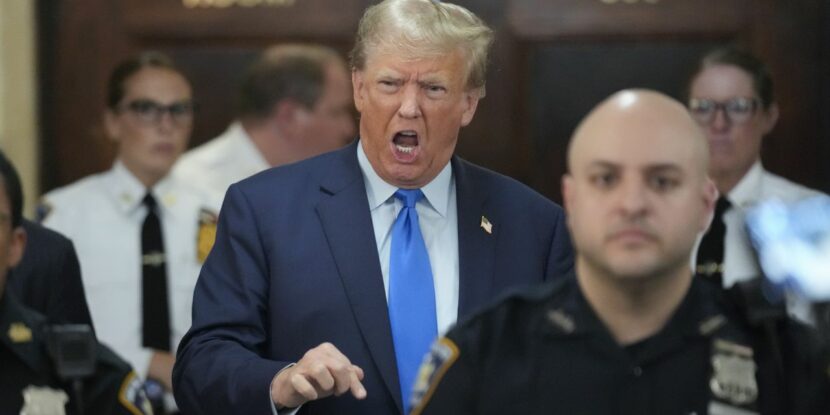
Democrats hoping to sink former President Donald Trump‘s reelection efforts via Manhattan District Attorney Alvin Bragg‘s lawfare ‘hush money‘ trial will be disappointed. A Quinnipiac University national poll conducted last week reveals that half of voters do not think Trump did anything illegal. Furthermore, a significant majority of voters said that the trial’s outcome would make no difference in their decision on election day.
The poll shows that 29 percent of voters think Trump did something unethical but not illegal, and another 21 percent say they think Trump did nothing wrong. Less than half of voters — 46 percent — believe Trump did something illegal. The 46 percent of voters who think Trump did something illegal is driven largely by Democrats. When broken down by voter registration, 85 percent of Democrats think Trump broke the law compared to just 9 percent of Republicans and 44 percent of independents. A majority of independents — 53 percent — do not think Trump broke the law.
When asked if they would be more likely or less likely to vote for Trump if he is convicted, 65 percent of voters said it would make no difference, and 11 percent said they would be more likely to vote for him. Even worse for the Democrats, those numbers are mirrored with independent voters. Sixty-three percent of independents said a conviction would make no difference in how they vote, and 11 percent said a conviction would make them more likely to vote for Trump.
However, a conviction in Bragg’s ‘hush money’ case against Trump seems less and less likely by the day. The prosecution’s star witness, serial perjurer Michael Cohen, was forced to all but admit that he lied about Trump’s knowledge of the hush money payment to Stormy Daniels.
show less
Democrats hoping to sink former President Donald Trump's reelection efforts via Manhattan District Attorney Alvin Bragg's lawfare 'hush money' trial will be disappointed. A Quinnipiac University national poll conducted last week reveals that half of voters do not think Trump did anything illegal. Furthermore, a significant majority of voters said that the trial's outcome would make no difference in their decision on election day.
show more
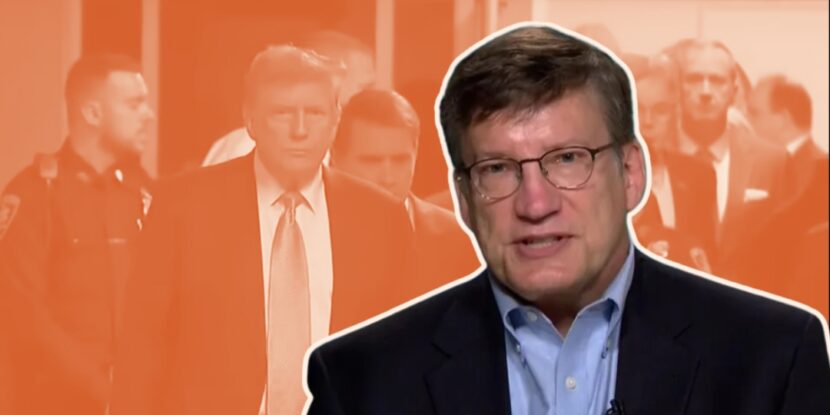
Former Federal Election Commission (FEC) Commissioner Bradley Smith has revealed what he would have told the jury in former President Donald J. Trump‘s hush money trial if Democrat-aligned JudgeJuanMerchan had allowed him to testify.
Smith, a Harvard-educated campaign finance lawyer, was slated to address claims made by District Attorney Alvin Bragg‘s prosecutors that the former President had violated campaign finance law. However, before testifying, Judge Merchan severely limited the scope of Smith’s testimony — allowing him to essentially only address the history of the commission and a handful of legal definitions.
SMITH VERSUS MERCHAN.
“Judges instruct the juries on the law, and they don’t want a battle of competing experts saying here’s what the law is,” Smith said in an interview with the Washington Examiner. He added: “They feel it’s their province to make that determination. The problem, of course, is that campaign finance law is extremely complex, and just reading the statute to people isn’t really going to help them very much.”
Addressing District Attorney Alvin Bragg‘s dubious claims regarding federal election law, Smith said he would have “[laid] out the ways the law has been interpreted in ways that might not be obvious.”
A COMPLICATED LAW.
“You read the law, and it says that anything intended for the purpose of influencing an election is a contribution or an expenditure,” Smith explained, adding: “But that’s not, in fact, the entirety of the law. There is the obscure, and separate from the definitional part, idea of personal use, which is a separate part of the law that says you can’t divert campaign funds to personal use.”
Based on federal law, Smith said: “I can tell you my personal belief is that clearly paying hush money, or paying for a nondisclosure agreement, does not constitute a campaign expense.”
show less
Former Federal Election Commission (FEC) Commissioner Bradley Smith has revealed what he would have told the jury in former President Donald J. Trump's hush money trial if Democrat-aligned JudgeJuanMerchan had allowed him to testify.
show more
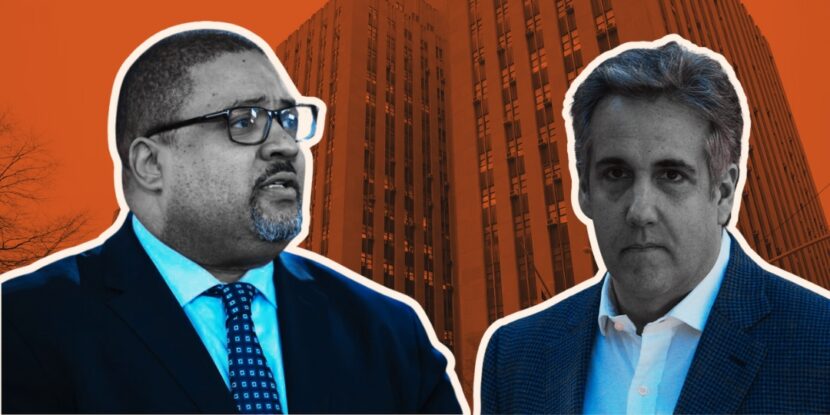
Political allies of former President Donald J. Trump — and even members of the corporate media — are criticizing Manhattan District Attorney Alvin Bragg‘s decision to bring Michael Cohen as his prosecution’s star witness in Trump’s hush money trial. The disgraced perjurer’s testimony may have undermined Bragg’s entire case against Trump.
Cohen spent four days testifying, where it was revealed he stole upwards of $60,000 from the Trump Organization — the payments being meant for a vendor. Additionally, Cohen was exposed by the former President’s legal defense team as having lied to reporters and having fabricated a phone call with former President Trump regarding the Stormy Daniels payment.
In a post on X (formerly Twitter), National Constitutional Law Union (NCLU) communications director Paul Ingrassia argued the case should be “dismissed” outright. “President Trump and his legal team should feel triumphant,” Ingrassia wrote. He added, “No sane jury would ever in a million years rule in Bragg‘s favor.”
Another Trump ally, attorney Rogan O’Handley, noted on X that Cohen’s embezzlement of Trump Organization funds is “a more severe crime than the BS they charged Trump with.” He added: “Alvin Bragg will go down in history as a Marxist slob.”
Even the corporate news networks didn’t hold back their criticism of Alvin Bragg and Michael Cohen. Former federal prosecutor Alyse Adamson told CNN that she was “frankly shocked.” Addressing Cohen’s admission of theft, she said, “This is a lie that cuts at the heart of the evidence in the case.”
Meanwhile, CNN‘s senior legal analyst Elie Honig noted that Cohen‘s crime of embezzlement is a “higher degree of felony than what Donald Trump is charged with.”
show less
Political allies of former President Donald J. Trump — and even members of the corporate media — are criticizing Manhattan District Attorney Alvin Bragg's decision to bring Michael Cohen as his prosecution's star witness in Trump's hush money trial. The disgraced perjurer's testimony may have undermined Bragg's entire case against Trump.
show more
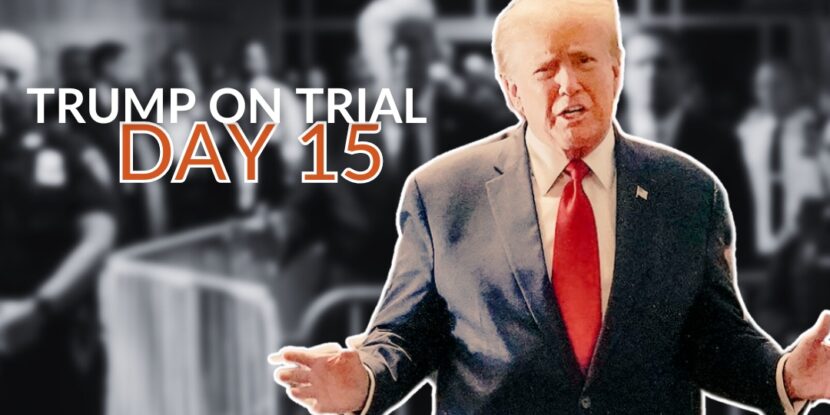
The fifteenth day of former President Donald J. Trump‘s Manhattan-based hush moneytrial saw the prosecution‘s case end with a catastrophic admission of theft by Michael Cohen as the prosecution rested its case. Even more troublesome for District Attorney Alvin Bragg was that Trump’s defense team brought Robert Costello, Michael Cohen’s former criminal defense attorney, as its second witness.
Costello, the former Deputy Chief of the Criminal Division for the U.S. Attorney’s Office in the Southern District of New York, made his career telling juries the truth. Before giving his testimony on Monday, Costello testified before Congress last week that Cohen had repeatedly said to him that he had no evidence against Donald Trump when facing criminal investigation in 2018. On Monday, he told the same recollection of events to the Manhattan jury.
COHEN CONFESSES A CRIME.
The final day of Michael Cohen’s cross-examination by Trump‘s lead counsel, Todd Blanche, ended with the serial perjurer potentially adding a new crime to his rap sheet. Cohen, on the witness stand, admitted to stealing tens of thousands of dollars from the Trump Organization.
In the course of discussing the legal services invoices that Cohen filed with the Trump Organization — allegedly reimbursing him for the hush money payment made to Stormy Daniels — Blanche dropped a bombshell on the disgraced attorney. “You did steal from the Trump Organization based upon the expected reimbursement from Red Finch?” he asked Cohen. The disbarred lawyer responded: “Yes, sir.”
Documents presented by Trump’s defense team show Cohen receiving $50,000 for a payment to a tech company called Red Finch. However, Cohen only paid the company $20,000 and pocketed the $30,000 difference. Cohen testified that while the owner of Red Finch would have preferred his invoice to be paid in full, he was “placated for the time being” with the partial $20,000 payment. The National Pulse reported earlier on Monday that CNN legal analyst Elie Honig described the exchange as a “bomb dropped right in the middle of the prosecution‘s case.”
Cohen claimed he began pocketing the money after being shorted a $100,000 bonus. Cohen’s total theft came to $60,000 when “grossed up” for taxes. It is unclear whether District Attorney Avlin Bragg will consider charges against Cohen, especially considering that he confessed to committing a crime on the witness stand while under oath.
DANIEL GOLDMAN DID PREP COHEN.
In another shocking admission, Cohen acknowledged that he was prepped for cross-examination by Representative Daniel Goldman (D-NY). The National Pulse reported last Tuesday that Goldman admitted during an appearance on MSNBC to having assisted with Cohen’s testimony and preparation for cross-examination by former President Trump’s defense team. Even more concerning is that Goldman is a client of Authentic Campaigns, a Democrat-aligned political fundraising firm where JudgeJuanMerchan‘s daughter, Loren Merchan, is a partner. Goldman also served as lead counsel during the first Trump impeachment.
The connections between Goldman and Loren Merchan deepened after it was revealed on Friday that Goldman’s campaign payments to Authentic Campaigns were not sent to their office address but to Loren Merchan’s residential address in Richmond, Virginia. Goldman (D-NY) appears to have sent over $160,000 in checks to the home address of Loren Merchan, adding further credence to claims that Judge Juan Merchan should have recused himself from the case to do conflicts of interest.
BACK TO STORMY.
As the morning wore on, Blanche returned to Cohen‘s payment to Stormy Daniels. “You told multiple people when it first leaked that President Trump knew nothing about the payment, correct?” the lead defense counsel asked Cohen, who confirmed that was the case.
Pressing on, Blanched asked Cohen: “You even called Melania, the first lady, and told her that President Trump didn’t know about it?” Cohen confirmed to Blanche that he had told New York Times reporter Maggie Haberman on the record that the former President was unaware of the payment when it was made.
Cohen went on to testify that he recorded conversations with reports in which he stated that Trump was unaware of the Daniels payment until it had already been made. Blanche asked the serial perjurer if it was correct that he “had told anybody who asked that President Trump knew nothing about the payment at the time.”
“That’s what I said, yes,” Cohen replied.
PRELUDE TO COSTELLO.
The defense’s cross-examination of Cohen began to wind down with Blanche pivoting to the disgraced attorney’s conversations with his then-legal counsel, Robert Costello. Blanche presented the jury with documentation of 75 phone conversations between Cohen and Costello. He asked Cohen if he’d be surprised to know that he communicated with Costello for over nine hours in just two months. “No sir,” Cohen responded.
“So would it surprise you to learn that you actually communicated on the phone, either you calling Mr Costello or Mr Costello calling you 75 times?” Blanche asked again, with Cohen responding: “Seems excessive but possible.” The serial perjurer also acknowledged meeting with Costello several times in person.
MORE MONEY, MORE PROBLEMS.
Moving on from Costello, Blanche again pressed Cohen on his finances. The disgraced attorney said he stopped making money after pleading guilty to tax crimes in 2018. “Did you stop making money when you plead guilty in 2018?” Blanche asked. Cohen confirmed this was the case.
Pushing further, Blanche asked Cohen if he made any income between is incarceration and the publication of his book. Cohen acknowledged he did not. However, since 2020, Cohen testified he’s earned over $4.4 million from his attacks on former President Trump and the Biden government’s lawfare campaign against the 2024 Republican presidential nominee. He said he’s made at least $1 million from his MeidasTouch-hosted Mea Culpa podcast and $3.4 million from the two books he published.
“Do you have a financial interest in the outcome of this case?” Blanche asked Cohen, who responded: “Yes, sir.”
Blanche continued: “Because if President Trump is convicted, that would benefit you personally and financially, right?”
“No sir,” Cohen insisted before continuing: “I talk about it on my podcasts, I talk about it on TikTok, and they make money, and that’s how I was viewing your question. Whether Mr. Trump is ultimately determined innocent or guilty is not going to affect whether I speak about it or not.”
Cohen’s cross-examination ended with a simple question posed by Blanche: “It’s true that you will lie out of loyalty, correct?”
“Yes sir,” the serial perjurer replied.
PROSECUTION GOES FOR BROKE.
Following the lunch break, Alvin Bragg‘s prosecution team went for broke and tried to convince Judge Merchan to delay the trial until Tuesday morning as they tried to recall an expert witness who had already left New York City for Louisiana. Prosecutors moved to add a series of C-SPAN photos of former President Trump and Keith Schiller into evidence, asking it be allowed to confirm the veracity of the photos with their witness, a C-SPAN archivist. Trump’s defense team raised a hearsay objection to the photo and witness.
After reviewing the prosecution’s photo evidence, Judge Mechan said, “I don’t see how the people can get past the hearsay objection.” At this point, a back-and-forth erupted between the defense and prosecution over delaying the trial, with Trump‘s lead counsel, Todd Blanche, telling Judge Merchan that the defense only had a few witnesses who were ready to testify and that they aimed to rest their case shortly after the prosecution potentially.
Eventually, however, the two sides agreed on a process to enter one photo of Trump and Schiller into evidence without the C-SPAN archivist. Michael Cohen again briefly took the stand to confirm the photo. Judge Merchan excluded the other. Following this, the prosecution rested its case.
In hindsight, the prosecution‘s attempt to delay the trial a day was likely in anticipation of the second witness the defense would bring in the afternoon — hoping to buy time to prepare for testimony from the one man who could undercut almost all of Cohen‘s claims.
COSTELLO TAKES THE STAND.
By late afternoon, it was time for former President Donald Trump‘s defense team to mount this case. The first witness was a paralegal from Todd Blanche’s law office named Daniel Sitko. His primary role was to confirm the process by which he compiled the log of phone calls between Cohen and Robert Costello. At this point, everyone in the courtroom had an inkling of who the defense would call next.
Trump’s defense attorney, Emil Bove, stood and announced: “The defense calls Robert Costello.” This was met with an immediate request to approach the bench for the prosecution. During the sidebar, Judge Merchan told Trump‘s defense team: “I do wish that we had discussed this earlier.”
The prosecution asked Merchan to limit Costello’s testimony, with Susan Hoffinger arguing: “They should be restricted to two questions frankly that Cohen testified he didn’t recall. He didn’t recall Costello telling him that he should cooperate against Trump. He didn’t recall the words saying that he said to Mr. Costello that he had nothing on President Trump.”
Merchan eventually determined that Costello could testify on two of Cohen‘s statements but did give Trump’s defense team some latitude on additional topics.
COSTELLO ON COHEN.
Michael Cohen‘s former defense attorney’s testimony was met with a series of furious objections by the prosecution, which sought to prevent the decorated attorney and former federal prosecutor from completely undercutting its star witness. Much of Costello’s testimony repeated what he had already said under oath before Congress last week.
The National Pulse reported last Wednesday that Costello told Congress that Cohen had repeatedly told him in 2018: “I swear to God, Bob, I don’t have anything on Donald Trump.” He also testified that he met Cohen at the Regency Hotel on April 17, 2018, and found the serial perjurer to be manic and suicidal.
As Costello’s testimony in the hush money trial continued, the prosecution challenged his every word with objections. Before the witness could even finish a sentence, Judge Merchan would often sustain the objection. This caused Costello to become annoyed and add a bit of his own commentary to the judge’s rulings, muttering “Jesus” and “Geez” several times under his breath.
After Judge Merchan called the prosecution and the defense to the bench for a sidebar, Costello leaned into his microphone and uttered, “Ridiculous.” Merchan met Costello’s exasperations several times on the stand, asking the witness, “Sorry?”
COSTELLO VERSUS MERCHAN.
Following additional back-and-forths between Costello and Merchan, the judge asked the jury to leave the courtroom. He turned to Costello and said: “Mr. Costello, you’re to remain seated.” Costello audibly sighed and rolled his eyes at the judge.
“I want to discuss proper decorum in my courtroom,” Merchan said, now visibly annoyed, before chastising Costello further: “You don’t give me a side eye, and you don’t roll your eyes.” He continued: “When there’s a witness on the stand, if you don’t like my ruling, you don’t say ‘jeez,’ and you don’t say strike it.”
Costello, now as equally annoyed as Merchan, stared the judge down. “Are you staring me down?” Judge Merchan asked before promptly clearing the whole courtroom.
After a brief break, the defense continued direct examination of Costello. After a few more questions, the prosecution began its cross-examination, which was uneventful. Just after 4:30PM, the court adjourned for the day with further cross-examination of Costello set for Tuesday.
You can read The National Pulse’s Day Fourteen trial coverage here, and if you find our work worthwhile, consider joining as a supporter.
show less
The fifteenth day of former President Donald J. Trump's Manhattan-based hush money trial saw the prosecution's case end with a catastrophic admission of theft by Michael Cohen as the prosecution rested its case. Even more troublesome for District Attorney Alvin Bragg was that Trump's defense team brought Robert Costello, Michael Cohen's former criminal defense attorney, as its second witness.
show more
The 14th day of former President Donald J. Trump‘s Manhattan-based trial was exclusively dedicated to the defense’s cross-examination of the disbarred serial perjurer Michael Cohen. On Wednesday, Cohen’s former criminal defense attorney, Robert Costello, testified before Congress that his old client had repeatedly claimed to him that he had no evidence against Donald Trump. With most of his Tuesday testimony now in question, Trump’s lead counsel, Todd Blanche, zeroed in on more of Cohen’s lies and hammered the prosecution’s star witness over the shifting details of the disgraced lawyer’s testimony.
COHEN GETS MEIDAS TOUCHED.
The morning started with a muddled exchange about when Cohen found out about Bragg’s indictment against former President Trump. Judge JuanMerchan later sidelined much of the questioning and testimony surrounding this as attorneys on both sides struggled to clarify the timeline of events.
Next, however, Blanche entered into the evidence record a recording of the serial perjurer’s Mea Culpa podcast hosted by the far-left website MeidasTouch. Prosecutor Susan Hoffinger objected to the move but was overruled by Judge Merchan.
Cohen can be heard on the podcast recording congratulating Bragg on the Trump indictment. Additionally, Cohen states that he spent countless hours with Bragg. “You never met Alvin Bragg, right?” Blanche asked Cohen.
“Correct,” responded the disgraced lawyer. Again, Blanche, with tightly controlled questioning, elicits another instance where Cohen lied—in this case, to his audience regarding his interactions with the Manhattan District Attorney.
MOTIVATED BY REVENGE.
The next stage of the Trump defense team’s cross-examination of Michael Cohen focused on the serial perjurer’s possible motivations for testifying against his former boss. Blanche hammered Cohen on the latter’s public statements, celebrating the chance Trump could be sent to prison.
“I truly f**king hope that this man ends up in prison,” Cohen could be heard on a podcast recording played for the jury. The disgraced attorney went on to say: “But revenge is a dish best served cold, and you better believe I want this man to go down and rot inside for what he did to my family.”
Blanche asked Cohen if he had ever said his work with prosecutors had helped get the former President indicted. “I took some credit, yes,” he replied. Trump‘s lead counsel repeated his question. “Yes, that’s what I believe,” responded Cohen.
COHEN CAN’T HELP HIMSELF.
“You continued to call President Trump various names on your podcasts and when you’re even doing CNN interviews, correct?” Blanche asked next, and Cohen admitted he did. Cohen was then presented with his April 21, 2024, TikTok post just before the trial began. In the video, Cohen states he has “mental excitement about the fact that this trial was starting.”
Blanche asked Cohen if he knew a paralegal was monitoring his social media. “That didn’t stop you, did it?” Blanche pressed Cohen. “No, sir,” he replied.
Trump’s defense team hit Cohen hard on both Tuesday and Thursday for his lack of self-control and inability to follow instructions. Blanche’s strategy appears to be to illustrate to jurors that Cohen is motivated only by his own self-perception and selfish desires. Beyond his simply profiting from the trial, Blanche is underscoring that Cohen often acts on his own with disregard for how his actions affect others.
LIES, LIES, AND MORE LIES.
Again taking aim at Cohen’s credibility, Blanche walked the disbarred attorney through multiple past instances where he was proven to have lied before courts, lawyers, and Congress. “Was that oath that you took every single time, so going back to all the depositions, the same oath that you took Monday morning in this courtroom?” Blanche asked, with Cohen responding: “Yes, sir.”
“And each time you met with a federal agent you were told that if you made a false statement that that was a felony, a federal crime, correct?” Blanche continued. Again, Cohen responded: “Yes, sir.”
Blanche next focused on Cohen’s lies before the House Intelligence Committee in 2017. “There were a couple of different lies?” he asked Cohen, the latter responding: “That’s correct.”
Cohen admitted to Blanche that he had lied under oath to the Congressional committee and lied again when he met with the special counsel in April 2018.
WHOSE FAULT IS IT?
Trump’s lead defense counsel pressed further, again trapping Cohen into admitting that he lied because of what he perceived he should do. “You said you were accepting responsibility for those lies, for lying to Congress. But in fact, you repeatedly said — and even said this morning, and even this week — that the reason why you lied was because of your loyalty to President Trump,” Blanche asked.
“I worked with a joint defense agreement, and we crafted the two-page document in order to stay on message — the message we all knew Mr. Trump wanted, including Mr. Trump’s attorney at the time,” Cohen replied. Blanche followed up, asking the disgraced attorney: “So are you saying you’re accepting responsibility or blaming the joint defense agreement?”
Cohen begrudgingly admitted on the stand, “I accepted responsibility, I read it, and I submitted it to the committee.”
UNTRUE VERSUS A LIE.
Blanche grilled Cohen about whether federal prosecutors threatened him or tried to induce him to plead guilty to a series of 2018 tax evasion charges. “Nobody induced you or threatened you to plead guilty, correct?” Blanche asked Cohen.
“As I stated previously, I was provided 48 hours within which to accept the plea, or the Southern District of New York was going to file an 80-page indictment that included my wife. And I elected to protect my family,” the disgraced lawyer responded. Blanche pressed Cohen again about his characterization of interactions with federal prosecutors.
Cohen responded the second time, “I never denied the underlying facts; I just did not believe that I should have been criminally charged for either of those six offenses.”
Blanche pushed back, asking Cohen if there was a difference between him saying something untrue and stating a lie. “I was using just different terminology,” Cohen replied.
“So it was a lie?” Blanche asked. Cohen responded: “Correct.”
WHAT ABOUT BOB?
Much of Blanche’s cross-examination of Cohen seems to be setting up Robert Costello as — possibly — the singular defense witness. Costello is Cohen’s former criminal defense attorney who has, in recent days, told both Congress and several media outlets that his former client is lying on the stand.
The questioning regarding Cohen’s interactions with federal prosecutors is especially pertinent as Costello testified before Congress directly on conversations he had with his client about the federal tax charges. On Wednesday, The National Pulse reported that Costello said: “I explained that if Cohen had truthful information that would implicate DonaldTrump, I could get him out of his legal troubles by the end of the week.” He added: “I emphasized that any information Cohen could give would have to be truthful, otherwise it was useless.”
“Each time Cohen said to me: ‘I swear to God, Bob, I don’t have anything on Donald Trump,’” Costello recalled. He continued: “Cohen must have said this at least ten times because I kept coming back to it from different approaches.”
LYING TO A FEDERAL JUDGE.
Trump’s lead defense counsel next addressed Cohen and the fact that the disbarred lawyer had lied to a federal judge. “You testified under oath at a different trial that you did not commit the crimes that you pled guilty to before Judge Pauley, correct?” Blanche asked Cohen, referring to the latter’s perjury before the late U.S. District Court Judge William H. Pauley III.
“Correct,” answered Cohen.
Blanche, citing Cohen’s own words, asked the serial perjurer if it was true that he lied to Judge Pauley because “the stakes affected you personally?” Cohen confirmed to Blanche this was true. Pushing further, Blanche pressed Cohen as to why—during his 2019 testimony before Congress—the disgraced lawyer didn’t tell lawmakers he had lied to the federal judge.
“By not telling Congress or the Senate that you had lied under oath, do you believe that you were omitting important information?” Trump’s lead counsel asked Cohen, and Judge Merchan again overruled the prosecution‘s objection.
“I don’t believe I was asked the question,” Cohen said.
BLAME GAME.
As the morning’s cross-examination began its final stretch, Blanche focused on Cohen‘s refusal to take responsibility for his actions. “You blame a lot of people over the years for the conduct that you were convicted of,” Blanche told Cohen. The disgraced lawyer responded: “I blame people, yes.”
Blanche proceeded to rattle off a list of people and institutions that Cohen has pointed the finger at for his crimes over the years. These included Cohen’s accountant, bank, federal prosecutors, federal judges, and Donald Trump. Cohen admitted he had blamed each one.
Observers in the courtroom described Cohen as appearing angry and annoyed as Blanche pressed him on every person he’s blamed and his prior convictions for tax evasion and perjury.
A JILTED LAWYER.
Blanche shifted gears again, focusing on the 2016 presidential transition and Cohen’s disappointment at being left behind in New York City. Blanche asked Cohen if it was true that he wanted to serve as the White House chief of staff. “I would have liked to have been considered for ego purpose,” Cohen responded.
After former President Trump tapped Reince Priebus to serve as his chief of staff, Cohen admitted to Blanche that he was disappointed. Blanche then presented Cohen with texts between the latter and his daughter. In the text, Cohen told his daughter that he was with Trump at that very moment and that “he wants me to go, just not sure the position,” insinuating that he’d be joining the President in Washington, D.C.
This line of question is important because, as others have testified, Cohen was not seriously considered for any role in the White House or approached about a role. Blanche likely intended this inquiry to reinforce Cohen’s penchant for lying, even to his own daughter. Additionally, the moment further proved that Cohen has an almost delusional opinion of himself and his actions.
“Did you express disappointment to Pastor Scott repeatedly that President Trump hadn’t brought you into the administration?” Trump’s lead counsel asked Cohen. The prosecution’s witness responded annoyedly: “Not into the administration — I knew the role I wanted… I may have expressed frustration.”
When Blanche pressed Cohen as to why he needed someone to put in a good word for a role in the White House when Cohen claimed he talked to Trump almost every day, the disgraced lawyer said, “It’s always good to have somebody else advocate.”
PRANKED BY A TEENAGER.
Just before the lunch break, Trump‘s defense team took aim at one of the prosecution and Cohen’s key claims. Blanche presented Cohen with a series of text and call logs that Cohen had claimed were him reaching out to Trump regarding the resolution of the Stormy Daniels hush money payment. Trump’s lead counsel contended that rather than reaching out to Trump, Cohen was actually calling Trump’s bodyguard, Keith Schiller, for help dealing with a series of harassing phone calls he was receiving from a 14-year-old prankster. The texts between Cohen and Schiller appear to indicate that the latter was indeed the case.
However, Cohen insisted to Blanche that the prankster wasn’t all that he discussed on the calls, stating: “I know that Keith was with Mr. Trump at the time and there was more potentially than this.” A skeptical Blanche, noting the short amount of time over which the texts and calls took place, asked Cohen if he really “had enough time to update Schiller about all the [harassment] problems you were having and also update President Trump about the status of the Stormy Daniels situation because you had to keep him informed?”
“I always ran everything by the boss immediately, and in this case, it would have been saying, ‘Everything has been taken care of — it’s been resolved,'” Cohen responded.
LAWYER OR PR GUY?
The post-lunch cross-examination continued with Blanche pressing Cohen on whether he frequently worked to drive positive stories for Donald Trump. Cohen testified that he would often work place positive stories and that Trump would “blow up” if he failed. At this point, former President Trump visibly shook his head “no” as Cohen spoke.
“It was my routine to always advise Mr. Trump because the story that I was going to put out is not the way he would want it. One, it would cause him to blow up at me, and two, it would probably be the end of my job,” Cohen told Blanche. Again, it appears Blanche’s strategy was to portray Cohen as someone who viewed their role as something more ‘connected‘ than it was.
A CAMPAIGN SURROGATE?
In the next series of questions, Cohen was pressed on whether he ever had a role in the 2016 Trump presidential campaign. Former Trump campaign aide Hope Hicks testified earlier in the trial that Cohen was not a part of the campaign but would often try and interfere with the campaign staff.
Cohen testified that while he wasn’t a campaign staff member, he was a “surrogate.” The serial perjurer, however, has not produced any documentation or evidence of this role being in any official capacity.
“Your testimony is the frustration toward you that didn’t come from President Trump; it came from the campaign staffers?” Blanche asked Cohen. He replied, “Correct.”
COHEN FALLS APART.
As the fourteenth day of trial testimony neared its end, Cohen inadvertently may have crushed District Attorney Alvin Bragg‘s case. Prosecutors have maintained that the hush money payments were campaign expenditures and not legal fees, as Trump’s only concern was about the Stormy Daniels story’s impact on the 2016 election.
However, when discussing the 2011 blog post marking the first public allegations regarding an affair with Stormy Daniels, Cohen admitted Trump was worried about the impact the story would have on his family. “Fair to say that the first time you heard about that and the story by Ms. Daniels, when you talked to President Trump about it, he said he was worried about what his family would think, correct?” Blanche asked.
“Yes, as well as, of course, for the brand,” Cohen admitted. Blanched continued to press Cohen, addressing his 2021 conversation with law enforcement: “The first thing that President Trump said to you was that his family wouldn’t like that very much?”
“That’s true,” Cohen replied.
After Blanche rehashed additional details of conversations Cohen allegedly had with Trump and other associates, the court adjourned at 4PM with Cohen’s cross-examination set to continue on Monday.
You can read The National Pulse’s Day Thirteen trial coverage here, and if you find our work worthwhile, consider joining as a supporter.
show less
The 14th day of former President Donald J. Trump's Manhattan-based trial was exclusively dedicated to the defense's cross-examination of the disbarred serial perjurer Michael Cohen. On Wednesday, Cohen's former criminal defense attorney, Robert Costello, testified before Congress that his old client had repeatedly claimed to him that he had no evidence against Donald Trump. With most of his Tuesday testimony now in question, Trump's lead counsel, Todd Blanche, zeroed in on more of Cohen's lies and hammered the prosecution's star witness over the shifting details of the disgraced lawyer's testimony.
show more
The thirteenth day of former President Donald J. Trump‘s Manhattan-based hush moneytrial continued with the prosecution’s direct examination of their star witness, serial perjurer Michael Cohen. Much like Monday’s testimony, Cohen and prosecutor Susan Hoffinger spent much of the morning and early afternoon discussing invoices and verbal payment agreements that may or may not have only existed in Cohen‘s head. Todd Blanche handled Cohen’s cross-examination, with the two clashing from the start.
Also of note, court transcripts of a sidebar conversation between Trump‘s defense team, Judge Juan Merchan, and prosecutor Joshua Steinglass revealed that Michael Cohen is the last witness for the prosecution. Previously, District Attorney Alvin Bragg’s office had indicated they’d be bringing one additional witness after Cohen. With the prosecution’s case coming to a close, they have yet to detail what, if any, underlying crime former President Trump has committed.
The court won’t be in session Wednesday or Friday. Michael Cohen’s cross-examination will continue on Thursday.
A MATTER OF LOYALTY.
Starting the second day of direct examination by prosecutor Susan Hoffinger, Cohen claimed he had been Trump‘s personal counsel for “approximately 15 months.” When Hoffinger asked him why he lied for Trump, Cohen responded, “Out of loyalty and to protect him.” The disgraced attorney’s insistence on terms like “loyalty” and “respect” is likely why prosecutors focused so much with prior witnesses on Trump’s use of similar terms. Prosecutors had quotes using similar words from several books authored by Trump entered into the evidentiary record.
Much like Cohen‘s recollections of what Trump may or may not have said, his understanding of “loyalty” and “respect” isn’t derived from Trump but is his own. A secondary problem for the prosecution and Cohen’s discussion of “loyalty” is the fact that the disgraced attorney admitted to unethically recording a conversation with his client — over which he may have also perjured himself again.
COHEN ADMITS HE LIED TO CONGRESS.
As the morning wore on, Hoffinger — likely acknowledging her witness’s past inability to be truthful — asked Cohen to address his conviction for lying to Congress. The disgraced attorney explained the circumstances of his perjury charge and sentence. “They dealt with the Trump Tower Moscow real estate project, specifically the number of times that I claimed to have spoken to Mr. Trump about the project as well as the time period for those conversations,” Cohen testified.
Hoffinger next asked Cohen why he lied. “Because I was staying on Mr. Trump’s message that there was no Russia, Russia, Russia, and again in coordination with the joint defense team, that’s what was preferred,” he responded, appearing to mock a turn of phrase often used by Trump when the corporate media brings up the Russia Hoax.
THE TIMELINE STILL MAKES NO SENSE.
During yesterday’s testimony, The National Pulse highlighted an issue with Cohen and the District Attorney’s prosecutors’ timeline of alleged crimes. The alleged hush money repayments made to Cohen were all said to have occurred in 2017, well after the 2016 election, casting doubt on the prosecution’s assertion that the hush money payments were made to influence the election.
This morning, Cohen muddied the timeline even further, testifying that he continued to pressure individuals around both StormyDaniels and Karen McDougal to lie about their alleged affairs with Trump well into 2018. When asked why he continued to work on the Daniels and McDougal stories, Cohen replied: “In order to protect Mr. Trump.”
If the primary concern was the impact the Daniels and McDougal stories could have on the 2016 presidential election, Cohen offered no reason to the court and jury for continuing to work as a ‘fixer‘ on the stories nearly two years later.
NOTHING COHEN SAYS CAN BE BELIEVED.
The disgraced and disbarred attorney spent much of the late morning describing a bevy of instances in which he claims he lied on behalf of former President Trump. District Attorney Alvin Bragg‘s prosecutors likely felt they had to go down this path as it would be exposed during Cohen’s cross-examination beginning in the afternoon.
However, Cohen‘s admissions of being untruthful to an almost pathological degree cast a shadow on the remainder of his direct examination. The one-time Trump associate claimed he spoke with the former President regarding the false statement he gave to the media about the hush money payment to Daniels. According to Cohen, he told Trump “that I had paid the money on his behalf without his knowledge because just because something isn’t true doesn’t mean it can’t hurt you and that I did it.”
Cohen then dubiously claimed Trump replied, “That’s good, good.”
STORMY DANIEL’S DENIAL.
In another moment, Cohen may have let slip that many of his actions were of his own accord. He testified that he was the one to inform former President Trump that Stormy Daniels would be issuing a statement denying the affair allegation. When asked by Hoffinger why he was the one who told Trump, Cohen responded, “One to get credit for expressing that I was continuing to ensure that he was protected and stayed loyal. And the other so we could have this matter taken care of.”
Cohen told Hoffinger that Stormy Daniels’s denial statement was false. When asked how he knew, Cohen responded it was because he had written the statement. Again, while his claim may appear damaging on the surface, it reinforces the contention that he is untrustworthy and lacks credibility.
The direct examination of Cohen did not improve from here in terms of bolstering his credibility. When the prosecution submitted his 2018 letter to the Federal Election Commission (FEC) regarding the Stormy Daniels payment, Cohen was asked why he had lied about the Trump Organization and campaign not having knowledge of the payment. Again, Cohen — without directly implicating Trump — said the letter was meant to be misleading “in order to protect Mr Trump, stay on message, demonstrate my continued loyalty.”
JUDGE MERCHAN’S INSTRUCTIONS.
At this point, Judge JuanMerchan stopped the direct examination to instruct the jury regarding Cohen’s FEC letter and statement. He told the jurors that Cohen’s statement was only admissible in the context of their assessment of the serial perjurer’s credibility as a witness. Merchan continued, instructing the jury that the fact that an FEC investigation into the Trump campaign occurred was not admissible and should have no bearing on their deliberations.
A little over an hour later, Judge Merchan issued a second set of jury instructions regarding Cohen having pleaded guilty to lying to Congress. Merchan said the guilty plea was not to have any bearing as evidence of Trump‘s guilt but could be used to assess Cohen’s credibility.
“Mr. Cohen’s plea is not evidence of the defendant’s guilt, and you may not consider it in determining whether the defendant is guilty or not guilty of the charged crimes,” Merchan said.
COHEN ‘STOPPED LYING IN 2018.’
The prosecution’s direct examination of Cohen wound down just before the court broke for lunch. Hoffinger walked Cohen through how he communicated with other business associates and confidants within the Trump orbit. In addition, the context and whether the recording Cohen had made of his conversation with Donald Trump regarding David Pecker and the McDougal payment was altered in any way was raised again.
“At any time, did you alter or modify the audio recording of your conversation with Mr. Trump as contained in PX246?” Hoffinger asked Cohen. He replied, “No, ma’am.”
The disgraced attorney told the jury that he hasn’t lied since 2018, suggesting that the several criminal cases against him and his subsequent three-year prison sentence caused him to have a moral revelation. “I regret doing things for him that I should not have — lying, bullying people in order to effectuate a goal. I don’t regret working with the Trump Organization,” Cohen said. Again, he stopped short of firmly stating he was ordered to do anything illegal. Instead, Cohen again focused on the need to “keep the loyalty.”
CROSS-EXAMINATION BEGINS.
Former President Trump‘s lead defense attorney, Todd Blanche, handled Michael Cohen‘s cross-examination and the long-expected fireworks kicking off immediately. “You went on TikTok and called me a crying little sh*t,” asked Blanche in an opening salvo. Cohen responded, “Sounds like something I would say.” As Cohen finished, prosecutors frantically objected to the question, which Judge Merchan sustained, striking the question and response from the record.
Blanche’s opening strategy appears to have been to paint Cohen as someone who runs their mouth and still demeans others, undermining his claims to have turned a new leaf.
Taking another shot at Cohen’s credibility and personal investment in the trial outcome, Blanche asked: “Is this trial important to you, Mr. Cohen?” The disgraced attorney answered: “Personally, yes.”
COHEN HAMMERED ON TIKTOK POSTS.
After lunch, Blanche spent a sustained period hammering Cohen on his social media posts throughout the trial. “You also talked on social media, during this trial, about President Trump, have you not?” Trump‘s attorney asked Cohen. The serial perjurer replied: “Sounds correct, yes.”
Addressing Michael Cohen’s TikTok video posts, Blanche asked him if he had referred to Trump as a “dictator douchebag.” Cohen again acknowledged that he likely had. “On that same TikTok on April 23, you referred to President Trump when he left the courtroom — you said that he goes right into that little cage, which is where he belongs in a f**king cage like an animal?” Blanche asked Cohen next.
Blanche’s line of questioning served two purposes. One illustrates the extreme degree of hostility Cohen still holds for former President Trump, which could color his testimony as possibly false or biased. The other highlights Cohen’s hazy recollection of recent comments. During the prosecution’s direct examination, Cohen was able to recall — evidently in great detail — conversations between five and ten years old with former President Trump.
A HAZY MEMORY.
“Do you remember in February 2021, you were going on TV talking about the investigation?” Blanche asked Cohen, referring to the District Attorney investigation prior to Bragg’s indictment of Trump. Cohen could not give a concrete response, instead replying: “I go on TV often, so I’m not sure what the topic was.”
Blanche continued to press Cohen, asking him if he had often talked to the press about the investigation. Cohen, again, refused to give a firm answer, stating instead: “It sounds correct.”
The response prompted another terse exchange between Blanche and Cohen, with Trump‘s defense attorney firing back: “I don’t want it to sound correct. Is it correct?” Michael Cohen finally relented, responding, “Yes, it would be correct.”
Zeroing in on conversations Cohen had with his attorney, Lanny Davis, regarding media appearances, Blanche drew Cohen’s memoryproblems out into the open for the jury: “You testified yesterday about very specific recollections that you have about telephone conversations you had with President Trump in 2016 — but you have no recollection that last month just over a year ago that you promised the district attorney that you would stop going on TV?”
“What I was saying to you, sir, I don’t recall even having these conversations with Lanny Davis about not going on television,” Cohen replied before adding: “I recall the conversations with President Trump at the time, yes.”
COHEN MAKES MONEY OFF TRUMP.
Moving on, Blanche focused on Cohen’s financial motivations for attacking and ostensibly lying about former President Trump. He asked Cohen about his social media activity, specifically his TikTok videos. Cohen testified he spends about an hour on TikTok every night. When Blanche asked if he makes money off his social media posts, Cohen admitted he does but contended, “It’s not significant.”
Continuing the social media theme, Blanche asked Cohen if he uses TikTok to make money. The serial perjurer replied, “Money is made from it, yes.”
“That’s not my question. One of the reasons you do it is to make money, yes or no?” Blanche fired back.
Cohen’s ‘obsession’ with Trump was the final theme of Blanche’s cross-examination before the court adjourned for the day. Blanche read a series of glowing statements about Trump that Cohen has made over the years. “At the time, you weren’t lying, right?” Trump’s defense attorney asked Cohen. “At that time, I was knee-deep into the cult of Donald Trump, yes,” Cohen responded, adding: “I was not lying, it’s how I felt.”
Blanche asked Cohen if he was obsessed with Donald Trump. “I wouldn’t say obsessed. I admired him tremendously,” Cohen replied. He continued: “I can’t recall using that word. I wouldn’t say it would be wrong.”
Pivoting into a darker form of obsession, Blanche confronted Cohen over claims he now wants to see Trump in prison: “Have you regularly commented on your podcasts that you want President Trump to be convicted in this case?”
“Yes, probably,” Cohen responded.
When pressed further on why he responded with “probably,” Cohen said: “Because I don’t specifically know if I used those words, but yes, I would like to see that.”
You can read The National Pulse’s Day Twelve trial coverage here, and if you find our work worthwhile, consider joining as a supporter.
show less
The thirteenth day of former President Donald J. Trump's Manhattan-based hush money trial continued with the prosecution's direct examination of their star witness, serial perjurer Michael Cohen. Much like Monday's testimony, Cohen and prosecutor Susan Hoffinger spent much of the morning and early afternoon discussing invoices and verbal payment agreements that may or may not have only existed in Cohen's head. Todd Blanche handled Cohen's cross-examination, with the two clashing from the start.
show more
George Washington University (GWU) law professor Jonathan Turley believes disgraced and disbarred attorney MichaelCohen may have perjured himself again during Monday’s testimony in former President Donald J. Trump‘s hush money trial. Cohen previously pleaded guilty to lying to Congress — a felony — in 2018 and was sentenced to two months in prison for the crime.
Turley noted that Cohen‘s reasoning for secretly recording a phone conversation with then-President-elect Trump was questionable. “The one thing about yesterday that was striking is I thought that Michael Cohen may have committed perjury again,” the GWU law professor toldFox News‘s Dana Perino on Tuesday.
He continued: “In my view, one of his answers just made no sense at all. He said that he taped his client, former President Trump, in order to keep DavidPecker, the former publisher of the National Enquirer, honest and make sure he paid. First of all, it made no sense at all why he would do that, Pecker had been in communication with Trump himself, but it didn’t make any sense at all.” The distinguished law professor also noted that such behavior breaks professional ethical standards.
Previously sentenced for tax evasion and disbarred, Cohen is a key witness for Manhattan District Attorney Alvin Bragg‘s prosecution of former President Trump. What crime Trump committed has yet to be made clear in the course of the Manhattan hush money trial. Cohen was recently dubbed a “serial perjurer” and ethically “perverse” by a federal judge after the disgraced attorney asked for an end to the conditions of his early release.
show less
George Washington University (GWU) law professor Jonathan Turley believes disgraced and disbarred attorney MichaelCohen may have perjured himself again during Monday's testimony in former President Donald J. Trump's hush money trial. Cohen previously pleaded guilty to lying to Congress — a felony — in 2018 and was sentenced to two months in prison for the crime.
show more
On the twelfth day of the Manhattan-based hush money trial of former PresidentDonald J. Trump, prosecutors under District Attorney Alvin Bragg brought their star witness, disbarred lawyer and serial perjurer Michael Cohen. For lack of a better description, Cohen’s testimony was underwhelming.
Billed as the man who would pin the still yet-to-be-defined crime on former President Trump — Cohen incriminated himself more than anything.
As he took the stand, Cohen appeared nervous and uneasy — a stark difference from the free-wheeling and, at times, angry StormyDaniels who testified last week. Throughout the day, it became readily apparent that Cohen was even more of an unreliable witness than previously thought. The disgraced former lawyer — and self-described ‘fixer’ — was unable to produce any convincing connection between Trump and the hush money payments, let alone a federal campaign finance violation.
SERIAL PERJURER TAKES THE STAND.
Susan Hoffinger, one of the prosecutors with Manhattan District Attorney Alvin Bragg’s office, handled Michael Cohen’s questing throughout the day. After dispensing with standard procedural questions, Hoffinger and Cohen dove into the start of Cohen’s relationship with Donald Trump. According to Cohen, the two became acquainted after he helped facilitate a co-op board takeover of Trump World Tower. The disbarred lawyer told Hoffinger that he was not paid for his early legal work on behalf of Trump.
Cohen recalled being hired by Trump after doing legal work for Trump Entertainment Resorts. According to Cohen, he was never actually paid the $100,000 in fees for his legal work on the resort project but was instead given a job as an executive vice president with the Trump Organization. “He asked me if I wanted to get fired on the first day if I asked about the bill,” Cohen recalled Trump saying at the end of their meeting. Hoffinger’s line of questioning was meant to specifically direct Cohen to recall this memory, as it served to underscore the terms — or lack thereof — of the repayment agreement regarding the Stormy Daniels money.
COHEN THE FIXER.
As the morning wore on, Cohen began to lean into the ‘fixer’ persona he projected to those on the 2016 presidential campaign and others outside the Trump Organization. He described how he could renegotiate unpaid bills with Trump University vendors. When Trump praised him for his work, Cohen said it felt “like I was on top of the world.”
“With press as an example, they said something that angered him, I would reach out to the press, and I would express to them their need to either redact or take the article down or we would file an action against them,” Cohen testified. He added that he was often aggressive when addressing the problems he believed could impact the former President.
It is important to note that Hope Hicks testified that Cohen’s ‘fixer’ persona was all in his head. The former Trump campaign aide said that Cohen “used to like to call himself Mr. Fix It, but it was only because he first broke it.” Hicks went on to note that Cohen was not supposed to be involved in 2016 campaign issues, but he was prone to going rogue.
When Hoffinger asked if it was fair to call him a “fixer,” Cohen replied: “Yes, some have described me as that.”
A USELESS RECORDING.
Just before the court broke for lunch, the jury listened to a secret recording made by Cohen of himself and allegedly DonaldTrump discussing a supposed payment related to the Karen McDougal story. However, as noted in previous witness testimony by David Pecker, the payment was never actually made to McDougal. She had agreed to appear on the cover of Men’s Health instead, which netted Pecker‘s American Media, Inc (AMI) a far better financial windfall. In short, no conceivable crime was committed involving a non-payment to McDougal.
It appears that Bragg‘s prosecutors hope to conflate the handling of Karen McDougal’s accusations with those of Stormy Daniels despite having no recordings of payment details or anything beyond Michael Cohen’s word on the latter. Even then, the recording of the McDougal meeting doesn’t shed much light on what Trump knew regarding the payments.
Cohen can be heard describing the need to set up a shell company while informing Trump he’s spoken with Weisselberg. Trump asked Cohen if they actually had to pay for all of this “stuff.” At no point did Trump say what he was paying for, and when Cohen mentioned “financing,” the former President can be heard asking, with a degree of confusion, what Cohen was talking about.
COHEN’S CREDIBILITY ISSUES.
The disbarred and disgraced lawyer’s credibility has been a top concern heading into his Monday testimony. While on the stand, Cohen contradicted the testimony of David Pecker and other fellow prosecution witnesses on several occasions.
One of the most damning incidents occurred when Cohen described to Trump that the AMI negations with the McDougal payment were going fine. Yet, at the start of the hush money trial, David Pecker testified that when he initially objected to not being reimbursed for a $150,000 payment on a call with Cohen, the attorney became irate and told Pecker that Trump was very angry with him—something directly contradicted by the evidence provided by Cohen himself.
Cohen has been convicted of lying to Congress — for which he served a two-month prison sentence. In addition, the disgraced lawyer was labeled as “perverse” and a “serial perjurer” by a federal judge in March this year.
THE TIMELINE MAKES NO SENSE.
Cohen’s and, subsequently, District Attorney Alvin Bragg‘s prosecution team’s timeline of events and payments is plagued with internal contradictions. The disgraced lawyer appeared to insinuate that Trump was aware of the Stormy Daniels story much earlier in the election process than any evidence indicates. Cohen testified that Trump only cared about the story’s impact on the campaign and didn’t give much worry about it being embarrassing for him or his family. This directly contradicts several sworn witness testimonies where it was attested that Trump was not preoccupied with the campaign but rather more concerned about the impact the Access Hollywood tape and the Stormy Daniels story would have on his wife and children.
Additionally, Cohen’s timeline of events causes a problem for prosecutors as they need to prove an underlying campaign finance crime. However, per Cohen, the reimbursement payments were not made until well after the 2016 election and were not made from campaign accounts. Cohen testified that Trump had suggested that if the story came out, he’d lose the election, yet Cohen’s alleged financial reimbursements all date to 2017.
COHEN TRIES TO FINGER TRUMP.
Continuing on Stormy Daniels, prosecutor Susan Hoffinger pressed Cohen on details about his conversations with Trump regarding the allegations. After the Daniels story became public just days before the 2016 election, Cohen claims he spoke with Trump, who he says was irate.
“I thought you had this under control. I thought you took care of this,” Cohen alleges Trump said to him. The disgraced lawyer continued, stating Trump told him, “Just take care of it.”
According to Cohen, Trump continued: “Women are going to hate me… Guys may think it’s cool, but this is going to be a disaster for the campaign.” Again, prior witnesses brought by the prosecution, including Hope Hicks and Madeleine Westerhout, have directly contradicted this claim. They contend the former President was far more concerned about the impact the Daniels story — like the Access Hollywood tape — would have on his family.
Cohen says Trump told him, “I want you to just push it out as long as you can just get past the election. Because if I win, it will have no relevance because I’m President. And if I lose, I don’t even care.” While Cohen certainly seemed preoccupied with the election, not a single recording, text message, or email presented by the prosecution — outside Cohen’s testimony — mentioned Trump’s concerns about the 2016 race.
NONE OF THIS IS ILLEGAL.
The timeline of events and payments and the 34 charges found in the indictment continue to be an overarching problem for the prosecution. The falsifying business records charges are only enhanced from minor misdemeanors to felonies by an underlying crime.
We’re now on the second-to-last prosecution witness, and District Attorney Avlin Bragg’s team has yet to concretely show what that underlying crime even is. In theory, and from the course of Cohen‘s testimony, it appears the prosecution believes the underlying crime is a conspiracy to violate Federal campaign finance laws. It is important to note that the nondisclosure agreements, the alleged “catch-and-kill” scheme hatched between Cohen and Keith Davidson, and even the alleged hush money payments are all legal — meaning none constitute an underlying crime for the prosecution.
BEING DONALD TRUMP.
Cohen’s testimony is reminiscent of the 1999 filmBeing John Malkovich, in which the actor’s life is told through the perspective of others who are literally inside his head. Much of Cohen’s testimony is a stand-in for what DonaldTrump may or may not have been thinking at various moments in the lead-up to, during, and just after the 2016 presidential campaign.
When the Access Hollywood tape broke, Cohen emailed campaign adviser Stephen K. Bannon, “It’s all over the place. Whose doing damage control here?” According to Cohen, he wanted to “ensure” that Trump was protected. However, at no point does Cohen offer evidence that he was directed by Trump to “ensure” his protection or oversee “damage control” efforts. Again, Hope Hicks testified that Cohen is an individual prone to going rogue and was told that he was not to have a role in the campaign.
A tremendous amount of the prosecution’s case rests on what Micahel Cohen believes, in his mind, he was directed to do by Donald Trump — even though he may not have ever been told directly to do it. In essence, we now know what this case boils down to: the word of a serial and perverse perjurer versus DonaldTrump.
show less
On the twelfth day of the Manhattan-based hush money trial of former PresidentDonald J. Trump, prosecutors under District Attorney Alvin Bragg brought their star witness, disbarred lawyer and serial perjurer Michael Cohen. For lack of a better description, Cohen's testimony was underwhelming.
show more
Editor’s Notes
Behind-the-scenes political intrigue exclusively for Pulse+ subscribers.
Aren’t these trial round-ups great? Make sure you share them with your friends, family, and colleagues who otherwise may be tempted to get their information from less reliable sources
Aren’t these trial round-ups great? Make sure you share them with your friends, family, and colleagues who otherwise may be tempted to get their information from less reliable sources show more
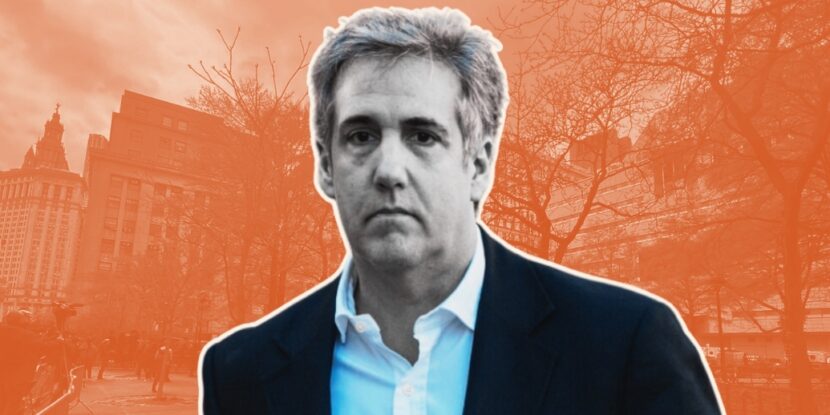
Disgraced lawyer MichaelCohen, who takes the stand today in former President Donald J. Trump‘s Manhattan-based hush money trial, is not the ideal witness for District Attorney Alvin Bragg‘s prosecutors. Cohen has a sordid legal history and served a prison stint for fraud, tax evasion, and lying to Congress.
COHEN THE FRAUDSTER.
In late 2018, following what appears to have been a nearly year-long investigation into tax evasion campaign finance fraud allegations, Cohen surrendered himself to the Federal Bureau of Investigation (FBI). He pleaded guilty to eight federal charges, including tax evasion, making false statements to a financial institution, violating the Federal Election Campaign Act (FECA) of 1971, and making an excessive contribution on behalf of a candidate. The last charge stems from the alleged $130,000 hush money payment to StormyDaniels.
After his conviction, Cohen began speaking to the press through his attorney, Lanny Davis, a long-time Clinton confidant. This, arguably, marked the start of the events that would culminate in the ongoing hush money trial brought by Manhattan District Attorney Alvin Bragg. In what appeared to be a ploy to avoid any serious jail time, Cohen sat for over 50 hours of interviews with the MuellerInvestigation — with little coming of his testimony. In December 2018, a federal judge sentenced Cohen to three years in prison. The disgraced lawyer was also hit with a $50,000 fine, ordered to pay $1.4 million in restitution, and made to forfeit an additional $500,000.
‘PERVERSE’ AND A ‘SERIAL PERJUROR.’
At the same time, in November 2018, Cohen pleaded guilty to lying to Congress. The disgraced lawyer admitted he misled the Senate and HouseIntelligence Committee during his 2017 testimony. Cohen was ordered to serve a two-month prison sentence. In 2019, Cohen was disbarred as an attorney in the State of New York.
In March of this year, Cohen asked a federal judge to lift the conditions of his early release from prison, citing his ongoing testimony against former President Trump. The judge denied the request by Cohen, calling it the ethics of reasoning “perverse.” In addition, the judge noted that Cohen was a serial perjurer.
show less
Disgraced lawyer MichaelCohen, who takes the stand today in former President Donald J. Trump's Manhattan-based hush money trial, is not the ideal witness for District Attorney Alvin Bragg's prosecutors. Cohen has a sordid legal history and served a prison stint for fraud, tax evasion, and lying to Congress.
show more
Editor’s Notes
Behind-the-scenes political intrigue exclusively for Pulse+ subscribers.
Michael Cohen, the disbarred lawyer and convicted perjurer due to testify against Donald Trump in Manhattan on Monday, is viewed as dishonest by a plurality of Americans. Almost half, 48 percent, of people polled by POLITICO and Ipsos, say they believe he will be very or somewhat dishonest on the stand, against 47 percent who believe he will be very or somewhat honest.
Poll respondents were informed Cohen “was a long-time lawyer and ‘fixer’ for Trump who has since turned against Trump” and that he “pled guilty in 2018 in federal court to lying to U.S. congressional committees, financial fraud, and campaign-finance violations.”
They were further informed that Cohen “was sentenced to three years in prison as a result and lost his law license” and later “implied that he lied to the federal judge who accepted his guilty plea and that he is, in fact, innocent of some of those offenses.”
Nevertheless, 23 percent of Democrat respondents said they believed his testimony would be “very honest,” and 51 percent of Democrat respondents said he would be “somewhat honest,” suggesting a partisan bias.
HUNG JURY?
POLITICO notes in its report that the Manhattan jury pool is “bad for Trump” — although “not as bad as it is in Washington,” where Joe Biden’s Justice Department is prosecuting him. The news outlet adds an outright acquittal of the former president “seems highly unlikely” but that even a single juror could hang the jury and cause a mistrial.
Adding that Trump “will probably be convicted,” they warn it is still “quite plausible” Cohen’s credibility issues could result in a mistrial if jurors’ views of him “are ultimately in line” with its national poll.
Cohen has been grifting from anti-Trumpers on the China-controlled TikTok app in recent months. He is also a contributor to MeidasTouch, a far-left news organization pushing hoax stories against Trump with White House support, funded by billionaires linked to Jeffrey Epstein.
show less
Michael Cohen, the disbarred lawyer and convicted perjurer due to testify against Donald Trump in Manhattan on Monday, is viewed as dishonest by a plurality of Americans. Almost half, 48 percent, of people polled by POLITICO and Ipsos, say they believe he will be very or somewhat dishonest on the stand, against 47 percent who believe he will be very or somewhat honest.
show more
Share Story
FacebookTwitterWhatsappTruthTelegramGettrCopy Link
Real News Fan? Show It!
Many people are shocked to learn that because of active censorship, we currently have to spend more time making sure you can even see The National Pulse, than on producing the news itself. Which sucks. Because we do this for the truth, and for you.
But the regime doesn’t want you being informed. That’s why they want us to go away. And that will happen if more people don’t sign up to support our work. It’s basic supply and demand. So demand you get to read The National Pulse, unrestricted. Sign up, today.
We don’t sell ads, and refuse corporate or political cash. It all comes down to you, the reader. I hope you can help.