



Monday, February 23, 2026

First Human Case of Rare Bird Flu Strain Hospitalizes Washington State Resident.

PULSE POINTS

❓WHAT HAPPENED: A Washington state resident was hospitalized after contracting a rare strain of bird flu, marking the first human case linked to this particular virus strain.

👤WHO WAS INVOLVED: The patient is an older person with underlying health conditions, who keeps backyard poultry.

📍WHEN & WHERE: The case was reported in early November in Grays County, Washington, west of Seattle.

đź’¬KEY QUOTE: “The risk to the public from bird flu is low,” according to the Centers for Disease Control and Prevention (CDC).

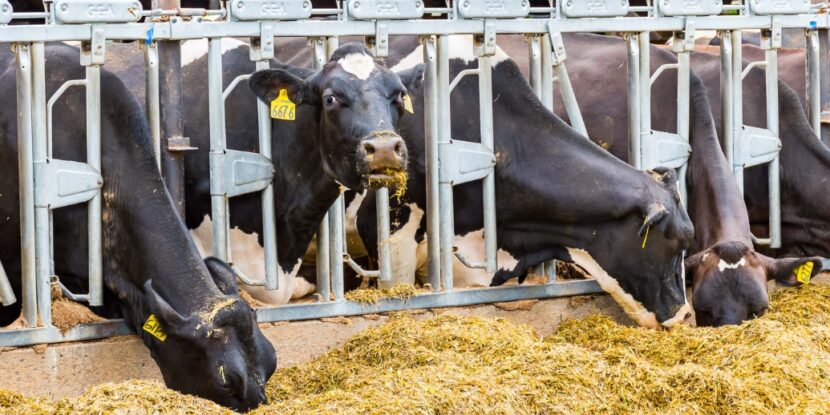
🎯IMPACT: The case is part of a broader spread of bird flu in the U.S., affecting dairy cattle herds and prompting health investigations.

IN FULL

A Washington state resident has been hospitalized after contracting a rare strain of bird flu, marking the first human case linked to this specific virus strain. The patient, an older person with underlying health conditions, remains in the hospital as of the latest reports.

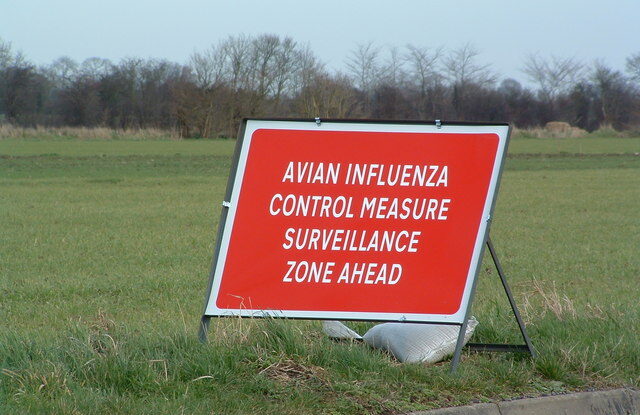
The Washington State Department of Health revealed that the patient, who keeps backyard poultry, was hospitalized in early November with flu-like symptoms. The poultry had been exposed to wild birds, which are known carriers of the A(H5) virus, a rare strain of avian influenza.

This case, reported in Grays County, adds to the nationwide spread of general bird flu outbreaks, which have already affected over 1,000 dairy cattle herds across 17 states since March 2024. Despite this, the U.S. Centers for Disease Control and Prevention (CDC) maintains that the risk to the general public remains low.

According to health officials, there have been 71 human cases of bird flu in the U.S., with California reporting the highest number. Symptoms mirror those of the common flu, and there has been no evidence of person-to-person transmission so far.

State and local health departments are collaborating with the Washington State Department of Agriculture to trace the source of the infection. The virus primarily spreads among wild birds but can also infect poultry and other mammals.

Image by Keith Evans.

Join Pulse+ to comment below, and receive exclusive e-mail analyses.

show less
show more

Here We Go Again? USDA Mandates Nationwide Milk Testing as Bird Flu Cases Surge.

The U.S. Department of Agriculture (USDA) has mandated testing of the nation’s milk supply due to growing concerns over bird flu, first identified in a Texas cow in March. The virus has since affected over 710 dairy herds across 15 states, with California experiencing the most cases. There have been 58 human infections, including a child from the San Francisco Bay Area.

Under the new federal order, regulators can collect samples for testing from dairy farms and during milk transportation or processing. Private laboratories must report any positive findings. Initially, this testing program will be implemented in California, Colorado, Michigan, Mississippi, Oregon, and Pennsylvania. The USDA indicated that the order aims to “identify where the disease is present, monitor trends, and help states identify potentially affected herds.”

Agriculture Secretary Tom Vilsack claims that the testing initiative is designed to boost confidence among farmers and farmworkers in the safety of their livestock and enhance the efforts to control and stop the virus’s spread nationwide. Evidence suggests that the virus propagates through dairy operations, potentially spreading via milk with high viral concentrations, rodents, other animals, or contaminated clothing and equipment.

RISK TO HUMANS.

California health officials recently detected bird flu in raw milk and cream products from Raw Farm in Fresno, prompting a recall and quarantine of the farm’s products. Although the exact risks of consumption are uncertain, scientists warn that infected milk could pose an infection threat. Federal health officials claim that pasteurized milk remains safe for consumption. However, The National Pulse has previously reported on bird flu being detected in pasteurized milk, too.

Former U.S. Centers for Disease Control (CDC) Director Dr. Robert Redfield warned of the risk of bird flu jumping to humans as a result of gain of function research in June. The first American to be infected with bird flu despite no close contact with animals was reported in September.

show less
The U.S. Department of Agriculture (USDA) has mandated testing of the nation's milk supply due to growing concerns over bird flu, first identified in a Texas cow in March. The virus has since affected over 710 dairy herds across 15 states, with California experiencing the most cases. There have been 58 human infections, including a child from the San Francisco Bay Area. show more

Ex-CDC Chief Warns of High-Mortality Bird Flu Pandemic Caused by Gain of Function Research.

Former U.S. Centers for Disease Control (CDC) Director Dr. Robert Redfield has expressed concerns over a potential avian influenza pandemic caused by reckless gain-of-function research. Redfield stressed he is “less concerned” by the possibility of bird flu jumping between species than he is by an out-of-control manmade virus.

“I’m much more concerned that this will happen in the laboratory, through gain of function research. I can create this virus literally in weeks to months by using gain of function research,” Redfield warned.

“I know exactly what amino acids I have to change, because in 2012, against my recommendation, the scientists that did these experiments actually published them. So the recipe for how to make bird flu highly infectious for humans is already out there. All you have to do is look at it.”

Redfield has previously expressed disappointment in Dr. Anthony Fauci’s resistance to investigating whether the Chinese coronavirus pandemic was caused by a leaked gain-of-function virus—possibly because he funded such research.

HIGH FATALITY RATE. 

Dr. Redfield highlighted the high mortality associated with bird flu when it infects humans, estimating a fatality rate between 25 percent and 50 percent. He noted a rise in bird flu among 27 mammalian species including not only poultry animals like chicken, ducks, and turkeys, but also cattle in the United States.

Highlighting the virus’s spread to mammals such as dolphins, seals, bears, and cats, Redfield noted, “As the virus adapts to these new receptors, it inches closer to being able to infect humans.”

Health officials have detected bird flu in pasteurized milk from infected dairy cattle, and it has already transferred to at least one Texas dairy worker.

The Joe Biden regime is already investing millions in an mRNA vaccine for bird flu.

show less
Former U.S. Centers for Disease Control (CDC) Director Dr. Robert Redfield has expressed concerns over a potential avian influenza pandemic caused by reckless gain-of-function research. Redfield stressed he is "less concerned" by the possibility of bird flu jumping between species than he is by an out-of-control manmade virus. show more

Here We Go Again: Biden Regime To Push Bird Flu mRNA Vaccines.

The Biden government is set to invest millions in an mRNA bird flu vaccine as concerns grow about a nationwide H5N1 outbreak. Concurrently, researchers at the University of Pennsylvania’s School of Medicine have developed an experimental mRNA vaccine for H5N1.

Talks between the U.S. government’s Biomedical Advanced Research and Development Authority and Pfizer regarding the development of an mRNA vaccine targeting H5N1 are reportedly ongoing, though no formal agreement has been reached yet. Dr. Rick Bright, an experienced immunologist and influenza expert, emphasized the need for broader consideration.

“While it is good to see BARDA considering partnerships with Moderna and Pfizer, it’s also important that they look at additional companies and technologies that could be helpful in pandemic response and even seasonal influenza vaccine impact,” Dr. Bright noted. He mentioned that GSK and Curevac have recently initiated clinical trials for an H5N1 vaccine alongside other companies exploring innovative delivery methods such as oral capsules and skin patches.

Over 68 dairy herds across nine states have been infected with bird flu in the United States. This year, three dairy workers have tested positive for the H5N1 virus. In at least one case, the virus showed a mutation indicating better adaptation for human transmission.

In a press release touting its new experimental bird flu vaccine, the University of Pennsylvania said, “mRNA vaccines are easily and quickly adapted to protect against different strains of influenza viruses, and don’t require eggs for their development.”

However, discussions surrounding an mRNA vaccine for bird flu are sure to cause concern among the public. The mRNA COVID-19 vaccines created by Moderna, Pfizer, and AstraZeneca have been connected to a host of serious and potentially fatal health risks, including blood, heart, and neurological issues.

show less
The Biden government is set to invest millions in an mRNA bird flu vaccine as concerns grow about a nationwide H5N1 outbreak. Concurrently, researchers at the University of Pennsylvania’s School of Medicine have developed an experimental mRNA vaccine for H5N1. show more

Bird Flu Outbreak Spreads in Cattle.

North Carolina has become the seventh state to detect a bird flu outbreak in a dairy cattle herd, and scientists are concerned that the virus could evolve to become easily transmissible to and between humans.

Genomic sequences of the virus from a dairy worker in Texas reveal mutations hinting at adaptation towards mammals. Yet, more mutations are required for the virus to become a human pandemic. It would need to improve its airborne transmission capabilities, like common human influenza viruses.

“We really need to keep on top of this, because I think we are at a bit of a precipice where something interesting or unfortunate could happen,” said Michelle Wille, a senior research fellow at the Center for Pathogen Genomics at the University of Melbourne.

As the virus spends more time in mammals, it could alter its protein to bind with the cellular receptors in human upper respiratory tracts, which could lead to more efficient spread. But the proteins on the virus would also need to stabilize for airborne transmission.

Interestingly, the bird flu affecting cattle is not manifesting as a respiratory illness. I want to emphasize really how unusual this is,” said Thijs Kuiken, a professor of comparative pathology at Erasmus University Medical Center. “In other mammalian species with influenza viruses, it’s primarily a respiratory disease, which doesn’t seem to be the case in these cattle.”

This suggests that the outbreaks could be a result of “mechanical transmission.” One theory is that the cows are being exposed to the virus during milking, which is supported by the high concentrations of the virus being found in the cows’ milk. Cattle in Texas were found to have been infected with drug-resistant tuberculosis from contact with infected migrant workers.

show less
North Carolina has become the seventh state to detect a bird flu outbreak in a dairy cattle herd, and scientists are concerned that the virus could evolve to become easily transmissible to and between humans. show more
Chickens Bird Flu

Bird Flu Outbreak at Largest U.S. Manufacturer of Fresh Chicken Eggs.

Cal-Maine Foods, Inc., the largest producer of fresh eggs in the U.S., temporarily shuttered one of its production facilities in Parmer County, Texas, following a bird flu outbreak that resulted in the loss of approximately 3.6 percent of its flock — nearly 2 million chickens.

The Cal-Maine Foods outbreak follows revelations from the Texas Department of State Health Services that a local man contracted bird flu due to a dairy cattle outbreak. The U.S. Department of Agriculture (USDA) recently confirmed several bird flu outbreaks in dairy cow herds in Texas, New Mexico, and Kansas.

The Texas man infected with bird flu is the second U.S. citizen infected by the strain. However, the Centers for Disease Control and Prevention (CDC) continues to downplay fears about the disease’s transmissibility, stating that the likelihood of a person contracting the bird flu is minimal. They noted that eggs that are properly cooked and stored pose no risk of transmission.

However, the case of the Texas man contracting bird flu from infected cattle appears to confirm the fears of Gregory Gray, an epidemiologist at the University of Texas. Following the dairy herd bird flu outbreaks, Gray predicted the disease could jump to humans. “We most recently saw the infections in goats, and we’ve all seen the wildlife being affected with the hotter pathogenic avian flu, including the strange infection of carnivores — bears and wolves,” Gray said. “It’s disturbing,” Gray continued. “We need to figure this thing out, because if the virus continues to change, it could move into other species, including humans.”

Texas is also struggling with tuberculosis outbreaks among its cattle, with the disease thought to have been introduced to the herds by infected illegal alien workers.

show less
Cal-Maine Foods, Inc., the largest producer of fresh eggs in the U.S., temporarily shuttered one of its production facilities in Parmer County, Texas, following a bird flu outbreak that resulted in the loss of approximately 3.6 percent of its flock — nearly 2 million chickens. show more

Officials Investigate ‘Disturbing’ Spread of Bird Flu to Dairy Cows.

Dairy cows in Kansas and Texas have tested positive for bird flu — a development experts are calling “highly concerning” and “disturbing.”

The U.S. Department of Agriculture (USDA) confirmed last week that milk from afflicted cattle from two farms in Kansas and one in Texas tested positive for avian influenza. Wild birds present at the dairy farms are the source of infections, according to the USDA.

The discovery came after the USDA began investigating reports of a “mystery cow disease” among older dairy cows in Texas, Kansas, and New Mexico. “For the dairies whose herds are exhibiting symptoms, on average about ten percent of each affected herd appears to be impacted, with little to no associated mortality reported among the animals,” the USDA said in a statement.

show less
Dairy cows in Kansas and Texas have tested positive for bird flu — a development experts are calling "highly concerning" and "disturbing." show more