Wednesday, April 1, 2026

BREAKING: German Leftist Govt Collapses.

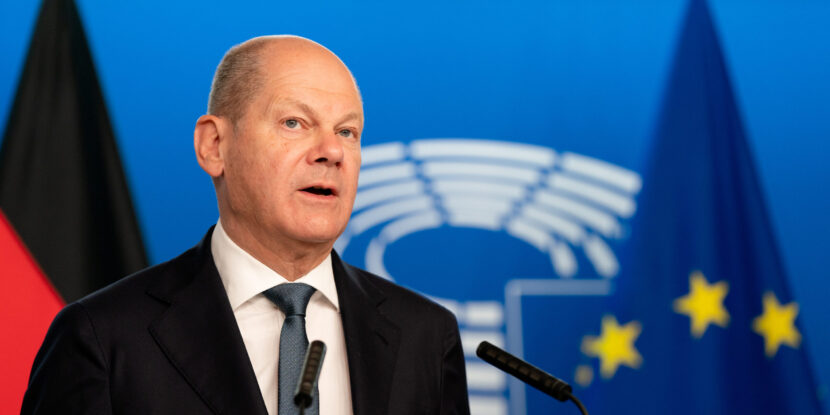
Germany‘s leftist coalition government has collapsed following a confidence vote in the Bundestag (federal legislature), with snap elections expected sometime in February next year. Chancellor (Prime Minister) Olaf Scholz of the Social Democrats (SPD) and his allies, the Greens, lost a vote of confidence, which was expected as the two parties do not have a majority of seats in the Bundestag.

The vote came after Scholz dismissed former Finance Minister Christian Lindner of the neoliberal Free Democrats (FDP) from the government. This effectively ended the governing legislative majority, with the FDP being the third pillar of a three-party coalition.

Prior to the vote, populist Alternative for Germany (AfD) parliamentary group leader Alice Weidel slammed Scholz’s migration and economic policies. She stated that the automotive industry was in free fall, and the country was still flooded with immigrants. She also called for Syrians to return to Syria now that the Assad regime has fallen.

Notionally center-right Christian Democratic Union (CDU) leader Friedrich Merz also criticized Scholz, saying, “It is embarrassing how you behave at the European level.” He also called out Green Party Economic Minister Robert Habeck, saying, “You are the face of the economic crisis of this country.”

Current polling puts Merz and the CDU, the former party of Angela Merkel, at 31 percent overall when combined with their Bavarian Christian Social Union (CSU) sister party.

The AfD is second in the polls at 20 percent. However, while the two right-leaning parties could have enough seats to form a majority, it is unlikely the CDU/CSU will form a government with the AfD, having vowed to cooperate with the leftist party to shut the anti-mass migration populists out of government.

The German confidence vote comes just under two weeks after the French government, led by former Brexit negotiation Michel Barnier, also collapsed after failing a confidence vote.

Image via European Union–Source: EP.

show less
Germany's leftist coalition government has collapsed following a confidence vote in the Bundestag (federal legislature), with snap elections expected sometime in February next year. Chancellor (Prime Minister) Olaf Scholz of the Social Democrats (SPD) and his allies, the Greens, lost a vote of confidence, which was expected as the two parties do not have a majority of seats in the Bundestag. show more

European ‘Democracy’ CANCELS Presidential Election Because Pro-Trump Populist was Winning.

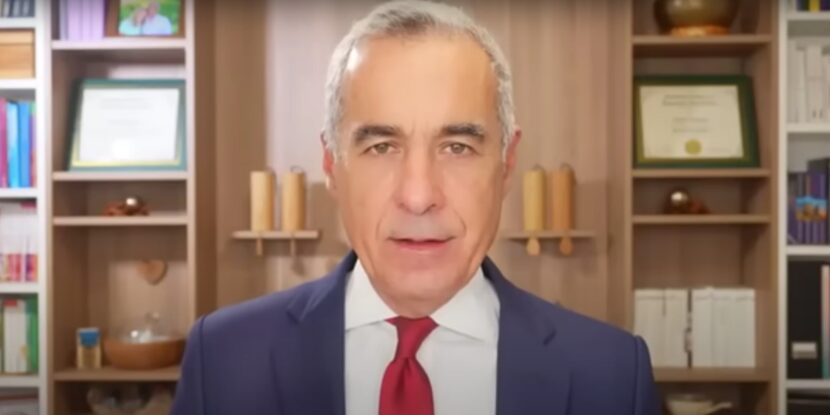
The Constitutional Court in the European Union (EU) and NATO member state Romania has canceled its presidential elections just days before a scheduled vote, claiming a Russian interference campaign is the reason a pro-Trump candidate populist was the favorite to win the race.

Romanian judges annulled the second round of the presidential elections as polls suggested populist, NATO-critical candidate Călin Georgescu, who won a surprise victory in the election’s first round, was likely to win Sunday’s vote. According to the court, Georgescu benefits from an influence campaign on social media platforms like TikTok, similar to some run by the Russian government.

The move comes after Romanian intelligence information was declassified by the government, claiming that Russia was trying to manipulate the outcome of the election. Georgescu, who is pro-Trump, pro-life, and opposed to escalating the Western proxy war with Russia in Ukraine, was set to face pro-EU globalist Elena Lasconi on Sunday.

Over the past year, European governments have consistently attempted to blame Russian interference campaigns for the rise of populists across Europe, shutting down alternative media in the Czech Republic ahead of the European Parliament elections, for example.

Russian interference has been blamed for the rise of populism in the United States and the United Kindom for years. However, the infamous Russia hoax accusations against President Donald J. Trump and the allegations of extensive Russian interference in the Brexit referendum in 2016 all proved to be false.

show less
The Constitutional Court in the European Union (EU) and NATO member state Romania has canceled its presidential elections just days before a scheduled vote, claiming a Russian interference campaign is the reason a pro-Trump candidate populist was the favorite to win the race. show more

Populists Win Historic Victory Driven by Youth Vote.

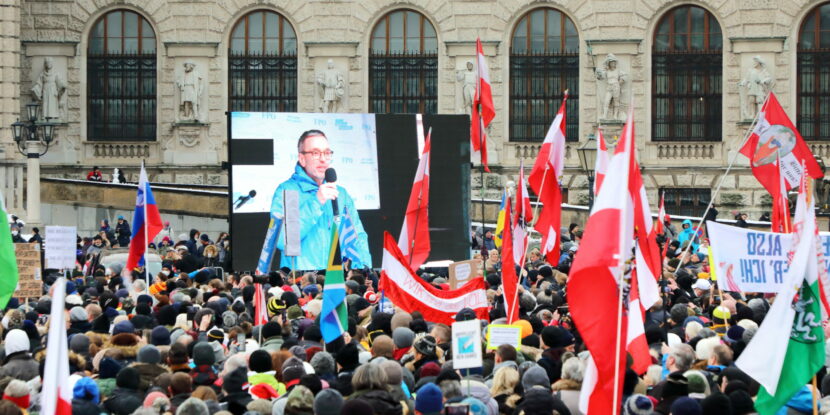
Austria’s populist Freedom Party (FPOe) achieved its largest election success in the party’s history on Sunday, September 29, as young voters flocked to support the anti-mass migration party and its “remigration” policies. The FPOe won 29.2 percent of the national vote, beating their previous record of 26.9 percent back in 1999 when the party entered a coalition government as the junior partner of the center-right Austrian People’s Party (OeVP).

Herbert Kickl, leader of the FPOe and an ally of Hungary’s Viktor Orban in the European Union (EU), ran on an anti-mass migration platform and endorsed the concept of “remigration,” which could see large-scale deportations of illegal aliens and possibly incentives for migrants to return to their home countries.

“These invaders want to harm us, endanger our security and our prosperity,” Kickl said during the election campaign, calling for “Fortress Austria.”

The FPOe has become very popular among young voters, attaining first place among those under the age of 34 and winning 37 percent of the vote among those aged 35 to 59.

Despite winning the election, Kickl and his party will have to form a coalition government with another party for a majority in the Austrian parliament. Unlike Germany‘s Alternative for Germany (AfD) and France’s National Rally (RN), there is no so-called cordon sanitaire against the Austrian populists, with all other parties colluding to shut them out of office. This means there is a realistic prospect the FPOe could form a government with the center-right OeVP.

The OeVP last formed a coalition with the FPOe in 2017, which lasted until 2019. However, the OeVP was the senior partner in that coalition, and it is unclear whether it would accept a junior role with Kickl rather than an OeVP politician becoming Chancellor.

The Social Democrats, Greens, and liberal NEOS group have all ruled out working with the FPOe.

Image by C.Stadler/Bwag.

show less
Austria's populist Freedom Party (FPOe) achieved its largest election success in the party's history on Sunday, September 29, as young voters flocked to support the anti-mass migration party and its "remigration" policies. The FPOe won 29.2 percent of the national vote, beating their previous record of 26.9 percent back in 1999 when the party entered a coalition government as the junior partner of the center-right Austrian People's Party (OeVP). show more

UPDATED: Right-Wing AfD Surges Again.

The right-wing Alternative for Germany (AfD) finished an agonizingly close second to German Chancellor Olaf Scholz’s Social Democrats (SPD) in elections in Brandenburg this past weekend.

This follows the AfD’s significant performance in other eastern states, including a recent first-place finish in Thuringia and a close second in Saxony.

Per the BBC:

Olaf Scholz’s center-left Social Democratic Party (SPD) won Sunday’s regional election in stronghold Brandenburg by just one or two percentage points, according to polls by the two main public broadcasters.

Alternative for Germany (AfD) stood a chance of winning the state, which has been governed by the SPD since German reunification in 1990.

But after voting ended at 18:00 (16:00 GMT), predictions put the SPD on 31 to 32% to the AfD’s 29 to 30%.

The AfD’s rise is part of a broader trend among rightist groups in Europe, who are dominating on concerns about economic slowdown, immigration, and the Ukraine-Russia war.

These issues are notably prevalent in formerly Communist eastern Germany.

show less
The right-wing Alternative for Germany (AfD) finished an agonizingly close second to German Chancellor Olaf Scholz’s Social Democrats (SPD) in elections in Brandenburg this past weekend. show more

The New York Times’ Venezuela Election Critiques Sound ‘Familiar!’

The National Pulse’s Editor-in-Chief, Raheem Kassam, notes that a New York Times article criticizing the recent Venezuelan elections parallels critiques made by conservatives during the 2020 presidential elections in the United States and subsequent elections afterward. Venezuelan dictator Nicolás Maduro claims to have won the largely fraudulent presidential vote, drawing international condemnation

The New York Times says Venezuela’s election was dodgy. They cite: Blocked access to polling stations Changes in how/where people vote. Arbitrary polling station timings/management. The withholding of paper ballots,” Kassam wrote on X, adding: “Sounds familiar!”

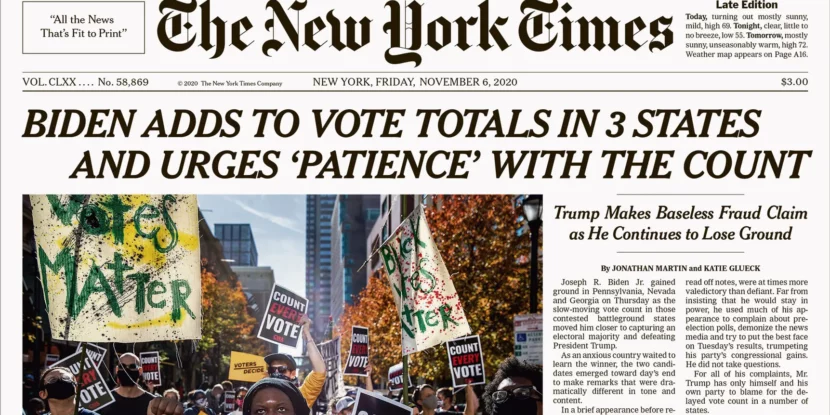
The New York Times article, published on July 31, notes that the Maduro regime intimidated voters, changed polling station locations at the last minute, kept polls open in some areas beyond the scheduled end of the voting, and only gave out digital tallies of votes. Several of these issues were raised during the 2020 presidential election won by current U.S. President Joe Biden, including criticisms of digital voting machines.

Dominion Voting Systems has been one of the firms highlighted and has continued to see problems with their machines, including multiple discrepancies found during a primary vote in Puerto Rico earlier this year. Other voting machines have also experienced similar problems, such as those made by Election Systems & Software, which flipped votes in Pennsylvania last year due to an alleged “coding error.”

The Maduro regime has also refused to show the paper tallies of ballots counted by voting machines. In the U.S., a majority of Americans want to see paper ballot backups rather than only voting machines used at the polls, and the majority also support requiring ID to vote as well.

show less
The National Pulse's Editor-in-Chief, Raheem Kassam, notes that a New York Times article criticizing the recent Venezuelan elections parallels critiques made by conservatives during the 2020 presidential elections in the United States and subsequent elections afterward. Venezuelan dictator Nicolás Maduro claims to have won the largely fraudulent presidential vote, drawing international condemnation show more

Editor’s Notes

Behind-the-scenes political intrigue exclusively for Pulse+ subscribers.

RAHEEM J. KASSAM Editor-in-Chief
Am I wrong?
Am I wrong? show more
for exclusive members-only insights

Ireland to Tech Giants: Censor Social Media or Face ‘Consequences.’

Ireland‘s Electoral Commission Chief Executive Art O’Leary is demanding that Big Tech companies censor social media platforms or face “reputational consequences.” O’Leary wants tech giants to squash so-called “disinformation” that can damage “democracy.”

“They [social media companies] are very conscious that their platforms are a place where quite serious damage can be done to democracy,” O’Leary said. “The implications for social media companies [if they fail to act on disinformation] aren’t good. To be accused after the event of having impacted on the outcome of an election is huge,” O’Leary continued.

The kind of “disinformation” from which O’Leary wants to protect “democracy” appears to be anything that could help right-wing parties in the upcoming Irish and European elections. Reports the Irish Examiner: “Garda Security & Intelligence and broadcasting regulator Coimisiún na Meán, which is charged with dealing with disinformation and online harm more generally, are increasing their level of cooperation to investigate disinformation from the far-right, which is expected to ramp up in the next few weeks.”

Ireland has been rocked by widespread popular protests against the government’s mass migration policies, with another major organized protest planned in Dublin on Saturday. A recent poll found that half of the Irish population now wants checkpoints at the Northern Irish border to keep out waves of asylum seekers. Such border checkpoints at the border were once seen as symbols of British oppression.

As in much of the European Union (EU), right-wing populist candidates in Ireland are expected to see a significant surge of support in the upcoming European elections. The EU, equally concerned about right-wing electoral success, has begun mobilizing a mass online censorship plan.

show less
Ireland's Electoral Commission Chief Executive Art O'Leary is demanding that Big Tech companies censor social media platforms or face "reputational consequences." O'Leary wants tech giants to squash so-called "disinformation" that can damage "democracy." show more

France Becomes First Country to Make Abortion a Constitutional ‘Right.’

The French Parliament has overwhelmingly voted to enshrine abortion as a constitutional right, making France the first country on Earth to guarantee the “right” to murder unborn babies.

The government of Emmanuel Macron introduced the measure in response to the U.S. Supreme Court’s decision to overturn Roe v. Wade and to shore up support electoral support in the face of resurgent right-wing populist movements and parties throughout Europe, including France’s National Rally. National Rally is leading in French polls ahead of the European elections in June, dominating the pro-Macron bloc by 12 points.

Enshrining abortion rights is a way of “uniting against conservatives and reactionaries,” Christopher Weissberg, a Pro-Macron MP, told POLITICO. “It helped build consensus and show ourselves under a progressive light.”

But whether the move will be enough to take votes away from the far-left socialist bloc in the French parliament remains to be seen. Mathilde Panot, head of the left-wing France Unbowed group, claimed that Macron only introduced the measure because of far-left feminist groups and parliamentarians. “He can boast, but it’s first and foremost our victory,” she said.

show less
The French Parliament has overwhelmingly voted to enshrine abortion as a constitutional right, making France the first country on Earth to guarantee the “right” to murder unborn babies. show more

How Illegal Immigration Can Swing a Presidential Election.

Immigration experts are warning that illegal immigration could impact the number of House seats and Electoral College votes in a presidential election.

Back up: This concern began because of an executive order signed by Joe Biden in 2021, which mandated that the U.S. Census Bureau factor in all residents, including non-citizens, in its count of the U.S. population.

The numbers: According to one conservative estimate, 16.8 million illegal aliens are living in the U.S. today [I believe it’s much worse]. When you consider that the average House seat represents 761,168 residents, this means the illegals would account for 22 House seats.

In a presidential election, states receive Electoral College votes in proportion to their House seats. So if New York [thanks to sanctuary city NYC] adds one house seat after the next census, they will also pick up an additional Electoral College vote in the presidential election.

Quote: Mark Krikorian, executive director at the Center for Immigration Studies, said: “Illegal immigrants aren’t even supposed to be here, so their inclusion in the census count for purposes of apportionment really is outrageous.”

What can be done about this? Republican lawmakers have introduced the Equal Representation Act, requiring the Census Bureau to exclude non-citizens from its counts. But with a Democrat President and Democrat Senate, that will never pass.

Big picture: The next census won’t be counted until 2030, so this does not pertain to the upcoming election. But something must be done; otherwise, we risk giving representation to roughly 20 million illegals who have taken up residence in mostly Democrat strongholds.

This article is adapted from the free ‘Wake Up Right’ newsletter, which you can subscribe to here.

show less
Immigration experts are warning that illegal immigration could impact the number of House seats and Electoral College votes in a presidential election. show more

Here’s a List of All The Countries Having Elections This Year.

Nearly half the global population – expected to hit 8 billion people total today, January 1st – will head to the polls at some point over the coming year. At least sixty-four countries, and the European Union will hold elections – with some expected to result in tectonic political shifts.

The National Pulse has compiled a comprehensive list of countries expected to hold elections by region and will be providing further insight as each election grows nearer.

Europe.

  • European Union (EU): The 27 EU member states, comprising 448 million people,  will hold elections for the European Parliament from June 6th to the 9th.
  • The United Kingdom (UK): A general parliamentary election for the House of Commons is expected to be held at some point in 2024. The general election must be held before 28 January 2025 and Parliament itself is set to be dissolved no later than December 17th, 2024.
  • Ukraine: A presidential election is scheduled for March 31st, however the ongoing conflict with Russia and the declared state of martial law may prevent the election from happening.
  • Romania: The Eastern European nation is expected to hold elections for its Presidency, Senate, and Chamber of Deputies at some point between November and December 2024.
  • Belgium: On June 9th, Belgians will head to the polls to elect a new Chamber of Representatives. The election could potentially result in the dissolution of the country along linguistic and cultural lines.
  • Czech Republic: An election to choose a new Czech Senate will held at a to-be-determined date next year.
  • Portugal: A snap legislative  election will occur in Portugal on March 10th after the fall of the socialist government. A tight race is expected between the country’s socialists and right-wing populists.
  • Belarus: The Russian-allied state will hold elections for its Chamber of Representatives on February 25th.
  • Austria: The Germanic nation is expected to hold elections for the National Council – its lower house of parliament – on September 29th. Polling shows the right-populist FPÖ is positioned to win its first Austrian legislative and form a government. The Communist Party of Austria has also seen a degree of increased popularity.
  • Slovakia: An election for the President of Slovakia will be held at some point in 2024.
  • Finland: One of the earlier elections of 2024, citizens of Finland will elect a new president on January 28th, 2024.
  • Croatia: The Balkan nation will likely hold two elections. A presidential contest is expected in December of 2024 while it is not yet known when the country will hold its parliamentary elections.
  • Republic of Moldova: A presidential election is expected in November.
  • Lithuania: The Baltic state will hold a presidential election on May 12th with parliamentary elections on October 13th.
  • North Macedonia: A presidential election will be held on April 24th while its parliamentary election will occur on May 8th.
  • Iceland: The North Atlantic island nation will hold a presidential election on June 1st.
  • San Marino: The European micro-state is expected to hold elections for the Grand and General Council at some point in December.
  • Georgia: Parliamentary elections will be held on October 26th. The presidential election date has yet-to-be-determined.

Asia and Oceana.

  • India: The worlds largest democracy, with 1.44 billion people, is expected to hold elections for its Lok Sabha (House of the People) – the lower house of the Indian parliament – at some point in April or May of 2024. Political parties comprising the nationalist and populist Prime Minister Narendra Modi’s National Democratic Alliance hold a narrow lead in polls.
  • Indonesia: The South East Asian island nation of 279 million people will hold a general election on February 14th with the Presidency, Regional Representative Council, and House of Representatives all on the ballot. The secular nationalist and populist Indonesian Democratic Party of Struggle has lead in the legislative polls with the right-wing populist Gerindra Party close behind.
  • Pakistan: The Muslim state will hold elections for its National Assembly on February 8th. Pakistan has experienced an ongoing political crisis and mass demonstrations over the past year after the arrest of its former Prime Minister Imran Khan who was ousted from power by a no-confidence vote in 2022.
  • Bangladesh: An election for the National Parliament will be held on January 7th.
  • Russian Federation: From March 15th to 17th Russians will head to the polls to vote for the nation’s president. Vladimir Putin, the incumbent president, is expected to win re-election.
  • Uzbekistan: The Central Asian state is expected to hold elections for the Legislative Chamber in October, but they can occur as late as December of 2024.
  • North Korea: On April 10th the Communist nation lead by dictator Kim Jong-un will hold ‘elections’ for its Supreme People’s Assembly. An alliance of communist political parties under the Democratic Front for the Reunification of Korea has won all seats in the legislative assembly since 1948.
  • South Korea: Elections for the National Assembly will be held on April 10th.
  • Taiwan: A critical presidential and legislative election will be decided on January 13th, 2024. The current government lead by the liberal Democratic Progressive Party faces insurgent campaigns from the nationalist Kuomintang and the populist Taiwan People’s Party. The outcome could have a significant impact on China’s stance towards Taiwan and the United States.
  • Cambodia: Senate elections will be held on February 25th.
  • Sri Lanka: Presidential and parliamentary elections are expected to be called at some point in 2024.
  • Mongolia: Elections for the State Great Khural – the country’s unicameral legislature – are expected to be held in June.
  • Bhutan: An election for the country’s National Assembly will be held on January 9th.
  • Solomon Islands: A general election for the National Parliament is expected in April of 2024.
  • Maldives: Between March and May, a general election for the country’s legislature is expected to be held.
  • Kiribati: Elections for the country’s Presidency and House of Assembly are expected to be held in 2024.
  • Palau: A general election for the Presidency, Senate, and House of Delegates will be held on November 12th.
  • Tuvalu: Parliamentary elections will be hold on January 26th.

Middle East.

  • Syrian Arab Republic: Despite political instability and an ongoing civil war, it is expected Syria will hold elections for the People’s Assembly at some point in 2024.
  • Islamic Republic of Iran: Both the Islamic Consultative Assembly and the Assembly of Experts will be up for election on March 1st.
  • Azerbaijan: The Islamic country will elect a president on February 7th.
  • Jordan: The country’s elections for House of Representatives are expected to be held in November 2024.

Africa.

  • South Africa: National Assembly elections are expected to be held between May and August of 2024. The African National Congress continues to poll at or close to 50-percent.
  • Algeria: A presidential election is expected in December of 2024.
  • Ghana: Presidential and parliamentary elections will be held on December 7th, 2024.
  • Mozambique: Presidential and legislative elections will be held on October 9th.
  • Madagascar: Elections for the National Assembly are due to happen before May.
  • Mali: The military junta in control of the country has postponed a February presidential election indefinitely with only vague reasons given as to why.
  • Chad: A presidential election is expected in October.
  • Senegal: A presidential election will be held on February 25th.
  • Rwanda: Elections for the Presidency and Chamber of Deputies will happen on July 15th.
  • Tunisia: A presidential election is expected to be held at some point in the fall of 2024.
  • South Sudan: Presidential and legislative elections are expected to be held in December of 2024.
  • Togo: Legislative elections are expected to be held in early 2024.
  • Mauritania: A presidential election will occur on June 22nd.
  • Botswana: An election for the National Assembly is expected in October.
  • Namibia: Presidential and legislative elections will be held at some point in 2024.
  • Guinea Bissau: A presidential election is slated to occur at a to-be-decided point in 2024.
  • Mauritius: Legislative elections are expected to be held in 2024.
  • Comoros: A presidential election will be held on January 14th.

The Americas.

  • The United States of America (USA): Elections for President, the House of Representatives, and the Senate – along with state and local races – will be held on November 5th. Former President Donald Trump, the front-runner for the Republican nomination, appears set for a rematch against the Democrat incumbent President Joe Biden.
  • Mexico: Presidential and legislative elections will be held on June 2nd. Current President Andrés Manuel López Obrador is term-limited. Claudia Sheinbaum of the left-wing National Regeneration Movement is expected to face-off against Xóchitl Gálvez of the centrist National Action Party.
  • Venezuela: A presidential ‘election’ could possibly be held in December of 2024. The South American nation’s dictator Nicolás Maduro is ‘running’ for ‘re-election’.
  • Dominican Republican: The Caribbean island nation will hold presidential and legislative elections on May 19th.
  • El Salvador: The Central American state will hold presidential and legislative elections on February 4th. Incumbent President Nayib Bukele is running for re-election after the country’s supreme court ruled he would not have to wait 10-years between terms in office.
  • Panama: Presidential and legislative elections will be held on May 5th.
  • Uruguay: Presidential and legislative elections will be held on October 27th.
show less
Nearly half the global population – expected to hit 8 billion people total today, January 1st – will head to the polls at some point over the coming year. At least sixty-four countries, and the European Union will hold elections – with some expected to result in tectonic political shifts. show more

WATCH: CNN’s Kaitlan Collins Admits She Doesn’t Know That Alternate Electors Have Been Used In Previous U.S. Elections.

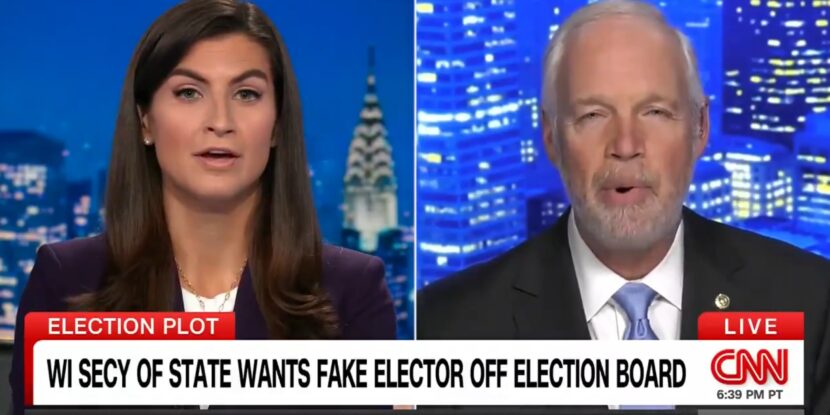
CNN’s Kaitlan Collins tried to dunk on Senator Ron Johnson of Wisconsin on Monday, attacking the alternate electors slated by the political right in the aftermath of the 2020 election. Sen. Johnson was forced to explain the tactic has been used by Democrats in previous years – a fact over which Collins seemed both wildly ignorant and belligerent.

Collins repeatedly demands the Senator provide exact details of prior examples, despite Johnson having been booked by CNN producers to discuss Ukraine and the U.S. border. While Johnson therefore didn’t have specific dates to hand, he furnished CNN will information via X (formerly Twitter) a few hours later:

Democrats in Hawaii chose an alternative slate of electors in the 1960 election, for example, allowing John F. Kennedy to be certified as the winner. Johnson also cited: “In 2005, Sen. Barbara Boxer and Rep. Stephanie Tubbs Jones led a group of 31 representatives in objecting to the certification of Ohio’s electors. Those 31 include Jim Clyburn, Sheila Jackson Lee, Barbara Lee, now-Sen. Ed Markey, Benny Thompson, and Maxine Waters.” Indeed, in 2016, Democrats from Washington and Colorado signed an attempt to block Trump from winning an Electoral College majority. And in 2017, Reps. Jamie Raskin, Pramila Jayapal, Barbara Lee, Sheila Jackson Lee, Raúl Grijalva, Maxine Waters, and Jim McGovern, all objected to electoral votes for Trump.

show less
CNN's Kaitlan Collins tried to dunk on Senator Ron Johnson of Wisconsin on Monday, attacking the alternate electors slated by the political right in the aftermath of the 2020 election. Sen. Johnson was forced to explain the tactic has been used by Democrats in previous years – a fact over which Collins seemed both wildly ignorant and belligerent. show more