


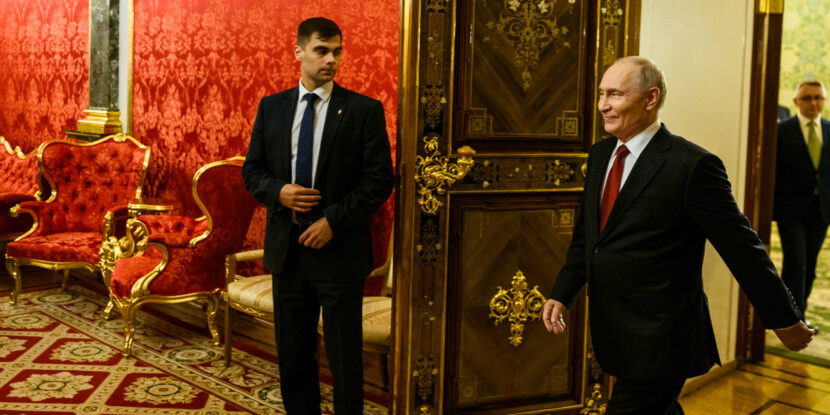
Russia’s tightly controlled parliamentary election results, which favored the ruling party, suggest President Vladimir Putin remains popular, even accounting for issues with election integrity in the country.
| PULSE POINTS |
❓ WHAT HAPPENED: Russian President Vladimir Putin’s United Russia party secured a record number of seats in Russia’s national parliament, the Duma, according to near-complete official results released Monday. The anti-war Yabloko party appeared to have gained a small foothold in a regional legislature. With more than 95 percent of the vote counted, United Russia received 57.83 percent of the vote, up from 49.8 percent in the 2021 election, before the full-scale invasion of Ukraine in 2022. The party is expected to control 355 of the Duma’s 450 seats. 📺 DETAIL: The result gives the ruling party nearly 80 percent of the chamber and preserves its constitutional majority, allowing it to pass legislation and propose constitutional amendments without support from other parties. The Communist Party received 13.81 percent, followed by the LDPR with 8.98 percent and New People with 7.96 percent, while Just Russia narrowly cleared the 5 percent threshold needed to enter parliament. Notably, all four opposition parties have generally supported the Kremlin on major issues in recent years. The anti-war Yabloko party failed to break through at the national level, although many of its candidates were barred from running by the Kremlin. However, in the Novgorod regional parliament, Yabloko appeared to have passed the five percent threshold for representation with nearly 97 percent of votes counted. As the three-day election was the first parliamentary vote since Russia launched its full-scale war in Ukraine in February 2022, and Putin had presented it as a test of domestic support for the war. 🎯 IMPACT: The result reinforces President Vladimir Putin’s political dominance of Russia and gives United Russia an even larger parliamentary majority, allowing the Kremlin to advance its legislative agenda with extremely limited institutional opposition. Yabloko’s apparent breakthrough in Novgorod, despite heavy restrictions on opposition political parties in Russia, provides a small example of anti-war representation, but will not materially alter the national balance of power. |
Join Pulse+ to comment below, and receive exclusive e-mail analyses.