



British households could be facing another massive energy price shock, with some forecasts suggesting annual bills could climb to more than $3,200 by April 2027 as the Iran war drives international gas prices higher. The crisis is again exposing Britain’s dependence on imported energy, with successive Conservative and Labour governments having refused to encourage energy production at home and pursued net zero ideology.
The National Pulse brings you detailed analysis on global energy trends and many other topics. To help Raheem J. Kassam and his team continue this work, please JOIN THE NATIONAL PULSE or MAKE A DONATION. We are 100% reader-funded.
Forecasts from energy supplier EDF suggest the typical annual household energy bill could rise by 27 percent in January, from the equivalent of approximately $2,309 to $2,937, before climbing again to $3,201 in April. Wholesale gas prices have reached a four-year high, driven by disruptions to liquefied natural gas (LNG) shipments through the Strait of Hormuz and concerns about European gas reserves.
Britain’s North Sea Retreat.
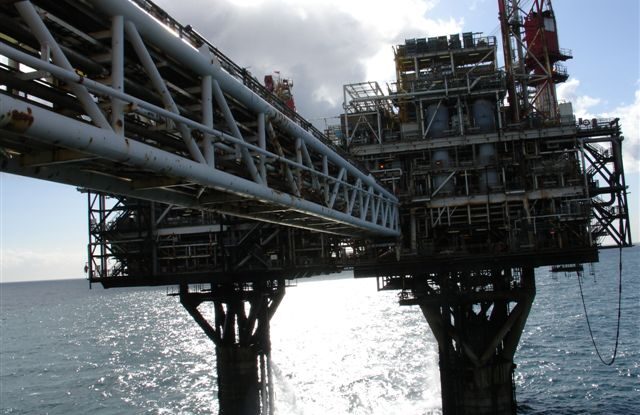
Britain was once an energy powerhouse, extracting enormous quantities of oil and natural gas from beneath the North Sea. However, domestic production has declined dramatically, leaving the country increasingly dependent on foreign suppliers.
According to the House of Commons Library, British North Sea oil and gas production peaked in 1999 and has subsequently fallen by more than 70 percent. In 2004, Britain became a net importer of natural gas, much of it from the Norwegian sector of the North Sea.
The decline has partly resulted from the natural depletion of mature offshore fields. However, government policy has repeatedly discouraged new exploration, with the leftist Labour Party going as far as committing to ending new oil and gas exploration and production licenses, while allowing limited developments around existing fields.
Ofgem’s analysis of Britain’s gas supplies indicates that approximately 47 percent of Britain’s gas comes through pipelines from Norway, compared with just 29 percent from domestic North Sea fields. Despite having domestic reserves, Britain is increasingly forced to rely on overseas suppliers to meet its energy requirements, driving up costs for consumers and businesses alike.
Britain’s Electricity Market Makes Everything Worse.
Britain’s energy problems extend far beyond the long-standing declining domestic gas production. The structure of its electricity market means international gas price increases can affect households even when their electricity is generated by renewable sources like wind and solar, or nuclear power.
Under Britain’s marginal pricing system, the wholesale electricity price is frequently determined by the most expensive generator needed to satisfy demand. That generator is often a gas-fired power station. A recent parliamentary Energy Security and Net Zero Committee report warned that Britain already had some of the highest domestic and industrial electricity costs among comparable countries before the current crisis in the Middle East. It also called for reforms to reduce the disproportionate influence of gas on electricity prices.
France, Norway, and America Invested in Energy Independence.
Other Western countries show how different energy strategies can reduce dependence on imported natural gas.
France has maintained its large nuclear power industry, with reactors generating approximately 68 percent of the country’s electricity in 2025, according to the International Atomic Energy Agency. Nuclear generation has helped limit France’s reliance on gas-fired electricity, although it still has some exposure to energy markets in Europe.
Norway pursued a different strategy, continuing to develop its North Sea oil resources while relying overwhelmingly on domestic hydropower for electricity. According to Norwegian government figures, hydropower accounted for approximately 90 percent of electricity production in 2025.
The United States, meanwhile, has benefited from the shale gas revolution, which dramatically expanded domestic production through hydraulic fracturing, or fracking. The U.S. Energy Information Administration reports that American natural gas production reached a record 118.5 billion cubic feet per day in 2025, helping sustain a huge domestic energy supply.
All three countries show that prioritizing the cost of energy for their own residents over net zero and the green agenda has consistently left them more insulated to global energy market fluctuations and grants their own people cheaper energy at home.
Net Zero Has Made Britain Less Secure.
The contradiction in Britain’s energy strategy is that governments have sought to restrict domestic fossil-fuel development while the economy continues to rely heavily on natural gas.
According to the British government’s 2025 security of supply report, natural gas accounted for 35 percent of total British energy demand in 2024. The same report projects continued declines in North Sea production, although it argues that ending new exploration licenses will have only a marginal impact on future output.
Wind and solar alone cannot guarantee a continuous energy supply, leaving gas-fired generation important during periods of low renewable output. However, Conservative and Labour governments have moved away from domestic fossil fuel production without first establishing sufficient alternatives. With household energy bills potentially approaching $3,200 annually, that issue is becoming increasingly urgent.
To help Raheem J. Kassam and his team provide you with more of the original reporting and analysis you deserve, please JOIN THE NATIONAL PULSE or MAKE A DONATION today.
Join Pulse+ to comment below, and receive exclusive e-mail analyses.