


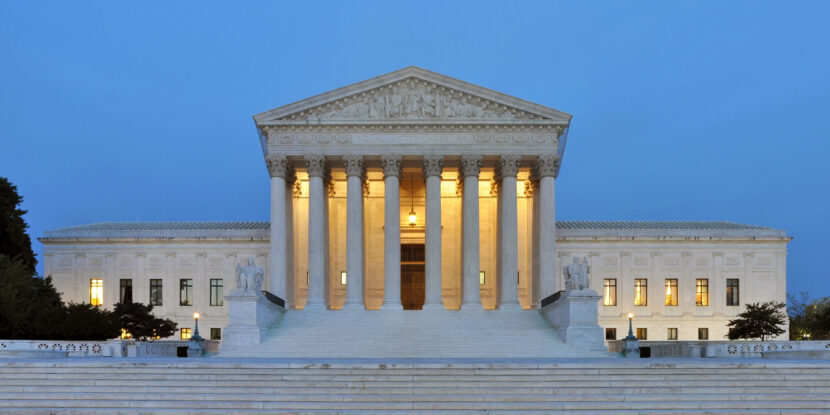
The Supreme Court’s unanimous decision rejects a federal law that disarmed “habitual” marijuana users from owning firearms.
| PULSE POINTS |
❓ WHAT HAPPENED: The Supreme Court has unanimously limited a federal law that banned “habitual” marijuana users from owning firearms, ruling it violated the Second Amendment. 📺 DETAIL: On Thursday, Justice Neil Gorsuch, writing the majority opinion of the Supreme Court, argued that the historical laws cited by the federal government to justify a ban were too dissimilar to modern restrictions. “The historical laws on which it relies targeted different kinds of people, did so for different reasons, and operated in different ways,” wrote Gorsuch. The Supreme Court’s opinion follows the federal prosecution case against Ali Hemani, a Texas man who was charged with a felony after admitting to regular marijuana use while possessing a handgun for self-defense. Hemani was prosecuted under the same law used to prosecute Hunter Biden. The Supreme Court argued that the law was overbroad and unconstitutional, and that the historical laws to justify the prosecution of Hemani, such as laws targeting “habitual drunkards,” were directed at individuals unable to manage their lives due to substance abuse, not all regular drug users, regardless of any threat posed. Gorsuch noted that such a broad view of the law could extend beyond marijuana users to “a college student who routinely uses a friend’s Adderall to cram for exams” or “a husband who regularly takes his wife’s prescription Ambien to sleep.” 💬 KEY QUOTE: “The government’s analogy fails under every measure it asks us to consider.” – Supreme Court Associate Justice Neil Gorsuch 🎯 IMPACT: This ruling could set a significant precedent for cases involving firearm ownership among drug users. Despite ruling in Hemani’s favor, the Supreme Court emphasized that its decision did not extend beyond Hemani’s case. As such, it does not address whether the federal government can bar firearm possession by addicts, felons, alcoholics, or other potentially dangerous individuals. “We do not address efforts to ban addicts, or those presently intoxicated, from possessing a firearm,” emphasized Gorsuch in the majority opinion. The Supreme Court’s ruling comes approximately a year after the Trump administration floated the possibility of downgrading marijuana on the federal list and a few months after the administration reclassified medical marijuana as a less dangerous drug. |
Join Pulse+ to comment below, and receive exclusive e-mail analyses.