




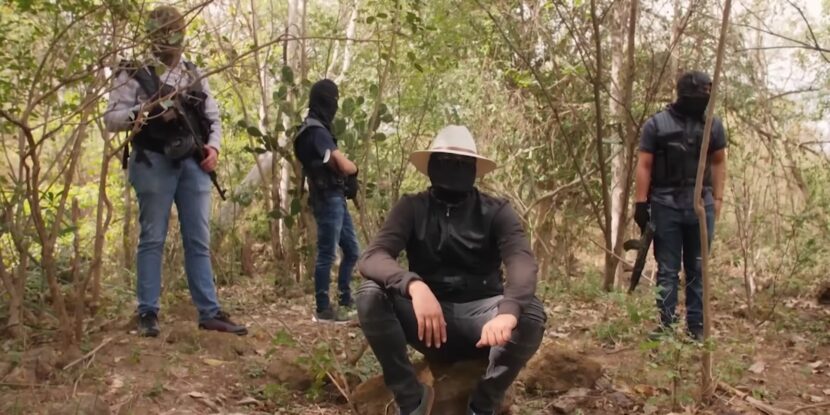

The Sinaloa Cartel is at the epicenter of the Trump administration’s heightened campaign against drug trafficking into the United States from Latin America this week, with the Treasury’s Office of Foreign Assets Control (OFAC) sanctioning 46 entities and individuals, including corrupt Mexican politicians, linked to the organization. But where did the cartel come from, what crimes has it orchestrated, and what are its future prospects under pressure from the Treasury and, as a designated terrorist organization, the Department of War?
The National Pulse is dedicated to helping you understand the news. If you value this originally researched work, please JOIN THE NATIONAL PULSE or MAKE A DONATION today.
The Origins of the Sinaloa Cartel.
The Sinaloa Cartel is a drug-trafficking syndicate based in the northwestern Mexican state of Sinaloa. It is one of the oldest and most powerful drug trafficking organizations in the country, emerging out of criminal networks associated with the Guadalajara Cartel, which dominated Mexican drug trafficking throughout the 1980s.
After the Guadalajara Cartel was dismantled, Joaquín “El Chapo” Guzmán and Ismael “El Mayo” Zambada, two former members, co-founded the Sinaloa Cartel, using former Guadalajara Cartel networks. Initially dealing in marijuana and heroin, the Sinaloa Cartel later moved into trafficking cocaine, methamphetamine, and fentanyl.
Since its creation, the Sinaloa Cartel is estimated to have integrated tens of thousands of criminals into its operations, and it continues to operate through decentralized networks throughout Latin America, the United States, and beyond.
The Crimes of the Sinaloa Cartel.
The Sinaloa Cartel’s crimes span drug trafficking and manufacturing, money laundering, weapons trafficking, people smuggling, murder, kidnapping, bribery, terrorism, and narcoterrorism. The organization’s networks involve suppliers, brokers, transporters, distributors, and money launderers.
U.S. authorities have identified Sinaloa-linked activity in at least 40 countries, with networks extending into markets including Europe, Asia, and Australia. According to reports from the U.S. Drug Enforcement Administration (DEA), during one week of Sinaloa-targeted operations in late August 2025, authorities seized 480 kg of fentanyl powder, 714,707 counterfeit pills, 2,209 kg of methamphetamine, 7,469 kg of cocaine, and 16.55 kg of heroin.
The Sinaloa Cartel’s crimes have triggered a campaign from the United States and its allies in Latin America which has lasted for roughly four decades, and radically stepped up throughout the second term of President Donald J. Trump.
The National Pulse is 100% reader-funded. If you want to keep it RADICALLY INDEPENDENT, please JOIN THE NATIONAL PULSE or MAKE A DONATION today.
How Has the United States Responded?
The United States has pursued the Sinaloa Cartel through criminal prosecutions, extraditions, financial sanctions, intelligence operations, international cooperation, and rewards for information leading to the capture of senior members. In 2009, the cartel was designated as a “significant foreign narcotics trafficker” under the Foreign Narcotics Kingpin Designation Act, which aimed to freeze its assets, among other actions. After being arrested in 2016, Guzmán was extradited to the United States the following year and convicted in 2019. He was sentenced to life imprisonment. Zambada was taken into U.S. custody in July 2024, pleaded guilty in August 2025, and was sentenced in July 2026 to life imprisonment.
The Trump administration significantly escalated its campaign against the Sinaloa Cartel last year. In February 2025, the Department of State designated the Sinaloa Cartel as a Foreign Terrorist Organization (FTO) and Specially Designated Global Terrorist (SDGT) following an executive order by President Trump.
@USTreasury OFAC sanctions against Sinaloa Cartel leader Ismael Zambada Sicairos, “Mayito Flaco,” and nearly 50 targets show what going after the entire network means. Not just leaders but also traffickers, money launderers, front companies, corrupt officials—everyone who keeps… pic.twitter.com/FY4AdExOAg
— Embajador Ronald Johnson (@USAmbMex) September 30, 2026
Future Prospects.
While “El Chapo” and “El Mayo” have both been captured and arrested, the Sinaloa Cartel’s drug-trafficking networks remain in place. The networks remain hard to dismantle due to their decentralized nature, although reports have revealed that the cartel has descended into infighting between “Los Chapitos” (networks and personnel associated with El Chapo) and “Los Mayitos” (networks and personnel associated with El Mayo).
Despite this, it has managed to develop clandestine laboratories, which can be used to manufacture drugs while avoiding law enforcement. Nevertheless, since the start of the year, the Trump administration has escalated its campaign against the cartel, signaling a willingness to conduct land strikes in tandem with the strikes on cartel-linked boats it is already carrying out at sea.
U.S. authorities have also indicted cartel-linked Mexican officials, such as Rubén Rocha Moya, the Governor of Sinaloa. The cartel may also have to contend with further escalations, Treasury sanctions, and joint military operations between the U.S. and Latin American countries, such as Colombia.
If you want to help Raheem J. Kassam and his team deliver original and high-quality reporting, please JOIN THE NATIONAL PULSE or MAKE A DONATION today.
Join Pulse+ to comment below, and receive exclusive e-mail analyses.








.jpg)


