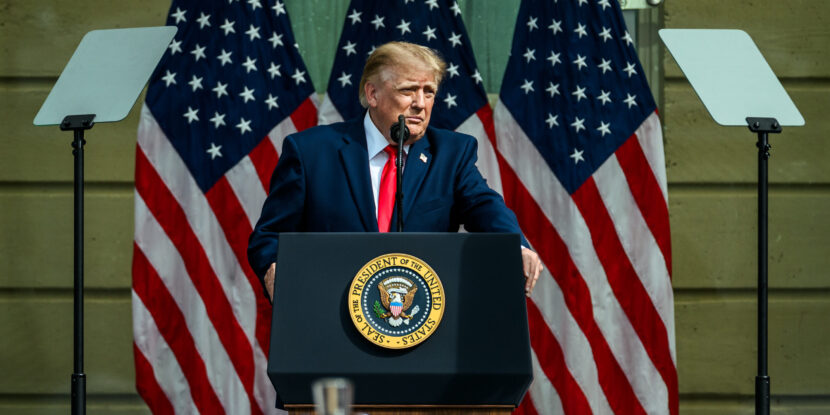




President Donald J. Trump is tightening the economic noose around Cuba’s communist dictatorship, targeting the fuel supplies keeping the increasingly desperate regime afloat. Last week, U.S. authorities announced the seizure of 90 shipments of biodiesel headed for the island, totaling more than 600,000 gallons and valued at approximately $3 million.
The National Pulse gives you the best analysis of geopolitical trends. If you help support Raheem J. Kassam and his team continue this work, please JOIN THE NATIONAL PULSE or MAKE A DONATION today. We are 100% reader-funded.
The shipments, intercepted in Houston and Port Everglades, Florida, were allegedly intended for ENETEC, a sanctioned Cuban state-owned energy company. The operation is the latest escalation in Trump’s campaign to economically isolate the Communist country. It also raises questions as to whether Trump and his administration can topple the communist regime through economic means, rather than sending troops.
Six Decades of Communist Rule.
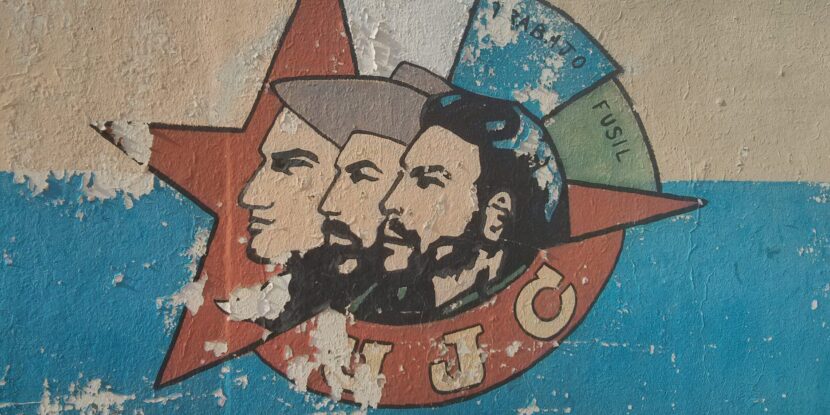
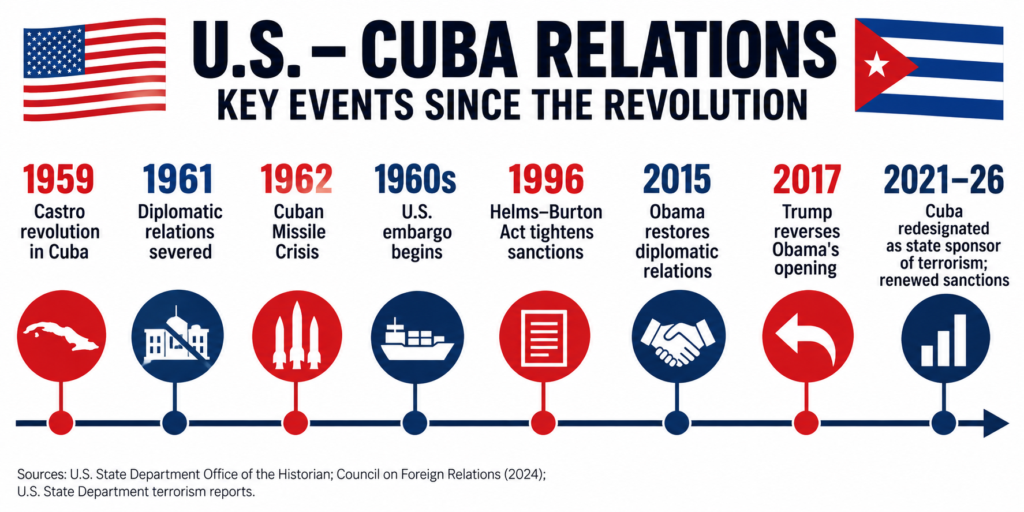
Cuba has been an issue for the U.S. since 1959, when Fidel Castro overthrew President Fulgencio Batista and subsequently transformed the island into a Soviet-aligned communist state just 90 miles from Florida. Successive American administrations attempted to contain Castro’s revolution, beginning with economic sanctions under Dwight Eisenhower and the failed Bay of Pigs invasion under John F. Kennedy in 1961. The following year, the Cuban Missile Crisis brought Washington and Moscow to the brink of nuclear war after the Soviets deployed nuclear missiles to the island.
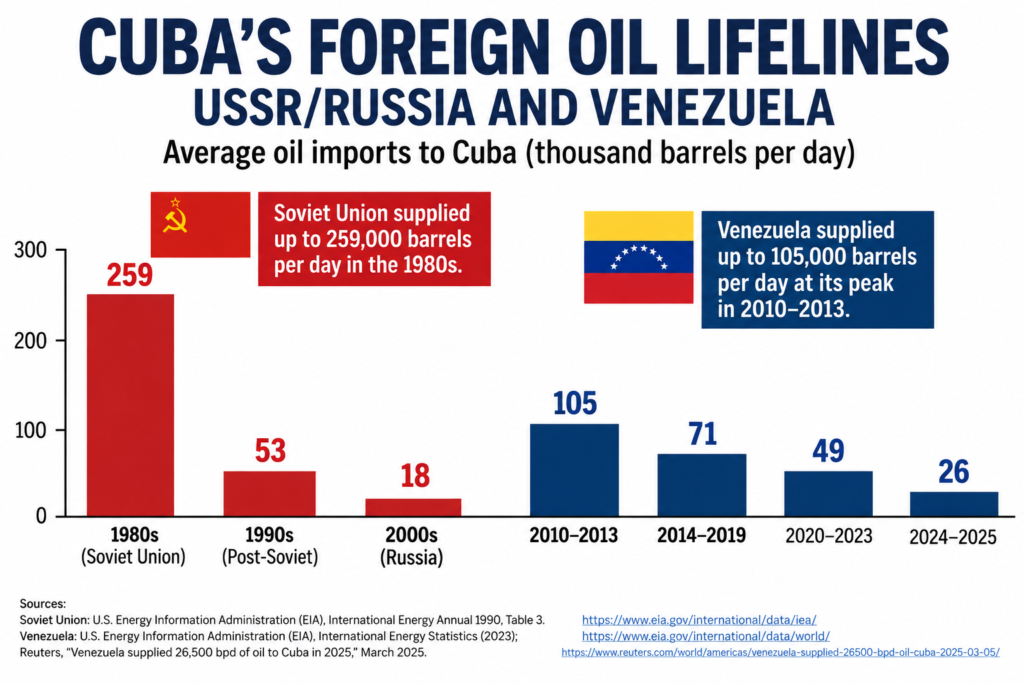
Despite decades of American sanctions, Castro survived, largely because the Soviet Union provided an economic lifeline through subsidized petroleum products, financial assistance, and preferential trade agreements.
When the Soviet Union collapsed in 1991, Cuba saw its economy contract dramatically. Food became scarce, and transportation infrastructure deteriorated. Despite this, the Communist Party survived.
The Helms-Burton Act of 1996 subsequently strengthened American sanctions, tying their removal to democratic reforms. Former President Barack Obama controversially restored diplomatic relations in 2015, but the communist government retained its monopoly on political power.
Trump, by contrast, has embraced economic coercion, betting that the regime’s deteriorating finances and dwindling foreign support will accomplish what previous American presidents could not.
From Soviet Subsidies to Venezuelan Oil.
For decades, Cuba’s socialist economy has depended on foreign benefactors to keep the country’s economy afloat. Following the Soviet collapse, Havana eventually found another patron in Venezuela’s socialist dictator Hugo Chávez, who supplied subsidized petroleum in exchange for Cuban medical personnel and other services. His successor, Nicolás Maduro, maintained the relationship, even as Venezuela’s own economy collapsed.
That arrangement suffered a potentially fatal blow in January 2026, when American forces captured Maduro during a military operation in Caracas. Venezuelan oil shipments to Cuba subsequently stopped, depriving Havana of one of its most important sources of energy. Venezuela had supplied approximately 26,500 barrels of oil per day in 2025, covering roughly half of Cuba’s petroleum deficit.
Mexico, another important supplier, has also suspended shipments under American pressure. Russia remains an ally, but its assistance has been insufficient to replace the lost petroleum supplies, while China has shown little interest in rescuing the Cuban regime. Cuba now faces the very real prospect of economic collapse without a reliable foreign patron willing to finance its survival.
Cuba’s Economy Is Running Out of Power.
Cuba’s aging electricity infrastructure, already plagued by decades of underinvestment and poor maintenance, has suffered repeated nationwide failures. The island’s chronic fuel shortages have compounded the problem, leaving entire communities without electricity for extended periods.
In May, Cuban authorities acknowledged that the country had exhausted its diesel and fuel oil reserves. Parts of Havana experienced blackouts lasting 20 to 22 hours daily, provoking demonstrations in which residents demanded the restoration of electricity. Meanwhile, food shortages, collapsing purchasing power, inadequate public transportation, and deteriorating public services have contributed to a huge exodus of Cubans seeking better lives elsewhere.
Cuba’s centrally planned economy has long suffered from low productivity, restrictions on private enterprise, inefficient state monopolies, and chronic shortages of foreign currency. American sanctions are just part of the country’s problems.
However, the Trump administration’s latest restrictions have undoubtedly intensified the crisis, particularly by limiting the fuel needed to operate power stations, factories, and transportation networks. For Trump, this vulnerability presents an opportunity to force concessions from a communist government increasingly unable to meet its population’s basic needs.
Regime Change Without Another American War.
The administration’s strategy appears designed to exploit Cuba’s dependence on imported energy while avoiding the costs and risks of a direct military intervention. Rather than invading the island, Washington is targeting the economic resources sustaining the Communist Party’s control.
Whether economic devastation will translate into political change remains uncertain. Communist governments have historically demonstrated considerable resilience, often shifting the costs of economic crises onto ordinary citizens while preserving the privileges of ruling elites.
The humanitarian consequences also threaten to undermine Washington’s objectives. Prolonged blackouts, food shortages, and unemployment could encourage further migration toward the United States rather than organized opposition capable of replacing the government.
Havana has shown little willingness to surrender. In an October 5 interview, Cuba’s senior diplomat in Washington acknowledged continuing communication with American officials but denied that formal negotiations were underway.
Is the End Finally Near?
For 67 years, Cuba’s communist leadership has survived American sanctions, diplomatic isolation, economic disasters, and the collapse of its most powerful allies.
However, the situation confronting the Communist regime today is different. The Soviet Union is long gone, Maduro is imprisoned in the United States, Venezuelan oil shipments have stopped, and Cuba’s economy is struggling to function amid an unprecedented energy crisis both in Cuba and worldwide.
President Donald J. Trump’s approach to Cuba represents an unusually direct challenge to a communist system that has relied on foreign subsidies for much of its existence. For the first time in decades, Cuba’s rulers may be running out of both money and powerful friends. Deprived of the energy and foreign assistance that have sustained it, Cuba’s regime may be toppled without a shot being fired.
To help Raheem J. Kassam and his team keep providing you with top-tier analysis and reports, please JOIN THE NATIONAL PULSE or MAKE A DONATION today.
Join Pulse+ to comment below, and receive exclusive e-mail analyses.