


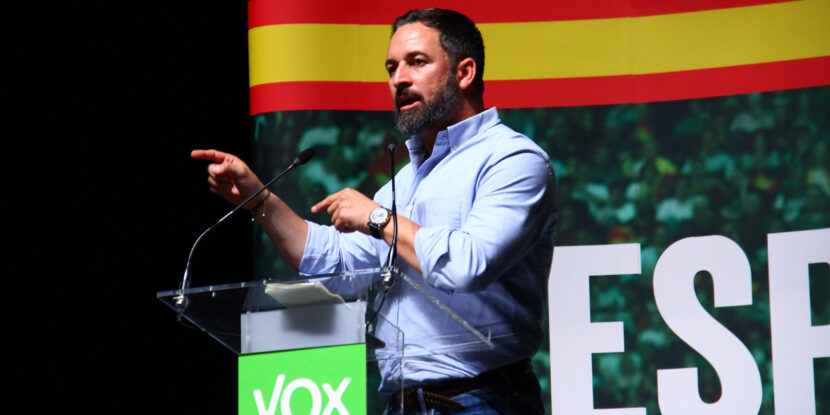

Spain’s 2026 snap general election campaign is underway, and the country’s right-leaning parties are finalizing an electoral pact that could inspire further cooperation between national populists and the center-right across Europe.
The National Pulse brings you news that matters from around the world. If you value the work of Raheem J. Kassam and his team, please JOIN THE NATIONAL PULSE or MAKE A DONATION today.
Election Background.
Earlier this month, Spanish Prime Minister Pedro Sánchez announced a snap election. This followed the Socialist government’s defeat in the legislature over emergency measures intended to address Spain’s worsening housing crisis, which were voted down by the center-right People’s Party (PP), the national populist Vox party, and Junts, a party advocating Catalan independence. Along with Sumar, a far-left electoral alliance, Junts was a critical supplier of votes to Sánchez’s left-wing Spanish Socialist Workers Party (PSOE), which lacks an outright legislative majority.
The decision to call a snap election came after mounting pressure on Sánchez, including a slew of corruption scandals and allegations affecting prominent figures in his government and domestic and international criticism of his handling of an illegal immigrant amnesty and migrant border influx into Ceuta, a Spanish exclave on the coast of North Africa, bordering Morocco.
However, while PP leads in the polls, much of the Spanish right is worried about repeating the outcome of the 2023 general election, in which PP secured more seats than PSOE, but no party won an outright majority and Sánchez struck a governing agreement with various smaller far-left and regionalist parties. PSOE gave significant policy concessions in exchange for parliamentary support, thereby allowing Sánchez to become Prime Minister despite PSOE not being the largest party.
The Agreement.
PP and Vox have made an electoral agreement to maximize the right’s combined strength in Spain’s Senate, which is elected by a party-list system. Under the system, voters choose individual candidates rather than a party.
According to the agreement, Vox will withdraw its Senate candidates in six provinces: Las Palmas, Santa Cruz de Tenerife, Cádiz, Valencia, Castellón, and the Balearic Islands. In the six provinces, a Vox-backed candidate will appear on the PP ticket as an independent. The party will also field only one candidate instead of three in 14 other provinces, allowing voters to support two PP candidates alongside the Vox candidate.
In exchange, PP will withdraw its Senate candidates in three provinces: Gipuzkoa, Girona, and Tarragona, boosting the electoral prospects of Vox candidates.
This agreement aims to help the Spanish right achieve the three-fifths threshold in the upper house required for important institutional appointments. This includes the Constitutional Court, the supreme interpreter of the Spanish Constitution, along with the General Council of the Judiciary, the governing body of Spain’s legal system.
The National Pulse relies on reader support, not government or corporate cash. Please JOIN THE NATIONAL PULSE or MAKE A DONATION today.
The Contrast.
This is not the first time that PP and Vox have worked together, having cooperated at the municipal and regional levels on a number of occasions. However, this is the first time that the two parties have cooperated on a national level. It demonstrates that the Spanish right has made more progress towards internal cooperation than right-leaning parties in other European countries.
In Germany, the populist Alternative for Germany (AfD) is subject to an electoral firewall, meaning that other parties, including the notionally center-right Christian Democratic Union (CDU) formerly led by Angela Merkel, refuse to work with it. Similarly, the establishment-right Republicans in France are officially opposed to working with Marine Le Pen’s National Rally (RN) party, although they have been increasingly permissive of their voters independently supporting RN candidates to prevent left-wing victories.
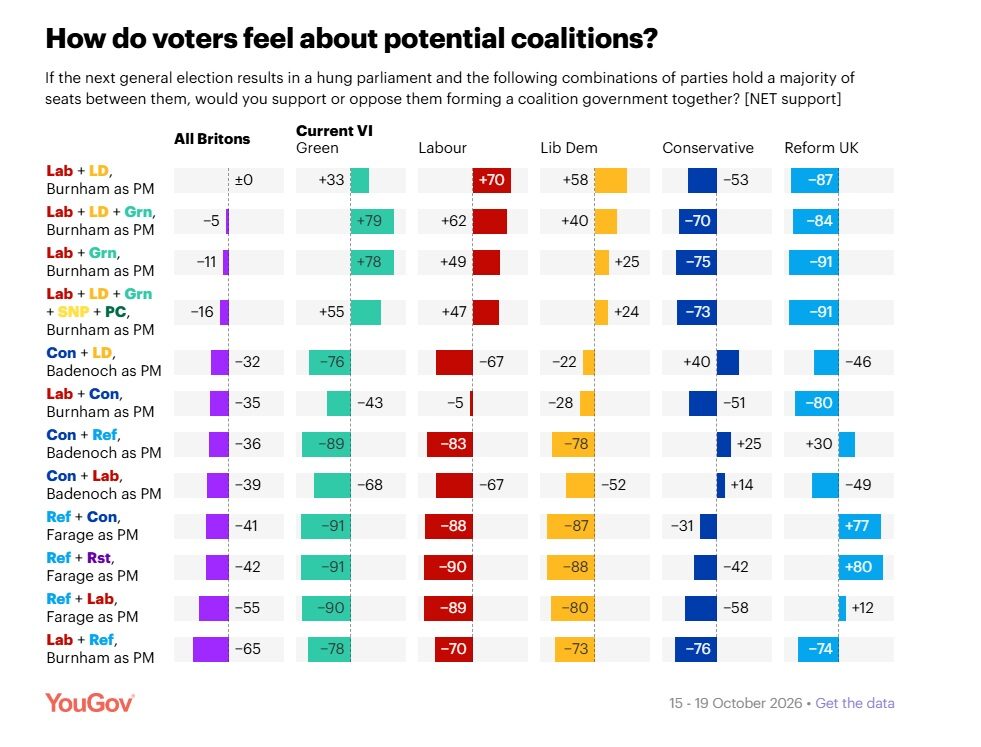
Meanwhile, according to data released last week, it has been revealed that the remaining supporters of the Conservative Party in the United Kingdom would prefer a coalition with the Liberal Democrats over Nigel Farage’s Reform UK party. The Liberal Democrats are a left-leaning party that supports open borders and reversing Brexit.
Election Forecast.
The Spanish election is scheduled for November 29, with PP and Vox expected to gain seats, while the PSOE is projected to suffer losses. Broad Front, the far-left electoral alliance to succeed Sumar, is also on track for heavy losses.
Specifically, according to polling conducted last week, PP secured 33 percent support, giving the party a seven-point lead over PSOE, which is currently on 26 percent. Meanwhile, Vox is polling at 19 percent, while Broad Front polls at seven percent.
It is possible that the Spanish right’s movement towards cooperation is incentivized by a crowded political field in which the establishment center-right remains viable and the establishment left can mobilize voters focused on preventing right-leaning victories. This is likely strengthened by the imminence of the election, meaning that while many center-right parties across Europe currently refuse to work with national populists, their position is prone to shifting over time.
The National Pulse stays on top of European politics. If you value the work of Raheem J. Kassam and his team, please JOIN THE NATIONAL PULSE or MAKE A DONATION today. We are 100% reader-funded.
Join Pulse+ to comment below, and receive exclusive e-mail analyses.