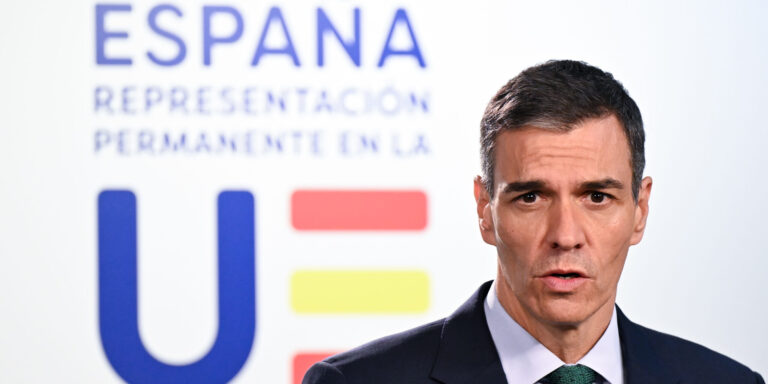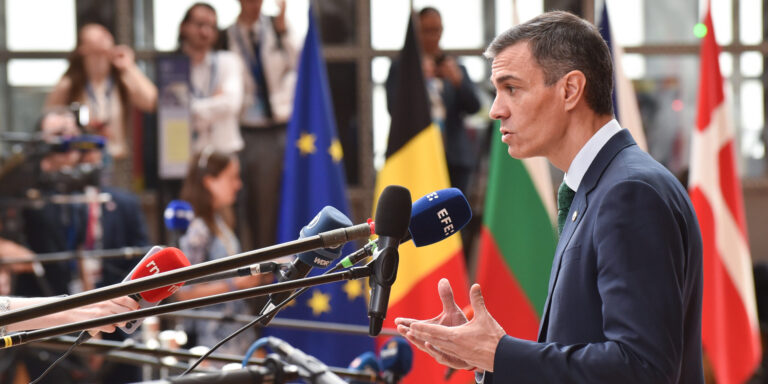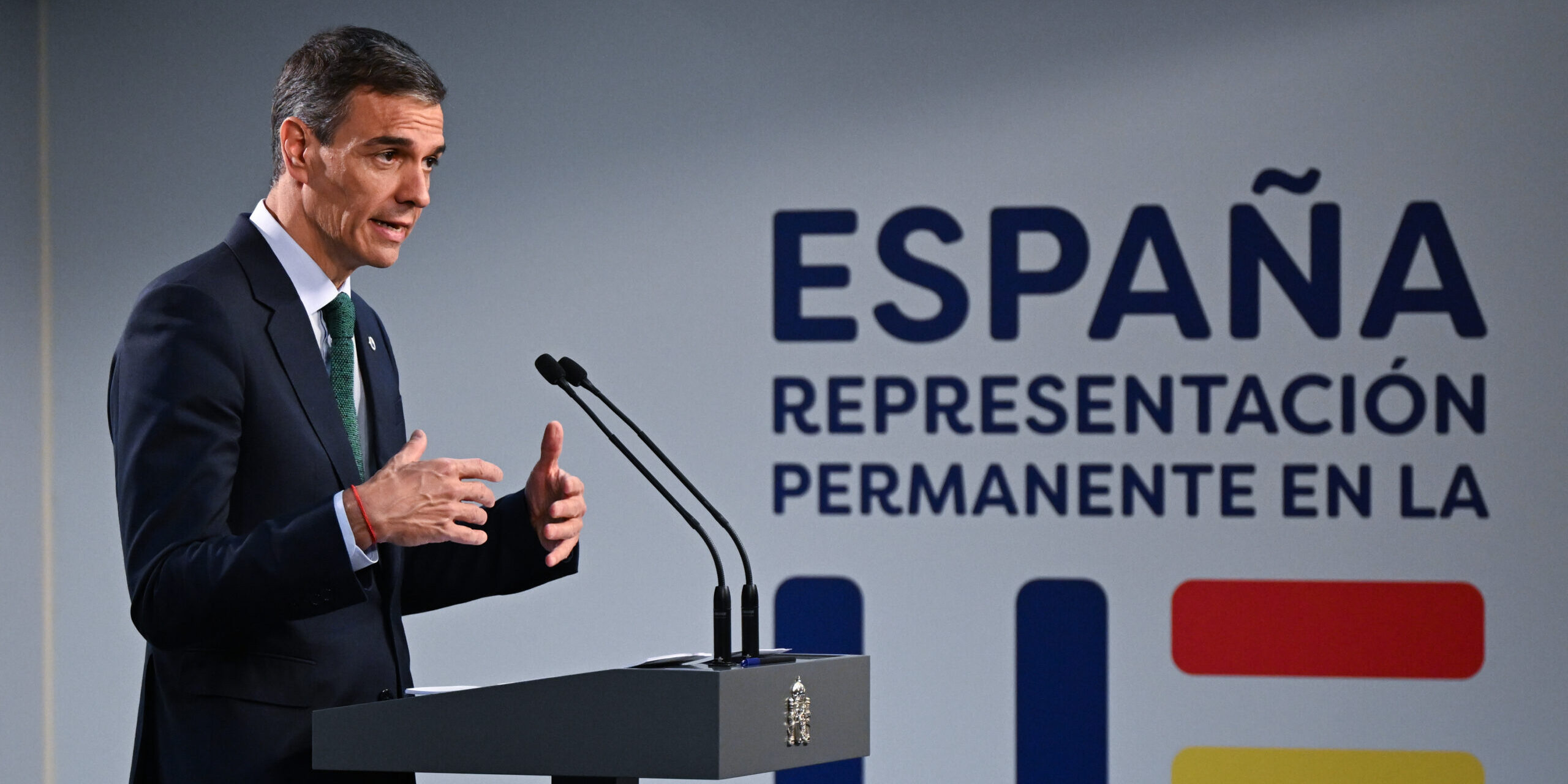
Recent data from the Spanish Centre for Sociological Research (CIS), Spain’s publicly funded, state-run polling institute, shows incumbent socialist Prime Minister Pedro Sánchez in the lead ahead of the country’s Sunday snap election. This runs counter to multiple independent polls showing the center-right People’s Party (PP) ahead, with the populist-nationalist Vox party also expected to make major gains and pave the way for a right-wing coalition government.
Favorable Figures.
According to CIS’s survey, Sánchez’s Spanish Socialist Workers’ Party (PSOE) leads with 34.4 percent, followed by People’s Party on 24.7 percent and Vox on 15.6 percent. The PSOE’s 9.7-point lead over PP increased from the 7.8-point lead recorded in a previous November poll. PSOE gained 1.1 points, while support for PP declined by 0.8 points and support for Vox dropped by 2.8 points.
The survey, based on answers from over 8,000 interviews conducted between November 10 and 17, also tracks support for minor parties, which hold considerable sway in Spain’s electoral system, due to the use of proportional representation and the fact that parties usually need to form coalitions to govern. Specifically, support for the hard-left Broad Front was 5.7 percent, while the right-wing Se Acabó la Fiesta (“The Party is Over,” or SALF) polled at 1.3 percent and the far-left Podemos party polled at 0.8 percent.
CIS’s polling also included support for Spain’s many left-wing separatist and regionalist parties. The Republican Left of Catalonia (ERC) polled at 2.7 percent, while EH Bildu was on 1.8 percent, the Valencian Front on 1.8 percent, Forward Andalusia polled at 1.7 percent, the Galician Nationalist Bloc (BNG) secured 1.1 percent, Canarian People’s Unity (UPC) on 0.4 percent, and Now More on 0.3 percent. These parties seek increased power or even independence for the autonomous communities of Catalonia, the Basque Country, Valencia, Andalucía, Galicia, the Canary Islands, and the Balearic Islands, respectively.
Non-leftist regionalist parties in the poll included the Catalan separatist Junts party, which secured one percent, and the regionalist Basque Nationalist Party (PNV), which polled at 0.7 percent.
Independent Projections.
CIS’s figures differ significantly from the vast majority of independent polling conducted in the run-up to Spain’s general election on Sunday.
SocioMétrica, a Spanish polling firm, projects PP will win 132 seats and Vox will win 63 in the upcoming election. ABC, a Spanish daily newspaper, projects a similar result, with PP winning 131 seats and Vox winning 63 seats. El Mundo, a Spanish daily newspaper, also projects PP will win between 126 and 132 seats while Vox will win between 57 and 62 seats. In contrast, the same pollsters project Sánchez’s PSOE winning 114 seats, 110 seats, and between 112 and 118 seats, respectively.
This divergence between state-run and independent polling is likely to spark questions as the election approaches and once the results are confirmed. Sánchez is currently facing a boat migrants crisis in the Canary Islands, the ongoing effects of a previous migrant surge into the Spanish city of Ceuta, a botched general amnesty for illegal aliens, and news that years of legal mass migration have seen immigrants leave Spaniards behind in terms of pay rises.