


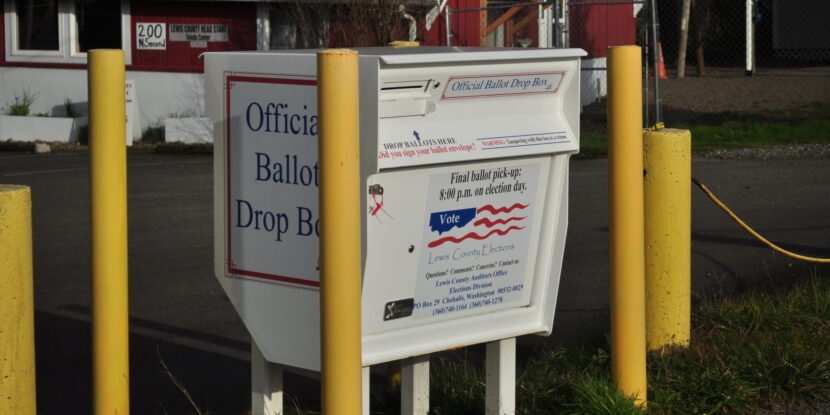

The Department of Justice (DOJ) has asked Washington state officials to set aside more than 400 ballots cast by suspected noncitizens to confirm their eligibility, roughly a week before the midterm elections.
The National Pulse provides you with the latest election news. If you value the work of Raheem J. Kassam and his team, please JOIN THE NATIONAL PULSE or MAKE A DONATION today. We are 100% reader-funded.
Context.
In the run-up to the midterm elections, which are scheduled for November 3, the Trump administration has been cracking down on noncitizen voting.
Earlier this month, the federal government asked California election officials to set aside ballots from approximately 20,000 suspected noncitizens until their citizenship is verified. Specifically, the Trump administration has argued that California’s decision to count the alleged noncitizen ballots violates the U.S. Constitution’s Supremacy Clause, as federal law states that only U.S. citizens can vote, and this takes precedence over state management of federal elections.
Simultaneously, the Trump administration sued Alaska to prevent certification of its Senate election if Republican Senator Dan Sullivan loses, citing potential confusion caused by the inclusion of another candidate named Daniel J. Sullivan.
As such, the recent request should be viewed as another front in the Trump administration’s ongoing campaign to strengthen election integrity.
The DOJ’s Request.
The DOJ has asked Washington election officials to set aside 405 ballots suspected to have been cast by noncitizens. Specifically, the DOJ has asked state officials to separate any ballots these potential noncitizens submit in the upcoming midterms until they can confirm their citizenship and eligibility.
Federal prosecutors have claimed that the DOJ’s investigation has uncovered approximately 1,500 votes cast by noncitizens in previous elections, and that several have been identified as lawful permanent residents, also known as green card holders, who can live and work in the United States but cannot legally vote.
As with federal investigations in other states, the suspected noncitizen voters were identified by comparing federal immigration information with voter records. However, federal prosecutors have emphasized that determining whether the suspected noncitizens actually voted illegally requires access to Washington’s election records. The DOJ has asked for addresses, dates of birth, driver’s license numbers, and partial Social Security numbers.
“Because of limitations the state has placed on our investigation, we’ve only been able to uncover a fraction of the total number,” said Charles Neil Floyd, the acting U.S. attorney for the Western District of Washington.
The National Pulse relies on reader support, not government or corporate cash. Please JOIN THE NATIONAL PULSE or MAKE A DONATION today.
Washington State’s Response.
Washington state officials have not agreed to automatically set aside the ballots. In response to the DOJ request, Washington Secretary of State Steve Hobbs questioned both the timing and implications of the request.
“The timing of this request—one week before the General Election—is no doubt intended to cast unfounded suspicion on the results,” said Hobbs in response to the federal government’s request.
Washington officials have also expressed concern that federal data can produce inaccurate matches. For example, people who were once noncitizens may subsequently have become naturalized U.S. citizens.
Nevertheless, the Washington Secretary of State has confirmed that his office is reviewing the federal government’s information and will determine how to respond under state and federal law.
Looking Forward.
If Washington ultimately accepts the DOJ’s request, election officials would have to separate ballots cast by people on the federal list until their citizenship and voting eligibility could be established.
While there is no indication that there are enough noncitizen votes to swing the state-wide outcome, the decision may impact competitive races within Washington itself. For example, Washington’s 3rd Congressional District is among the country’s most competitive House contests, meaning a small number of disputed ballots could attract intense political and legal scrutiny.
The outcome of the dispute could result in federal officials playing a more direct role in managing state elections, potentially leading to similar federal challenges in other states, especially where the result is close.
This could lead to further exposures of noncitizen voting across the United States, which could subsequently strengthen the case for implementing election integrity measures, such as voter ID, a long-standing cornerstone objective of the Trump administration and an overwhelmingly popular measure with Americans.
The National Pulse strives to keep you updated. If you value the work of Raheem J. Kassam and his team, please JOIN THE NATIONAL PULSE or MAKE A DONATION today. We are 100% reader-funded.
Join Pulse+ to comment below, and receive exclusive e-mail analyses.