


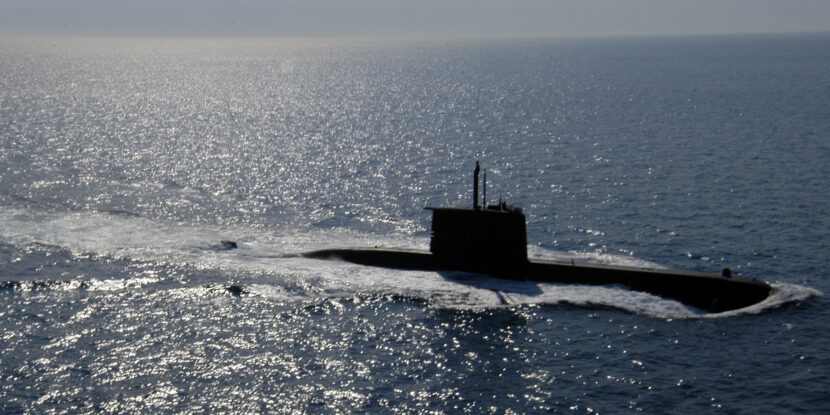

France and Germany have offered to build attack submarines for Argentina following the Latin American country’s renewed demands to take over the Falkland Islands, despite their notional status as allies of the United Kingdom.
The National Pulse keeps you updated on British politics. If you value the work of Raheem J. Kassam and his team, please JOIN THE NATIONAL PULSE or MAKE A DONATION today. We are 100% reader-funded.
Background.
The Falkland Islands are a British Overseas Territory in the South Atlantic. Argentina has long claimed sovereignty over the territory, even though the islands voted overwhelmingly (99.8 percent) to remain British in a 2013 referendum. Britain has administered the islands since 1833.
In 1982, Argentina invaded the islands, triggering the Falklands War, a 74-day conflict which ended with Argentine forces surrendering and British control being re-established. The conflict saw the deaths of 649 Argentine military personnel, 255 British military personnel, and three Falkland Islanders.
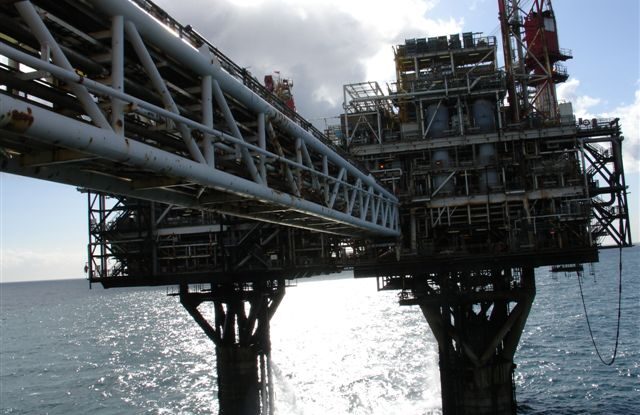
Despite this, Argentina has continued to assert its claim, using diplomatic, economic, and legal pressure rather than military force in recent decades. For instance, earlier this year, Argentina announced its opposition to the Sea Lion Field, an oil drilling project off the coast of the Falklands. The Argentine government, led by President Javier Milei, has threatened companies involved in the project, while Britain maintains that the Falkland Islanders have the right to make use of their natural resources.
Argentina’s Renewed Threat.
In September, President Milei used a speech at the United Nations General Assembly to characterize British administration of the islands as an “illegal foreign occupation.”
“An organisation that set out to defend the territorial sovereignty of its members decided to look the other way regarding the situation of the Malvinas Islands… Argentina is not going to sit around waiting for the UN and the international community to live up to their own mandate… We’re going to take matters into our own hands,” said Milei.
The Argentine government has also described sovereignty over the Falkland Islands as a “national objective.”
In late September, Argentina launched legal action against Britain over the Sea Lion oil project, arguing Britain is illegally exploiting Argentina’s continental shelf. Earlier this month, Argentina asked the International Tribunal for the Law of the Sea to urgently halt the project.
The National Pulse relies on reader support, not government or corporate cash. Please JOIN THE NATIONAL PULSE or MAKE A DONATION today.
France and Germany’s Offer.
According to Admiral Marcelo Dalle Nogare, head of Argentina’s armed forces’ Joint Staff, French and German manufacturers have offered to build three new attack submarines for the country.
Specifically, France’s Naval Group has offered its Scorpène submarines, designed for long-range operations, while Germany’s ThyssenKrupp Marine Systems has offered its Type 209NG submarines, primarily used for coastal defense. Admiral Nogare described the proposed vessels as potentially being “among the best submarines in the world today.”
Admiral Nogare also claimed that both the French and German governments had offered to finance the purchase in full, with Argentina repaying the money through installments.
If a deal is made between the three countries, this would constitute the first major step to rebuilding Argentina’s submarine capabilities, having essentially closed its submarine force in 2017. It also complicates claims from President Milei that the Argentine government is not seeking to take the Falkland Islands through military means.
Implications for Britain.
The proposals coincide with ongoing efforts from British Prime Minister Andy Burnham to strengthen the United Kingdom’s relationship with the European Union (EU), including potentially restoring Freedom of Movement and reversing Brexit, the country’s democratic decision to leave the bloc in 2016. The Labour Party politician claims that Brexit had done “more harm than good” and has said that he would like to see Britain rejoin the EU within his lifetime.
Earlier this month, the Institute for Public Policy Research, a British left-wing think-tank with connections to the Prime Minister’s inner circle, published a report encouraging the government to prioritize overturning Brexit and working towards seeking public consent to rejoin the bloc in the medium term.
“When the options are presented, government should name membership of the European Union as its medium-term goal,” reads the report’s recommendations section.
However, given the proposals from France and Germany, the two largest countries and economies in the EU, to arm a country seeking to take territory from Britain, it seems the British government’s desire for a closer, mutually beneficial relationship is one-sided.
Going forward, the Prime Minister will have to justify the decision to move closer to the EU while the bloc is not only prepared to demand major concessions for rejoining, but is also willing to undermine the United Kingdom’s security and sovereignty.
The National Pulse is an independent publication. If you value the work of Raheem J. Kassam and his team, please JOIN THE NATIONAL PULSE or MAKE A DONATION today. We are 100% reader-funded.
Join Pulse+ to comment below, and receive exclusive e-mail analyses.