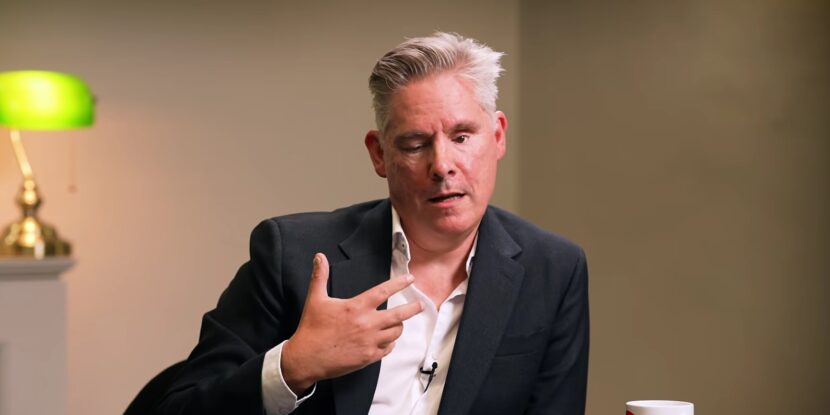



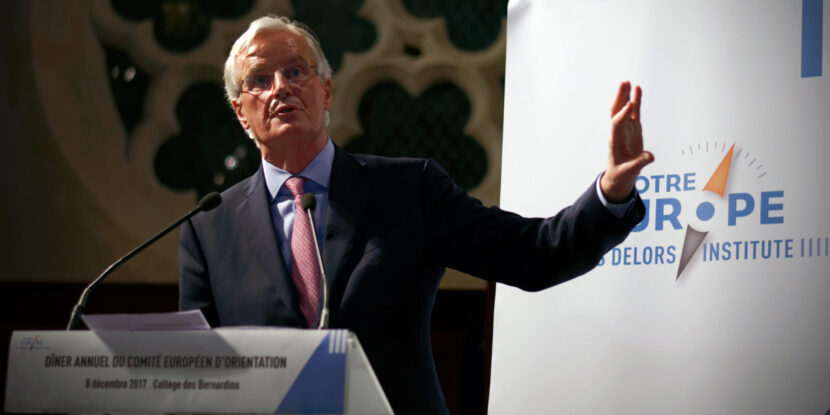

Earlier this month, Michel Barnier, the European Union’s former Brexit negotiator, said that Britain must accept freedom of movement to rejoin the bloc.
The National Pulse tracks Britain’s relationship with the European Union. If you value the work of Raheem J. Kassam and his team, please JOIN THE NATIONAL PULSE or MAKE A DONATION today.
Barnier’s Warning.
Barnier said that the United Kingdom would have to accept Freedom of Movement if it sought to return to the European Union’s Single Market, a borderless economic and migration area encompassing all EU member states as well as non-EU countries Iceland, Liechtenstein, and Norway, with Switzerland replicating much of it through sector-by-sector bilateral trade agreements.
While Barnier said the 27-country bloc was open to rebuilding closer ties with the former member state, particularly in defense and foreign policy, and praised British support for Ukraine, he stressed that Britain could not pick and choose the parts of the European single market it wanted. He emphasized that the EU’s “Four Freedoms”—free movement of services, goods, capital, and people—were “indivisible.”
“There will be no marché unique à la carte, Single Market à la carte—no cherry picking,” he said in an interview with LBC.
The former French prime minister’s comments follow British Prime Minister Andy Burnham’s decision to seek closer co-operation with the EU. The Prime Minister has also signaled the possibility of reversing Brexit, the United Kingdom’s 2016 democratic decision to leave the EU, which took effect in 2020. “We could go all the way” in terms of rejoining, the Prime Minister said at the time, alleging that Brexit had done “more harm than good.”
Barnier’s comments also coincide with a report from the Institute for Public Policy Research (IPPR), a George Soros-funded left-wing think tank with close ties to the Prime Minister’s inner circle in Number 10 Downing Street, as well as an agreement between Britain and the EU to hold a so-called “reset” summit in late November.
The National Pulse does not rely on government or corporate cash, so we need your support. Please JOIN THE NATIONAL PULSE or MAKE A DONATION today.
What Does This Mean?
According to a new analysis conducted by The National Pulse last month, rejoining the EU, or its Single Market on Norway-style terms, could have significant ramifications for the United Kingdom. Specifically, the analysis compares net migration projections of staying outside the EU versus rejoining the bloc.
In the low scenario, Britain is projected to receive an additional 19,000 net migrants per year by the fifth year after rejoining the EU. In the middle scenario, Britain is projected to receive an additional 82,000 net migrants annually by the fifth year, with a cumulative increase to roughly 714,000 over ten years. In the high scenario, Britain is projected to receive an extra 200,000 net migrants per year by the fifth year, resulting in roughly 1.76 million additional migrants over a decade.
The Soros Org Report.
The recently published IPPR report anticipates the need for the British government to “develop a new political language about Europe, reflected by the government in its communications strategy,” and the need to rejoin the bloc “either through a referendum or a clear manifesto commitment” to secure democratic consent. It advises that the British government’s communication strategy “should stress how today’s Europe meets British goals on issues from migration to security” and demonstrate “how a common effort increases our sovereign autonomy and allows us better control of our own fortunes.”
“Britain’s assumptions about its place in the world no longer hold, upturned by Russian aggression, American unreliability and Chinese coercion. Increasingly, it is size and scale that determines autonomy and sovereignty; who can act against pressures, and who must absorb them,” claims the report’s summary.
Consequently, any campaign aimed at ensuring the United Kingdom remains outside the EU will need to account for the fact that the battle-lines of the 2016 referendum will not necessarily re-emerge. Instead, a hypothetical re-join campaign is likely to reframe EU membership as a form of risk mitigation and lean into the idea of “autonomy,” echoing French President Emmanuel Macron’s advocacy of so-called “strategic autonomy.” This posits that European integration is necessary to develop the capabilities and scale, especially in areas like defense and technology, in order to reduce European nations’ reliance on (and vulnerability to) the United States, China, and Russia.
The National Pulse strives to keep you informed. If you value the work of Raheem J. Kassam and his team, please JOIN THE NATIONAL PULSE or MAKE A DONATION today. We are 100% reader-funded.
Image via the Jacques Delors Institute.
Join Pulse+ to comment below, and receive exclusive e-mail analyses.