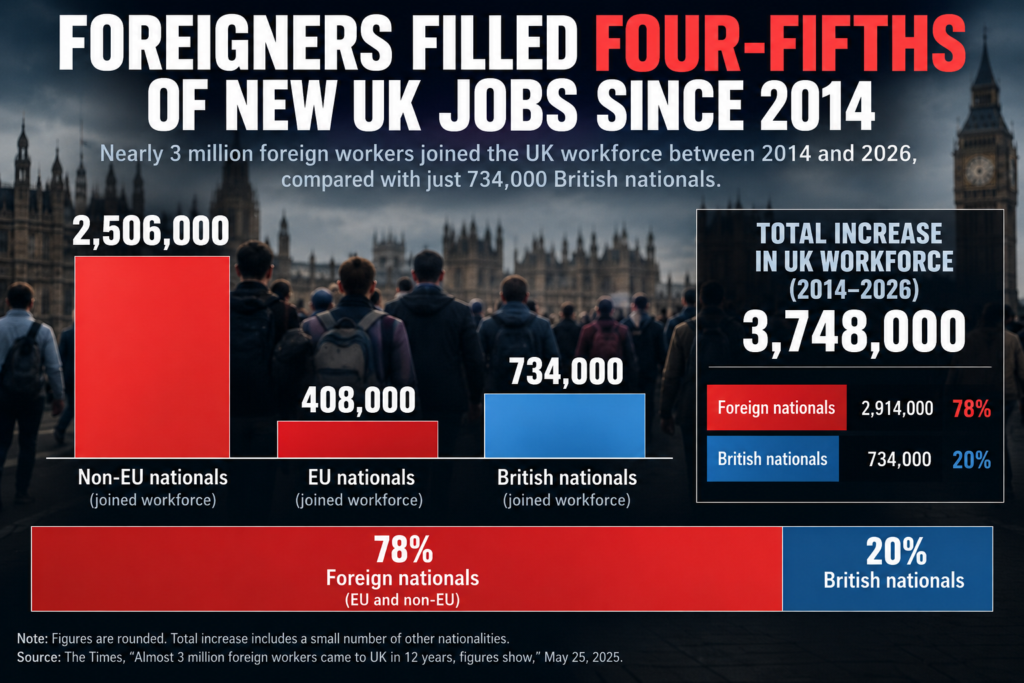



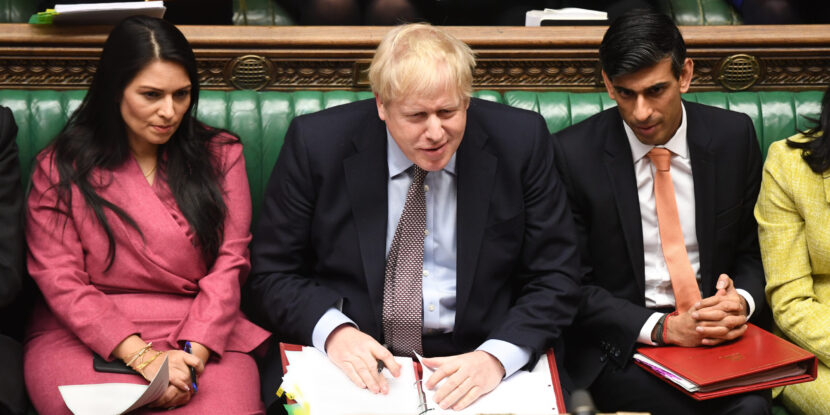

Britain’s Labour government is allowing thousands of migrants to secure de facto permanent residency every week by delaying promised immigration restrictions. Many are entered Britain as part of the Boriswave, a mass influx engineered by the former Conservative government following the COVID-19 pandemic.
The National Pulse researches the stories that matter to you. To support Raheem J. Kassam and his team, please JOIN THE NATIONAL PULSE or MAKE A DONATION today. We are 100% reader-funded.
More than 200,000 legal migrants have reportedly received indefinite leave to remain (ILR) despite tougher settlement requirements being promised last year. Around 5,000 migrants are reportedly securing permanent settlement every week under existing arrangements, even as government ministers debate extending the standard qualifying period from five to ten years.
The Conservatives created the conditions for the surge in settlement by dramatically relaxing controls on legal immigration, disregarding their repeated pledges to substantially reduce it. Labour, despite promising to tighten the rules, has failed to implement reforms that could prevent hundreds of thousands of Boriswave arrivals from becoming de facto permanent residents.
The Tories Own the Boriswave.
Boris Johnson’s government introduced a new points-based immigration system in December 2020, supposedly to restore British control over immigration following Brexit. Instead, the Conservatives greatly expanded eligibility for foreign workers outside of the EU, lowered skills requirements for sponsored employment, uncapped student and work visas, and opened additional routes for lower-paid care workers and their dependants.
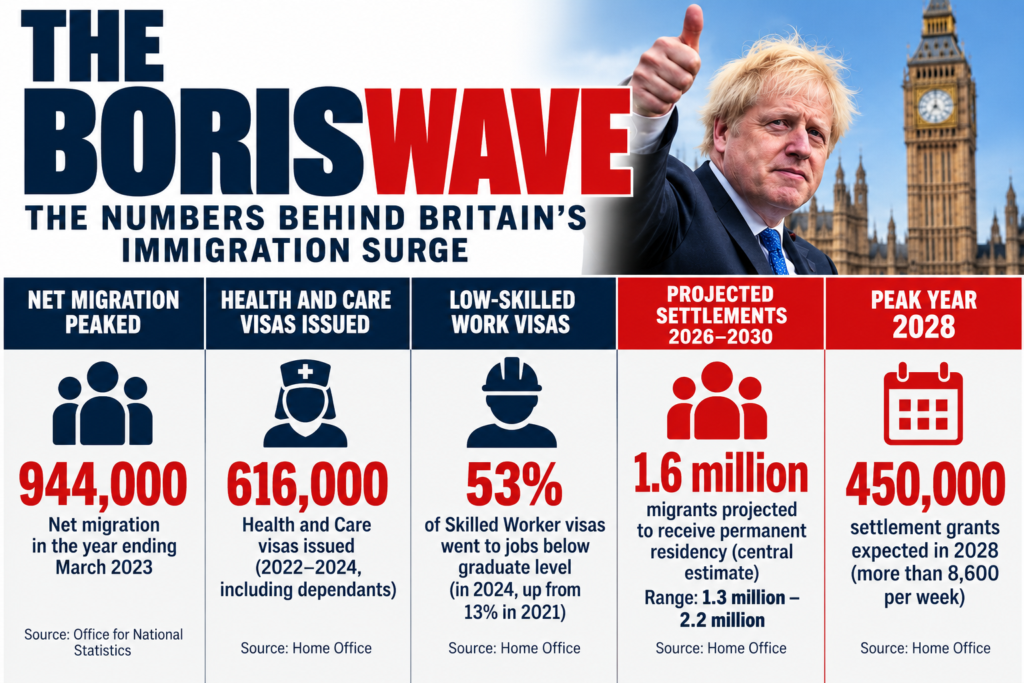
According to the Home Office’s own assessment of the settlement system, approximately 616,000 people entered Britain through the Health and Care visa route alone between 2022 and 2024, most of them dependants rather than the workers the scheme was supposedly designed to attract.
The Conservatives also expanded the “skilled” worker routes to occupations below graduate level. By the year ending June 2024, 53 percent of Skilled Worker visas issued to main applicants were for jobs below graduate-level skill requirements.
Brexit had been sold to voters as an opportunity to restore national control over Britain’s borders, including by Johnson himself. Instead, while Conservative ministers ended European “free movement” immigration, they introduced an uncapped points system that facilitated record levels of arrivals from outside the European Union, far larger than the decrease in EU immigration.
The Office for National Statistics (ONS) subsequently revised its estimates of net migration, placing the peak at approximately 944,000 in the year ending March 2023.
Up to 2.2 Million Migrants Could Settle by 2030.
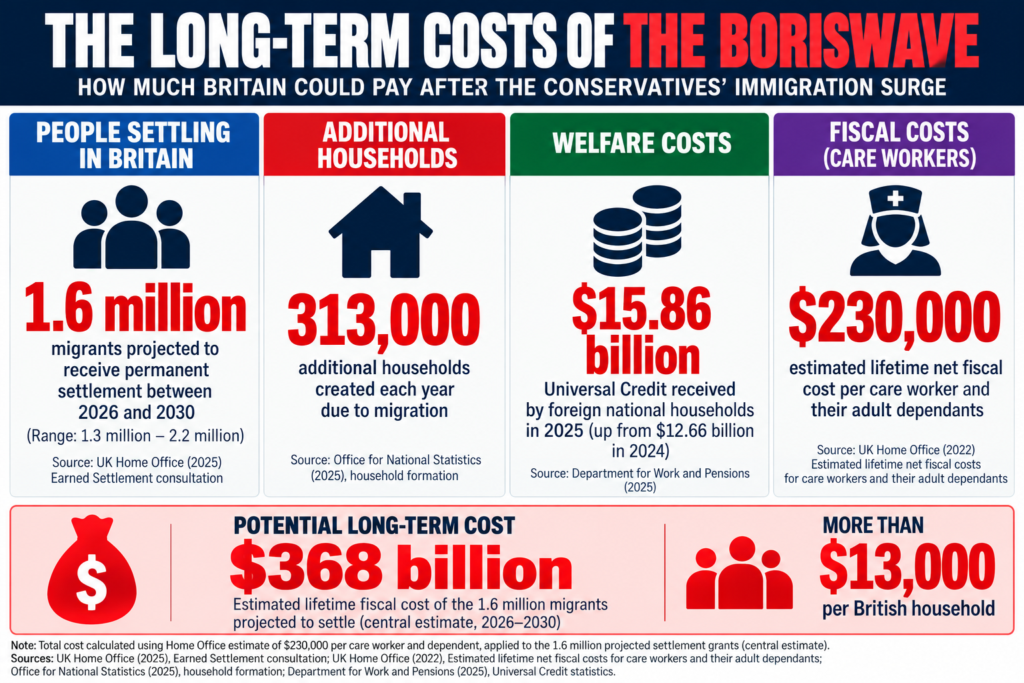
The Home Office’s official settlement forecasts estimate that between 1.3 million and 2.2 million migrants could obtain Indefinite Leave to Remain between 2026 and 2030 under projected settlement patterns. The department expects settlement grants to peak in 2028, when approximately 450,000 people could receive ILR. That would represent an average of more than 8,600 grants per week, nearly doubling the approximately 5,000 being reported now.
Much of the increase can be traced directly to decisions taken by Conservative ministers. The Home Office forecasts that approximately 462,000 people who originally entered through the Health and Care visa route could obtain ILR between 2026 and 2030. Another 306,000 are projected to settle after arriving through other Skilled Worker routes.
In 2028 alone, the department expects approximately 210,000 settlement grants to people who originally entered through the Health and Care route. The forecasts also include “family reunion” chaim migration, Hong Kong British National (Overseas) visa holders, and others.
Labour’s Promised Crackdown Appears to Be a Mirage.
Labour initially proposed doubling the standard qualifying period for indefinite leave to remain from five to ten years as part of its immigration reforms. Home Secretary Shabana Mahmood outlined a more extensive system of earned settlement, under which applicants would have to demonstrate economic contribution, integration, and compliance with immigration requirements.
The government’s November 2025 consultation also proposed a 15-year qualifying period for certain lower-skilled workers, alongside longer periods for applicants whose circumstances trigger additional requirements. Mahmood has also proposed applying the changes to migrants already living in Britain who had not yet obtained ILR.
However, the proposal provoked opposition within Labour, with many Members of Parliament (MPs) lobbying against retrospectively changing the conditions for millions of foreign workers who are already in Britain. Open borders proponents and others say that migrants who arrived legally under the Conservative government’s rules should not have their settlement expectations overturned after years of residence.
The consultation closed in February 2026, but the central reforms remained unresolved as of October 19. Meanwhile, the settlement pipeline established by Johnson and his Conservative successors continues to operate.
The Long-Term Cost of the Conservative Immigration Experiment.
Permanent settlement does not automatically grant every recipient welfare payments, but it generally removes the immigration restrictions that prevent many temporary visa holders from accessing many public funds. ILR holders can become eligible for Universal Credit, social housing, and other benefits. They can also generally apply for British citizenship after meeting additional residence and eligibility requirements.
This raises questions about the long-term fiscal consequences of the Conservatives’ decision to expand immigration through low-paid employment routes. A Home Office fiscal assessment of care workers and their adult dependants examines how earnings, tax contributions, public services, and welfare expenditure affect the lifetime fiscal impact of this category of migration.
Meanwhile, government figures reported in September showed that households containing at least one foreign national received approximately £11.9 billion ($15.86 billion) in Universal Credit during 2025, up from £9.5 billion ($12.66 billion) in 2024.
Labour’s proposed restrictions would delay settlement for many applicants, potentially postponing their access to certain benefits. However, the final fiscal impact will depend on which migrants are covered, what transitional arrangements are introduced, and how settlement affects their employment and tax contributions.
Britain’s Immigration Crisis Is a Failure of the Entire Establishment.
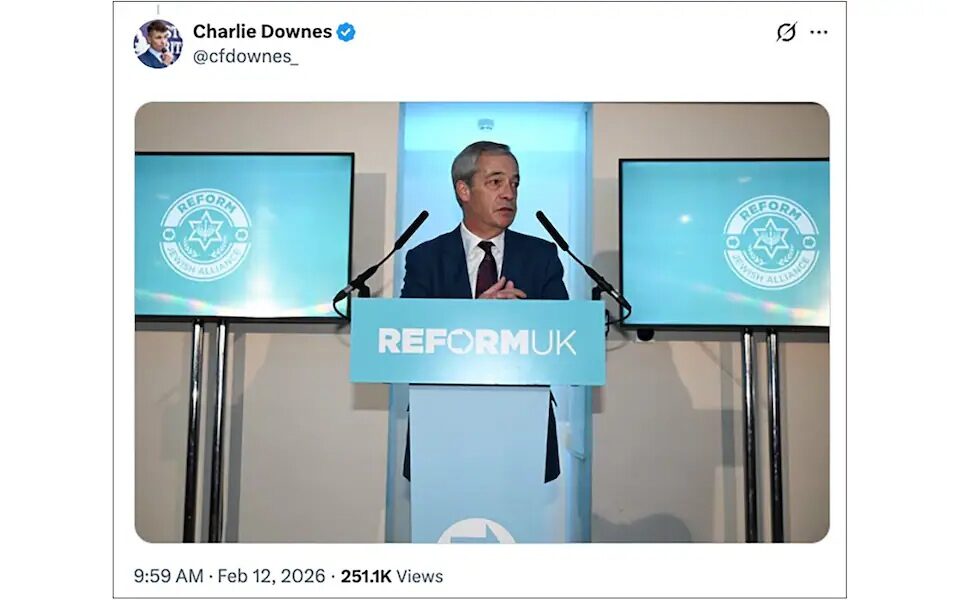
Labour’s hesitation over settlement reform presents an opportunity for Nigel Farage and his Reform UK party, but the Boriswave is fundamentally a legacy of the Conservative government. Their post-Brexit immigration system admitted unprecedented numbers of foreign nationals, many on pathways that could eventually lead to indefinite leave to remain.
Labour inherited that system and has now spent months debating how to change it, while thousands continue securing settlement under the existing rules.
To help Raheem J. Kassam and his team keep you informed on the deeper stories, please JOIN THE NATIONAL PULSE or MAKE A DONATION today.
Join Pulse+ to comment below, and receive exclusive e-mail analyses.